

For nearly eight decades, Pakistan’s military establishment has attempted to impose its strategic will upon Afghanistan.
Successive governments in Islamabad have changed, military chiefs have come and gone, and doctrines have evolved from “forward policy” to “strategic depth” and now “counterterrorism.”
Yet the underlying assumption has remained remarkably constant: that Afghanistan can ultimately be coerced into compliance through military force.
The events of June 2026 suggest that this assumption continues to shape Pakistan’s conduct along the Afghan frontier, despite repeated historical failures.
Throughout this month alone, Afghan border communities have reportedly endured multiple rounds of Pakistani artillery shelling and airstrikes that, according to Afghan authorities and human rights organisations, have resulted in significant civilian casualties, including women and children.
Pakistan has consistently maintained that its operations target militant infrastructure responsible for attacks inside Pakistan.
However, the growing number of allegations involving civilian harm has intensified calls for independent international investigations.
A Pattern of Civilian Harm
According to statements issued by the International Human Rights Foundation, the latest incidents represent not isolated mistakes but part of what it describes as a recurring pattern of cross-border military operations affecting civilian populations across eastern Afghanistan.
On 10 June 2026, at approximately 04:45 local time, Pakistani forces allegedly fired artillery into Sadiq Gharab, Alisher District of Khost Province.
According to the IHRF, citing local sources, the shells struck a civilian residential area, killing three children and injuring at least six civilians.
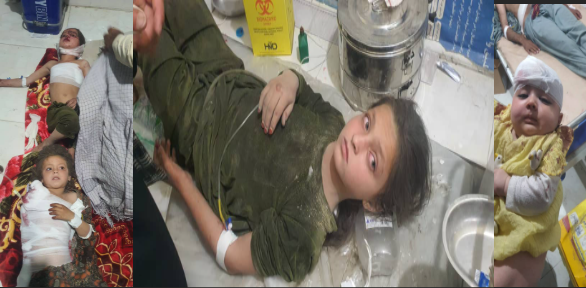
The organisation warned that the use of heavy artillery against or near populated civilian areas raises serious concerns regarding compliance with International Humanitarian Law, particularly the obligation to distinguish between military objectives and civilians.
The Khost incident was not unique.
In a subsequent statement, the IHRF expressed alarm over additional Pakistani airstrikes across Paktia, Paktika and Kunar Provinces.
According to preliminary local reports cited by the organisation:
• In Mandokhail village, Chamkani District, Paktia Province, an initial strike allegedly destroyed a civilian residence, killing an elderly man and a child. Witnesses further alleged that a second strike hit villagers who had gathered to rescue survivors, resulting in the reported deaths of 28 additional civilians and injuries to more than 150 people.
• In Walwast village, Gayan District, Paktika Province, another residential house was reportedly struck, killing six civilians, most of them women and children.
• In Barolo village, Manogai District of Kunar Province, another civilian home was reportedly destroyed, causing extensive damage.
Taken together, the IHRF stated that the reported June attacks had resulted in at least 38 civilian deaths, including women and children, more than 160 injuries, and the destruction of multiple family homes.
The organisation has called upon the United Nations Human Rights Council, the International Criminal Court and other international mechanisms to investigate the incidents, preserve evidence and determine whether violations of international humanitarian law have occurred.
If independently verified, such attacks would raise serious legal questions regarding the principles of distinction, proportionality and precaution, which lie at the heart of the Geneva Conventions and customary international humanitarian law.
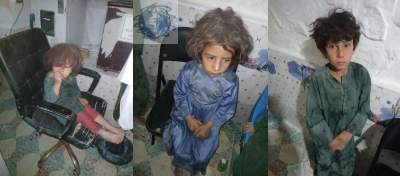
(Children displaced due to Pakistani artillery bombing across the border on 10 June 2026, resulting in the death of 3 children and injuring 6 civilians)
A Colonial Mindset Wearing a National Uniform
The military operations themselves are only part of a much larger story.
Pakistan’s Afghan policy has long reflected a security doctrine rooted in control rather than partnership.
The doctrine of “strategic depth” assumed that Afghanistan’s political future could be shaped from Rawalpindi and that ethnic, tribal and national identities would ultimately be subordinated to broader Islamic solidarity.
Events since 2021 have largely disproved that assumption.
The Afghan Taliban, once widely perceived as Pakistan’s closest regional ally, continue to reject formal recognition of the Durand Line, resist Pakistani pressure, and pursue policies increasingly independent of Islamabad.
Rather than producing strategic depth, Pakistan now faces persistent instability along its western frontier.
Echoes of Maharaja Ranjit Singh
History offers an instructive parallel.
During the early nineteenth century, Maharaja Ranjit Singh became the first non-Muslim ruler in nearly a thousand years to halt the traditional invasions through the Khyber Pass and establish control over Peshawar.
His rule over the Pashtun frontier relied heavily upon military coercion.
Regional historical accounts describe public executions of Pashtun rebels near the Khyber Pass, where the remains of executed dissidents were displayed as warnings to others, a brutal spectacle intended to break the independent spirit of the frontier tribes.
Whether every element of these accounts can be verified from contemporary primary sources, the broader historical reality is undisputed: Punjab’s rule over the frontier depended upon force rather than consent.
Yet even Ranjit Singh’s formidable military machine ultimately failed to permanently pacify Afghanistan or the Pashtun frontier.
His empire fragmented shortly after his death.
The Same Logic Applied Today
Critics argue that Pakistan’s military establishment continues to apply a similar security logic across regions viewed as politically troublesome.
Over the decades, military operations in the former Federally Administered Tribal Areas, Balochistan and, more recently, Pakistan-administered Jammu and Kashmir have generated repeated allegations of collective punishment, enforced disappearances, internet shutdowns and disproportionate use of force.
Pakistani authorities have consistently rejected allegations of unlawful conduct, maintaining that security operations are necessary responses to insurgency and terrorism.
Across these theatres, however, the underlying doctrine appears remarkably consistent:
Resistance is treated primarily as a security problem.
Political grievances become military objectives.
Civilian populations increasingly bear the consequences.
Afghanistan has become the external extension of this doctrine.
Border closures.
Mass deportations of Afghan refugees.
Economic pressure.
Repeated artillery barrages.
Cross-border airstrikes.
Each has been employed in an attempt to compel political behaviour inside Afghanistan.
None has fundamentally altered Kabul’s strategic position.
Strategic Depth Has Become Strategic Failure
Pakistan’s security planners once believed Afghanistan would provide strategic depth against India.
Instead, Afghanistan has increasingly become a source of strategic vulnerability.
Cross-border militancy persists.
Relations between Kabul and Islamabad continue to deteriorate.
Military operations intended to enhance security often produce greater hostility among Afghan communities already scarred by decades of conflict.
Every civilian casualty, whether ultimately verified through independent investigation or not, risks reinforcing narratives of occupation, collective punishment and historical grievance.
Force can eliminate individual targets.
It cannot manufacture political legitimacy.
Nor can artillery extinguish nationalism.
Afghanistan Was Never Pakistan’s Strategic Depth
History has been remarkably consistent.
Ranjit Singh could not permanently subdue Afghanistan.
The British Empire could not.
The Soviet Union could not.
The United States could not.
Military technology has evolved from cannons to fighter aircraft, drones and precision-guided munitions.
The strategic outcome has not.
Pakistan’s repeated cross-border attacks during June 2026 illustrate a broader pattern that deserves serious international scrutiny, not only because of the reported civilian casualties, but because they reflect a strategic mindset that history has repeatedly shown to be self-defeating.
Some analysts have aptly observed that Afghanistan was never Pakistan’s strategic depth.
It has instead become Pakistan’s strategic death, a theatre where successive military doctrines have consumed enormous national resources while delivering neither security nor lasting political influence.
The lesson has remained unchanged for more than two centuries.
Afghanistan can be invaded.
It can be bombed.
Its borders can be closed.
Its economy can be pressured.
But its people have never accepted domination by external force.
Empires have learned this lesson before.
Pakistan’s military establishment now appears determined to learn it again.

Reader comments
Subscribers can join the conversationSign in to join the conversation. Comments are open to everyone with a free account.
Sign in or create accountLoading comments…