
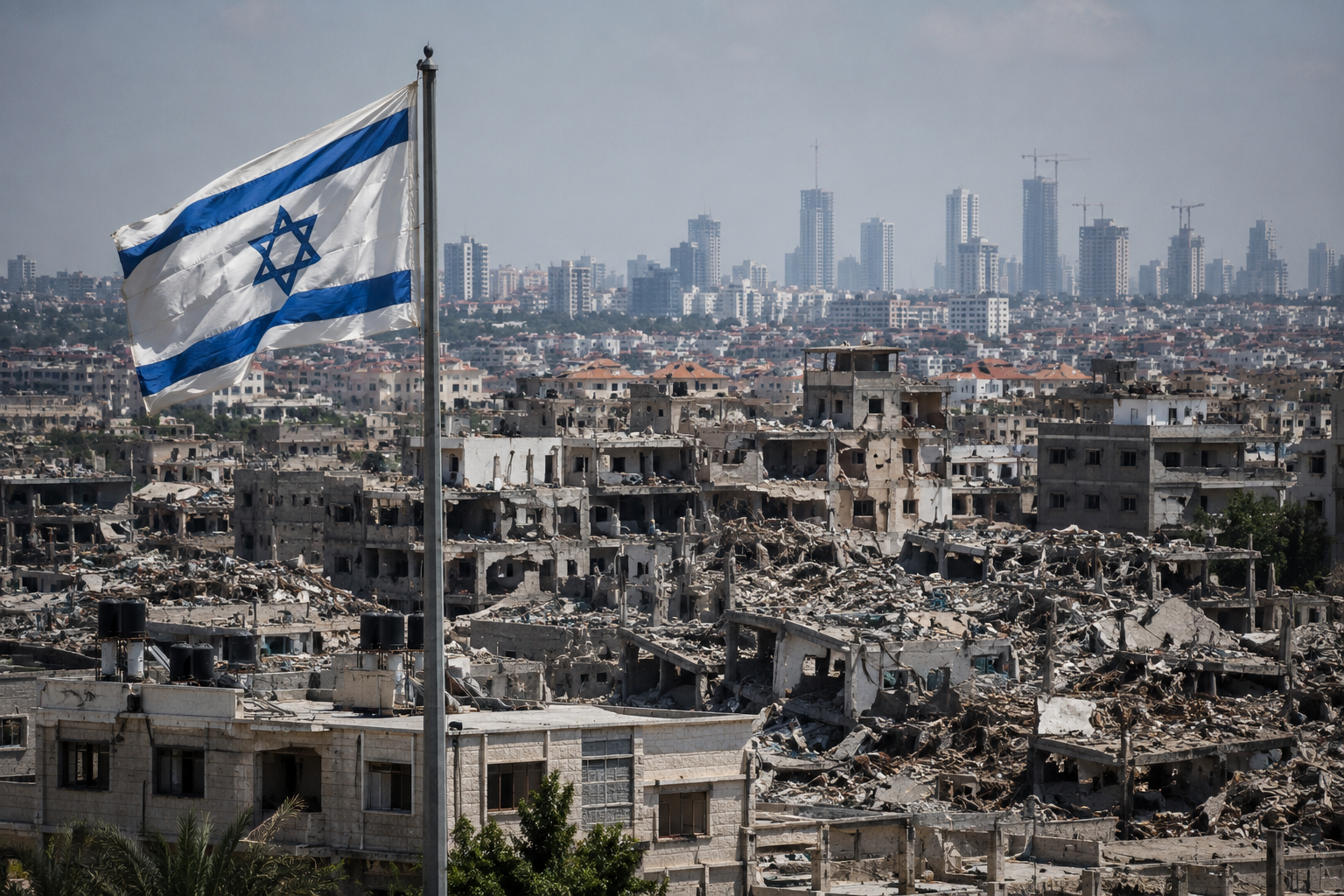
The question of Israel’s place in the international system has become increasingly difficult to ignore.
While Israel remains one of the most militarily capable states in the Middle East and continues to enjoy strong support from the United States, recent developments have raised important questions about its diplomatic standing, global image, and long-term strategic position.
The war in Gaza, the confrontation with Iran, mounting international criticism, and signs of tension between Washington and Tel Aviv have all contributed to a growing debate: is Israel becoming more isolated?
The answer is more complex than many partisans on either side would like to admit.
Israel is not isolated in the traditional diplomatic sense. It retains powerful allies, advanced military capabilities, significant economic strength, and extensive intelligence relationships across the world.
Yet at the same time, it faces levels of public criticism and political scrutiny that would have been difficult to imagine only a decade ago.
Understanding this contradiction is essential to understanding the changing geopolitical landscape of the Middle East.
Power and Legitimacy Are Not the Same Thing
One of the defining characteristics of modern international politics is that military power and political legitimacy do not always move together.
A state can remain militarily dominant while simultaneously facing declining support in global public opinion. Israel’s current situation appears to reflect precisely this challenge.
Its armed forces remain among the most capable in the world. Its intelligence services continue to play a major role in regional security. Its technological and economic sectors remain highly influential.
Most importantly, American military and diplomatic backing continues to provide Israel with substantial strategic protection.
Yet the political environment surrounding Israel has changed dramatically.
The images emerging from Gaza, growing humanitarian concerns, legal challenges in international institutions, and widespread criticism from human rights organisations have altered how many people around the world perceive the conflict.
The result is an increasingly visible gap between Israel’s military strength and its international reputation.
Gaza and the Crisis of Global Perception
No discussion of Israel’s international standing can avoid the impact of Gaza.
The war has generated intense scrutiny from humanitarian organisations, legal bodies, journalists, academics, and civil society groups across multiple continents.
Questions surrounding civilian casualties, displacement, aid access, and military operations have become central to international debate.
Many governments continue to support Israel’s right to self-defence. At the same time, growing numbers of citizens within those same countries have become more critical of Israeli policy.
This divergence between governments and public opinion is significant.
Political leaders may continue to offer diplomatic support, but democratic societies are ultimately influenced by voters. As public attitudes evolve, political calculations often change as well.
For Israel, the long-term challenge may not be immediate diplomatic isolation but a gradual erosion of support among future generations of Western voters.
Strains Within the U.S.-Israel Relationship
The relationship between the United States and Israel remains one of the strongest strategic partnerships in modern international politics.
However, strong alliances are not immune from disagreements.
Recent regional developments, particularly regarding Iran, have exposed differences over tactics, timing, and diplomatic priorities.
While such disagreements should not be exaggerated into predictions of a complete rupture, they nevertheless illustrate that Washington and Tel Aviv do not always share identical interests.
American policymakers must balance multiple considerations, including regional stability, energy security, military commitments, domestic politics, and broader strategic competition with rival powers.
Israeli leaders, meanwhile, operate according to their own security assessments and political pressures.
When these priorities diverge, tensions become visible.
The significance of such disagreements lies not in whether the alliance survives. It almost certainly will. The question is whether Israel can continue to assume unlimited diplomatic flexibility under American protection.
The Iran Factor
The recent confrontation with Iran has further complicated Israel’s strategic environment.
For decades, Iran has represented one of Israel’s most significant regional challenges. Yet the latest crisis demonstrated that military confrontation does not always produce clear political outcomes.
Rather than resolving regional tensions, the conflict appears to have deepened uncertainty about the future balance of power in the Middle East.
Iran emerged damaged but intact. Israel demonstrated military capabilities but faced growing scrutiny. The United States became more deeply involved while simultaneously pursuing diplomatic off-ramps.
No side achieved a decisive strategic victory.
The result has been a growing debate about whether military superiority alone remains sufficient to secure long-term political objectives in the region.
The Importance of Distinguishing Judaism from State Policy
Any serious discussion of Israel must make a clear distinction between Judaism, Jewish people, and the policies of the Israeli state.
Judaism is one of the world’s oldest religions, and Jewish communities represent a diverse global population with a wide range of political views.
Criticism of government policy, military actions, or political ideology must never be confused with hostility toward Jewish people.
This distinction is particularly important because debates surrounding Israel often become emotionally charged and politically polarised.
A mature discussion requires careful focus on state policies, diplomatic decisions, military strategy, and geopolitical consequences rather than religious or ethnic identity.
A Changing International Environment
The broader context for Israel’s challenges extends beyond Gaza or Iran.
The international system itself is changing.
The post-Cold War era, characterised by overwhelming American influence, is increasingly giving way to a more fragmented and multipolar world.
Regional powers are asserting themselves. New alliances are emerging. Traditional assumptions about global leadership are being questioned.
In such an environment, states that relied heavily on established power structures may find themselves under increasing pressure to adapt.
Israel is not alone in facing this reality. Many countries closely aligned with the existing international order are being forced to reassess their strategic assumptions.
The difference is that Israel occupies a uniquely sensitive position at the intersection of regional conflict, international law, religious significance, and great-power competition.
As a result, changes in global politics often affect Israel more visibly than many other states.
The Risk of Misreading the Situation
At the same time, claims that Israel has become completely isolated are clearly exaggerated.
Israel continues to enjoy extensive diplomatic relationships, strong military partnerships, significant trade connections, and substantial international support.
Its economy remains dynamic. Its military remains formidable. Its alliances remain consequential.
The more accurate observation is not that Israel has become isolated, but that it has become more isolated than before.
That distinction matters.
It suggests a gradual shift rather than a dramatic collapse. The challenge facing Israeli policymakers is therefore not one of immediate survival but of long-term legitimacy and strategic sustainability.
Military power can deter threats and win battles.
It cannot by itself resolve political disputes, restore damaged reputations, or create lasting peace.
Conclusion
Israel remains one of the most powerful states in the Middle East, supported by strong alliances and formidable institutions.
Yet power alone does not guarantee security.
The growing criticism surrounding Gaza, visible tensions over regional policy, shifting public opinion in the West, and the emergence of a more multipolar international system all suggest that Israel faces a more complicated strategic environment than it did in previous decades.
The question is therefore not whether Israel is isolated. It is whether Israel’s leaders recognise that the world around them is changing.
If international legitimacy continues to erode while military solutions dominate political strategy, diplomatic isolation may deepen over time.
If, however, political solutions, regional engagement, and renewed legitimacy become priorities, the current trajectory could still change.
The future of Israel’s international standing will depend not only on its military strength but on its ability to navigate a world in which power increasingly requires legitimacy as well as force.

Reader comments
Subscribers can join the conversationSign in to join the conversation. Comments are open to everyone with a free account.
Sign in or create accountLoading comments…