On 13 July 1931, thousands of Kashmiris gathered outside Srinagar’s Central Jail to protest the arrest of Abdul Qadeer Khan. Maharaja Hari Singh’s forces opened fire, killing 21. The day is now marked as Kashmir’s Martyrs’ Day. Yet this year, as Hurriyat leaders in Muzaffarabad performed their ritual homage—funded, approved, and choreographed by Pakistan’s military establishment—they avoided any mention of the killings, disappearances, torture, and shortages of food and medicine unfolding in Azad Jammu and Kashmir (AJK) under Pakistan’s own siege.
The Kashmir Media Service (KMS), which meticulously records deaths in Indian-administered Kashmir, maintains a chilling silence on civilian killings in AJK. Even as Hurriyat leaders praised General Asim Munir and claimed to speak for the “entire Kashmiri nation,” they ignored the mass rallies led by the Joint Awami Action Committee (JAAC)—a grassroots coalition demanding civic rights and an end to elite exploitation. Their vow to “foil conspiracies against Pakistan” was clearly aimed at delegitimising this civil resistance.
On 13 July, while Pakistani media invoked Indian atrocities to distract from the public gathering across AJK and Rawalakot, the military killed seven more civilians in Tarkhal and Rawalakot. But fifty days of siege have produced something unprecedented: a sustained, fearless popular resistance that has altered political consciousness across AJK.
The Anatomy of a Siege
The night of 7 June marked the rupture. Under darkness and a deliberate power cut, Pakistani paramilitary forces stormed Rawalakot. By dawn, the city was under occupation—flag marches, checkpoints, armed posts, home raids. Internet was cut on 5 June and remains suspended; mobile signals are throttled. Rawalakot was sealed.
Yet people found ways to communicate. Even intermittent connectivity was enough to send videos and testimonies out. Collective will outpaced state control.
The Scale of Repression
The crackdown has few parallels. Homes raided, property destroyed, bank accounts frozen, families harassed. Police claim 425 JAAC-linked arrests; journalists say far more. Lock-ups overflow; hundreds are missing, likely held in military facilities. Minors remain detained without charge.
Phones are searched at checkpoints; protest photos mean arrest and often beatings. The state placed 147 activists on the Fourth Schedule of the Anti-Terrorism Act—an absurd, punitive misuse of legislation against traders, lawyers, and students staging peaceful sit-ins. The forced video resignations of two JAAC leaders underscored a state insecure in its legitimacy.
The Human Cost
Over 30 civilians have been killed; many more are missing. Food supplies have collapsed—vegetable prices have tripled, fuel is sold in bottles at extortionate rates. Internet suspension has crippled banking; Kashmiri students across Pakistan cannot receive money. Drug stores are shut, and supplies from mainland Pakistan deliberately blocked.
AJK’s MUF Moment
The parallels with Kashmir’s 1987 MUF moment are unmistakable: a population investing hope in political process, only to see it manipulated and denied. That ultimately led to the inauguration of militancy that continued for three decades causing widespread deaths and destruction, and more political disempowerment.
Thankfully, JAAC’s movement not only remains consciously nonviolent, its organisers are well aware about the dangers of sliding into violence. So far, the protesters, despite the provocations and unprecedented violence unleashed by the military led administration, have largely refrained from falling into the trap of mimetic rivalry. They have carried white flags alongside the AJK flags while insisting their struggle is not anti-Pakistan. They deny the state the imagery it seeks to justify repression by linking it to outside forces, particularly India.
The Fracturing Relationship
Conversations with people who escaped the siege reveal a profound shift. Public trust in Pakistan has totally collapsed. Even the politicians groomed by military admit in private that their influence has all but waned. Some are even being confronted by their own family members to maintain distance from politics for the future remains uncertain. The army may produce election victories for its favourite candidates through the infamous Form 47 phenomenon — a daylight theft of public mandate— introduced by General Asim Munir against the former Pakistan Prime Minister, Imran Khan. But such victories only deepen alienation in a state that is already retreating in Balochistan and the former tribal belt neighbouring Afghanistan.
Silence and Resistance
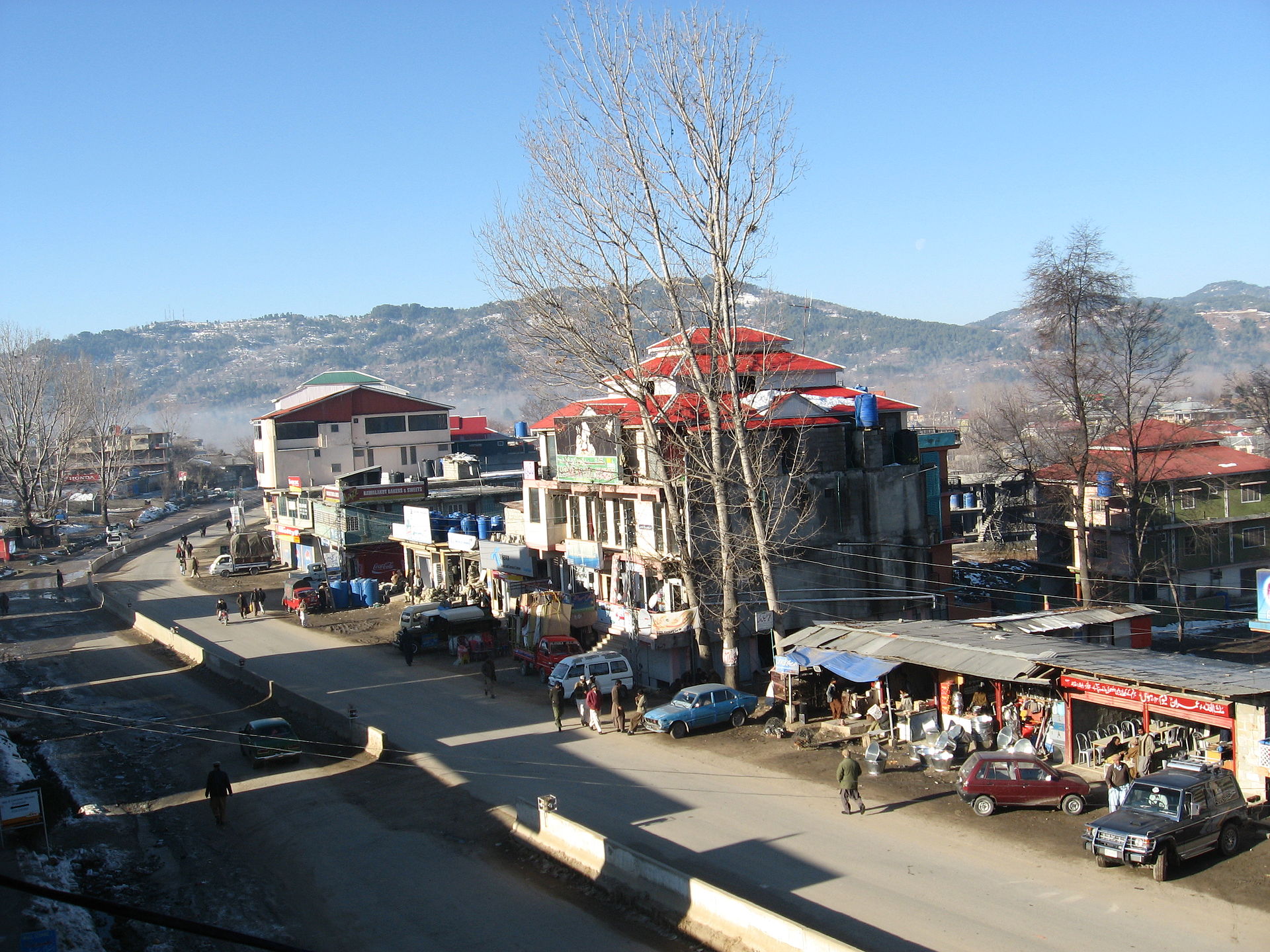
Rawalakot—once known for sports grounds and markets—has become the epicentre of defiance. Despite the latest killings and the ongoing repression, fear among the people is receding. Young men and women walk miles daily to reach sit-ins. New solidarities based on common civic demands are breaching the old and ossified clan loyalties as people carry food and drinks for every else or prepare it in communal langers. Communities are organising round‑the‑clock vigils and watches. Every act of state violence is tightening social solidarity.
Elections and the Future
The July 27 AJK elections now appear farcical. Even a staged exercise will provoke disdain. With a politically awakened diaspora amplifying the struggle, Pakistan—under Asim Munir’s jackboot—faces domestic anger, regional friction, and international reputational damage. It is becoming a state more obsessed with control than governance.
Conclusion
The ongoing fifty days of siege have changed AJK. Public perception has shifted; the relationship with Pakistan may never return to its old equilibrium. Rawalakot’s people have endured starvation, arrests, disappearances, and death—and have not broken. This is their MUF moment. Its consequences will shape a generation’s political consciousness.
The siege of Rawalakot is not only a story of oppression. It is a story of resilience—of a people who, confronted with the full might of the state, continue to stand their ground with zeal and conviction. This is a story that shall echo and inspire for years to come.
Reader comments
Subscribers can join the conversationSign in to join the conversation. Comments are open to everyone with a free account.
Sign in or create accountLoading comments…