
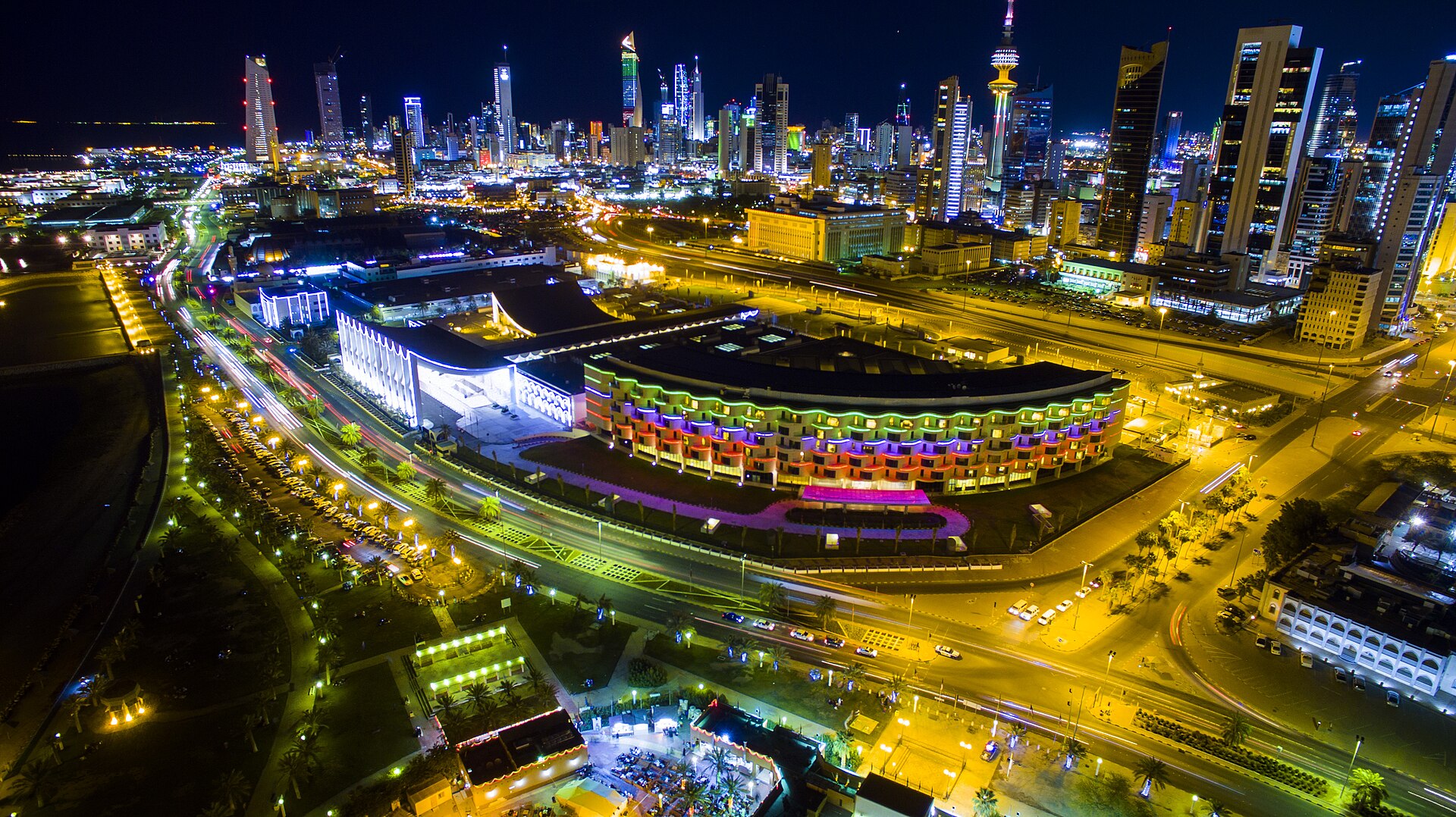
The Gulf has long been a landscape of carefully curated illusions, hidden behind a veil of secrecy. But behind the glitz, Kuwait is plunging into an unprecedented, terrifying demographic and democratic crisis driven by a brutal royal family feud, writes Dr Yvonne Ridley
Under the absolute grip of the ageing 86-year-old Emir, Sheikh Meshal Ahmad al-Sabah, the state is executing an aggressive campaign of political, digital, and physical erasure.
It is a ruthless, double-pronged assault on dissent. The regime is systematically trying to blind its population online while physically stripping hundreds of thousands of their very identity.
This is the chilling story of a state dismantling its own citizenship and upending its own monarchy to silence a nation.
For decades, Kuwait stood out among its Gulf Cooperation Council neighbours for its boisterous public sphere, lively political debates, and an elected parliament that was the only one of its kind in the region. Today, that democratic town square is being systematically slaughtered.
Dissidents and human rights monitors report that the Kuwaiti government has enacted a sweeping digital blockade. By weaponising local cybercrime statutes and regional agreements that forbid the "insult" of allied regimes like the thin-skinned UAE, authorities recently tried to force major US social media platforms, including X (formerly Twitter), to geoblock thousands of accounts.
The whole digital iron curtain has provoked scores of dark conspiracy theories. Shocking allegations suggest that bribes worth millions of dollars have been paid to rogue X workers who have literally pulled the plug on up to 4,000 social media accounts of Kuwaiti dissidents.
On Sunday 5th July 2026, thousands of account holders woke up to find their accounts on X, Instagram, Snapchat and other platforms geoblocked inside Kuwait, where the feeds of journalists, activists and government critics suddenly went pitch black, unless users had VPN. None of the account holders were informed in advance or given a chance to appeal.
Mounting protest forced at least X to belatedly send out the warnings, exhibiting a heavily redacted internal Kuwait government directive, misleadingly referred to as a “court order”. By Tuesday 7th July, the fiasco unravelled and the blocks removed.
Canadian journalist and dissident Samih Bowles reported online that 5 million Kuwait Dinars (around £12.5 million) were paid in bribes by the Kuwait regime, via operatives in the UAE who dealt with current and former employees of the regional X office in Dubai.
Without a VPN, the Kuwaiti public is trapped in an informational echo chamber, cut off from the voices that once dared to question the crown. Yet, this digital silencing pales in comparison to the absolute autocracy taking place in the physical world.
In May 2024, Emir Sheikh Meshal abruptly dissolved the newly elected National Assembly and froze parts of the constitution for four years. Student union and cooperative elections were halted. Former MPs now languish in prison for "defying the emir's authority." The move was unconstitutional, as there is no provision allowing the head of state to do this, and critics say the “four years” is a ruse, and parliamentary democracy will either never be restored, or return as a watered-down version under government control.
Free from legislative oversight and judicial checks, the regime unleashed the most terrifying weapon in its arsenal: Decree-Law No. 52/2026, a sweeping mechanism for mass citizenship revocation.
The state frames this purge as a necessary cleanup of "nationality fraud" and a crackdown on illegal dual citizenship. The Emir has spoken repeatedly of “purifying” society, callously labelling those with acquired nationality as “impurities.”
But the reality is far more sinister. Citizenship was transformed from an inalienable right into a conditional reward for absolute compliance. By reclassifying the stripping of nationality as a "Sovereign Act," the Emir effectively barred the judiciary from reviewing these cases. Most controversially, he launched a secret hotline for Kuwaitis to report suspected dual nationals, broadening a toxic climate of suspicion and denunciation.
The human toll is staggering. Officially, roughly 42,000 people have been stripped of their citizenship in the past six months alone. But political scientists warn of a catastrophic multiplier effect. Because Kuwaiti nationality passes exclusively through the male line, stripping a single man of his citizenship retroactively renders his children and grandchildren stateless.
Analysts estimate that the true human toll of this purge is rapidly approaching 300,000 people. In a native citizen population of just 1.5 million, the Emir is on track to turn up to one-fifth of his own people into ghosts in their own homeland.
Those caught on the state’s calculated "revenge list" lose everything overnight. Their bank accounts are frozen, their properties are placed in legal limbo, and their access to public healthcare, education, and employment is instantly revoked. Trapped inside the country or stranded abroad in the UK, the US, and Canada, they are forced to apply for asylum—transformed into vulnerable, legally non-existent ghosts.
Exiled dissidents enduring harsh conditions in Canada, Britain, and France report tactics resembling the plots of spy thrillers: frozen assets, fabricated charges, disappearances after being lured abroad, and even allegations of sorcery and witchcraft being used against opponents.
Despite the scale of this humanitarian crisis, the international response has been deafeningly quiet. Kuwait holds six per cent of proven global oil reserves and supplies three per cent of world output. Western allies like the United States, fiercely protective of their military and energy alliances in the Gulf, have looked the other way, while Kuwait plays a key role in the US-Israeli war on Iran.
Kuwait houses major military US assets that are used in the war, and in retaliation, Iranian forces have attacked key military and logistical installations, such as the Ali Salem Airbase. The regime, however, attempts to conceal the degree to which it is involved in the American war effort. Despite public American recognition of Kuwaiti involvement, the government says they are neutral and condemns Iranian counterattacks as unprovoked.
Kuwait hosts the U.S. 386th Air Expeditionary Wing which has been heavily targeted by the Islamic Revolutionary Guard Corps (IRGC). The most recent major wave of ballistic missile and drone strikes occurred overnight into July 13.
"In the past, Kuwaitis defended their democratic institutions with backing from outside powers," notes Kristin Smith Diwan of the Arab Gulf States Institute in Washington. "Today, they live in fear of mass denationalisation, while the United States remains silent."
By dissolving parliament, blinding the digital sphere, and stripping a vast portion of his population—and rival royals—of their fundamental rights, the Emir has chosen a path of entrenched autocracy. But a state built on the systematic erasure of its own citizens is structurally unstable. Observers warn that the death of the aging emir could trigger dangerous fragmentation.
You can block the tweets, you can freeze the bank accounts, and you can revoke the passports, but you cannot permanently extinguish a people's desire for a voice.
Reader comments
Subscribers can join the conversationSign in to join the conversation. Comments are open to everyone with a free account.
Sign in or create accountLoading comments…