
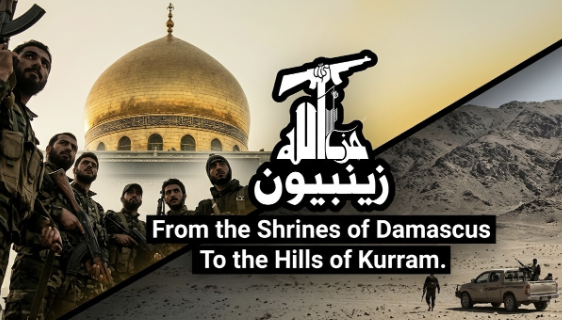
In the blistering midsummer heat of July 2012, a nineteen-year-old named Saqib Haider arrived in the Iranian city of Qom. It was his fourth time entering the Islamic Republic, traveling on this occasion at the explicit invitation of the Islamic Revolutionary Guard Corps (IRGC). Haider did not travel alone; he was accompanied by five trusted companions from the high, pine-fringed ridges of the Kurram tribal region in northwestern Pakistan. Despite his youth, Haider already carried the gravity of a seasoned militant leader. Back home in Khyber Pakhtunkhwa province, he served as the regional head of Sipah-e-Muhammad Pakistan (SMP) a clandestine Shia militant organization born in the mid-nineteen-nineties to protect Pakistan’s minority Shia community from the relentless, scorched-earth campaigns of state-tolerated Sunni extremist outfits like Sipah-e-Sahaba and Lashkar-e-Jhangvi.
To grow up Shia in the valleys of Kurram, particularly in its isolated regional hub of Parachinar, was to understand oneself as perpetually under siege. For years, the only highway connecting Parachinar to the rest of Pakistan the Thall–Parachinar road had been subject to bloody ambushes by Sunni militants. Haider’s life had been shaped by this geography of fear, and the IRGC recognized in him a potent mix of ideological devotion and raw organizational capability.
The morning after their arrival, having performed their ablutions and offered prayers at the golden-domed shrine of Fatima Masumeh, Haider and his companions walked to the Hotel Khorshid.
There, in a secure, wood-paneled conference hall, they found themselves surrounded by roughly fifty mid-level commanders representing a vast, transnational mosaic of Shia militancy men who had flown in from the suburbs of Beirut, the marshlands of southern Iraq, and the hardscrabble hazara neighborhoods of Kabul.
At the front of the room stood Brigadier General Esmail Qaani, then the low-profile but fiercely efficient deputy commander of the IRGC’s elite Quds Force. Qaani’s briefing was stark. The Arab Spring had metastasized into an apocalyptic sectarian war in Syria, where Western and Gulf backed Sunni rebel militias, alongside rising jihadist forces like Jabhat al-Nusra and the precursors of ISIS, were systematically targeting Shia populations. More critically for the men in the room, the shrines were falling into the crosshairs.
Qaani pulled up details from an attack that had occurred just weeks earlier, on June 14, 2012. A Sunni suicide bomber had navigated a vehicle packed with military-grade explosives deep into the Damascus suburb of Sayyida Zainab, detonating it a mere fifty meters from the outer walls of the iconic, blue-tiled Sayyida Zainab Shrine.
The blast had torn through the neighborhood, injuring dozens and shattering the shrine’s exquisite mosaic walls, its crystal chandeliers, and its stained-glass windows. The shrine, which holds the remains of the granddaughter of the Prophet Muhammad, is the emotional and theological anchor of global Shia identity. For Qaani, the implication was clear: the defense of the faith no longer stopped at national borders. It was time, he told the assembly, to build an international Shia foreign legion.
From the Shrines of Damascus: The Blueprint for Mobilization
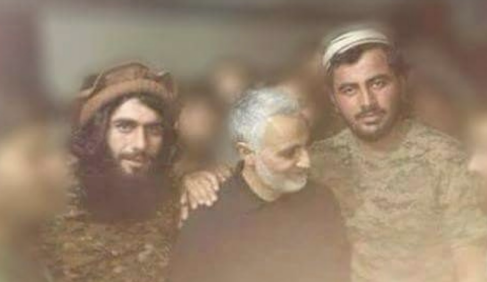
When the general briefing concluded, Qaani called Saqib Haider into a private, secondary room. The Iranian general was well-aware of the tactical realities in Pakistan; he commended Haider on the way Sipah-e-Muhammad had held the line against Sunni hardliners back home. Then came the ask: Qaani proposed that Haider begin mobilizing Pakistani fighters for immediate deployment to the Syrian theater.
Haider, swept up in the religious fervor of the moment, accepted without hesitation. He boasted to Qaani that SMP’s nationwide network exceeded three thousand active fighters and gave his word that he would personally secure a detachment of at least one thousand men to defend the Damascus front. Yet, when Haider returned across the border to Pakistan and presented the IRGC’s proposal to the shura the governing council of Sipah-e-Muhammad, he ran headlong into a wall of pragmatism. The senior commanders of the council listened to the teenager's impassioned plea and flatly rejected it. The year 2012 was one of the bloodiest periods in modern Pakistani history; Lashkar-e-Jhangvi and Sipah-e-Sahaba were unleashing monthly campaigns of suicide bombings against Shia mosques, marketplaces, and pilgrim buses from Quetta to Gilgit. To the shura, sending a thousand trained fighters away to defend a regime in Damascus while their own families were being slaughtered in Pakistan seemed not just strategically foolish, but an act of betrayal.
Undeterred by the high command's refusal, Haider retreated to his personal fiefdom in the Kurram district, where he directly commanded an autonomous SMP faction of about eighty men. He called a private meeting in a safehouse outside Parachinar. There, he framed the defense of the Sayyida Zainab Shrine as an extension of the very same tribal defense operations they were already conducting in the hills of Kurram. The arguments worked. Between thirty-five and forty of his personal loyalists agreed to follow him. Without uttering a word to the central shura, Saqib Haider and thirty-three companions including two stoic brothers from the local Turi tribe, Irshad Hussain Turi and Abid Hussain Turi packed their bags and quietly left for Iran by road.
Baptism by Fire: The Birth of Liwa Zainebiyoun
The pipeline engineered by the IRGC was smooth but deliberately labyrinthine. Upon crossing into Iran, Haider and his thirty-three men were provided with uniform weaponry, basic tactical gear, and cash reserves. They were smuggled across the western border into Iraq via clandestine mountain paths, where they were handed off to an IRGC cutout. This handler guided them across the desert plains into Syria, eventually depositing them in the battle-scarred southern suburbs of Damascus.
Upon arrival, the small Pakistani contingent was integrated into Liwa Abu al-Fadhal al-Abbas, a sprawling, multi-ethnic umbrella brigade dominated by Iraqi militants. Because of his innate administrative intelligence, the young Haider was designated the group's Nizam-e-Ala (Chief Administrator). Operating from this bureaucratic vantage point, Haider spent his evenings leveraging his old contacts back in Pakistan through encrypted messaging apps and secure courier lines. He pitched the Syrian war as a holy duty, an adventure, and an escape from the dead-end poverty of Pakistan's tribal areas.
The recruitment drive was wildly successful. Within seven months, more than eight hundred additional Pakistani youths had flowed through the Iranian pipeline into Damascus. By March 2013, the Pakistani contingent inside the brigade had swelled past the one-thousand mark.
Despite his tender age, the fighters looked upon the twenty-something Haider as a figure of immense authority. He led them into brutal, close-quarters urban combat alongside regular Syrian Arab Army units, fighting against the entrenched positions of Jabhat al-Nusra and various factions of the Free Syrian Army. During the critical offensives of late 2013, it was Haider’s Pakistani cadre that successfully cleared and secured the vital Damascus Airport Road, pushing rebel forces out of the Sayyida Zainab district and stabilizing the southern approaches to the capital.
By September 2013, Haider recognized that his men had outgrown their Iraqi hosts. The Pakistani contingent had become the single largest faction within Liwa Abu al-Fadhal al-Abbas, numbering over fifteen hundred fighters, but they were plagued by severe language barriers on the battlefield, unable to communicate effectively with Arab commanders during firefights. Haider approached his Quds Force handlers with a formal request: he wanted to split from the umbrella group and form an entirely independent, sovereign Pakistani unit. He proposed the name Lashkar-e-Zainab, known formally to the IRGC as Liwa Zainebiyoun (The Zainebiyoun Brigade).
The IRGC approved the request. In February 2014, Liwa Zainebiyoun was officially chartered. Haider, now twenty-one, assumed total military command under the nom de guerre "Haji Haider."
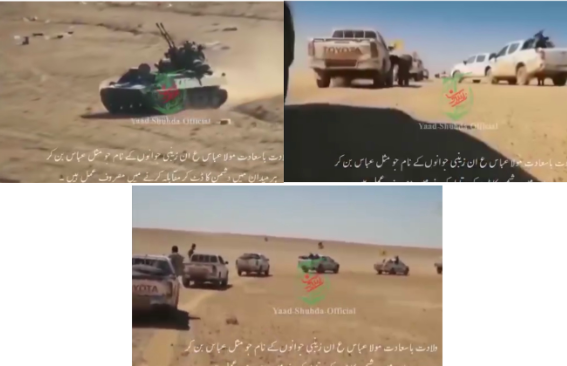
The brigade’s first sovereign operation took place that same year. In a meticulously planned assault, a force of 150 Zainebiyoun fighters stormed a heavily fortified barracks held by eighty to ninety anti-Assad rebels. The combat was vicious; fifteen Zainebiyoun fighters were killed, but they utterly wiped out the garrison, killing over seventy militants from the hardline Sunni coalition Ahrar al-Sham. Eight rebel survivors were taken alive and executed in a highly orchestrated public ceremony designed to cement the brigade's terrifying new reputation.
By 2015, the IRGC stopped treating the Zainebiyoun as mere frontline shock troops. They were integrated into the massive Aleppo Campaign and sent to advanced training grounds run by regular Syrian government forces. There, the young men from Kurram and Karachi were trained to drive Russian-made T-72 tanks, fire anti-tank guided missiles (ATGMs), and coordinate heavy artillery barrages.
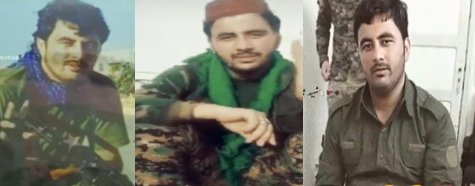
nder Haji Haider’s steady leadership, the brigade became a formidable mechanized asset. In 2016, they helped spearhead the operations that broke the years-long, grueling Siege of Deir ez-Zor. From there, their operational theater expanded dramatically into the central Syrian desert—the Badia—where they hunted ISIS remnants through the ancient ruins of Palmyra, the lethal valleys of Homs, and along the strategic Deir ez-Zor axis. These desert campaigns were critical for Tehran: by clearing these corridors, the Zainebiyoun helped reopen the historic land bridge stretching from Iran, through Iraq, and straight to the Mediterranean coast via the border towns of Mayadin and Abu Kamal.
The Fall of Haji Haider and the Geopolitical Mastermind
By early 2017, the conventional territorial "caliphate" of ISIS was collapsing into rubble, reverting to a decentralized guerrilla insurgency. In March of that year, Liwa Zainebiyoun was redeployed northwest to the Hama Governorate to counter a desperate, bloody counter-offensive launched by an alliance of ISIS and Hay’at Tahrir al-Sham.
On the morning of April 4, 2017, roughly two thousand Zainebiyoun fighters were scattered across the Hama frontline, broken down into forty distinct tactical units. The smallest of these units, consisting of just thirty-two men, was commanded personally by Haji Haider in the rural area of Tal Turabi. In the blinding dust of a sudden ISIS counterstrike, Haider’s position was isolated and completely surrounded by jihadist technicals. The Pakistanis fought until their ammunition dried up. Thirty-one fighters were killed on the spot; Haji Haider, wounded but alive, was dragged into the back of an insurgent truck.
For nine days, his men launched frantic search operations across Hama, but it was in vain. Haider was subjected to systematic torture by his captors before being executed. His body was never recovered, but within two weeks, his death was accepted as absolute certainty by both Tehran and Parachinar. To replace the fallen icon, the IRGC turned to Abid Hussain Turi, one of the original five companions from the 2012 Qom trip, who assumed command under the operational alias "Tehran Turi."
Within certain hardline factions of Liwa Zainebiyoun, however, there remained a stubborn refusal to accept that the young commander was truly gone. For nearly two years, a persistent myth traveled through the safehouses of Damascus and the valleys of Kurram: that Saqib Haider had survived the initial onslaught at Tal Turabi, that he was being held alive in some subterranean ISIS dungeon, a high-value hostage awaiting a prisoner swap that would never come. This agonizing fog of uncertainty fueled endless speculation, keeping his followers in a state of suspended mourning.
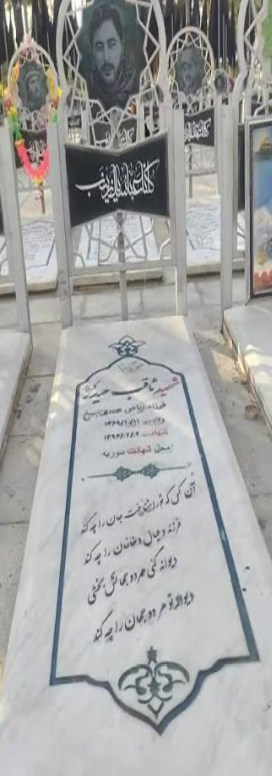
The myth finally disintegrated in June 2019. Following a meticulous excavation of a mass grave site in Syria’s Hama Governorate, a team of recovery specialists unearthed a set of skeletal remains matching Haider's general profile. The remains were immediately flown under high security to Tehran, where Iranian forensic experts conducted exhaustive DNA profiling against samples provided by his surviving family members. The match was absolute. For the first time since he vanished into the dust of the Hama desert, his comrades were presented with definitive, scientific proof of his martyrdom.
Following the forensic verification, the IRGC orchestrated a formal state funeral, carrying his casket through the tear-stained streets of Qom—the very city where, seven years earlier, a teenage Haider had pledged his sword to Esmail Qaani. He was laid to rest in a plot reserved for international martyrs, buried in the sacred earth of Iran’s theological heartland, far from the Pakistani hills he had left behind.
The enterprise that Tehran Turi inherited was no longer a ragtag band of volunteers; it was a highly professional, incredibly expensive mercenary ecosystem funded entirely by the Iranian state.
From 2012 onward, every Zainebiyoun fighter had been guaranteed a monthly stipend of $700, deposited into electronic accounts or distributed via family couriers. Every three months, fighters were granted fifteen days of paid leave, with their flights from Damascus to Iran and overland transport back to Pakistan fully comped. In 2017, as the fighting intensified, the IRGC raised this monthly stipend to $1,200.
To understand the explosive recruitment growth of the brigade, one must look at the stark economic realities of the Pakistani tribal areas at the time. At 2017 exchange rates, $1,200 equated to roughly 126,348 Pakistani Rupees (PKR). By contrast, a regular Sepoy (private) enlisting in the sovereign Pakistan Army earned a monthly salary of approximately 57,000 PKR. A young man from Parachinar could step onto a battlefield in Syria and instantly earn more than double what a Pakistani state soldier made, while simultaneously fulfilling what he believed to be a profound religious obligation to defend the household of the Prophet.
Behind this massive financial architecture stood the mastermind of Iran's regional strategy: Major General Qasem Soleimani. While Esmail Qaani remained the day-to-day manager, it was Soleimani who viewed the Zainebiyoun (and their Afghan sister brigade, Liwa Fatemiyoun) as a long-term geopolitical investment. For Soleimani, the Syrian war was a live-fire laboratory a training school where thousands of Pakistani and Afghan Shias could be converted into elite, combat-hardened veterans. The ultimate objective was never just about saving Bashar al-Assad; it was about building a native, institutionalized proxy framework that could eventually be redeployed back into Pakistan and Afghanistan to project Iranian power, mimicking the historical trajectory of Lebanese Hezbollah.
Strangely, Pakistan’s premier domestic intelligence agency, the Inter-Services Intelligence (ISI), was fully aware of this recruitment pipeline from its inception but deliberately chose to look the other way. In the early years of the Syrian war, Haider’s faction in Kurram had been locked in a bitter, bloody local feud with the Haqqani Network. Because the Haqqanis frequently disrupted the Pakistani state's own internal balances, Islamabad was content to let Iran drain off Kurram's volatile Shia youth to fight a distant war in the Levant, viewed through a detached, pragmatic lens of domestic containment.
Shifting to the Hills of Kurram: The Return of Battle-Hardened Veterans
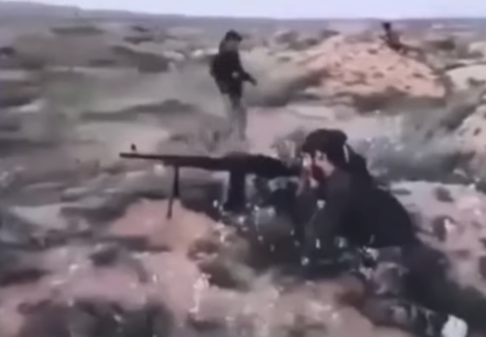
On January 3, 2020, a U.S. Hellfire missile struck a convoy leaving Baghdad International Airport, vaporizing Qasem Soleimani and instantly plunging Iran’s proxy network into administrative chaos. The Zainebiyoun Brigade was, at its core, Soleimani’s personal pet project. His successor, Esmail Qaani, found himself overwhelmed by the vast administrative weight of his new office and was initially paralyzed regarding how to manage the specialized Pakistani and Afghan cadres. To steady the ship, Qaani handed operational oversight of the Zainebiyoun over to Iraj Masjedi, Iran’s Ambassador to Iraq, and Mohammad Reza Fallahzadeh, the newly appointed deputy commander of the Quds Force.
By April 2020, with the Syrian state largely stabilized and the ISIS caliphate reduced to a fractured, low-level rural insurgency of roughly four thousand fighters, the IRGC high command decided it was time to cash in on their long-term investment. They instructed Tehran Turi to orchestrate a massive drawdown. Turi was ordered to return to Pakistan with approximately three thousand battle-hardened veterans, leaving behind a small, residual maintenance force of sixteen hundred men in Syria to protect the Damascus shrines and support the Syrian Army's remaining defensive positions.
Over the next six months, the migration occurred in total secrecy. The three thousand veterans infiltrated back into Pakistan in forty to fifty separate batches, utilizing the porous, mountainous borders separating Iran from Pakistan's Balochistan province. Internal intelligence audits later revealed the demographic breakdown of the returnees aa 60% were native to the Kurram tribal region, returning directly to their families in Parachinar and 40% dispersed into the dense urban pockets of Karachi, the high valleys of Gilgit-Baltistan, the Shia enclaves of Quetta, and the rural farmlands of Sahiwal in Punjab.
Upon their return, these men did not simply melt back into civilian life. More than eighteen hundred of them concentrated in Kurram, establishing an underground command structure under the direct personal supervision of Tehran Turi. The peace did not last long. Armed with millions of Iranian rials and tactical knowledge regarding the assembly of sophisticated explosive devices, Zainebiyoun elements began launching a silent campaign against local Sunni rivals, planting low-intensity Improvised Explosive Devices (IEDs) along the critical Thall–Parachinar highway—the very same choke point that had defined their youth.
Inside the halls of the ISI in Islamabad, a fierce bureaucratic debate erupted in 2021. A faction of mid-level intelligence officers argued that these three thousand highly trained, anti-Sunni veterans represented a golden opportunity. They proposed that the state formally co-opt the Zainebiyoun returnees, using them as a specialized counter-insurgency force to hunt down the Tehreek-e-Taliban Pakistan (TTP), who were stepping up attacks against the Pakistani state from safehouses in Afghanistan.
However, the high command of the military apparatus flatly vetoed the idea. Senior intelligence officials feared that formalizing or state-sponsoring a Shia militant group would trigger an uncontrollable wave of sectarian fury from Pakistan's existing, deeply entrenched Sunni militant proxies such as Jaish-e-Mohammed, Lashkar-e-Taiba, and the remnants of Sipah-e-Sahaba. The state chose, once again, to do nothing, allowing the embers to smoke until they burst into open flame.
The Cauldron of Parachinar: Sectarian Escalation and State Proscription
Between May and October 2023, the Kurram district dissolved into open, mechanized sectarian warfare. The catalyst occurred on May 4, 2023, when a local Sunni citizen was shot dead in a targeted assassination inside Parachinar. Hours later, a heavily armed hit squad from Sipah-e-Sahaba launched a horrific retaliatory raid. They stormed the Government High School Tari Mangal on the outskirts of the town, where Shia teachers were sitting in a closed staff room supervising annual student examinations. The gunmen locked the door and opened fire with automatic weapons, executing eight Shia teachers in cold blood.
The response from the Zainebiyoun network was instantaneous and devastatingly professional. No longer acting as uncoordinated tribal tribesmen, the veterans deployed tactical sniper teams and organized assassination cells that systematically hunted down the regional leadership of Sipah-e-Sahaba across Kurram. Long-standing local grievances, such as the historic Boshehra land dispute, were weaponized into military objectives. By October 2023, the tit-for-tat campaign had left twenty-nine high-ranking Sunni organizers dead, with the state completely incapable of maintaining order.
Sensing that they were losing control of the province, the Pakistani government attempted a drastic policy shift in December 2023. Senior military officials extended an official, classified overture to Tehran Turi. They offered the Zainebiyoun a formal, state-sanctioned role: if Turi agreed to mobilize his three thousand fighters to join the Pakistan Armed Forces in their bloody campaign against the TTP along the Afghan border, the state would officially validate their presence and grant them a degree of local administrative autonomy in Kurram.
Turi took the proposal to his handlers within the IRGC Quds Force. The answer from Tehran was an absolute no. When Turi returned to the negotiating table, he flatly rejected the Pakistani state's offer. He stated coldly that the Zainebiyoun had fought in Syria exclusively to protect Shia holy sites and populations from Sunni takfiri extremists. It was ideologically impossible, Turi argued, for his men to fight alongside a Pakistani military establishment that had historically cultivated, protected, and tolerated groups like Sipah-e-Sahaba and Lashkar-e-Jhangvi against the Shia Community.
This refusal was a point of no return. The Pakistani deep state, realizing that the Zainebiyoun were an uncontainable, sovereign weapon loyal only to Tehran, unleashed a ferocious domestic proxy war against them. Safehouses, private residences, and business fronts owned by Zainebiyoun returnees across Khyber Pakhtunkhwa were hit by a wave of coordinated attacks carried out by state-aligned Sunni jihadist groups, including Jaish-e-Mohammed, Sipah e Sahaba and the killers of Al-Badr.
In April 2024, Pakistan’s Ministry of Interior formally stripped away any remaining ambiguity, officially declaring Liwa Zainebiyoun a proscribed terrorist organization under the Anti-Terrorism Act. The shadow war went hot: between January and September 2024, targeted military operations and urban clashes resulted in the deaths of thirty-nine Zainebiyoun returnees and senior commanders, alongside eleven fighters from pro-government Sunni organizations.
The Point of No Return: Local Entrenchment
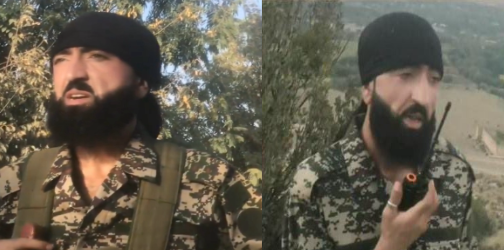
October 10, 2024, would be remembered in Parachinar as the day the blood dike completely broke. Irshad Hussain Turi the elder brother of Tehran Turi and one of the absolute founding members of the brigade was traveling in a soft-skinned civilian passenger van along the main highway. Irshad was a legendary figure among the fighters; they called him "Qalandar" (The Ascetic) because of his absolute refusal to collect worldly wealth, living in a small brick hut despite having access to millions in Iranian funding.
As the van slowed down near a remote bend, a joint ambush team from Sipah-e-Sahaba and Al-Badr opened fire from the ridges with heavy machine guns. The vehicle was turned into a sieve. Seventeen passengers including several women, young children, and "Qalandar" himself—were killed instantly.
The news of Qalandar’s death reached Parachinar within minutes. For the next five weeks, the Zainebiyoun network launched a scorched-earth retributive campaign against Sunni farming villages across the Kurram valley. Utilizing the very same heavy mortar tactics and coordinated infantry advances they had used against rebels in Aleppo, the veterans overran defensive lines, leaving more than 110 Sunni civilians dead by mid-November.
Seeking a dramatic, asymmetric act of revenge, a rogue faction of twenty-seven Sipah-e-Sahaba militants who had recently pledged formal allegiance to the Islamic State Khorasan Province (ISKP) orchestrated an operation of terrifying scale. On November 21, a massive Shia civilian convoy consisting of roughly 217 cars, pickup trucks, and buses was traveling under a fragile, nominal police escort from Parachinar toward the provincial capital of Peshawar.
The ISKP-linked hit squad intercepted the convoy on a completely isolated stretch of highway. Blocking the front and rear, the gunmen spent forty-three methodical minutes moving from vehicle to vehicle, firing through windows and executing passengers at point-blank range. When the dust cleared, thirty-eight men, five children, and eight women lay dead in the dirt.
The highway massacre pushed the Zainebiyoun network into an apocalyptic mindset. That night, hundreds of battle-hardened veterans gathered at the private compound of Tehran Turi in Parachinar to hold an emergency jirga (council). Standing before the mourning assembly, Turi pulled out a Quran and swore an oath of total, unmitigated retaliation.
Over the next twelve days, the Zainebiyoun launched an all-out tactical incursion into Sunni-dominated villages across both Upper and Lower Kurram. They used regular military-grade weaponry including RPGs and anti-tank missiles smuggled across the border to flatten opposition. By December 3, 2024, the offensive had claimed the lives of 137 people, the vast majority of them Sunnis. In addition, Zainebiyoun demolition teams systematically razed 319 Sunni-owned shops and 148 residential homes to the ground, effectively altering the demographic layout of the immediate district.
Sovereign Entrenchment in the Present Day
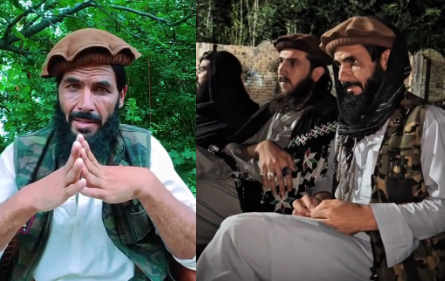
Following a fragile, desperate ceasefire brokered by the federal government in Islamabad, Tehran Turi called a mandatory assembly of every single Zainebiyoun veteran remaining on Pakistani soil. Standing before his men, Turi made an announcement that effectively severed their relationship with the Pakistani state forever. He declared that their historical deployment to Syria was over; their primary theological and military mandate was no longer the defense of Damascus, but the permanent, armed territorial defense of the Shia population of Kurram against both Sunni extremists and the state apparatus that housed them.
Turi ordered his three thousand veterans to dug in permanently. Parachinar was designated the central command headquarters of a sovereign, armed enclave. The brigade established formal checkpoints, constructed fortified concrete bunkers along the ridges, and began exerting total de facto territorial control over the district.
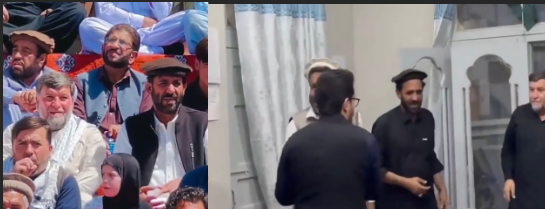
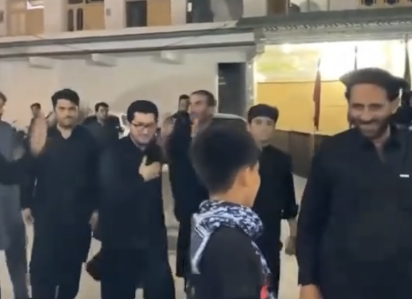
The state’s attempts to break this mini-state have ended in absolute disaster. On August 13, 2025, the Khyber Pakhtunkhwa Police, backed by specialized paramilitary assets, attempted a massive, midnight tactical raid on a compound in Parachinar where intelligence reported Turi was sleeping. The operation leaked. The police units walked straight into a multi-layered ambush prepared by Zainebiyoun veterans using night-vision equipment and suppressed weapons. Turi escaped the dragnet without a scratch; six police officers, including Station House Officer Qaiser Hussain, were killed in the firefight, their bodies left on the gravel road.
As of June 2026, Abid Hussain Turi continues to operate completely in the open out of his Parachinar stronghold. He directly commands a highly disciplined, heavily armed force of roughly two thousand veterans spread strategically across the hills of Upper and Lower Kurram. Despite the official government ban and constant intelligence surveillance, the financial pipeline from Iran remains completely unbroken. The IRGC Quds Force has recently adjusted for inflation, pumping an estimated $1,500 per month directly to each active fighter within the network.
Fourteen years after a nineteen-year-old Pakistani kid took a trip to a hotel in Qom, Qasem Soleimani’s long-term geopolitical experiment has achieved total realization. The volunteers who once learned to drive tanks in the deserts of Syria have successfully imported that expertise back to their native soil. They have built a permanent, battle-hardened, and foreign-funded strategic footprint deep inside the borders of Pakistan and the hills of Kurram remain locked in a permanent state of siege.
Editorial Note:
This article reflects the views, analysis, and conclusions of the author and is published in the interest of informing public debate on regional security, sectarian conflict, and geopolitical developments.
The article contains allegations, historical accounts, casualty figures, and descriptions of activities attributed to various state and non-state actors. While the author states that the information is derived from research, interviews, and sources familiar with the subject matter, some claims may not have been independently verified by the publisher.
Publication of this article does not constitute endorsement of every factual assertion contained herein. Readers are encouraged to consult additional sources and perspectives when evaluating the issues discussed.
The publisher remains committed to the principles of free expression, open debate, and rigorous examination of matters of public interest.

Reader comments
Subscribers can join the conversationSign in to join the conversation. Comments are open to everyone with a free account.
Sign in or create accountLoading comments…