
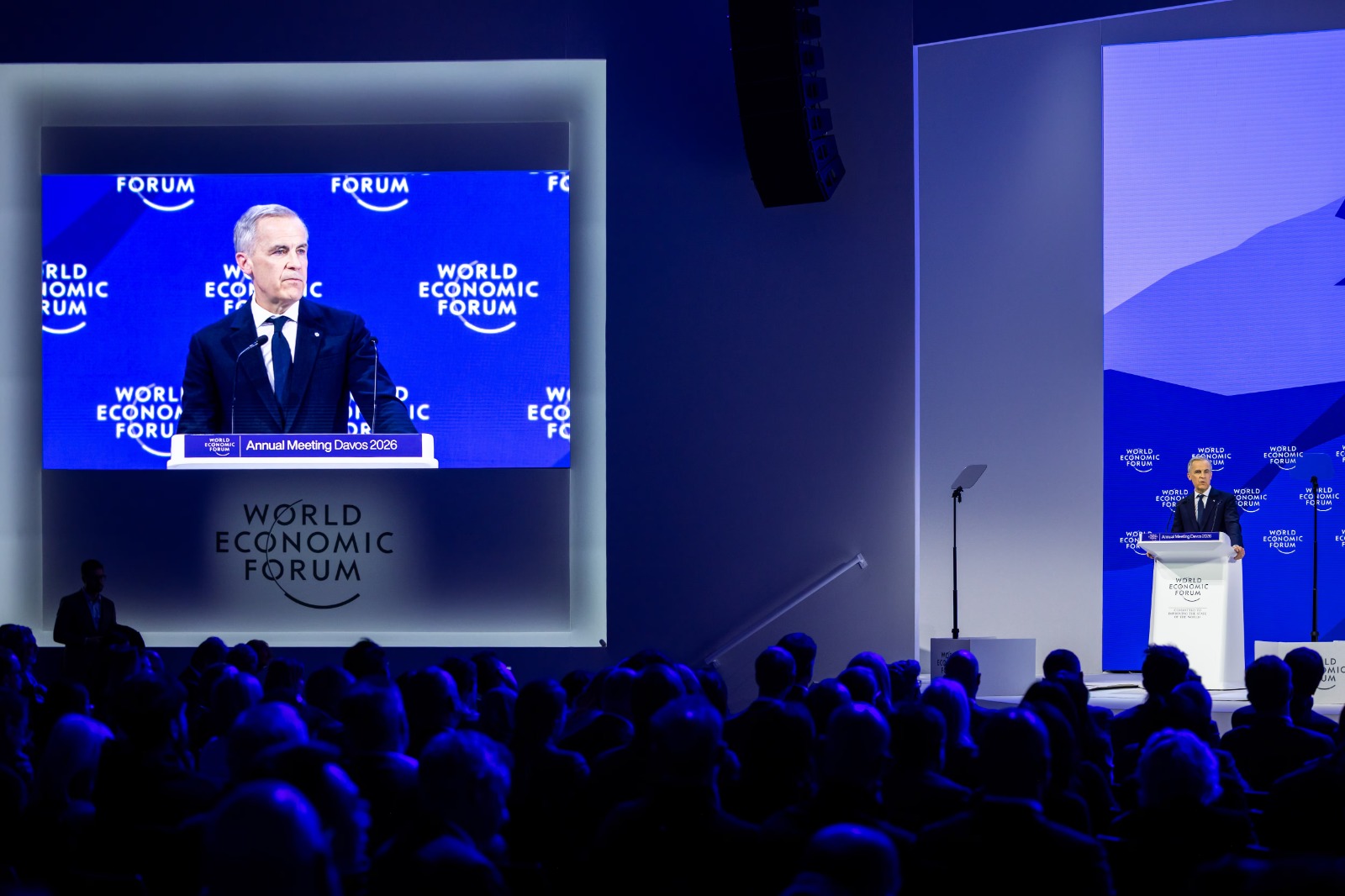
There are very few speeches that can be treated as fulcrum moments in history, those which are used to mark the end or beginning of an era. US President Reagan’s “tear down this wall”, heralding the beginning of the end of the Cold War, British Prime Minister Harold Macmillan’s “Wind of Change” doing the same for the British Empire, or Xi Jinping’s 19th Party Congress declaring a much more assertive strategic vision for the PRC.
I am, hesitantly, tempted to propose Canadian Prime Minister Mark Carney’s “Middle Powers” address at Davos this year for addition to this august assemblage.
His words (which received a standing ovation, rare praise from a usually reserved crowd) contended that Europe and other middle powers (for ease, I shall say Europe from here, but include Canada) could no longer rely on the old, comfortable assertions that had underpinned Western security and prosperity for decades.
Look at the context here. Under President Trump, the US has been increasingly imperialistic towards its Canadian neighbours (imperialist is a loaded word, but let’s call a duck a duck). Trump has repeatedly demanded that Canada cede to its demands, going so far as calling for its annexation and publicly referring to Carney as ‘governor’. This rhetoric has been coupled with hard power: 25% tariffs on certain goods, additional tariffs on steel and aluminium, and threats of even more tariffs if Canada pursued trade agreements with China.
Couple this with the Trump administration’s contempt for Europe. Months earlier, European troops had been deployed to Greenland after Trump repeatedly refused to rule out military force in an attempt to annex the Danish territory. Those troops were in token numbers (bar the Danish army) but the message was clear: if you want it, you’ll have to shoot your allies. More imperialism or, to use another loaded term: betrayal.
Trump’s words and actions have upended what was accepted by Europeans as the security order. By and large, Europe’s armies were small, designed to supplement each other and US forces in expeditionary coalitions abroad. The only exceptions to this were Eastern or Northern European nations close to Russia. They know who their neighbours are.
The US protected Europe, Europe hosted US troops and supported US operations around the world. It also ensured that Europeans didn’t go back to their age-old tradition of killing each other on an industrial scale, events which drew in the US and made them stay. Carney heralded a recognition that this arrangement is done.
Opening his speech, he said: “Tonight, I’ll talk about a rupture in the world order, the end of a pleasant fiction, and the beginning of a harsh reality where geopolitics – where the large, main power – is submitted to no limits, no constraints.”
Later he added: “A country that can't feed itself, fuel itself or defend itself, has few options. When the rules no longer protect you, you must protect yourself.”
Europe has, in many respects, embraced the strategic logic he articulated. Over the past six months, the continent has begun the most ambitious rearmament and industrial mobilisation programme since the end of the Cold War. It has been structured so that most of that money stays in Europe.
This is good for the continent, and rather bad for the United States.
It’s ironic. For years Washington has urged Europe to spend more on defence. Europe is now doing so but, increasingly, the money spent will not be going to the US. Europe has structured its programmes to support strategic autonomy. They have taken Carney’s words to heart and, recognising that the US partnership is now critically uncertain, are doing it themselves.
This is being done through two central vectors: ReArm Europe and Security Action for Europe (SAFE).
From the European Parliament, ReArm Europe (aka Readiness 2030) was presented by President von der Leyen in March 2025. It sets out the framework for European rearmament. Member states are officially encouraged to activate the Stability and Growth Pact’s national escape clause. This allows for further flexibility in the budget for defence spending. The EU has strong budgetary rules to ensure economic responsibility. This loosens those and allows more defence spending. It’s hoped that around 600 billion Euros will be unlocked by 2030 through this method.
Under ReArm, the European Investment Bank will expand its lending scope to include defence projects, European nations are encouraged to engage in more joint defence projects, and private capital, such as EU defence primes including BAE, Saab and Rheinmetall, as well as start-ups, are encouraged to grow using the Savings and Investments Union strategy.
SAFE makes up one of the key arms of ReArm. The guiding principles, as outlined in the Readiness 2030 factsheet, make the objectives clear: “Buy More, Buy Better, Buy Together, Buy European”.
The plan aims to raise up to 150 billion Euros on capital markets, with backing from the EU budget. Any SAFE project will have to involve at least two member states or one member state and Ukraine or a European Free Trade Area nation. Procurement is to buy from these nations and, vitally, procured products must have at least 65% domestic content from these countries. This is an enormous sea change in European defence procurement.
To contrast, in 2022–2023, 78% of EU defence procurement was placed outside the EU, of which 63% went to the US. This was all fine and dandy whilst the US was still the arsenal of democracy. It’s alright to lock into US supply chains, software updates, hardware maintenance, training and logistics. However, this new US, one that was willing to rug-pull vital intelligence support and military aid from Ukraine, is not one that any sensible nation would want to be beholden to for their defence.
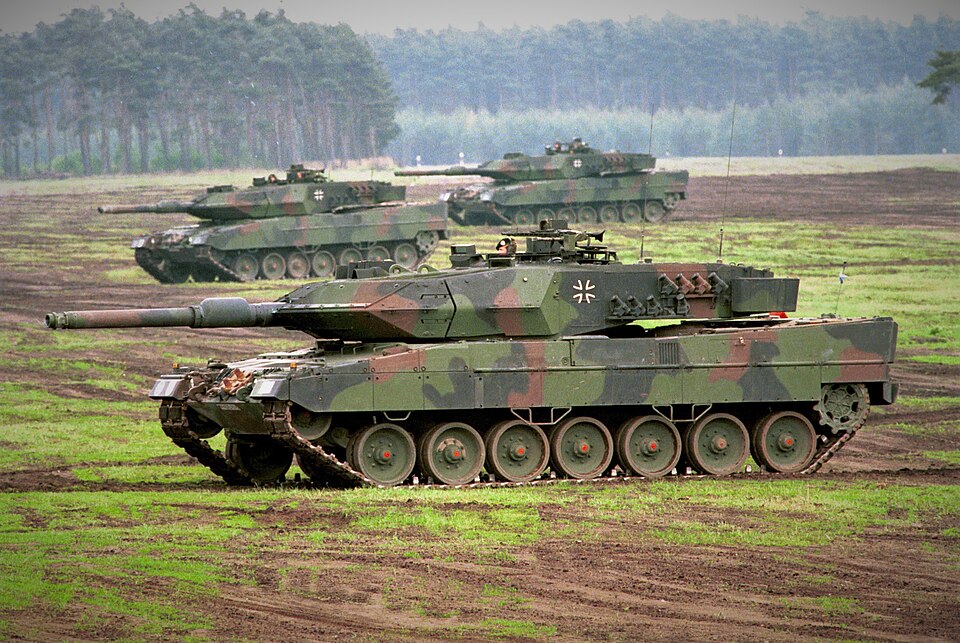
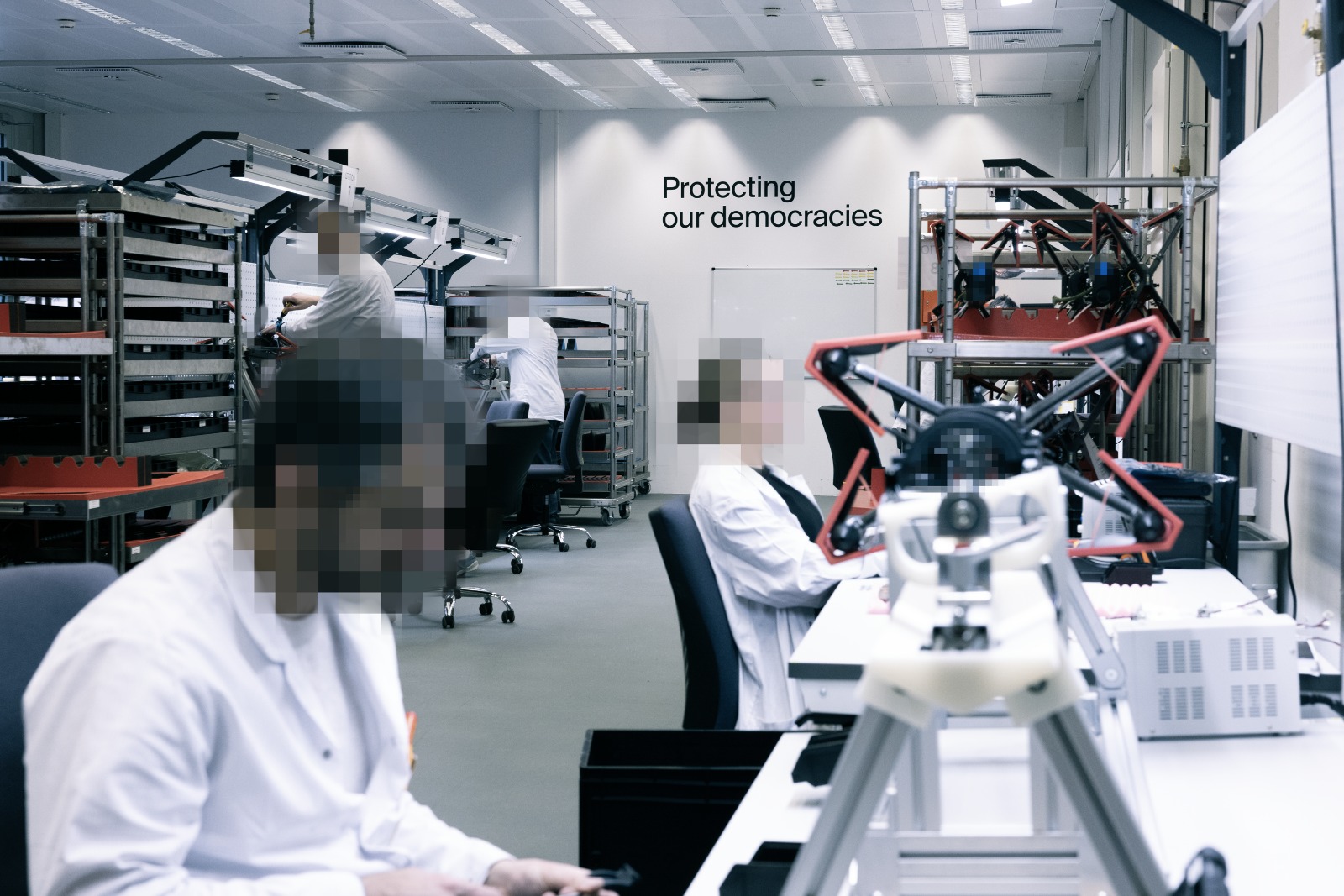
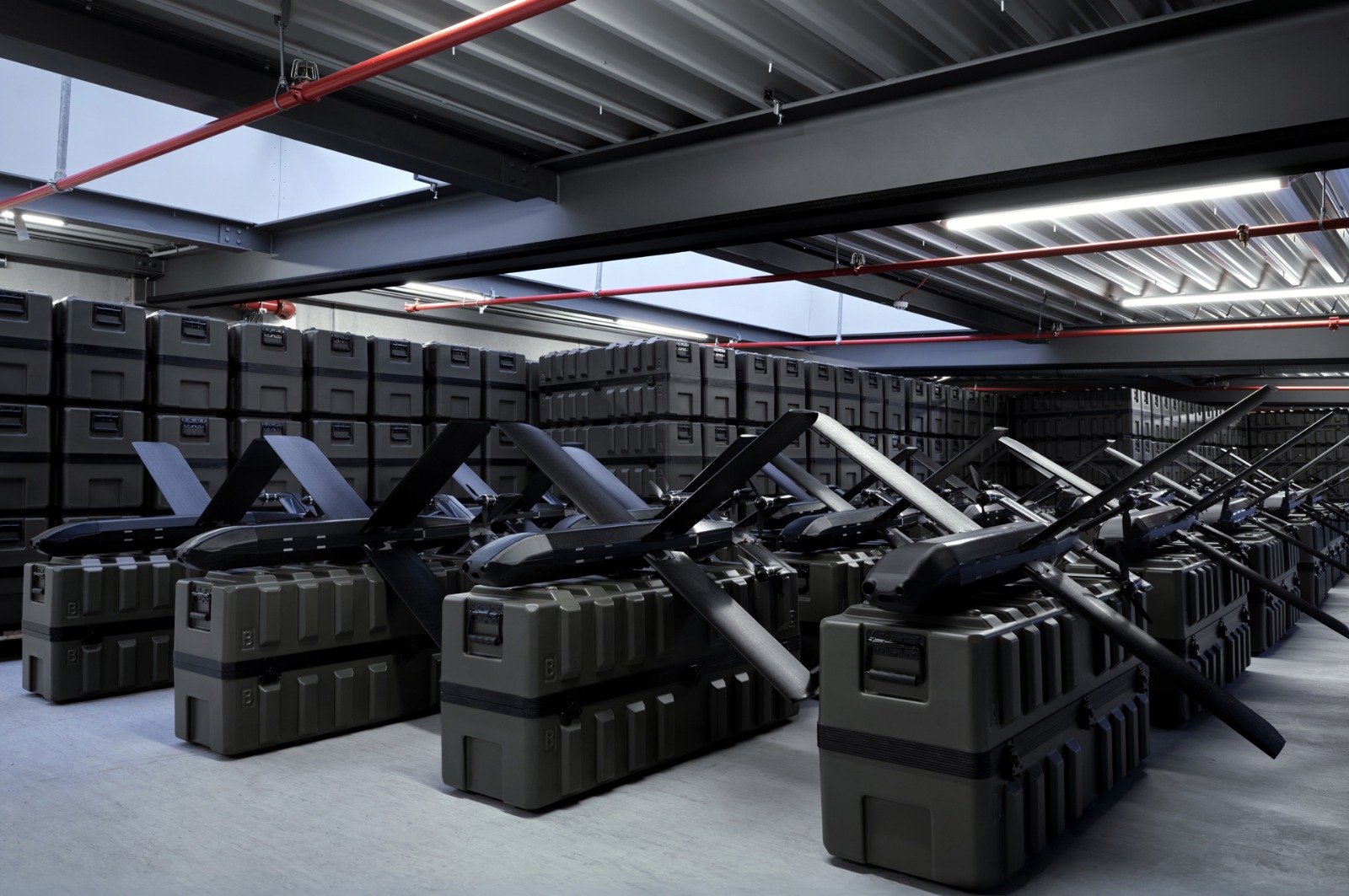
Now, Rheinmetall produces 1.1 million 155mm shells annually, up from 70,000 in 2022, with a goal of 1.5 million by 2027. The new Unterlüß ammunition complex alone went from 25,000 shells during commissioning to 140,000 in 2026. They are also increasing production of the Leopard 2 tank while KNDS expands production of the Caesar artillery system and Boxer MRAV. New drone manufacturers such as Quantum Systems and Helsing have been founded and expanded rapidly, drawing on lessons from Ukraine. Britain, long lagging, has announced a new focus on unmanned systems in 2026, allocating £5 billion for them, including large unmanned surface warfare vessels and submarines.
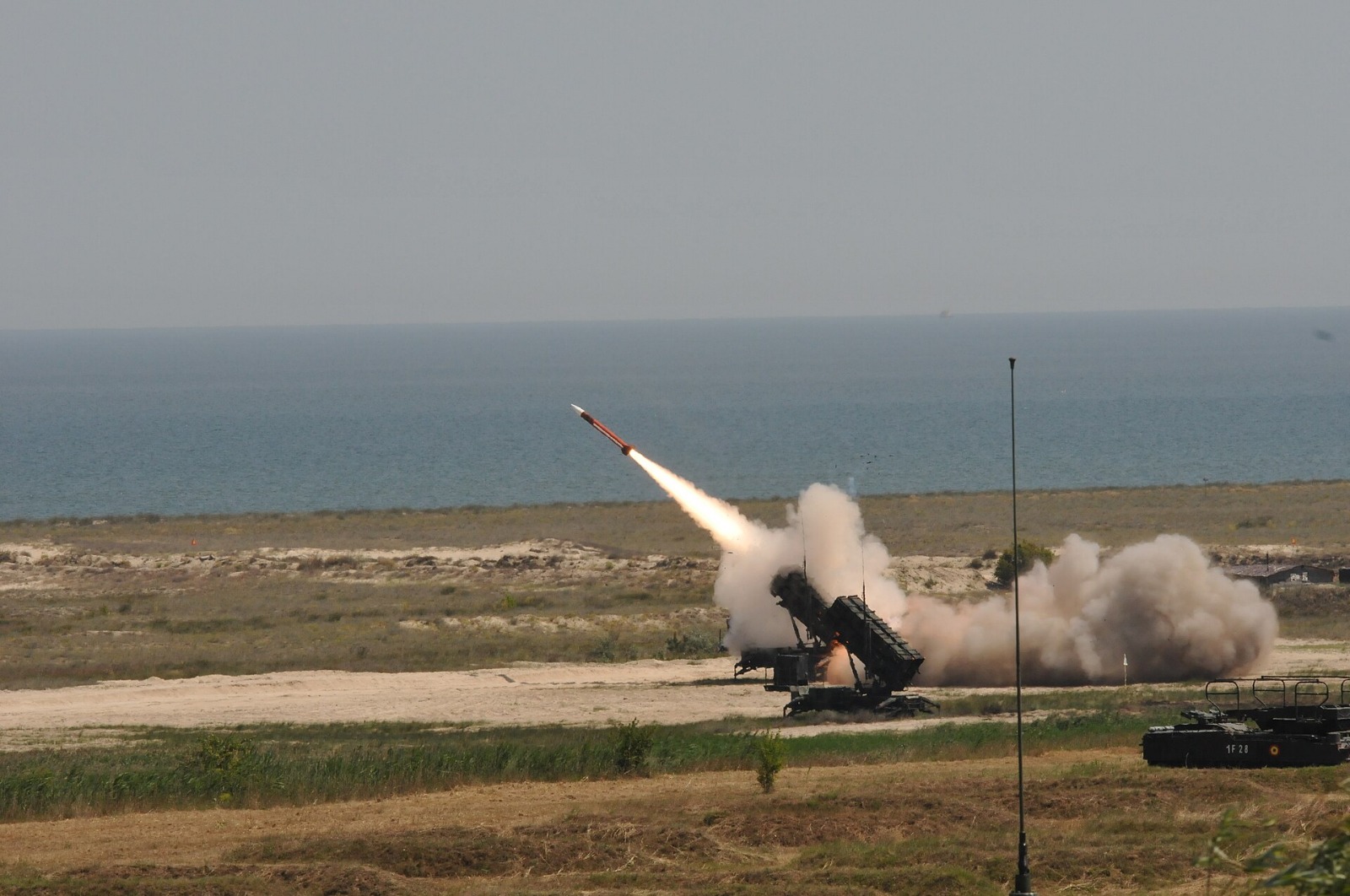
This kind of spending should be the dearest fever dream of US defence companies such as Lockheed Martin and Boeing, but it’s not. Where European arms used to automatically translate to American order books and jobs, this shift is changing. It won’t be immediate. Europe will still buy F-35s, HIMARS and Patriots, to name but a few, but it is beginning. Europe has the technical capacity, if managed right, to do this.
For the US defence industry, this represents a significant strategic challenge. Brussels now regards strategic autonomy as a priority and US defence primes will miss out. Washington has already complained in a feedback memo to the EU on 13 February 2026. It states:
“The United States fully supports European rearmament and a revitalization of the European defense industrial base. However, these efforts must not weaken the transatlantic defense industrial base, jeopardize our collective ability to deliver equipment to our warfighters, or pose risks to shared economic benefits. As such, the United States strongly opposes any changes to the Directive that would limit U.S. industry's ability to support or otherwise participate in EU member state national defense procurements.”
They go further, threatening reciprocal measures if the EU does not back down, threatening to “review existing blanket waivers and exceptions under Reciprocal Defense Procurement Agreements (RDPAs)”.
In practice, this is an Uno Reverse Card, making it more difficult for EU defence primes to bid for some US contracts.
None of this is immediate and the EU still buys significant material from the US. Speaking to the Financial Times ahead of this year’s NATO summit, Secretary General Mark Rutte said: “There is a total order book now of $300bn outstanding of European and Canadian sales from the US over the next couple of years.”
He added that these supported nearly 200,000 American jobs.
There are significant questions over whether the EU’s plan will work. Stocks for EU defence primes rocketed in 2025 and have since cooled significantly over questions around how much of that SAFE and ReArm money would translate into actual orders.
The EU also has significant problems around productivity, political unity, over-regulation and weak investment into emergent technologies such as AI. However, these are known issues. They can be addressed, and Europe and other middle powers have all they need to do so if they have the will.
The irony here is that for years the US has lobbied the EU to increase defence spending. Now, as Europe is attempting to do precisely that, the Trump administration is lobbying against how they are doing it. The reason for that shift is precisely the aggressive, imperialistic actions of the Trump administration.
Previous US presidents have tried and failed to get the EU to spend more on defence. Trump has succeeded only by shattering the previously accepted relationship. I wonder if anything less would have worked?
What the costs will be remain unknown. There are a lot of ‘ifs’ here. However, if SAFE and ReArm work as intended then the EU’s defence industry may grow to rival that of the US, which may come at the cost of American businesses and jobs.
Historians may refer to Carney’s Davos speech as the moment that Europe woke from its post-Cold War stupor and put its boots on. If Europe becomes the new arsenal of democracy, Washington may find that the greatest consequence of its pressure campaign was not a stronger alliance, but a stronger competitor.


Reader comments
Subscribers can join the conversationSign in to join the conversation. Comments are open to everyone with a free account.
Sign in or create accountLoading comments…