
Forget the corporate suits, the billion-pound stadiums, and the heavily policed fan zones.
The defining image of this World Cup belongs to a lone rebel in red who weaponised total silence.
He didn’t need a roaring mob, a megaphone, or a sea of flag-waving protesters to shake the tournament to its absolute core.
He did it entirely on his own, standing frozen like a statue in a crowded stadium while the world watched in stunned disbelief.
As the match raged on around him, this single man in a sharp red outfit remained completely motionless for 90 gruelling minutes.
Then came the chilling climax that panicked FIFA executives and forced television directors to cut their cameras in a frantic rush.
He slowly covered his mouth with one hand and pointed a simulated gun to his head with the other.
It was a shattering, silent scream against global indifference, executed by one man with the courage to bring raw, unfiltered politics into the heart of the beautiful game.
This is the ultimate testament to the Power of One.
In an era where we assume change requires mass movements and viral algorithms, this lone figure proved that a single human body, standing in the right place with enough conviction, can puncture the multi-billion-dollar matrix of global sport.
But why did he do it?
What is the real story hiding behind those panicked TV cuts?
The true irony is that the geopolitical web connecting this crisis spans continents—stretching all the way to South Asia.
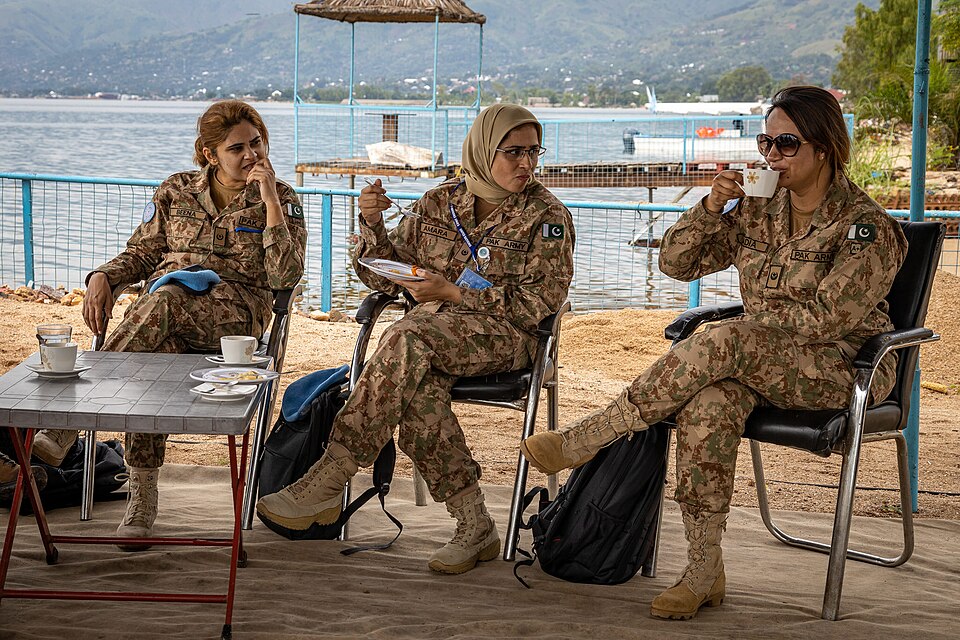
Our readers in Pakistan will instantly recognise the heavy cost of this conflict, because the UN deployment of Pakistani peacekeepers served for over two decades as the primary line of defence protecting millions of civilians in the bloodiest regions of South Kivu.
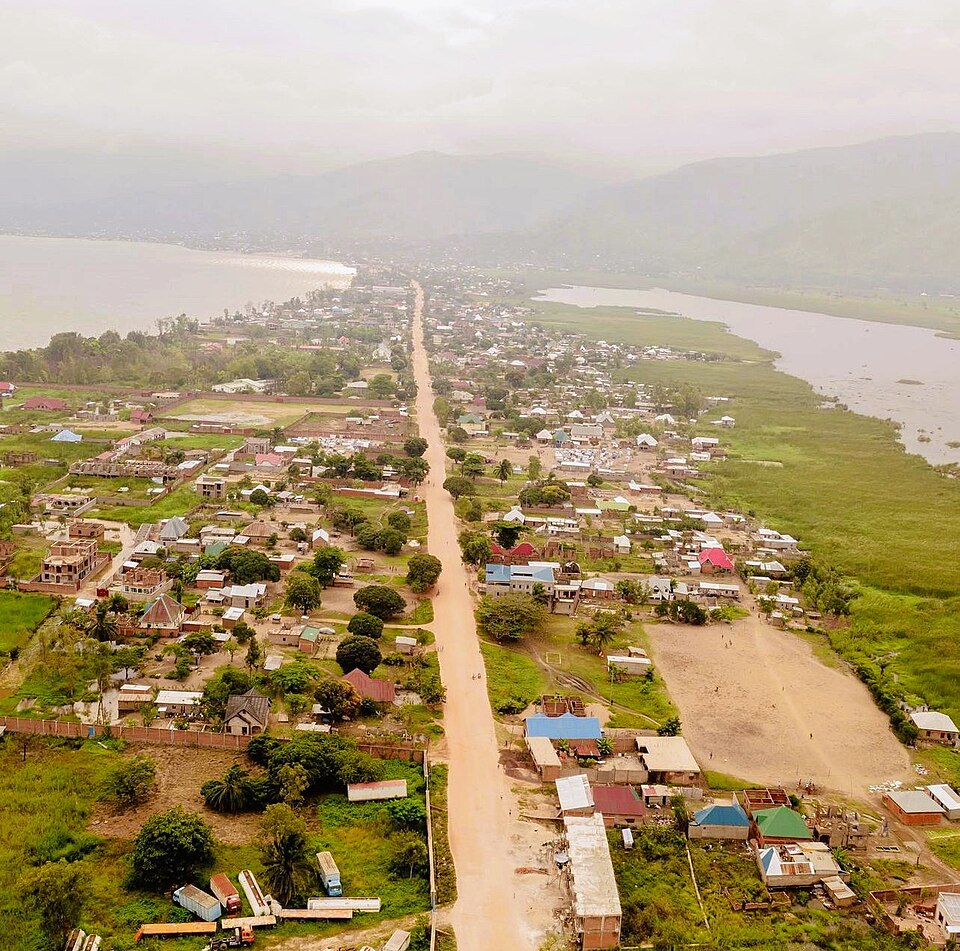
They didn’t just observe; they fought, bled, and sacrificed their lives in South Kivu province in the eastern part of the DRC bordered by Lake Kivu and countries including Rwanda, Burundi and Tanzania.
When Pakistani viewers saw the man in the red suit, they probably understood more than anyone else, the exact horror of his protest—the very tragedy that their own brave soldiers died trying to prevent.
They will remember men like Havaldar Babar Siddique, shot down at Minembwe while standing as a human shield against armed militants pretending to surrender.
They will remember the crew of the Pakistan Army Aviation unit—including Lieutenant Colonel Asif Ali Awan and Major Saad Nomani—who perished when their helicopter went down during a high-stakes reconnaissance mission over rebel territory.
They sacrificed everything trying to stand between vulnerable families and Western-funded militias.
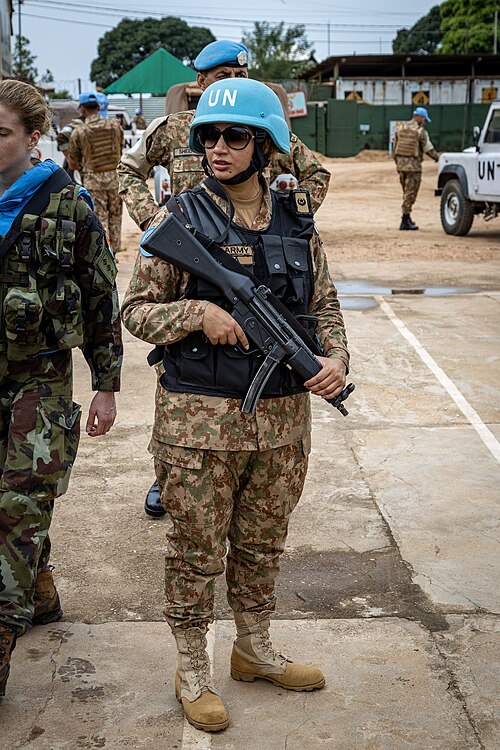
Yet, just as the corporate vultures accelerated their modern scramble for Congo's minerals, these international protectors were drawn down, leaving a massive security vacuum in their wake.
The global establishment chose to remove the shields, blindfold the world, and let the extraction continue uninterrupted.
Pull back the curtain on this tournament, and you find yourself staring directly into one of the worst, most devastating atrocities in human history.
The silent scream of super fan Michel Kuka Mboladinga—known as Lumumba Vea—was an indictment of a modern genocide.
In the eastern provinces of the Democratic Republic of Congo, a corporate-fuelled slaughter has been raging in the shadows.
Over six million people have been killed, and millions more displaced, in a landscape terrorised by massacres, systemic sexual violence used as a weapon of war, and the forced labour of children.
Horror is not an accident; it is an industry.
This bloodbath is funded and sustained by the global scramble for Congo’s mineral wealth—the coltan and cobalt that power our smartphones, laptops, and electric vehicles we, in the West, cannot live without.
The world looks away because to acknowledge the slaughter would mean disrupting supply chains that feed our modern lives.
The modern atrocities are a direct, unbroken continuation of the colonial greed that saw King Leopold II of Belgium slaughter millions, and the Western intelligence agencies assassinate Congo’s first independent leader, Patrice Lumumba, in 1961.
Against this backdrop of unimaginable trauma, the pitch itself became a theatre of pure defiance.
The mere presence of the DR Congo team at this World Cup is nothing short of a miracle.
The sheer resilience of the Congolese people is breathtaking.
While their homeland was ravaged by a devastating Ebola outbreak that crippled their training camps, and while rebel drones bombarded mining towns back home, their footballers fought through the chaos.
They stepped onto the grass at the Atlanta Stadium under immense pressure, carrying the grief, hope, and survival of millions on their jerseys.
Our man in red wasn't there to witness it—he couldn't be, having been aggressively denied entry to the United States just days prior.
But his absence only amplified the roar of the crowd.
On the pitch, the players delivered a breathtaking masterclass.
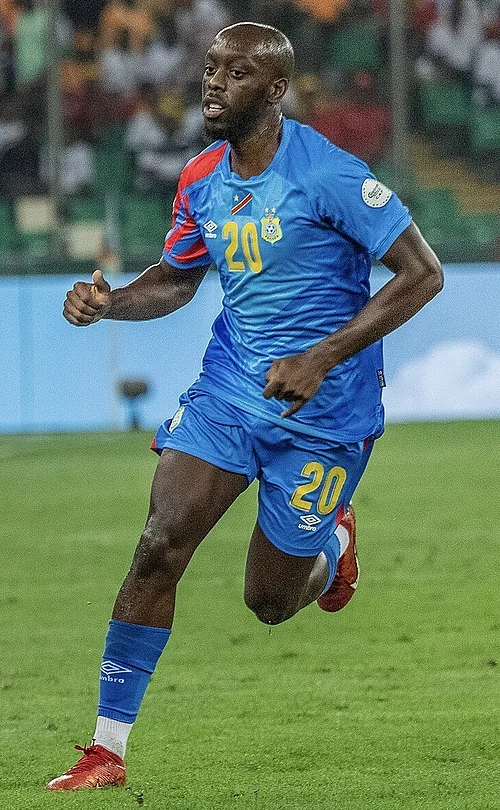
Against all odds, Yoane Wissa, who plays as a forward for Newcastle United Football Club, struck twice, securing a historic victory that sent the stadium into an absolute frenzy.
Every pass, tackle, and goal on that Atlanta turf was a middle finger to the forces trying to wipe their nation off the map.
And though Michel Kuka Mboladinga was barred from the stadium, his one-man protest had already done what global diplomacy failed to do for decades.
By mimicking a gun to his head while covering his mouth in Mexico, he had passed the torch.
Other fans in the Atlanta stands took up the mantle, ensuring that even though the American authorities stopped the man, they could not stop the movement.
This act of defiance was an existential threat to FIFA, a multi-billion-dollar corporate machine masquerading as a sports governing body.
FIFA’s business model relies entirely on sanitising the stadium, policing human expression, and masking blood-soaked geopolitical realities with a glossy coating of corporate sponsorships and slick marketing campaigns.
To FIFA, a fan is not a human being with a conscience; they are a walking barcode designed to consume.
When Mboladinga's substitute raised his hand, he shattered their carefully constructed illusion, proving that no amount of billionaire funding or broadcasting censorship can truly drown out the voice of human suffering.
The United States government may have rushed to ban him from entering the country for the match, and FIFA may have cut the feed, but they were too late ... the lone man in the red suit had already won.
He proved that the truth cannot be shadow-banned when someone has the courage to stand up and show it to the world.
FIFA can try to mute the microphones and turn off the cameras all they want, but they will never be able to delete the blood on their hands or the conscience of the beautiful game.
Reader comments
Subscribers can join the conversationSign in to join the conversation. Comments are open to everyone with a free account.
Sign in or create accountLoading comments…