
Pakistan has found a constitutional remedy for the persistence of its opposition: suspend the province in which it governs. On October 11, President Asif Ali Zardari approved emergency measures in Khyber Pakhtunkhwa, stripping the elected administration led by Imran Khan’s Pakistan Tehreek-e-Insaf of its powers. The official justification was the provincial government’s failure to combat terrorism. The immediate political context was the ongoing Long March demanding Khan’s release. Islamabad has responded to a movement challenging the federal government by taking away the government from which that movement draws its principal institutional strength.
The distinction matters. Khyber Pakhtunkhwa’s security crisis is real, and its inhabitants have considerably more experience of the Pakistani Taliban than the politicians explaining their predicament from Islamabad. But the existence of terrorism does not establish that suspending an elected administration will defeat it. That requires an explanation of what the takeover will change in intelligence, policing, border security and military strategy. Its usefulness against the PTI needs rather less elaboration.
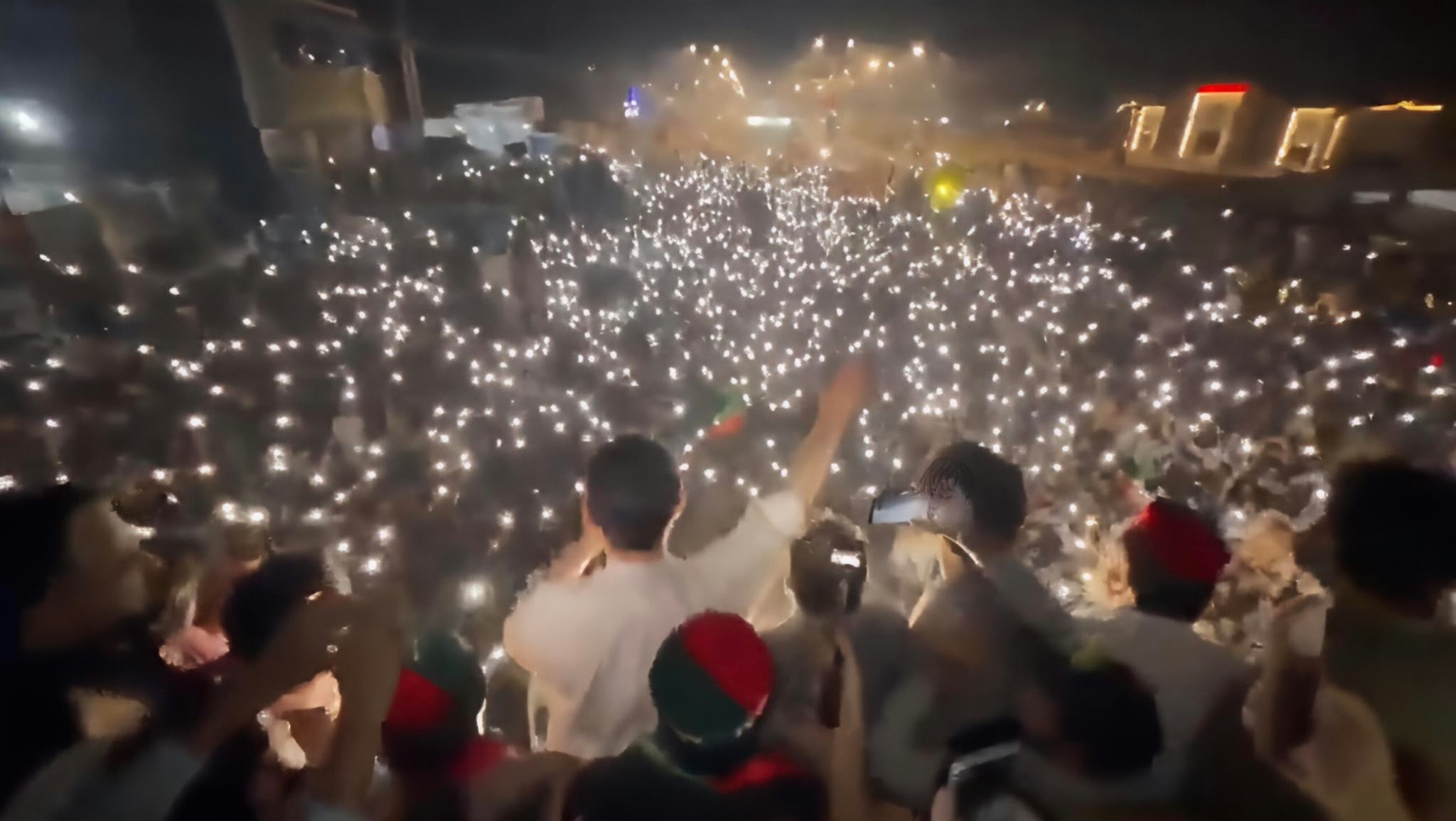
The Long March is therefore central to understanding the emergency. Launched on October 4 after an earlier postponement, the campaign has moved through the province under Chief Minister Sohail Afridi’s leadership, sustaining mobilisation ahead of the push towards Islamabad. Its demands concern Khan’s release, his treatment in detention and what the party describes as the restoration of constitutional supremacy. The government has treated that mobilisation as a confrontation to be contained, while presenting the provincial leadership’s disagreements over counterterrorism as evidence that it cannot be trusted to govern.
Those two disputes have increasingly been made interchangeable. Political defiance becomes refusal to cooperate on security; refusal to cooperate becomes administrative failure; administrative failure supplies the constitutional justification for removing the elected government. By the end of the process, a march demanding the release of a prisoner has become part of the explanation for why an entire province requires exceptional rule.
The connection was visible well before Sunday’s decision. Earlier reporting described the Centre’s temporary reluctance to impose emergency measures as an opportunity for the PTI to reconsider its march. Improved access to Khan, consideration of medical treatment and meetings with relatives and lawyers were discussed as matters that could be facilitated if the party de-escalated. These were accounts based on government sources rather than a formal agreement, but the political logic was clear enough.
Basic conditions of detention and the survival of a provincial administration had entered the same negotiation. Apparently, both could become more manageable if fewer people intended to visit Islamabad.
The constitutional language does not erase that bargain. The government invoked Articles 232 and 234, provisions addressing a grave emergency and the failure of constitutional government in a province. These are substantial thresholds, not alternative descriptions of an inconvenient chief minister. Militancy may demonstrate a serious security problem. It does not automatically demonstrate that government under the Constitution has become impossible. Nor does disagreement with the Centre establish that a provincial administration has forfeited its electorate’s mandate.
What makes the intervention particularly significant, however, is that it fits a wider direction of travel. Asim Munir's proposals for new provinces are a possible means of weakening the federation’s remaining centres of autonomous political power. There are legitimate arguments for administrative reorganisation. But multiplying provinces can also produce smaller, more dependent units, less able to bargain over resources or resist decisions made at the Centre.
The emergency in Khyber Pakhtunkhwa approaches the same problem through a different instrument. Territorial reorganisation could fragment provincial power over time. Governor’s rule can neutralise it immediately. One redraws the institution; the other takes away its authority. Both can leave the vocabulary of federalism intact while reducing the capacity of a province to act independently.
This does not establish that Sunday’s decision is a formally documented stage of a single master plan. It does make the takeover intelligible as another possible step in Munir’s project of centralising power: eliminating institutions capable of converting a popular mandate into resistance to the military-backed order. The relevant question is not whether the emergency proclamation bears the field marshal’s signature. It is whether the arrangement strengthens the system over which he presides.
Khyber Pakhtunkhwa demonstrates why provincial autonomy remains troublesome to that system. Khan is imprisoned, yet his party can still govern a province, organise a sustained political campaign and challenge Islamabad from an elected institutional base. A provincial government gives opposition something more durable than a rally: administrative authority, political continuity and a territorial centre around which supporters can mobilise. The Long March has made that residual power visible. The emergency seeks to make it unavailable.
The civilian parties authorising the intervention may calculate that they are simply depriving a rival of his strongest position. But the precedent extends beyond the PTI. If the Centre can remove a provincial government by combining security allegations with political non-compliance, provincial autonomy becomes conditional on satisfactory behaviour. The same logic can be applied wherever an elected administration resists federal priorities. Parties with provincial strongholds are helping construct an instrument whose usefulness will not necessarily expire when it has finished with Khan.
None of this requires rehabilitating the PTI’s own record. Khan’s enthusiasm for the Taliban’s return to Kabul and his faith in accommodation with militant actors belong inside Pakistan’s strategic failure. They cannot be edited out because his party is now being targeted. But neither can a crisis involving Afghan sanctuaries, militant networks and national security decisions be reassigned entirely to the government in Peshawar.
Provincial policing is one component of that crisis. It is not the author of every policy that helped produce it. The takeover offers a convenient distribution of responsibility. The elected provincial administration can be blamed for insecurity, while the institutions directing the wider security response acquire additional power to solve it. Their previous failures become an argument for removing somebody else.
There is an admirable economy to the arrangement: authority travels upwards, accountability stays behind. For the people of Khyber Pakhtunkhwa, the danger is that a genuine need for protection is being used to narrow the space in which they can demand it.
Counterterrorism requires public cooperation and confidence that the state distinguishes armed violence from political dissent. An intervention understood as punishment for supporting the wrong party risks deepening the distrust on which militant organisations already feed. Removing elected intermediaries may make federal instructions easier to transmit. It does not necessarily make the population more willing to accept them.
The emergency must therefore be judged by what it delivers beyond the disruption of the Long March. If it is a security intervention, the authorities should be able to explain its operational purpose, demonstrate results and define the conditions for restoring elected government. If its principal achievement is to prevent the PTI from exercising provincial power, the constitutional terminology will have served a different purpose.
The proposals for new provinces raised the possibility of a Pakistan reorganised so that no provincial government would be strong enough to challenge the Centre. Khyber Pakhtunkhwa now suggests that the map need not change for that process to advance. A province can remain geographically intact while its political autonomy is suspended.
Munir’s centralisation project may eventually acquire new boundaries. For the moment, it has acquired another precedent: when an elected province becomes the base of a national challenge, the Centre can declare the province itself part of the emergency.

Reader comments
Subscribers can join the conversationSign in to join the conversation. Comments are open to everyone with a free account.
Sign in or create accountLoading comments…