
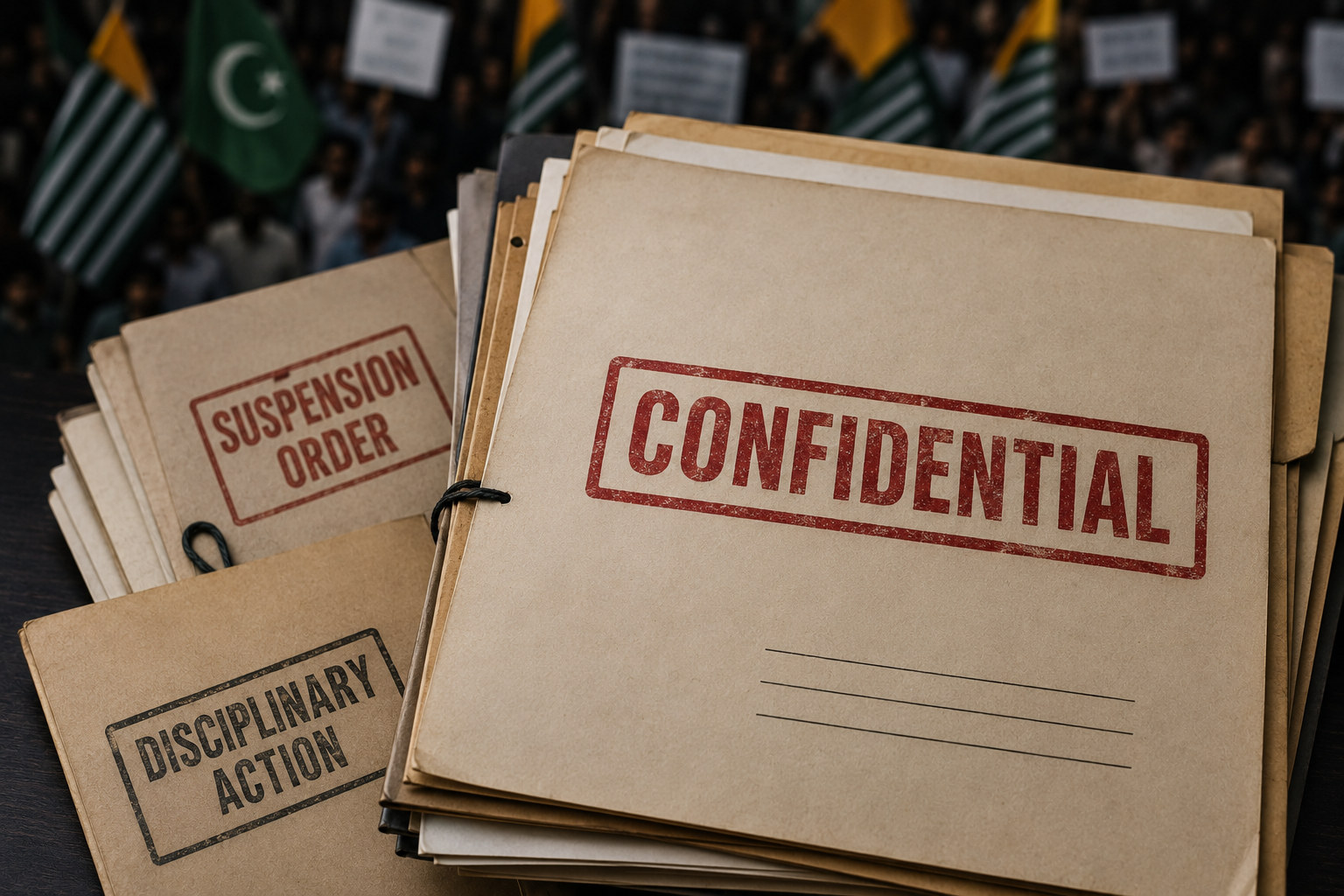
A series of leaked official documents from Azad Jammu & Kashmir (AJK), obtained and examined by Parrhesia News, raises significant questions about the extent of institutional resistance surrounding the Jammu & Kashmir Joint Awami Action Committee (JAAC) movement.
For months, the official narrative has portrayed the JAAC protests as a law-and-order challenge that was successfully contained. However, the documents reviewed by this publication suggest a more complicated picture—one involving disciplinary action, suspensions, and alleged refusals by some military and law enforcement personnel to participate in operations connected with the protests.
A Growing Crisis in AJK
The JAAC movement has evolved into one of the most significant civil movements witnessed in Pakistan-administered Kashmir in recent years. Originally centred on economic grievances, the movement rapidly expanded into a broader campaign demanding political accountability and constitutional rights.
As protests spread across multiple districts, authorities launched a coordinated administrative and security response.
The newly surfaced documents indicate that this response may also have generated internal tensions.
What the Documents Show
The document bundle includes: • official correspondence addressed to senior district officials;
• suspension and disciplinary orders issued by AJK government departments;
• lists identifying officials and employees of Pakistan Army allegedly connected with the JAAC movement; and
• administrative directions concerning participation in, or responses to, the protests.
Sample document from the bundle is attached below:
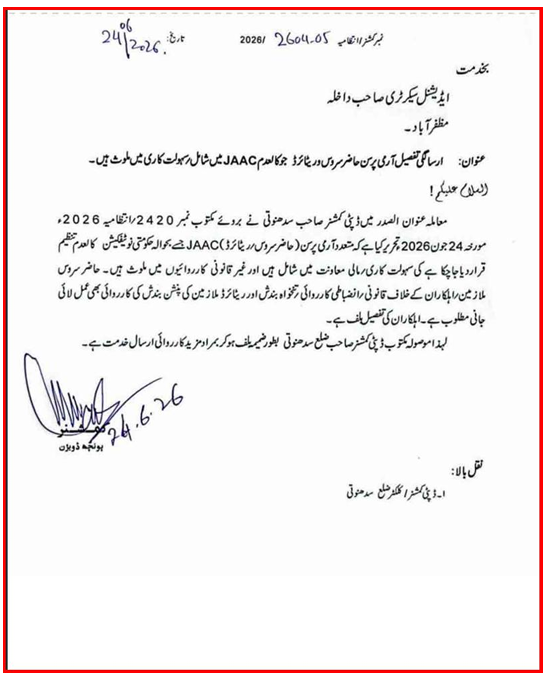
Several documents appear to reference disciplinary measures taken against government employees and Pakistan Army officials in connection with the protests, while others contain extensive lists of names and administrative actions.
Beyond Civil Administration
What makes these documents particularly noteworthy is not merely the disciplinary process itself.
The wider question they raise is whether the authorities encountered resistance within institutions tasked with implementing government policy.
If officials or security personnel declined to carry out certain orders—or expressed opposition to actions against demonstrators—that would represent an important development in understanding how the AJK crisis unfolded.
The documents do not independently establish the full extent of any such resistance. However, they provide evidence that administrative action was taken against individuals allegedly linked to the movement or accused of refusing official directives.
A Challenge to the Official Narrative
For decades, Pakistan's security establishment has projected an image of strict institutional cohesion.
Political crises have generally been presented as external challenges rather than issues capable of generating internal disagreement.
These documents invite scrutiny of that narrative.
If verified in full, they suggest that the AJK unrest may have placed unusual pressure on the institutions responsible for maintaining order.
Why This Matters
The significance of these documents extends well beyond AJK.
Civil protest movements become strategically important when they begin affecting the morale, discipline, or decision-making of state institutions.
History shows that governments are generally able to withstand public demonstrations. They face much greater difficulty when divisions emerge within the institutions responsible for enforcing state authority.
Whether the developments reflected in these documents represent isolated disciplinary cases or evidence of broader institutional disagreement remains an open question requiring further independent verification.
The Need for Transparency
The public interest demands answers.
The Government of Azad Jammu & Kashmir and the relevant Pakistani authorities should clarify:
• the authenticity of the leaked documents;
• the reasons disciplinary proceedings were initiated;
• whether any personnel refused operational instructions relating to the JAAC protests; and
• whether investigations remain ongoing.
Transparency would help distinguish verified facts from speculation.
Conclusion
These leaked documents do not, by themselves, conclusively establish a military mutiny. They do, however, raise serious questions about internal dissent, institutional discipline, and the state's response to one of the most significant protest movements in recent AJK history.
As further evidence emerges, these developments deserve careful public scrutiny rather than dismissal.
At Parrhesia News, we will continue examining the documentary record and reporting additional findings as they become available.


Reader comments
Subscribers can join the conversationSign in to join the conversation. Comments are open to everyone with a free account.
Sign in or create accountLoading comments…