

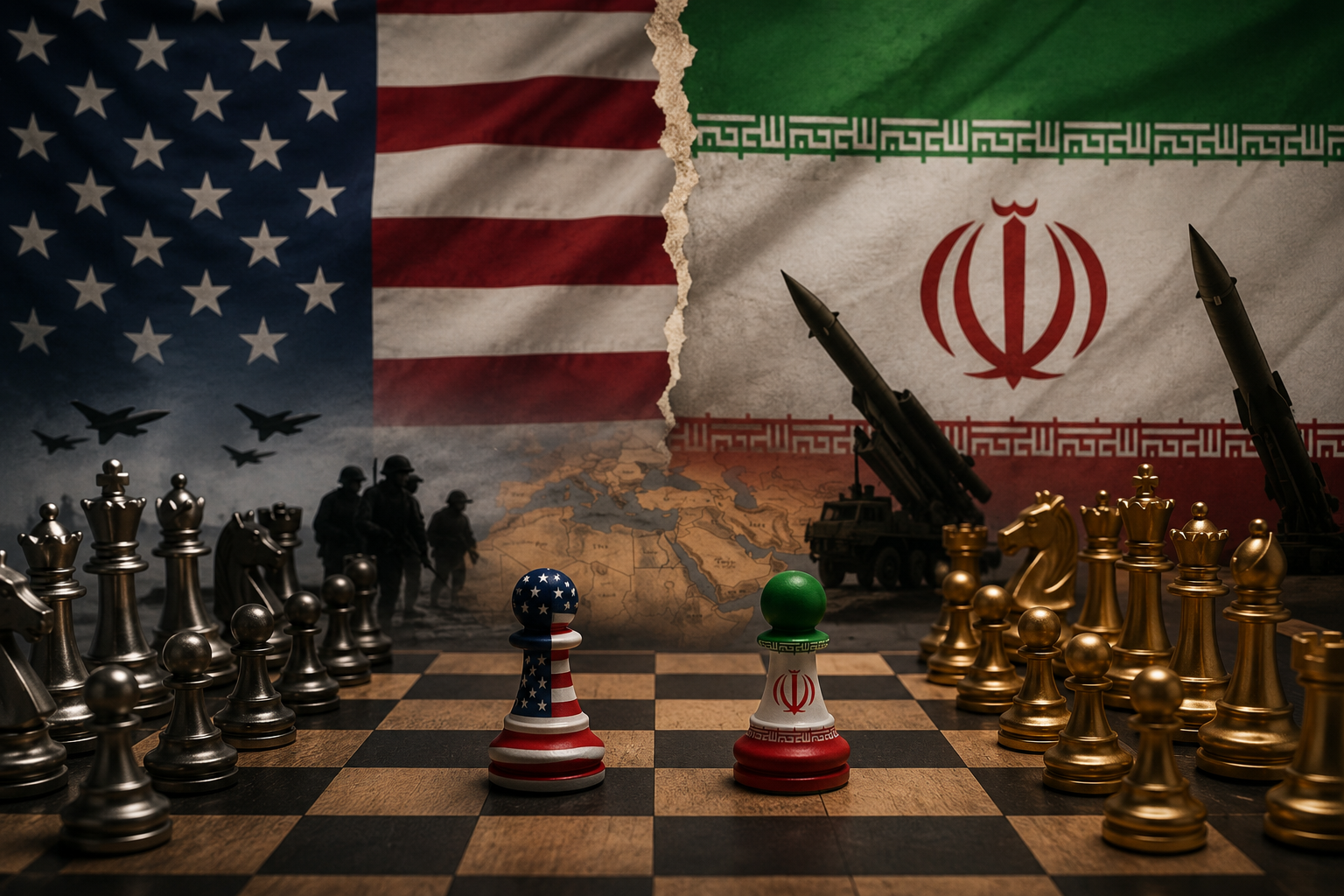
Recent events have exposed both the strengths and limitations of American power. While Washington retains the ability to inflict devastating military and economic damage, the prospect of forcing political surrender or engineering regime change in Tehran appears far less certain.
This distinction lies at the heart of the current crisis. The question is no longer whether the United States can strike Iran. It clearly can.
The more important question is whether military superiority can translate into strategic control of a nation that has spent decades preparing to resist external pressure.
The Limits of Military Dominance
Throughout history, the United States has demonstrated unmatched conventional military capabilities. From precision air power and long-range missiles to global intelligence networks and regional military alliances, Washington possesses tools that few nations can rival. Yet history also demonstrates that battlefield success does not automatically produce political victory. The wars in Iraq and Afghanistan illustrated the difficulty of converting military dominance into long-term political control. Despite rapid battlefield successes, both conflicts evolved into prolonged struggles that challenged America's ability to shape political outcomes.
Iran presents an even more complex challenge. With a population exceeding 90 million, deeply rooted state institutions, extensive regional networks, and decades of experience operating under sanctions and external pressure, Iran is not a fragile state easily susceptible to external coercion.
The Islamic Republic has spent years developing asymmetric military capabilities, regional alliances, and strategic deterrence designed specifically to complicate any foreign intervention.
This does not make Iran invulnerable. It does, however, make it difficult to conquer politically.
Why Iran Views the Conflict Differently
To understand Iran's resilience, one must understand its historical memory. Modern Iranian political identity has been shaped by a long struggle over sovereignty, foreign influence, and control of national resources.
The 1953 overthrow of Prime Minister Mohammad Mossadegh remains a defining moment in Iranian consciousness. Widely associated with British and American intervention, the coup reinforced perceptions that foreign powers sought to determine Iran's political future. The subsequent rule of Mohammad Reza Shah Pahlavi, backed by Western governments, deepened those sentiments. While the Shah pursued modernization policies, his government also became associated with political repression and dependence on foreign support.
The 1979 Islamic Revolution emerged from this historical context. It represented not only a domestic political transformation but also a rejection of what many Iranians viewed as decades of foreign interference. This history continues to shape how Iran responds to external pressure today. For many Iranians, resistance is not simply a policy choice.
It is closely linked to national identity and sovereignty.
Beyond Missiles and Airstrikes
Modern conflict extends far beyond conventional warfare. Military operations are only one component of a broader struggle involving economics, diplomacy, information campaigns, intelligence operations, and regional influence. The confrontation between Washington and Tehran reflects this reality. Sanctions, diplomatic isolation, media narratives, covert operations, cyber capabilities, and proxy conflicts have all become central features of twenty-first century geopolitics.
The battlefield is no longer confined to physical territory. It now encompasses financial systems, public opinion, energy markets, international institutions, and regional alliances. This broader context helps explain why military action alone rarely produces decisive outcomes. Victory in modern conflicts often depends on endurance as much as firepower.
The Regional Dimension
The conflict cannot be understood solely as a bilateral dispute between Washington and Tehran. Israel, Gulf states, regional militias, and major international powers all have interests in the outcome. The strategic rivalry between Israel and Iran has evolved over decades, involving questions of regional influence, security, military deterrence, and competing visions of Middle Eastern order. At the same time, Gulf governments face a delicate balancing act. Many rely on close security relationships with the United States while simultaneously seeking regional stability and economic development.
Any major escalation threatens energy markets, trade routes, investment flows, and internal security across the region. This is why even limited confrontations between Iran and the United States can have global consequences.
The Middle East remains one of the world's most strategically important regions, and instability there reverberates far beyond its borders.
What Does Victory Actually Mean?
The debate over whether Iran or the United States can "win" often suffers from an unclear definition of victory. For Iran, victory may simply mean preserving its political system, maintaining sovereignty, and preventing externally imposed regime change. By that measure, survival itself becomes a strategic success.
For the United States, objectives are less straightforward. If the goal is deterrence, limited military action may be sufficient. If the goal is restricting Iran's military capabilities, diplomatic agreements and inspections may play a larger role than warfare. If the goal is regime change, the challenge becomes significantly more difficult.
These differing definitions help explain why both sides can claim success while the broader strategic conflict remains unresolved.
Why This Matters for Pakistan
For Pakistan, the stakes are particularly high. Pakistan shares a long border with Iran while maintaining important relationships with Gulf states, China, and Western partners. A wider conflict would affect regional trade, energy security, refugee flows, border stability, and domestic political dynamics.
Any prolonged confrontation could also increase pressure on Islamabad to navigate competing regional interests. The consequences would extend far beyond diplomacy. Energy prices, economic stability, and regional security could all be affected by developments between Washington and Tehran.
Pakistan therefore has a direct interest in preventing escalation and encouraging regional stability.
A Test of American Power
The broader significance of the current confrontation lies in what it reveals about the changing international order. For decades, American power defined the strategic landscape of the Middle East. Today, that dominance is increasingly being tested by regional powers capable of resisting external pressure while building alternative partnerships and alliances. Iran has become one of the most prominent examples of this trend.
The country may lack the conventional military strength of the United States, but it possesses other advantages: geography, resilience, historical experience, regional influence, and a political culture shaped by resistance to outside intervention.
These factors complicate any attempt to impose political outcomes through military means alone.
Conclusion
The central lesson of the current crisis is that destruction and control are not the same thing. The United States retains extraordinary military capabilities and can inflict severe damage on Iran's infrastructure, economy, and security networks.
But causing damage is easier than achieving political transformation. Iran's history, institutions, geography, and strategic culture make it exceptionally difficult to dominate from outside. The result is a conflict in which both sides possess significant strengths, yet neither can easily achieve decisive victory. The question is therefore not whether America can strike Iran. It can. The real question is whether military power alone remains sufficient to determine political outcomes in an increasingly multipolar world.
The answer may shape not only the future of Iran and the Middle East, but the future of global power itself.

Reader comments
Subscribers can join the conversationSign in to join the conversation. Comments are open to everyone with a free account.
Sign in or create accountLoading comments…