
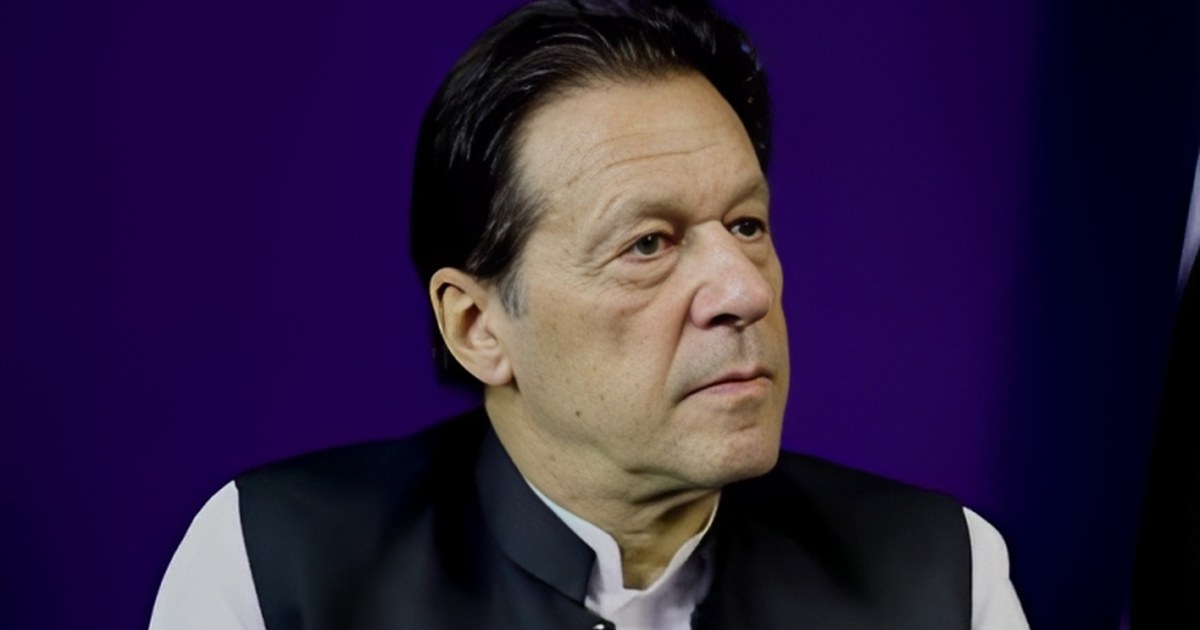
Pakistan has always had a talent for turning scandals into statecraft. What would destroy a normal government is absorbed, repackaged and eventually constitutionalised in Islamabad, provided it serves the only institution that truly matters: the army. The latest confirmation came with the resurfacing of the cypher cable, the diplomatic note once dismissed as Imran Khan’s conspiracy theatre and then returned as an X-ray of how power actually works in Pakistan. Not through elections, not through Parliament, not through the decorative civilian architecture displayed for foreign consumption, but through Rawalpindi, Washington, Riyadh and the men who decide which prime minister may remain useful and which one must be removed.
It is the story once dismissed as delirium, paranoia, rally rhetoric and Imran Khan’s final desperate attempt to prevent his own defenestration. Imran had always claimed that the vote of no confidence against him had not been merely a parliamentary event. He said the Americans were behind it. He said there was a secret diplomatic note in which Donald Lu, then Assistant Secretary of State for South and Central Asian Affairs, made it very clear what would happen to Pakistan if its prime minister was not removed. For years, the cypher story was treated as theatre. Victimhood. Populist mythology. After the document has surfaced, the phrase that really matters is no longer Imran’s slogan but Washington’s alleged message: if Khan was removed, “all will be forgiven.” The cable was published in full in May 2026 by Drop Site News, reopening the entire question of American pressure, Pakistani military compliance and the real nature of Khan’s fall.
Khan’s crimes, from Washington’s point of view, were numerous. He had blessed the Taliban victory in Afghanistan with too much enthusiasm. He had not lined up obediently on Ukraine. He had flirted with a foreign policy that was, if not independent, at least sufficiently undisciplined to annoy the adults in the room. Above all, he had made the fatal mistake of believing that Pakistan could afford ambiguity without first asking permission from the very powers that finance, arm, rescue and periodically rehabilitate its military establishment. In Pakistan, prime ministers are allowed corruption, incompetence and theatrical nationalism. What they are not allowed is to interfere with the army’s external rent-seeking model.
That is the real subject of Imran Khan’s detention. Not the Toshakhana case. Not the cypher case. Not the absurd multiplication of criminal proceedings designed to keep him in jail even when one conviction collapses and another becomes embarrassing. His detention is political architecture. The UN Working Group on Arbitrary Detention already described his imprisonment as arbitrary, called for his immediate release and compensation, and placed his legal persecution inside a broader campaign against Khan and Pakistan Tehreek-e-Insaf before the 2024 elections. But Pakistan does not jail politicians because they break the law. Pakistan jails politicians when they break the arrangement. And then it makes the prison itself part of the arrangement.
Because the conditions in which Imran Khan is being kept are not an administrative detail. They are the message. He has been held for months in conditions described by his family, party and lawyers as solitary confinement, with access to relatives, lawyers and doctors restricted, interrupted or denied despite court orders. Reuters reported in December 2025 that, after a rare supervised visit, his sister said he was physically well but cut off, confined indoors and suffering from isolation and psychological strain, while his family demanded access for his personal physician, who had not seen him for more than a year. The Guardian later reported that PTI raised serious concerns over his health after a diagnosis of central retinal vein occlusion in his right eye, a condition which can lead to permanent vision loss if not properly treated, while the party said he was being denied adequate medical care and remained in solitary confinement.
This is not incarceration. It is slow erasure. A former prime minister, the most popular political leader in the country, is kept in a cell and treated not as a convict but as a contaminant. Visits become concessions. Medical care becomes a negotiation. Family contact becomes a privilege to be granted or withdrawn by jail authorities acting, as always, with the invisible confidence of men who know where power really sits.
His isolation is not only punitive. It is pedagogical. It teaches Pakistan what happens when popularity challenges the barracks. It teaches judges how far their orders matter. It teaches parties how quickly an election symbol, a candidate list, a mandate and a leader can be dismantled. It teaches foreign capitals that the army remains in control.
The arrangement is simple. The civilian government performs sovereignty. The army exercises it. The judiciary legalises it. The media decorates it. Foreign powers tolerate it because Rawalpindi is useful: against the Soviets, against the Taliban, with the Taliban, against terrorism, through terrorism, against Iran, with Saudi Arabia, around China, beside Washington, inside every contradiction that can be monetised. Pakistan is not a state with an army. It is an army with a territory, a population, a nuclear arsenal and an excellent public relations department.
Imran Khan’s mistake was not that he opposed this system. He had benefited from it. He was brought to power with the blessing of the same establishment that later threw him out. He was sold as the clean alternative to dynastic corruption, the modern face of a controlled democracy, the cricket hero useful to a military that wanted civilian legitimacy without civilian independence. For a while, the arrangement worked. Then it stopped. Khan became too popular, too erratic, too convinced of his own mandate, and too dangerous for a system in which prime ministers are selected not to govern but to absorb responsibility.
His imprisonment therefore served two purposes. Domestically, it decapitated the only political force capable of mobilising millions against Rawalpindi. Internationally, it reassured Pakistan’s patrons that the adults had returned to the table. With Khan in prison, the army could again speak directly to Washington, Riyadh, Beijing and the Gulf without the inconvenience of an elected civilian leader imagining he had a veto.
The 2024 election did not solve the problem of legitimacy; it exposed it. PTI-backed candidates still performed strongly despite repression, arrests and the stripping away of the party’s electoral symbol. The result was not democracy but managed arithmetic: enough votes to show that the public existed, enough manipulation to ensure that it did not matter.
And then came the final act: the constitutionalisation of military rule. Asim Munir, once merely the army chief, became Field Marshal, Chief of Defence Forces, the central figure of a new order in which the old Pakistani hypocrisy has been abandoned. The 27th Constitutional Amendment created the post of Chief of Defence Forces, gave the army chief primacy over the other services, weakened the Supreme Court by shifting constitutional authority to a new federal constitutional court, and granted Munir lifelong legal immunity. In other words, Pakistan did not have a coup. It had something more elegant and more obscene: a coup with paperwork.
This is why Imran Khan is still in jail. Because his release would not merely free a former prime minister. It would reopen the whole chain of events: the cypher, the vote of no confidence, the military’s role, Washington’s pressure, the election manipulation, the judiciary’s collapse, the transformation of Munir from army chief into constitutional sovereign. Khan is no longer only a politician. He has become evidence. And evidence, in Pakistan, is either disappeared, intimidated, exiled, buried or imprisoned.
The geopolitical context matters because Pakistan’s internal repression is never only internal. Every domestic crackdown is also an external transaction. The army sells stability to Washington, strategic depth to Beijing, Islamic military usefulness to Riyadh, counterterrorism theatre to Europe, and nuclear responsibility to everyone frightened enough to pay attention. The prisoner in Adiala is part of that transaction. He signals that Pakistan’s army remains in control. He reassures foreign capitals that no mass mandate, no election result, no court order and no constitutional fiction will interfere with the military’s ability to deliver what it promises.
The irony is that Khan himself is not an innocent invention of democracy. He is a product of the same hybrid system that eventually devoured him. But this does not make his detention legal, nor does it make the architecture behind it less sinister. On the contrary, it shows the logic of the Pakistani state in its purest form: every civilian hero is temporary, every party is disposable, every election is conditional, every court is adjustable, every constitution is amendable, and every alliance is valid only as long as it serves the barracks. The cypher did not create this system. It revealed it. It showed, in one document, the invisible wiring of Pakistan’s power structure: an American grievance, a Pakistani ambassador’s warning, a prime minister marked as inconvenient, an army ready to translate external displeasure into internal regime change, and a political class eager to inherit the ruins.
What followed was not an exception but a sequence. Khan removed. Khan charged. Khan imprisoned. PTI dismantled. Elections managed. Judiciary clipped. Munir elevated. Immunity granted. Military rule renamed constitutional reform. That is what lies behind Imran Khan’s illegal detention. Not one case, not one judge, not one prison file. A whole geopolitical bargain.
The bargain says that Pakistan may remain formally democratic as long as democracy never threatens the army. It may hold elections as long as the wrong winner does not win. It may invoke sovereignty as long as sovereignty belongs to Rawalpindi. It may complain about foreign interference while surviving on foreign indulgence. And it may imprison the most popular politician in the country while telling the world that the rule of law is alive and well. In Pakistan, absurdity is not a deviation from the system. It is the system speaking honestly for once.

Reader comments
Subscribers can join the conversationSign in to join the conversation. Comments are open to everyone with a free account.
Sign in or create accountLoading comments…