Where are Ella, Kate, Mag, Lizzie and Edith,
The tender heart, the simple soul, the loud, the proud, the happy one?
All, all are sleeping on the hill.(Edgar Lee Masters)
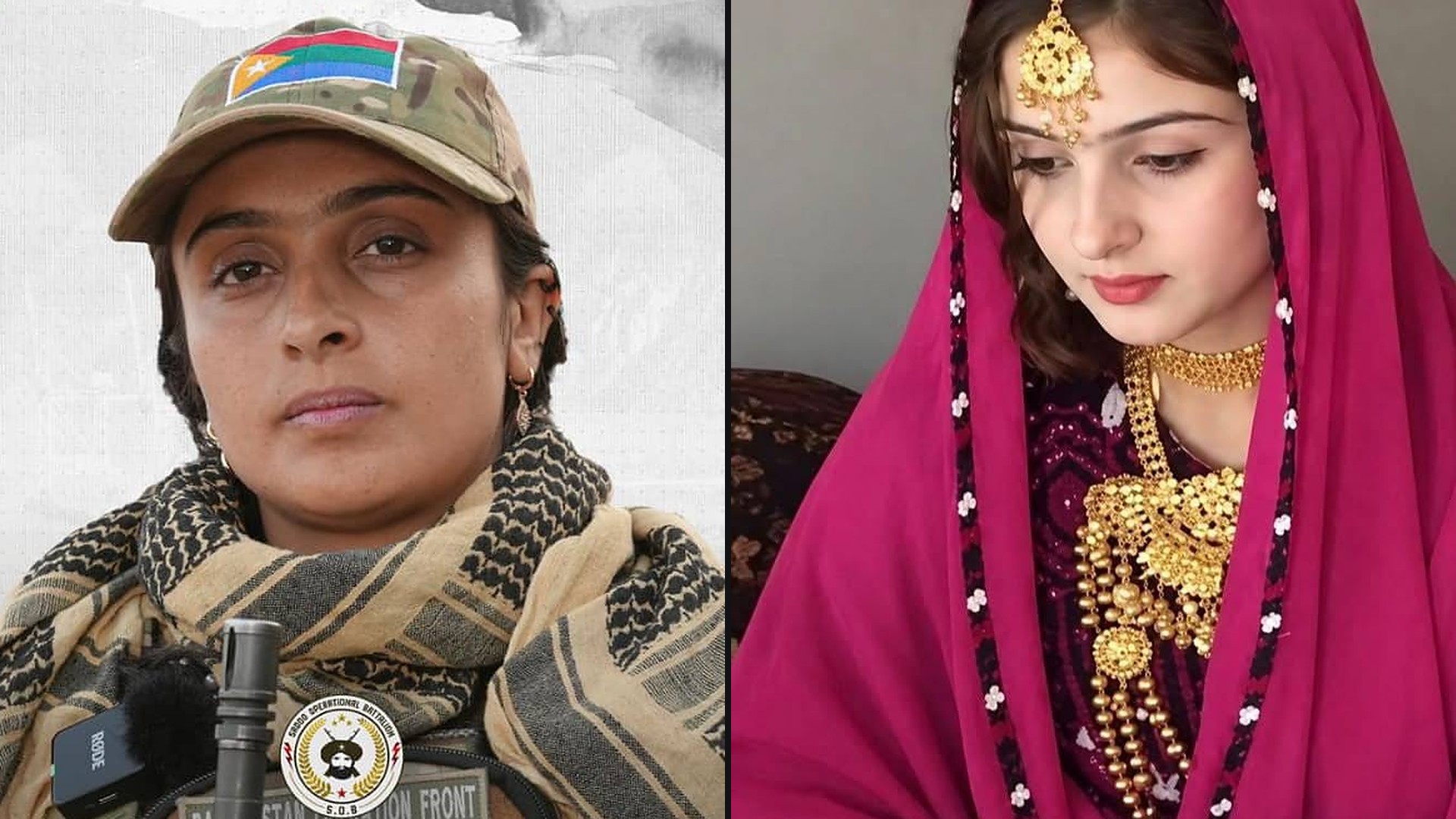
Her name was Bilqees Didag, known as Almas.
She was among the BLF fighters who entered the Frontier Works Organisation compound in Gwadar on 22 October. According to the group's account, the assault team fought for hours before taking their own lives rather than being captured.
The group said it held the compound for twenty hours and named seven dead fighters. Pakistan's military reported ten attackers killed across Gwadar and Gabd, including a woman, and denied security-force losses. The competing casualty claims remain unverified.
Yet beyond the disputed battlefield accounts lies a political question that another declaration of victory will not settle: why are women assuming increasingly visible roles in a conflict Islamabad still prefers to explain through foreign sponsorship?
The convenient answer, the one routinely offered in Pakistan's public discourse, is that somebody must have put them up to it.
A woman who enters an armed organisation is presumed to have been manipulated, emotionally broken or delivered into militancy by a man. Her convictions become a secondary matter, if they are considered at all.
This offers the Pakistani establishment a useful economy of explanation: foreign powers supply the conspiracy, male recruiters supply the mechanism, and the woman herself need never be heard.
There are reasons to examine recruitment, coercion and the internal hierarchies of armed groups. Their publicity is no substitute for independent evidence.
But an investigation that begins by assuming women incapable of political judgement has already decided its conclusion.
Recognising their agency does not require endorsing their methods. It requires accepting that a woman can reach a political conclusion one finds disturbing without having first surrendered her capacity to think.
In the interview she gave me, Shaynaz Baloch, a commander in the Baloch Liberation Army, rejected precisely this reduction of female militancy to personal trauma. Her account placed women's participation within a national struggle and a contest over their position in Baloch society.
She presented her own decision as an intellectual and political commitment, rather than an emotional consequence of losing a male relative.
It was the argument of a combatant explaining her organisation's worldview, with all the scrutiny that entails. It was also an explicit refusal to be interpreted solely through somebody else's biography.
Shaynaz's testimony cannot establish Bilqees's motives, of course. What it does reveal is a political language through which women in the armed movement describe themselves: as participants entitled to determine the future of their country, including the social order within it.
The demand is directed at patriarchal restrictions in their own society as well as at Pakistani rule. Neither dimension can be understood by counting female casualties and moving on.
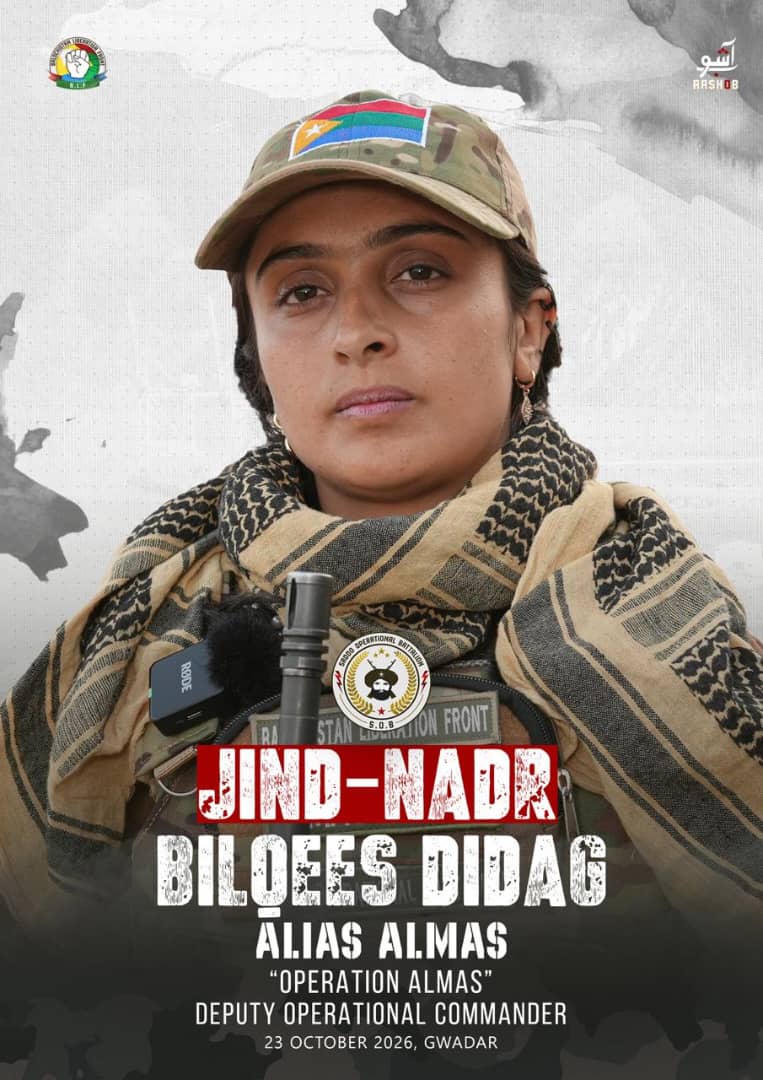
Baloch women had already become public political actors through campaigns against enforced disappearances. Families who demanded information about missing relatives turned an experience intended to isolate them into a collective accusation.
The question of where a particular man had been taken became a question about who could detain people, conceal their whereabouts and remain beyond accountability. Women helped carry that question from their homes into public life.
That civic mobilisation has its own leaders, methods and legitimacy. The Baloch Yakjehti Committee is not an auxiliary of an armed organisation, and women protesting disappearances cannot be assigned the choices of women who join the insurgency.
Collapsing them into a single category would reproduce the security narrative that treats political dissent as evidence of militancy. It would also erase the considerable political work involved in sustaining non-violent mobilisation under pressure.
The state's response to that mobilisation nevertheless belongs in any serious account of the armed movement's appeal. In December 2023, the women-led march from Turbat reached Islamabad to encounter tear gas, batons, water cannons and arrests. Amnesty International verified violence against peaceful protesters.
In 2025, it documented the arbitrary detention of Mahrang Baloch and other female activists as part of a broader crackdown using public-order and anti-terrorism legislation. The women who took the constitutional route did not discover a state particularly eager to distinguish them from its enemies.
This does not establish an inevitable passage from protest to insurgency. Most people subjected to repression do not join armed groups, and a commander's assertion that force is the only remaining option is a political claim, not a law of history.
But repression gives that claim material with which to work. Each peaceful appeal answered with detention makes it harder to demonstrate that public participation can produce accountability.
Islamabad demands that Baloch grievances remain peaceful while imprisoning and disappearing the people attempting to pursue them peacefully.
Its counter-insurgency policy is remarkably generous to the insurgents' argument.
The visibility of female fighters also creates obligations for the organisations that recruit them. Claims of emancipation deserve to be tested against women's actual authority, their ability to dissent and the future being offered to those who survive.
A movement cannot demonstrate equality merely by allowing women an equal opportunity to die. The question is whether it gives them an equal role in deciding how to live.
Bilqees's death cannot answer those questions. Her political convictions cannot simply be inferred from the statement announcing her death. Recognising a woman's agency also means examining how others claim to speak for her once she can no longer speak for herself.
And so the story does not close with an answer. It closes with a tension that refuses to settle.
On one side, women walking for weeks towards Islamabad, carrying photographs instead of weapons, insisting that memory itself is a form of resistance. On the other, women who enter armed formations, whose deaths are written into statements meant to travel faster than grief ever could.
Between these two figures—both real, both Baloch, both born of the same landscape of violence—the struggle fractures and mirrors itself. Their shared circumstances do not erase the distance between their choices.
What remains constant is the burden placed on women's body. The woman as target, warning, evidence, weapon, archive; the woman as future invoked and future erased.
State repression turns her detention or disappearance into a warning to others. Armed movements turn her death into a claim on the future. The purposes and responsibilities are different, but in both cases her body is asked to carry meanings that no human body should be asked to bear.
Acknowledging that burden does not cancel her convictions. It means refusing to let institutions appropriate them without scrutiny.
And the world watches selectively.
It recognises explosions more readily than endurance, communiqués more readily than years of unanswered appeals, spectacular death more readily than the slow violence of waiting.
It debates labels while the disappeared remain missing. It counts headlines while mothers keep photographs from fading in the sun. The operation becomes news; the march becomes background.
Choices are made inside structures not of one's choosing, and political agency does not confer immunity from violence long normalised. Protest, culture, armed resistance and the decision to die rather than be captured remain profoundly different responses, even when shaped by the same pressure.
Women keep appearing in all their irreconcilable forms: walking, writing, waiting, fighting; being detained, being buried, being named, being erased. They are people with competing convictions and unequal room to act, moving through a war that has learned to speak fluently through them.
In Balochistan, the violence accumulates, repeats and shifts shape. The women—whether holding photographs at dawn or being written into statements at night—remain at the centre of a conflict whose protagonists continually invoke them and have yet to reckon with what they have made of their lives.
Masters’s women sleep on the hill.
In Balochistan, even death offers no such rest: the dead are still made to speak, while the living struggle to be heard. Islamabad can announce the end of an operation. It still owes an answer to the women carrying photographs.

Reader comments
Subscribers can join the conversationSign in to join the conversation. Comments are open to everyone with a free account.
Sign in or create accountLoading comments…