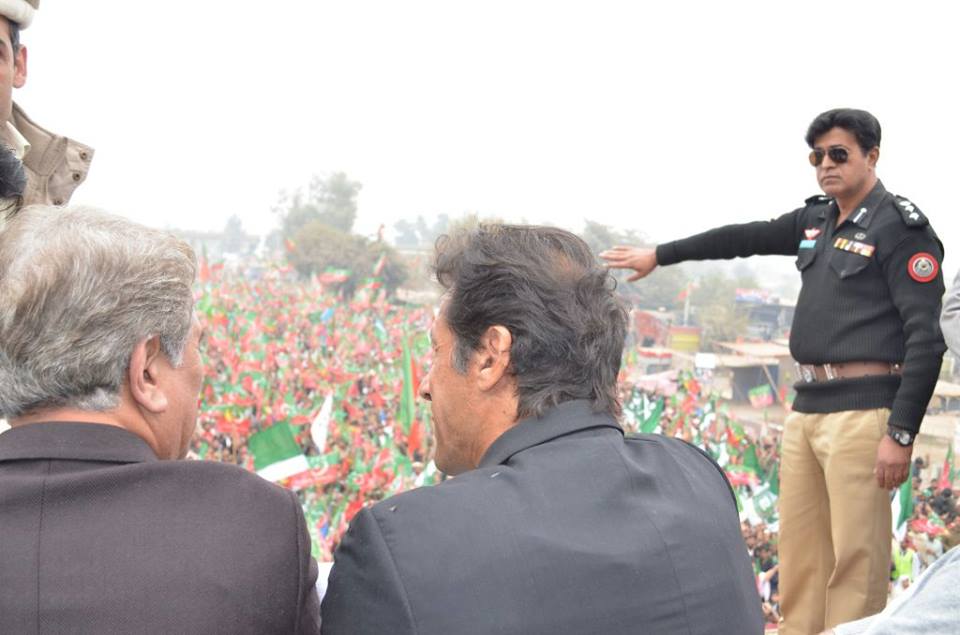
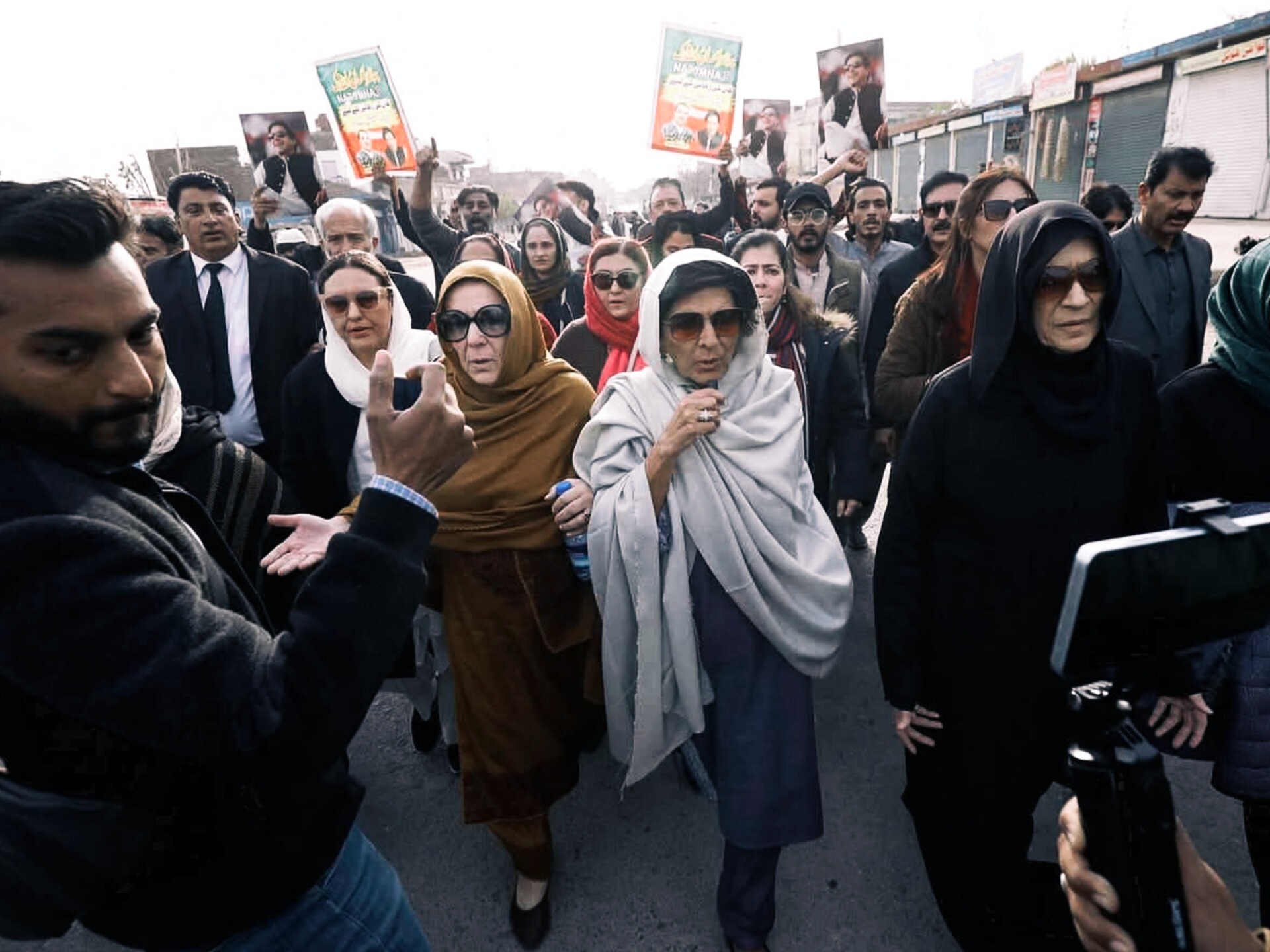
If the plan holds, a convoy of Pakistan Tehreek-e-Insaf (PTI) supporters will leave Peshawar for Islamabad on 4 October to demand the release of Imran Khan, the former cricketer and prime minister who has been in prison since August 2023, and the capital will once again be sealed with shipping containers, blocked motorways and tens of thousands of police and paramilitary personnel. To an outsider this can look like a routine quarrel between a government and its opposition, but the marchers' real contestation is with the army, which ruled Pakistan directly for more than three decades after 1947, shaped civilian politics for the rest, and is known inside the country simply as the establishment.
The march has already been postponed once, from 27 September, and PTI's working demands have shrunk to family visits for Khan and treatment in a hospital of his choosing, which suggests the party doubts it can force its way into the capital. The army will very probably contain it, as it contained PTI's march of November 2024, so the more useful question is what containment will cost, and the answer lies in a habit the military relied on for most of its history and has now abandoned.
Blinking as a Tool for the Military
Pakistan's generals have never governed by force alone, and when pressure from the street, from insurgents or from the clergy grew too strong they have repeatedly given ground, usually by sacrificing a face while protecting the institution. In 1969, a student and labour movement forced out Field Marshal Ayub Khan, but power simply passed to another general, Yahya Khan. In 1978, after an insurgency in Balochistan, the south-western province whose nationalists accuse the centre of exploiting its resources, General Zia-ul-Haq freed the jailed Baloch leadership and offered an amnesty that bought roughly two decades of relative calm. In 2008 General Pervez Musharraf resigned the presidency in the face of a nationwide lawyers' movement, and in March 2009 the army chief, General Ashfaq Parvez Kayani, pressed the civilian government to restore the dismissed Chief Justice rather than face another long march on the capital. With the Pakistani Taliban, the Tehreek-e-Taliban Pakistan (TTP), the army signed a string of peace deals between 2004 and 2009, and in 2017 it brokered the agreement that ended a sit-in by the Tehreek-e-Labbaik Pakistan (TLP), a hardline religious party, on the protesters' terms.
Some concessions backfired, since the Taliban deals let the militants regroup and the TLP learnt that the street pays, but blinking released pressure before it reached the institution, and it let a minister, a government or occasionally a general carry the blame while the army kept the final word.
A Safety Valve
What sets the present apart is that the army is blinking at no one. PTI's leaders are jailed or on trial, and civilians accused of joining the attacks on military buildings on 9 May 2023, when Khan's supporters stormed the corps commander's residence in Lahore after his arrest, were tried in military courts. The TLP was banned again after a violent crackdown in October 2025, the Pashtun Tahaffuz Movement, a non-violent campaign for Pashtun rights, was banned in 2024, the Baloch activist Mahrang Baloch was jailed in March 2025, and the war with the TTP has spilled across the border, with Pakistani airstrikes on Afghan provinces as recently as 21 September. In the past the army picked one adversary at a time and made peace with the others, and today it is making peace with none.
A rival on the army's own ground
PTI has proved far harder to contain than the Baloch, the Pashtun movement or the clergy because it competes with the army for the same ground. The army has long cast itself as the one honest and competent institution in a country run by corrupt dynasties, the Bhuttos of the Pakistan Peoples Party and the Sharifs of the Pakistan Muslim League (Nawaz), and PTI built its appeal on the same promise of clean, merit-based government. The overlap was partly engineered, since after Musharraf's fall the establishment shaped the pro-military urban middle class his rule had cultivated into a vote bank for PTI, Khan's anti-corruption pledge resonated most among bureaucratic and military families, and his first cabinet drew heavily on Musharraf-era figures, among them Ishrat Husain, who had run the central bank under the general.
The labels that worked elsewhere therefore fail against Khan. Baloch and Pashtun activists could be branded traitors backed by India and Afghanistan, the TTP terrorists and the TLP fanatics, but PTI speaks the army's own language of honesty and national pride and draws on its social base, so much so that the inquiry after 9 May reached the granddaughter of a retired four-star general, while Faiz Hameed, the intelligence chief of Khan's years in office, was sentenced to fourteen years by a court martial in December 2025. Khan's demand also cannot be divided, because releasing him means his return, and in 2024 his candidates won the largest bloc of seats even without the party's cricket-bat symbol. There is no minister to sacrifice when the challenger lays claim to the army's own role as guardian of the nation.
At the centre of this stands Field Marshal Asim Munir, appointed army chief in November 2022, who has since gathered more formal power than any predecessor serving under a civilian constitution. Amendments passed in 2024 and 2025 brought the higher judiciary under closer executive control, created the post of Chief of Defence Forces that places him above the navy and air force, and stretched his tenure to 2030, while the short conflict with India in May 2025 brought him the rank of field marshal, held before him only by Ayub Khan, and a welcome in Washington and the Gulf that few Pakistani generals have received.
Munir is the latest in a line of such figures, and the line has not ended well for any of them. Ayub Khan made himself field marshal and wrote his own constitution, and was pushed out by the street. Yahya Khan was forced to resign by his own officers after the loss of East Pakistan in 1971. Musharraf was sentenced to death in absentia for high treason in 2019 and died in exile in Dubai in 2023. Even General Qamar Javed Bajwa, who won an extension in 2019 and was seen as the maker and then the breaker of Khan, retired in 2022 disowned by PTI and its rivals alike. Each man gathered power until he became the face of every grievance, and each time the army, which outlives its chiefs, let him go.
No resolution as of Now
The pressure on Munir is both economic and political. Inflation rose to 11.1 per cent in August, pushed up by an oil shock from the war in the Middle East, the region that supplies nearly nine-tenths of Pakistan's oil, while an IMF programme obliges the government to run a primary budget surplus that leaves little room to protect households. Violence linked to the TTP killed more than 550 people in the first eight months of the year, mostly in Khyber Pakhtunkhwa, the north-western province that PTI governs and from which the march will set out. When the army stood behind civilian governments, hardship was blamed on politicians, but a field marshal whose authority is written into the constitution has no one to stand behind, and the blame now travels straight to army headquarters in Rawalpindi.
The grievance also reaches the barracks. An officer corps drawn largely from Punjab's middle classes, where Khan's support runs strongest, cannot be sealed off from what its families think, and the dismissal of a serving lieutenant general after 9 May, alongside disciplinary action against three major generals and seven brigadiers, showed how far that unease had already travelled.
None of this means the march will topple anyone. The army will very probably contain 4 October, perhaps with a concession on Khan's medical care that costs it nothing of substance, but every crisis that ends without release adds to a store of grievance that the old safety valve would once have let out. When that store finally gives way, Pakistan's history suggests the institution will protect its own cohesion first, and Munir, like Ayub, Yahya and Musharraf before him, is likely to be the man it gives up.
Reader comments
Subscribers can join the conversationSign in to join the conversation. Comments are open to everyone with a free account.
Sign in or create accountLoading comments…