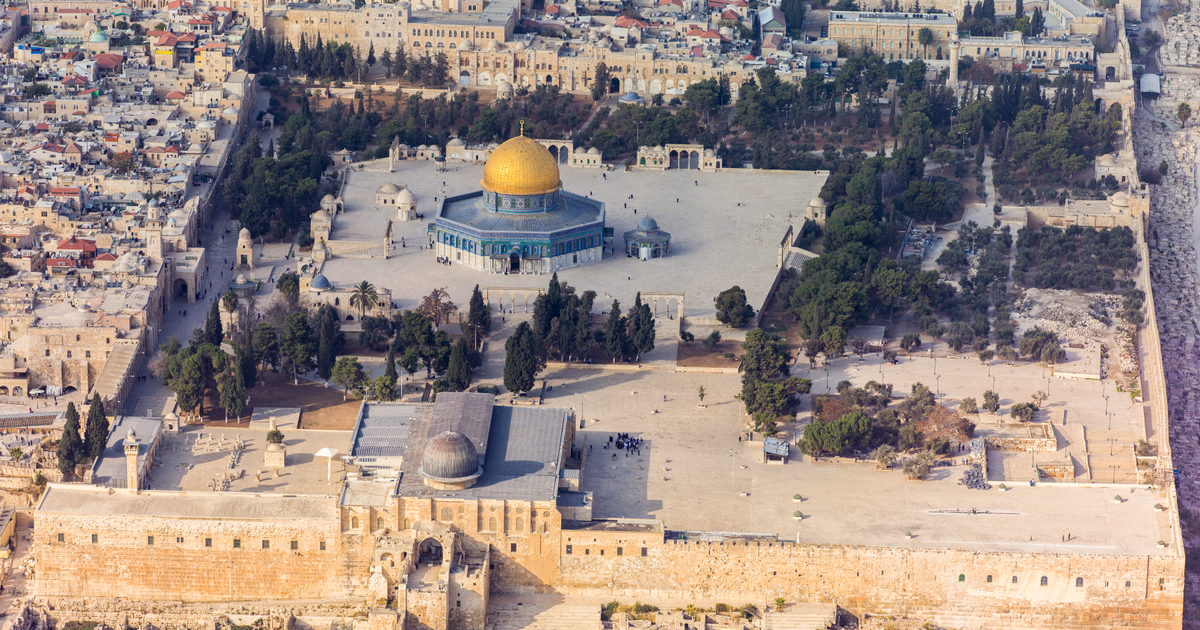
Jordan has called an emergency meeting of foreign ministers from Arab and Islamic countries after warning that the historic arrangements governing the Al-Aqsa Mosque compound in Jerusalem face an imminent challenge. Foreign Minister Ayman Safadi is due to host the meeting in Amman on Wednesday. Participants are expected to include Arab League states as well as Turkey, Indonesia, Malaysia and Pakistan. Jordan says the gathering is intended to coordinate diplomatic and legal pressure before further confrontations occur at the site.
Why the compound matters
The elevated compound in Jerusalem's Old City is known to Muslims as Haram al-Sharif and to Jews as the Temple Mount. It contains the Qibli prayer hall and the Dome of the Rock and is one of Islam's holiest places. It is also Judaism's most sacred site because of its association with the ancient temples. That overlapping religious importance has made changes to access or prayer arrangements especially sensitive. Under the long-standing status quo, Muslims worship at the compound while non-Muslims may visit at designated times but are not generally permitted to conduct public prayer. Jordan's Hashemite monarchy retains a custodial role, while Israeli police control security and access.
The 23 July incursion
Jordan's latest warning follows events on 23 July, when more than 2,000 Israelis from the religious right entered the compound, according to reporting from Jerusalem. The group was led by Israel's national security minister, Itamar Ben Gvir, and included settlers who prayed and performed religious rituals across the site. Jordanian officials described the visit as an unusually serious breach of the established arrangements. Amman has also raised concern about reported recruitment of religious Jewish officers for a specialised police unit connected to the site, and about the possibility of further challenges during Jewish holidays in September. Israel has not accepted Jordan's characterisation of every visit or prayer as a transfer of control, and Israeli nationalist groups have long argued for expanded Jewish prayer rights. A current response from the Israeli government and police should be included before publication.
Jordan's warning
Safadi said interference with the status quo could turn an already dangerous political struggle into a religious conflict with consequences beyond Jordan and the Palestinian territories. Amman's concern is that changes presented as incremental - larger organised visits, public prayer, policing decisions or administrative steps - could together alter control of the compound. The warning also reflects Jordan's wider vulnerability. The country has a large population of Palestinian origin, a peace treaty with Israel and a custodial responsibility that carries domestic as well as diplomatic significance. Any perception that Amman is unable to protect the holy sites creates pressure on the monarchy at home.
What the meeting can achieve
The emergency gathering cannot itself enforce access rules in Jerusalem. It can, however, produce a joint statement, coordinate approaches at the United Nations and other international bodies, and increase pressure on Israel and its allies to preserve the existing arrangements. The immediate test will be whether Wednesday's meeting leads to a practical diplomatic initiative and whether Israeli authorities change security or visitor arrangements before the September holidays. Until then, Jordan's warning should be reported as a serious regional assessment rather than proof that a takeover has already occurred. The compound has repeatedly shown how a local confrontation can acquire regional force. For Jordan, preventing that escalation is now an urgent question of foreign policy, religious legitimacy and national stability.

Reader comments
Subscribers can join the conversationSign in to join the conversation. Comments are open to everyone with a free account.
Sign in or create accountLoading comments…