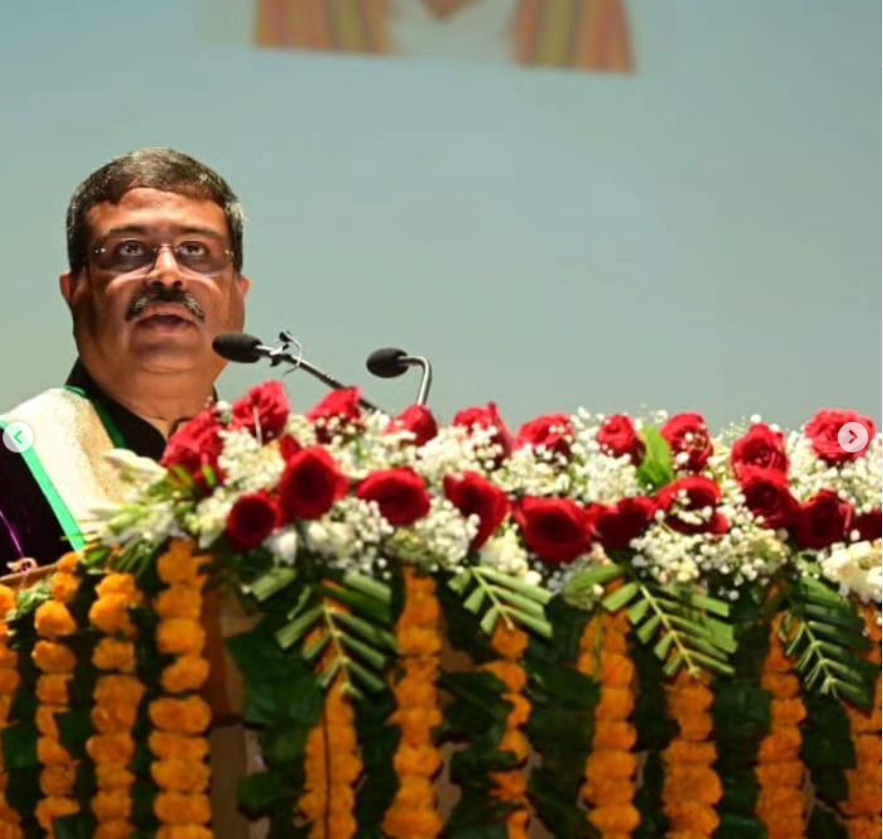
India's education minister, Dharmendra Pradhan, has resigned after weeks of nationwide youth-led protests over alleged examination paper leaks and wider failures in the education system.
Organisers of the movement known as the 'Cockroach' protests called off their demonstrations on Saturday, saying the central government had accepted their demands. Pradhan announced his departure in a post on X, handing the campaign its most significant victory since demonstrators began staging sit-ins, marches and hunger strikes.
The resignation is politically notable because Prime Minister Narendra Modi's government has rarely yielded to prolonged street pressure. The reversal of controversial farm laws in 2021 remains the most prominent recent example of a sustained protest campaign forcing a major concession.
From examination scandal to national movement
The campaign grew out of anger over alleged leaks and irregularities affecting high-stakes entrance examinations that shape access to universities, professional courses and public-sector employment.
For many young Indians, the controversy became a symbol of a broader problem: intense competition for limited opportunities, repeated uncertainty around examinations and a belief that institutions were failing to protect merit and fairness.
The movement adopted the word 'Cockroach' as an act of defiance after unemployed young people were disparagingly compared with the insects. Protesters turned the insult into a political identity, using satire, memes and online organising alongside conventional demonstrations.
Its rapid expansion reflected the scale of youth frustration in a country where nearly half the population is under 25 and where education, employment and social mobility remain closely connected.
Government concession
Associated Press reported that protest leaders declared the movement victorious after Pradhan resigned and the government accepted a package of demands that included education reforms, compensation for families affected by exam-related student suicides and protection from legal action for demonstrators.
Those commitments will now face scrutiny over implementation. A ministerial resignation can satisfy the demand for political accountability, but it does not by itself repair examination security, restore confidence in testing bodies or address the employment pressures that helped transform the campaign into a national challenge.
Opposition parties have welcomed Pradhan's departure as evidence that public pressure can force accountability. The government, meanwhile, must contain the political damage without allowing the resignation to be interpreted as an admission that every claim made during the protests has been proven.
A wider warning for New Delhi
The end of the demonstrations may reduce immediate pressure on the streets, but the movement has shown that digitally connected young people can combine humour, anger and disciplined organisation into a powerful political force.
The campaign also challenged assumptions that large-scale dissent had become too fragmented to force a response from the central government. Its success is likely to be studied by other movements seeking action on unemployment, public examinations and institutional accountability.
For the Modi administration, the next test is whether the reforms promised during the dispute are delivered quickly enough to prevent the same grievances from returning. For the protesters, Pradhan's resignation is both an ending and a demonstration of what sustained youth mobilisation can achieve.


Reader comments
Subscribers can join the conversationSign in to join the conversation. Comments are open to everyone with a free account.
Sign in or create accountLoading comments…