
That’s the question that Russian and Ukrainian generals have been asking for the last two years. The war in Ukraine is no longer one where divisions or tanks or infantry can move. Assaults, when they do happen, are spearheaded by drones or small groups of one to three soldiers dashing from cover to cover in what’s become known as the ‘Death Zone’. An area spanning around 10-30 kilometres from the front lines where venturing above ground carries extreme danger.
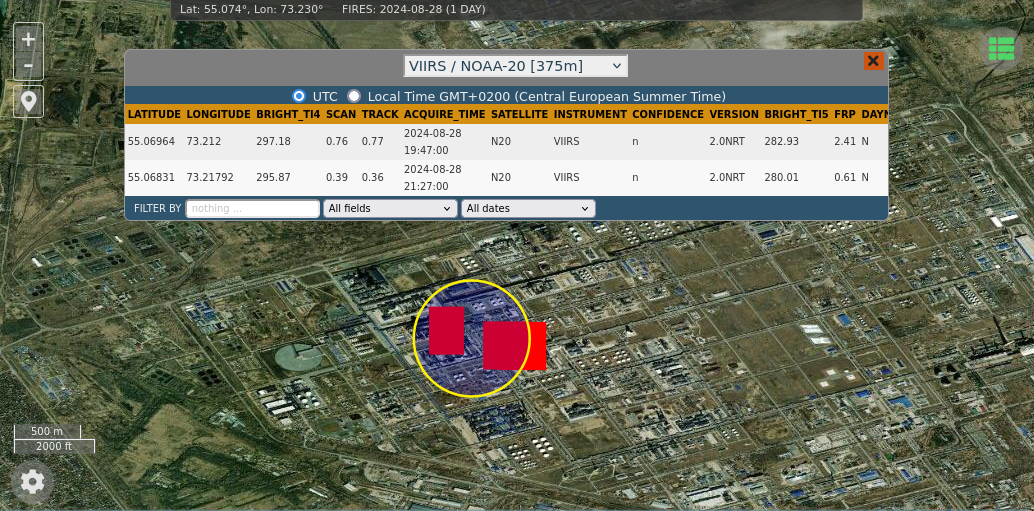
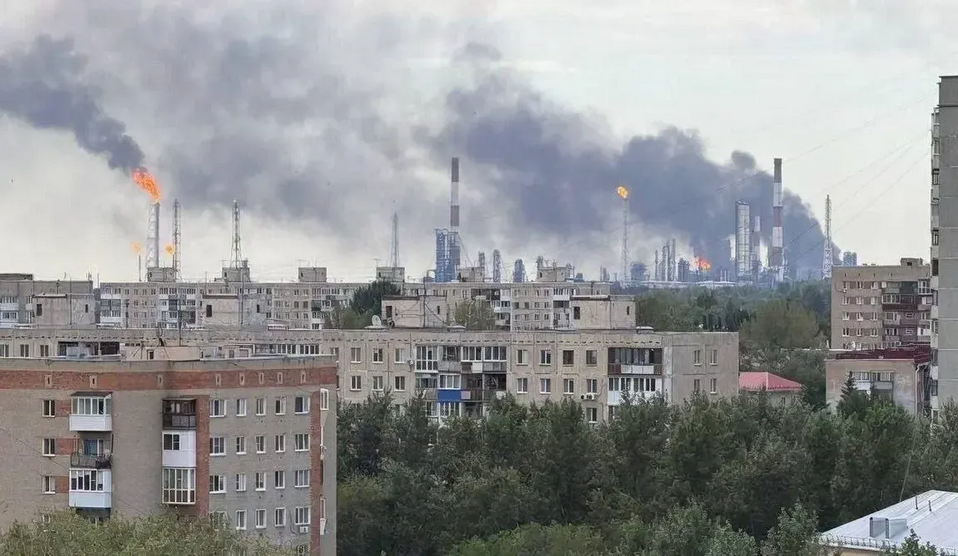
To answer this question, I have to get a little academic. But it’s worth giving you a clue: Russian oil refineries and, in the last week, shipping warehouses are ablaze from the border to Omsk, around 2500 km from Ukraine.
First, the academia. To win a war at all, you have to have a solid ‘Theory of Victory’. Put simply: what are your objectives in the war, and how can you achieve them given the cards you’ve got to play.
For this war and this brief analysis we can safely posit that the objectives for Ukraine are:
• Survive as an independent nation
• If possible, return control of all Ukrainian territory occupied by Russia since 2014
For Russia it is less clear, but given their military operations at the start of the conflict and given what they continue to say today, their objectives appear to be:
• Carry out regime change in Ukraine, bringing it into Russia’s orbit as a client state
• Failing that, secure control of the Donbas and Crimea
The RAND Corporation identifies five broad ways to achieve your objective:
• Dominance: Defeat your enemy and leave it physically unable to defend itself
• Denial: Convince your enemy that it cannot defeat you by destroying their capability to support the war
• Devaluing: Convince your enemy that the benefits of achieving their objectives are too small
• Brinkmanship: Convince your enemy that the future costs of war may become intolerably high by threatening maximum escalation
• Cost-Imposition: Convince your enemy that the costs are too high to justify continuation of the conflict through military means
These aren’t mutually exclusive. At the start of the full-scale invasion Russia attempted to win through dominance: trying to take Kyiv in a thunder-run of armoured vehicles, supported by an airlift. They did this while practising brinkmanship, warning all other powers of ‘significant consequences’ should they offer aid to Ukraine or get involved militarily. Clearly, this failed.
Now, four years, four months and 22 days later, the methodologies have changed in a way that actively favours Ukraine. The war has become one of static lines and deep strikes into enemy territory, here, Ukraine now has the advantage. They’re pressing it and their theory of victory relies on Denial, Devaluing and Cost-Imposition.
At the start of the war Ukraine possessed no weapons able to reach far into Russia. One of Russia’s significant advantages then was that its key logistics chains and the core of its extractive, oil-driven economy was well beyond anything Ukraine could strike.
As you can see from Omsk, this has now changed. Ukraine’s technological innovation has given it the tools to strike deep into Russia. It has hit oil refineries in (take a breath): Salavat, Afipsky, Syzran, Saratov, Ilsky, Omsk, Norsi, Slavyansk, Yaroslavl, Ufa, Orenburg, Moscow, TANECO, Kuibyshev, St Petersburg and Tuapse.
They have also struck depots in Tver and Stavropol regions, pumping facilities in Bashkortostan and Kraanodarskaya, as well as the ports of Sevastopol (occupied Crimea) and the Baltic ports of Vysotsk and Ust-Luga. Russian ‘Shadow Fleet’ ships in the Azov and Black Seas have been struck over one hundred times in the last month.
These numbers are growing. In the first year of the war Ukraine hit three Russian oil facilities, from February to June this year they hit 59. The total number of strikes so far is around 305.
The effect in Russia is being felt. According to Bloomberg, Russian oil output dropped in April this year to the lowest daily average since December 2009. The Institute for the Study of War reports that almost all major oil refineries in central Russia have halted or scaled back output, with those affected totalling more than 30% of Russia’s petrol output.
This has been seen at the petrol pump. Russians on social media have recorded videos of long queues, empty stations, fistfights and rationing, including outright bans on fuel sales to private citizens in some areas.
Farmers have warned of difficulties bringing in their harvest and food prices have risen commensurately. Russians have again taken their grievances to social media, reporting prices for staples such as chicken breast in the region of 6 euros. These are London prices, in a country where the average wage is 1230 euros a month. The Russian State Duma passed a measure on 22 July to track the price of staple food at every step of the logistics journey to try to get a handle on inflating prices.
These are the second-order effects of only the long-range strikes and sanctions on Russia. Ukraine has recently expanded its programme to hit logistics hubs of Wildberries, Russia’s answer to Amazon. 17 facilities have so far been struck, as well as warehouses owned by Wildberries’ chief rival: Ozon, causing billions of dollars of damage.
Not only will this affect Wildberries themselves, they merely own the website and warehouses, the majority of products sold are from other companies.
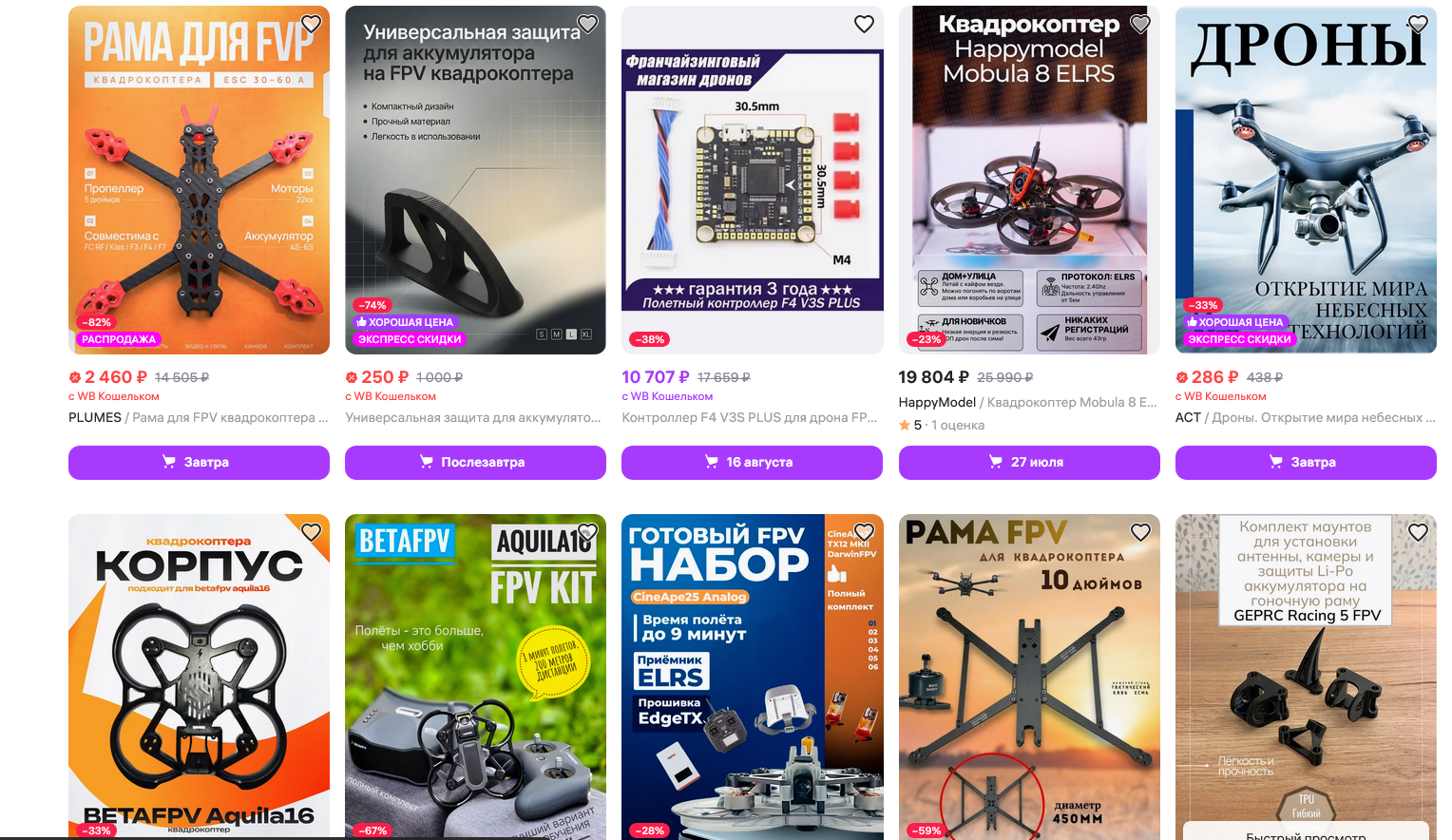
Wildberries stocked many ‘dual-use’ goods. Things that can be used by civilians or the military. A DJI drone can be used to take photos or monitor troop movements, large batteries can power a remote control car or a drone, the list goes on.
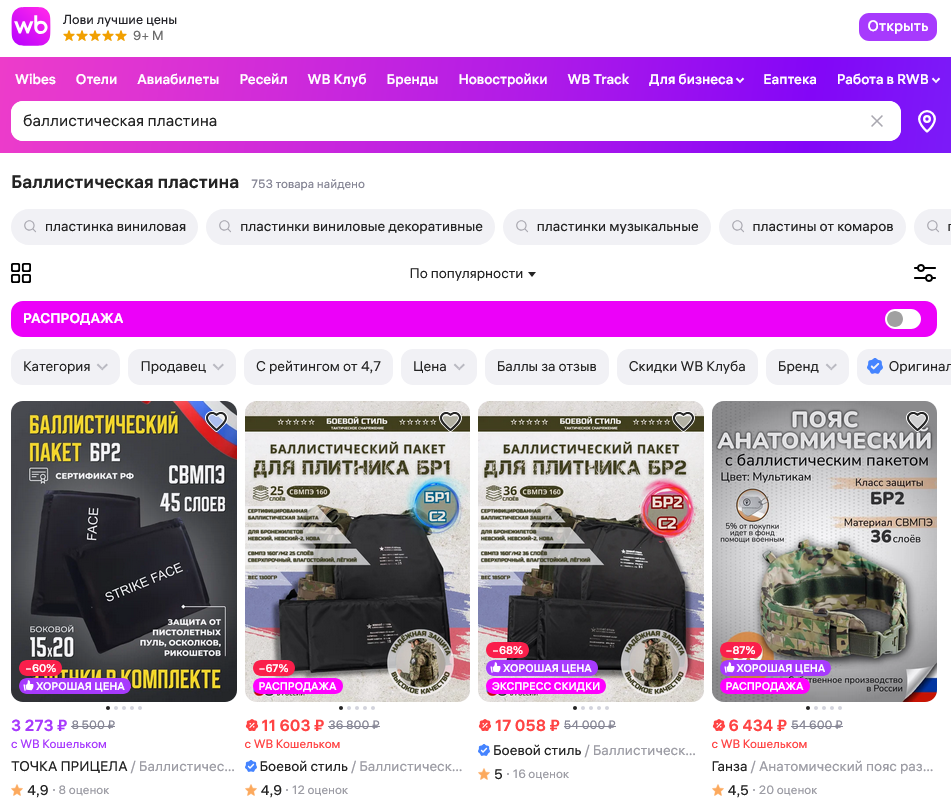
The warehouses also sold purely military gear. This search was for баллистическая пластина (ballistic plates).
While Russia has attacked similar Ukrainian facilities throughout the war, such as sorting stations of Nova Posta, the Ukrainian postal service. They are unable to replicate the kind of deep warfare that Ukraine is doing and hit the foundations of the Ukrainian economy in the same way.
The reason for this, and why Ukraine has the advantage here, is quite simple. Ukraine’s key logistics and economic centres aren’t in Ukraine. Ukraine’s currency is underwritten by European assistance, Ukraine is receiving loans of more than 90 billion euros from Europe with more promised by NATO. Major hubs of manufacturing for shells, upgrading armoured vehicles and more are in Poland, Germany, Denmark and the rest of Europe, which all sit under the protection of NATO’s Article 5. Unless Russia wants a shooting war with NATO, it can’t touch them through conventional means.
This is all the long-range strikes. These aren’t occurring in a vacuum, they are complemented with medium-range attacks that target key Russian logistics lines in occupied Ukraine, particularly Crimea. These attacks concentrate along the T-0509 and M-30 highways from occupied Mariupol to Donetsk and the M-14 and M-18 highways to occupied Crimea. Russian logistics vehicles are the main target, the effect of which is being felt both along the front line and in Crimea itself. Fuel, ammunition and food supplies are significantly disrupted. The port city of Sevastopol is unable to maintain power and fuel is restricted to emergency services, public transport and the military.
All of these are presenting a significant dilemma for the Russian high command. They simply do not yet have enough air defence to defend everything. Russia’s size, long its advantage in warfare, is proving to be a weakness here. Operationally in occupied Ukraine, it must choose whether to shore up defences in Crimea and along the M-14/18 or send forces to Eastern Ukraine to support its attacks there. Strategically, it must choose whether to send air defence to refineries and logistics hubs deep within Russia itself, or to divert those troops and their equipment to Ukraine. There are no easy choices here.
Ukraine’s Theory of Victory appears twofold: Denial and Cost-Imposition.
Ukraine is aiming to deny Russian troops the ability to attack through choking their logistics, presenting impossible operational choices to command and inflicting heavy casualties on Russian soldiers.
It is also imposing costs on Russia and Russians themselves through deep strikes that are degrading oil output (a keystone of their economy), destroying Russian logistics hubs and, crucially, bringing the war home to Russians themselves. This presents a question both to the Russian population and to President Putin.
To the people, the drones ask: is this war worth the loss of your livelihood and your son? To Putin: can you persuade your people that it is?
Reader comments
Subscribers can join the conversationSign in to join the conversation. Comments are open to everyone with a free account.
Sign in or create accountLoading comments…