
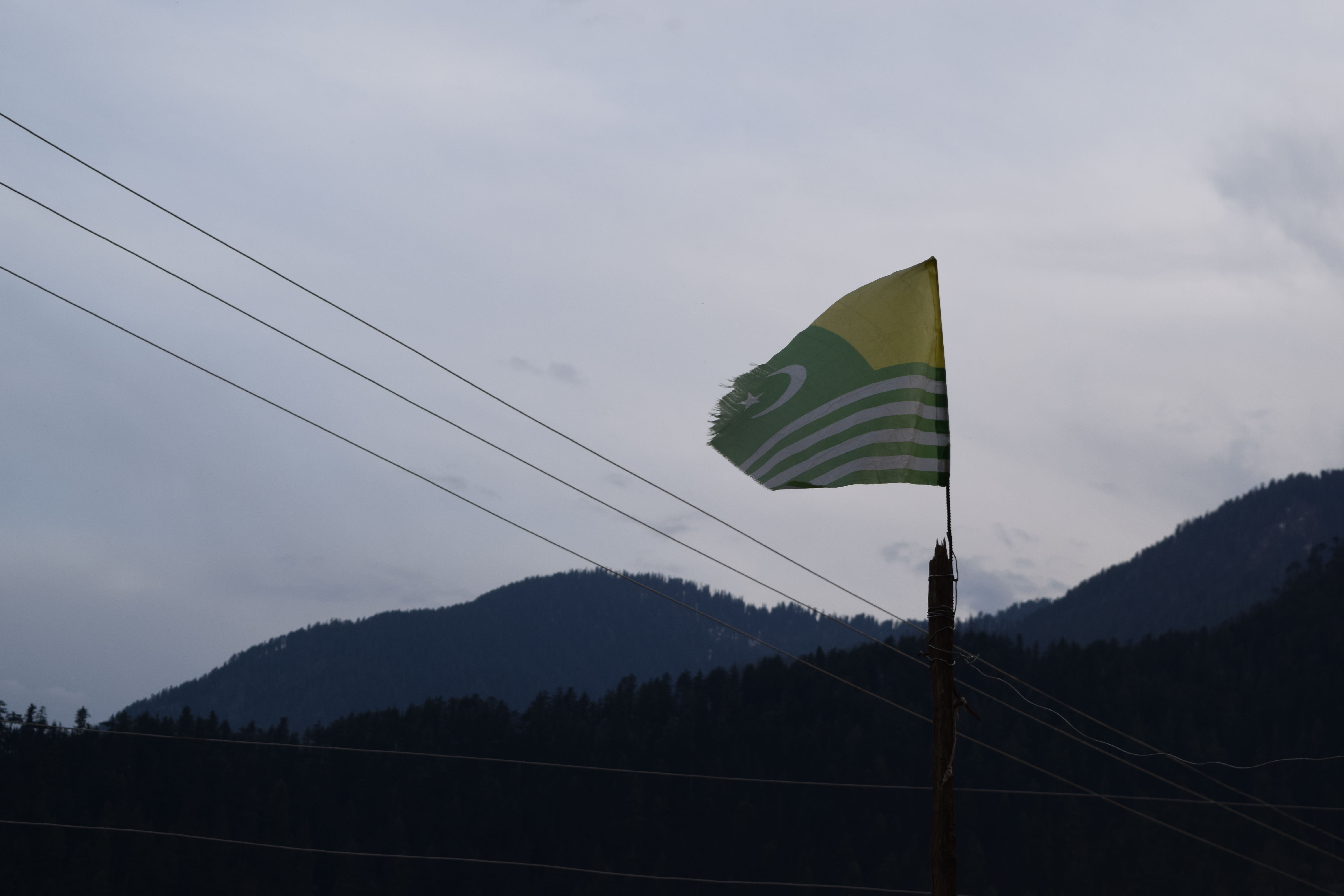
For seventy years, Pakistan has sold the Kashmir issue to the world as though it were a single, uncomplicated morality play. India was the villain. Kashmir was occupied. Muslims were oppressed. Self-determination had been betrayed. Pakistan, naturally, was the defender of freedom, the wounded custodian of an unfinished Partition and the innocent neighbour waiting patiently for justice.
It was an extraordinarily useful story. It provided Pakistan with an identity, the army with a permanent enemy, the intelligence services with an inexhaustible supply of jihadists and every failing government with a diversion from bankruptcy, repression and institutional collapse. Kashmir became diplomatic currency, military doctrine and national theology. It justified wars, proxy wars, terrorism, nuclear blackmail and the disproportionate power of the men in uniform. There was only one question that Pakistan never wanted anyone to ask. Which Kashmir?
Because the moment one turns one’s gaze towards the territory administered by Pakistan, the entire narrative begins to collapse. “Azad Jammu and Kashmir,” as Islamabad calls it, is free principally in its name. It is not free from Islamabad, not free from Rawalpindi, not free from political engineering, economic exploitation or the security establishment. It has the symbols of autonomy, a president, a prime minister, an assembly and a flag, but sovereignty ends precisely where Pakistani interests begin.
Now even the symbols are becoming difficult to maintain. The latest elections have taken place amid weeks of protests, roadblocks, mass arrests, communications restrictions, allegations of manipulation and repeated outbreaks of lethal violence. The dispute initially centred on the twelve legislative seats reserved for refugees from Indian-administered Kashmir who live elsewhere in Pakistan. Protesters argue, with some justification, that the arrangement dilutes local representation and provides Pakistan’s national parties with a mechanism for influencing the assembly from outside the territory. The Joint Awami Action Committee, which had already emerged as the principal vehicle for popular anger over electricity prices, flour shortages, elite privileges and the absence of accountable government, made the abolition of those seats a central demand.
Islamabad’s answer was familiar: outlaw the movement, arrest its leaders, seal its offices and redefine political dissent as terrorism. More than one hundred people associated with the organisation were reportedly detained during the June crackdown. The violence that followed has been difficult to document precisely because the authorities have made documentation difficult. Reuters reported more than twenty deaths during the June protests and another nine in clashes on July 14, shortly before the elections.
Roads were closed, internet and mobile services disrupted and media access restricted. As voting began on July 27, further violence and allegations of rigging overshadowed the process. Civil society groups and protesters have since claimed a substantially higher death toll, including reports of security forces firing on unarmed crowds. Those claims require independent verification.
The blackout imposed around the region is precisely what prevents it. That is not an incidental detail. It is the essence of the story.
Pakistan has spent decades demanding international access to Indian-administered Kashmir. It has called for foreign journalists, human-rights organisations, diplomats and international observers to be allowed to investigate every allegation made against Delhi. Yet when people rise in the Kashmir administered by Pakistan, access suddenly becomes a threat to national security. Roads are blocked. Journalists are detained. Communications disappear. Transparency, like self-determination, appears to be a principle that operates only on the other side of the Line of Control.
Then Islamabad complains that nobody is talking about what is happening. Of course nobody is talking about it. The state has created a blackout around the issue. “Azad” must remain a word, not become a place that outsiders can actually see. The irony is almost too perfect. Azad means free. Yet from that supposedly free territory, people continue to demand azadi (freedom). Between the label and the demand stands the Pakistani state, armed as usual and increasingly unable to explain the contradiction.
But what is happening in Pakistani-administered Kashmir is important for another reason. It may represent the end of innocence (or, more accurately, the end of plausible denial) for a much wider section of Pakistani society. For decades, much of urban and politically represented Pakistan has looked away from what was happening in Balochistan, Khyber Pakhtunkhwa and the former tribal areas.
Enforced disappearances, extrajudicial killings, military operations, collective punishment, mutilated bodies and the crushing of peaceful movements could all be absorbed into the national mythology by invoking India. Baloch activists were Indian agents. Pashtun protesters were foreign-funded. Missing students had joined militant organisations. Dead men had staged their own disappearances. Every atrocity could be explained by RAW, terrorism, national security or some combination of all three.
This was not merely military propaganda. It was a bargain willingly accepted by a large part of Pakistani society. The peripheries could be brutalised so long as the centre was reassured that the victims were suspicious, disloyal and probably working for the enemy. Lahore and Islamabad did not need to know exactly what was happening in Turbat, Waziristan or Khuzdar. They needed only to believe that whatever the army was doing there was being done for Pakistan.
Kashmir is different. Kashmir is not supposed to be an enemy territory. Kashmiris are not supposed to be separatists manufactured by India. They are the sacred objects of Pakistan’s national narrative, the people in whose name the army has demanded money, power and obedience since 1947. They are the perpetual victims Pakistan has claimed to defend. When those same Kashmiris are shot, arrested, censored and accused of terrorism by Pakistan, the old explanation becomes considerably harder to sustain.
Islamabad can still blame India, and inevitably does. It can discover foreign hands, trained infiltrators, sophisticated weapons and conspiracies behind every demonstration. But the formula is wearing thin.
Protesters demanding flour, electricity, fair representation and an end to elite privileges do not need Indian intelligence to understand their electricity bills. A population objecting to assembly seats controlled from outside does not need foreign coaching to recognise political disenfranchisement. Kashmiris do not require Delhi to tell them when they are being governed without meaningful consent.
This is where the Kashmir narrative undergoes its complete reversal. For seventy years, the “Kashmir issue” was the question Pakistan posed to India: why are Kashmiris denied self-determination? Why is dissent securitised? Why are journalists obstructed? Why are communications suspended? Why are elections conducted under military pressure? Why is political opposition treated as terrorism? Today, those are the questions Pakistani-administered Kashmir is posing to Pakistan.
If Islamabad is the defender of Kashmiris, why must Kashmiris under its control rebel for bread, electricity and dignity? If “Azad Kashmir” is genuinely free, why must it be administered like a guarded dependency? If self-determination is a sacred and universal principle, why does it cease to exist the moment it threatens Pakistan’s authority rather than India’s?
The dispute over the twelve refugee seats is particularly revealing. Those seats embody Pakistan’s preferred version of Kashmir: a territory politically frozen in 1947, permanently organised around claims against India and never permitted to develop a democratic identity independent of Islamabad’s geopolitical requirements. Local residents are being told that their representation must remain subordinate to a broader national mythology. They are not simply voting for an assembly. They are being asked to preserve Pakistan’s diplomatic case.
That is why the elections cannot resolve the crisis. An electoral exercise conducted after arrests, killings, communications blackouts and the banning of the principal protest movement cannot magically manufacture legitimacy. The ballot box does not become democratic merely because the state places it in a polling station. When the terms of political representation are imposed, candidates are managed by Pakistan’s national parties and dissent is criminalised, elections become another instrument of control.
The same pattern links Kashmir to Balochistan, Gilgit-Baltistan, the Pashtun belt and the former FATA. Pakistan’s periphery is not accidentally unstable. Its instability is produced by the way Rawalpindi conceives of the state: territories are strategic assets, populations are security problems, resources belong to the centre and rights are conditional upon obedience.
Local identities may be celebrated when they serve Pakistan’s foreign policy and suppressed when they demand power at home. Balochistan supplies minerals and coastline. Khyber Pakhtunkhwa supplies strategic depth and cannon fodder. Gilgit-Baltistan supplies mountains, water and corridors to China. Pakistani-administered Kashmir supplies the founding grievance upon which the entire national-security state has been built.
In return, each receives a different version of the same arrangement: extraction without sovereignty, representation without power and force whenever the fiction is challenged. What makes the Kashmir revolt uniquely dangerous for Pakistan is not merely its scale or its death toll. It is the destruction of the moral distinction upon which Pakistan’s case has always depended. Islamabad can no longer portray repression as an exclusively Indian phenomenon while reproducing the same methods in the territory it calls liberated. The mirror has crossed the Line of Control.
Pakistan used Indian-administered Kashmir as a moral stage on which to hide its own Kashmir. It pointed constantly towards Delhi so that nobody would look towards Muzaffarabad, Mirpur or Rawalakot. But the people living there have now walked onto the stage themselves. They are refusing to remain scenery in somebody else’s national mythology.
The Kashmir issue has not disappeared. It has changed direction. It is no longer only the question Pakistan asks India. It is the question its own Kashmiris are asking Pakistan. And this time, blaming India may not be enough to make the bodies, the rigged representation and the demand for azadi disappear.
Reader comments
Subscribers can join the conversationSign in to join the conversation. Comments are open to everyone with a free account.
Sign in or create accountLoading comments…