
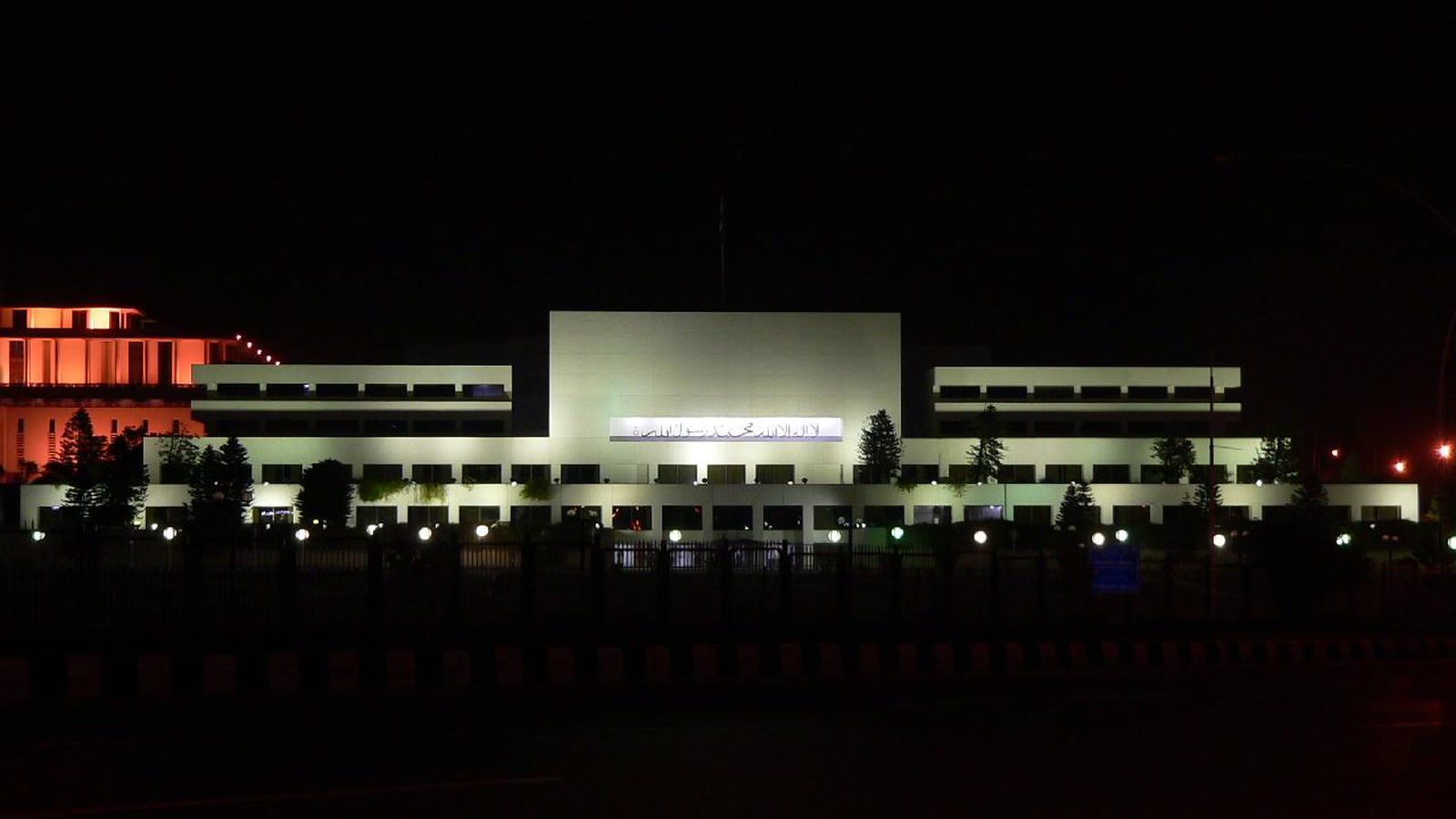
There is a perfectly respectable case for creating new provinces in Pakistan. Punjab alone has more inhabitants than many European countries combined; Balochistan is geographically too vast to be administered effectively from Quetta; southern Punjab has long complained of political and economic neglect; Hazara has demanded provincial status for decades; Karachi is governed with the efficiency one might expect from a city treated simultaneously as a cash machine, a battlefield and somebody else’s property.
In a functioning democracy, restructuring such a federation could be a legitimate response to population growth, regional inequality and administrative failure.
But Pakistan, unfortunately, is not a functioning democracy; and the proposal has not emerged from a national debate, a parliamentary commission or a movement towards greater devolution. It has emerged from the mouth of Field Marshal Asim Munir in his latest avatar: Chief of Defence Forces, army chief, nuclear custodian, lifetime beneficiary of constitutional immunity and now, apparently, part-time cartographer.
Munir reportedly raised the need for new provinces while addressing business leaders in Karachi. Interior Minister Mohsin Naqvi, one of the more industrious civilian auxiliaries of the military establishment, promptly urged political parties to “settle” the matter. MQM-P politicians then began publicly supporting what they described, with refreshing candour, as Munir’s “vision”.
Proposals circulating in the Pakistani media envisage replacing the existing four provinces with as many as twelve administrative units, although no official map, detailed draft or transparent set of criteria has been presented yet.
This deliberate vagueness is not incidental. It allows the establishment to market the proposal simultaneously as administrative modernisation, economic decentralisation, ethnic accommodation and better governance, while avoiding the only question that matters: who will gain power from the new arrangement? The answer is unlikely to be the people living in those provinces.
Pakistan’s constitutional coup has proceeded in stages. The February 2024 elections produced a Parliament whose composition bore only an approximate relationship to the votes cast, after the state had dismantled Imran Khan’s party, imprisoned its leadership, removed its electoral symbol and ensured that the winning independents could not translate their popular mandate into government.
The 26th Amendment then weakened judicial independence and gave the political executive greater influence over the appointment of the chief justice.
The 27th completed the personal enthronement of Munir: it placed the armed services under his unified command, extended his tenure, reinforced executive control over constitutional adjudication and granted lifetime immunity to the only serving five-star officer in the country. Pakistan did not abolish democracy. It preserved the scenery while transferring the theatre to Rawalpindi.
The proposed reorganisation of the provinces would be the logical next step. After neutralising elections, Parliament and the judiciary, the military establishment is turning towards the last remaining centres of autonomous political power: the provinces. The objective is not necessarily to abolish federalism outright, but to break it into pieces too small, too dependent and too politically fragile to resist the centre.
Under the 18th Amendment, passed in 2010, substantial powers were transferred from Islamabad to the provinces, including control over education, health and other important areas of governance. The amendment also strengthened the provincial claim to national resources through the National Finance Commission award. The military establishment has never been particularly fond of this arrangement. Provincial autonomy means that money, authority and natural resources cannot all be administered from Islamabad under Rawalpindi’s supervision. More seriously, it allows political parties, ethnic movements and provincial governments to develop independent mandates.
The campaign for new provinces therefore intersects with another establishment priority: revising the distribution of revenue between the federation and the provinces.
Islamabad argues that debt servicing, defence expenditure and the costs of the federal government leave it without sufficient resources. This is true in the same sense that a household might run short of food after allowing one of its members to purchase tanks, missiles, housing societies, fertiliser factories, banks and golf courses. Pakistan’s latest budget increased defence spending by 18 per cent, to three trillion rupees, while development expenditure was squeezed to satisfy the IMF. The fiscal problem is real; its official diagnosis is slightly less convincing.
Creating smaller provinces could provide the constitutional pretext for renegotiating both the NFC award and the balance established by the 18th Amendment. It could also allow the centre to impose a new political architecture before provincial populations understand precisely what they are being asked to surrender.
What is being advertised as devolution may become recentralisation through multiplication: more governors, assemblies, cabinets and bureaucracies, but less actual power in each of them.
The political targets are not difficult to identify. Dividing Khyber Pakhtunkhwa would weaken the principal provincial base of PTI and fracture a Pashtun political space already subjected to military operations, enforced disappearances and an undeclared war conducted in the name of fighting terrorism. A Hazara province can be defended on administrative and historical grounds, but under the present regime it would also carve away territory from a government that remains politically hostile to Munir.
In Punjab, new provinces could weaken both the Sharif family’s traditional power structure and Imran Khan’s enormous electoral support. The PML-N may calculate that a carefully designed partition would preserve its central Punjabi stronghold while placing troublesome regions under more manageable elites. It would be an exceptionally Pakistani bargain: the civilian dynasty agrees to amputate part of its own political body in return for permission to retain the rest.
Sindh is even more explosive. The creation of a Karachi-based province has long been demanded by sections of the MQM and fiercely resisted by the PPP and Sindhi nationalist forces. Separating Karachi from the rest of Sindh would not merely improve municipal administration. It would remove Pakistan’s financial capital, ports and principal revenue centre from the control of the Sindh government, crippling the PPP’s provincial power and reopening an ethnic conflict between Sindhi and Urdu-speaking communities that the establishment has manipulated for decades. No wonder Sindhi lawyers, writers and political organisations have already begun describing the proposal as a threat to the integrity of their homeland.
Balochistan reveals the plan’s most sinister possibilities. The province contains the resources Islamabad desperately wants and the population it has never succeeded in governing by consent. Dividing it into several smaller units could dilute Baloch demographic and political claims, separate mineral-rich areas from the broader national movement and manufacture provincial administrations dependent upon federal patronage and military protection.
Gwadar, Reko Diq, Saindak and the routes connecting Pakistan to Iran and Afghanistan would become easier to administer as strategic assets rather than parts of a Baloch homeland.
This would be presented, naturally, as bringing government closer to the people.
The same state that disappears Baloch students, fences Gwadar, crushes peaceful marches and treats entire districts as hostile territory has suddenly discovered an enthusiasm for local empowerment. Rawalpindi has always had a touching concern for Baloch welfare whenever copper, gold, ports or Chinese investment are involved.
There are also unresolved constitutional consequences. Altering provincial boundaries requires two-thirds support in the affected provincial assembly as well as in both houses of Parliament. Some legal experts argue that the Constitution does not even contain an explicit mechanism for creating entirely new provinces and would first require a broader amendment.
The composition of the Senate would have to be reconsidered because each province currently receives equal representation. Twelve provinces would therefore transform not only the map but the structure of federal power.
Under ordinary circumstances, these obstacles would demand years of negotiation and genuine popular consent.
But Pakistan has recently demonstrated how constitutional amendments are passed: opposition leaders are jailed, members of Parliament are pressured or made to disappear, debate is compressed into a few convenient hours and the final text emerges only when the necessary votes have been assembled.
The Constitution is no longer treated as the limit of state power. It has become the stationery on which military decisions are printed.
New provinces could, one day, make Pakistan more governable and more representative. They could answer genuine demands in southern Punjab and Hazara, reduce the distance between citizens and provincial capitals, and correct the grotesque imbalance created by a Punjab containing more than half the country’s population.
But such a reform would require elected governments, independent institutions, transparent criteria, referendums in affected areas and firm protection of provincial resources and cultural identities.
None of those conditions exists today. Munir’s Pakistan is moving in the opposite direction: from covert military supremacy to its legal and territorial institutionalisation. The 27th Amendment placed the army chief above the armed forces, beyond ordinary accountability and safely inside the Constitution.
The proposed provincial reorganisation would place the federation beneath him.
The constitutional coup is no longer merely about ensuring that Asim Munir cannot be removed.
It is about rebuilding Pakistan so that, even after he eventually departs, no civilian institution, province or elected majority will again be strong enough to challenge the system he leaves behind.
The field marshal has already acquired a new Constitution. Now he appears to want a new country to go with it.


Reader comments
Subscribers can join the conversationSign in to join the conversation. Comments are open to everyone with a free account.
Sign in or create accountLoading comments…