
Britain has long regarded sovereignty as one of the defining principles of its political identity. Parliament legislates in the name of the British people, governments claim to pursue an independent foreign policy, and successive prime ministers have insisted that Britain's national interest remains the guiding force behind major strategic decisions.
Yet an increasingly uncomfortable question is beginning to emerge. How sovereign is Britain when so much American military infrastructure, intelligence capability and legal privilege operates within its borders?
This is not an argument against the United States. Britain and America have been close allies for more than eighty years, and the so-called Special Relationship has shaped defence policy, intelligence cooperation and diplomacy since the Second World War. The more pertinent question is whether that relationship still resembles a partnership of equals, or whether Britain has gradually become the junior partner—one whose room for independent decision-making narrows whenever Washington's strategic interests are engaged.
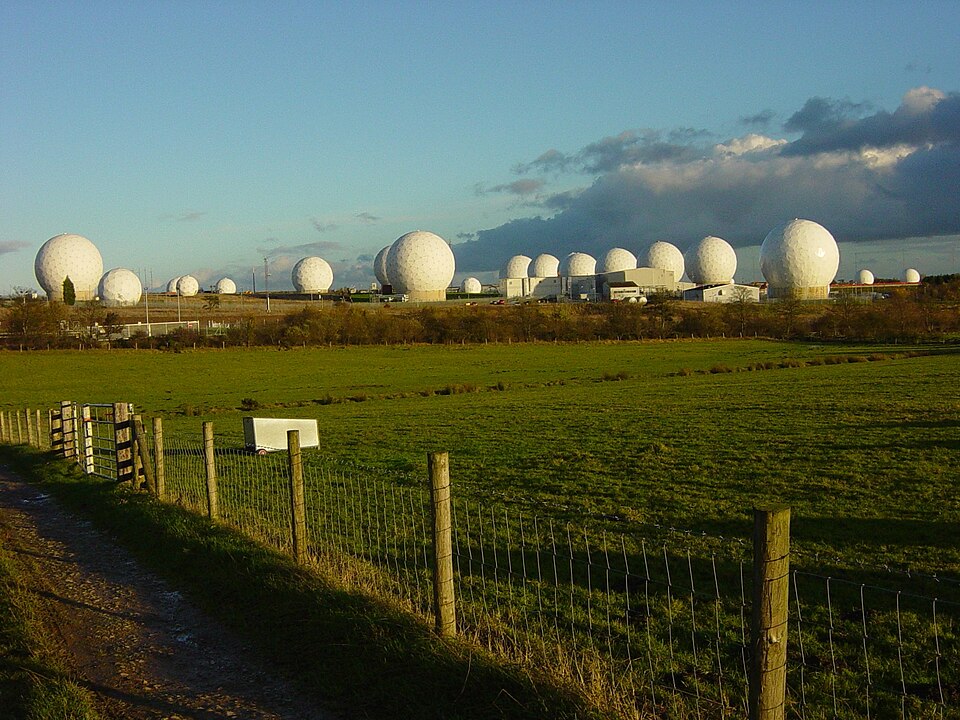
The extent of the American military presence in Britain illustrates why this debate has become increasingly relevant. Public records show that the United States Air Force has maintained a continuous presence in the United Kingdom since 1942. Today, American forces operate from a network of British installations including RAF Lakenheath, RAF Mildenhall, RAF Fairford, RAF Croughton and RAF Menwith Hill, among others.
Although these remain officially British bases, several serve as vital components of America's global military architecture. RAF Lakenheath hosts US fighter squadrons, RAF Fairford regularly supports long-range bomber deployments, while Menwith Hill and RAF Croughton have become synonymous with intelligence gathering, communications and surveillance.
Whether Britain benefits from these arrangements is almost beside the point. The more significant question concerns who ultimately exercises control when international tensions escalate.
That question resurfaced earlier this year when the House of Commons Library confirmed that the British Government authorised the United States to use UK airbases during limited defensive operations against missile facilities in Iran. Constitutionally, the decision rested with London. Politically, however, many critics wonder whether any British government could realistically refuse such a request from Washington during a major international crisis.
The issue becomes even more sensitive when nuclear weapons enter the discussion.
Recent reports have suggested that the United States intends to invest more than $4 billion upgrading military and intelligence facilities across Britain, including construction projects in Suffolk reportedly linked to the possible storage of nuclear weapons. If accurate, the implications extend well beyond defence policy.
How much does Parliament know about these developments? How much information is available to local communities? To what extent are British citizens aware of what may be stored—or potentially deployed—from facilities situated on British soil?
These questions strike at the heart of what sovereignty actually means. It is not merely a constitutional concept or a patriotic slogan. Sovereignty is measured by who exercises command, who carries legal responsibility and, ultimately, who answers to the electorate.
The legal position surrounding American military personnel in Britain raises similar questions.
Under the NATO Status of Forces Agreement and Britain's Visiting Forces Act 1952, jurisdiction over criminal offences involving foreign service personnel can fall to either British courts or the sending state, depending upon the circumstances. Officially, the system is designed to balance the interests of both countries.
In practice, however, public confidence is tested whenever serious cases appear to bypass the British justice system.
Recent reporting surrounding the Sarah Steele case alleged that an off-duty American fighter pilot accused of serious violence in Cambridge was tried before a United States military court rather than in a British civilian court. Downing Street reportedly described the circumstances as "very concerning", while the Ministry of Justice indicated that it would examine the matter further.
Regardless of the legal technicalities, the public perception is straightforward. If an alleged offence occurs in Britain against someone in Britain, yet is dealt with under American military jurisdiction, many citizens will inevitably ask whether British law truly applies equally to everyone within the country's borders.
Justice, after all, must not only be administered fairly—it must also be seen to be administered fairly.
Questions about sovereignty extend beyond military installations and legal arrangements into foreign policy itself.
For decades, critics have argued that Britain too readily aligns itself with Washington's strategic objectives. The Iraq War remains the most frequently cited example, but similar debates have surrounded sanctions policy, intelligence cooperation and Britain's role in conflicts across the Middle East.
Supporters of the alliance argue, with justification, that Britain and America share democratic values, intelligence capabilities and common security interests. Close cooperation, they contend, enhances Britain's international influence rather than diminishing it.
Even so, the question refuses to disappear. When Britain supports American military operations or adopts Washington's diplomatic positions, is it doing so because those policies genuinely serve British interests, or because successive governments have become institutionally dependent upon the relationship itself?
That remains a matter of political judgment rather than established fact. Nevertheless, the scale of defence integration and intelligence cooperation ensures that the question deserves serious public scrutiny rather than casual dismissal.
The same caution applies to claims surrounding Sir Keir Starmer's resignation.
Some commentators have suggested that political figures in the United States appeared to anticipate Starmer's departure before it was formally announced in Britain. Such claims should be approached carefully. They do not, in themselves, demonstrate foreign influence over British politics.
What can be stated with confidence is that Starmer announced his resignation on 22 June 2026 following sustained political pressure within the Labour Party. Whether overseas observers correctly anticipated that outcome is an interesting political question, but anticipation should never be mistaken for evidence of external control.
Maintaining that distinction is essential if legitimate concerns about sovereignty are to retain their credibility.
Ultimately, framing Britain as an "occupied country" may generate headlines, but it risks oversimplifying a far more nuanced reality.
A more useful question is whether Britain has become structurally dependent upon American power.
Military dependency is reflected in shared bases, integrated command structures and nuclear planning. Legal dependency appears in jurisdictional arrangements that sometimes place foreign personnel beyond the reach of ordinary British courts. Diplomatic dependency can be seen whenever governments instinctively align themselves with Washington, even where domestic opinion remains divided.
None of this means Britain has ceased to be sovereign in the constitutional sense. Parliament still legislates, British courts still function and governments continue to derive their authority through democratic elections.
Yet sovereignty can gradually erode without ever being formally surrendered.
A nation may retain its Parliament, its flag and its constitutional traditions while progressively losing meaningful control over its most consequential strategic decisions.
That is why this debate matters.
It is not anti-American to ask how much influence a foreign power exercises inside Britain. It is not anti-NATO to question legal arrangements or military basing agreements. Nor is it unreasonable for British citizens to expect transparency over the presence of foreign forces, the storage of nuclear weapons or the operation of intelligence facilities within their own country.
The issue is accountability.
Britain's alliance with the United States has undoubtedly brought strategic benefits for both nations. But alliances are strongest when entered into freely by sovereign states acting in their own national interests—not when one partner appears increasingly unable or unwilling to say no.
That is the question Britain now faces.
Not whether it should remain America's closest ally—but whether it can continue to do so without quietly becoming America's client state.

Reader comments
Subscribers can join the conversationSign in to join the conversation. Comments are open to everyone with a free account.
Sign in or create accountLoading comments…