
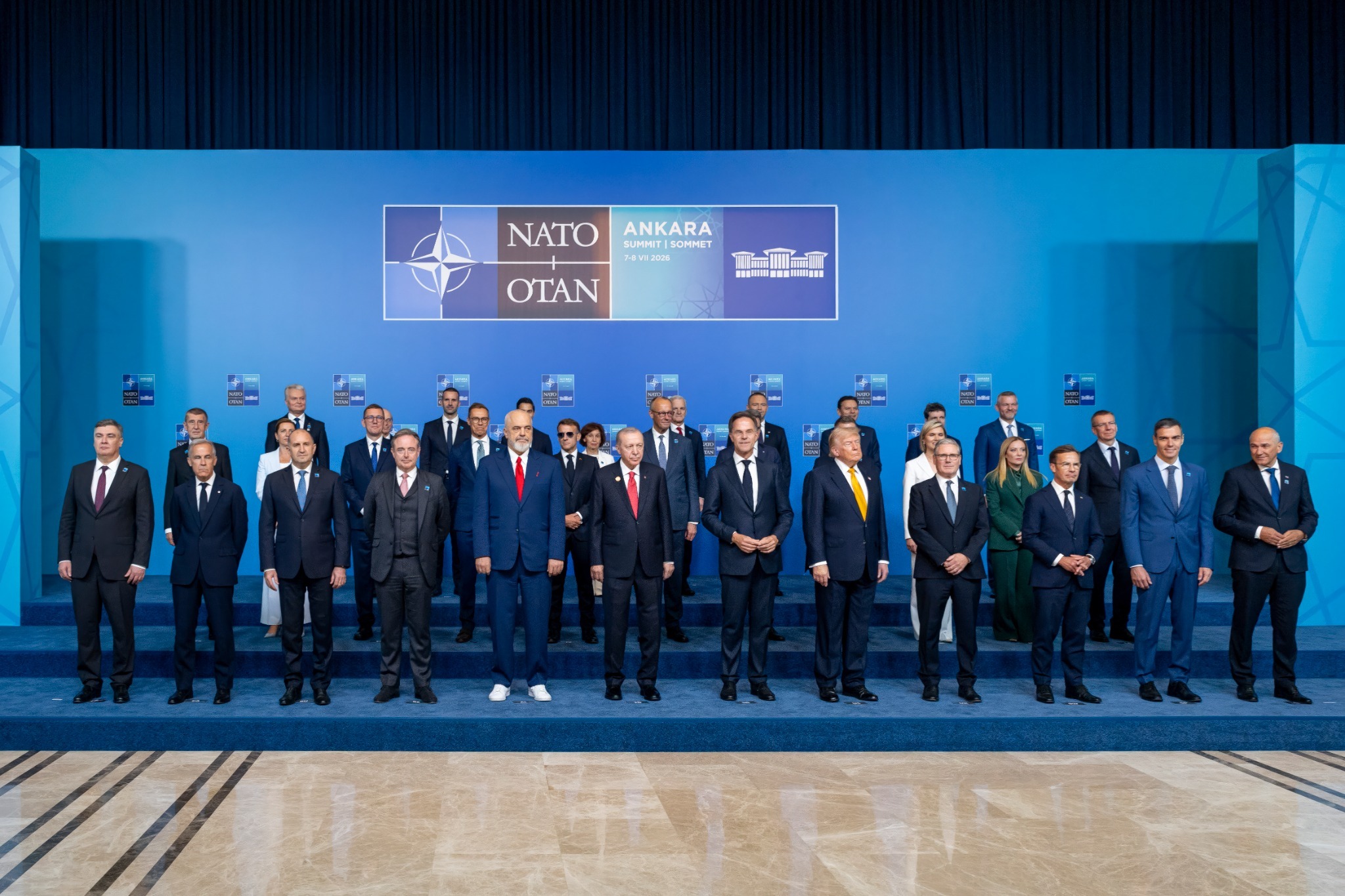
When leaders give gifts, they invariably bear a message. When Ukrainian President Zelenskyy spoke in the British Parliament in early 2023, he presented the Speaker with a Ukrainian fighter pilot’s helmet, highlighting his appeal for fighter jets to defend his country. Ukraine has since received them. The agenda at this year's NATO summit in Ankara, Türkiye, was defence manufacturing, and the gifts reflected it.
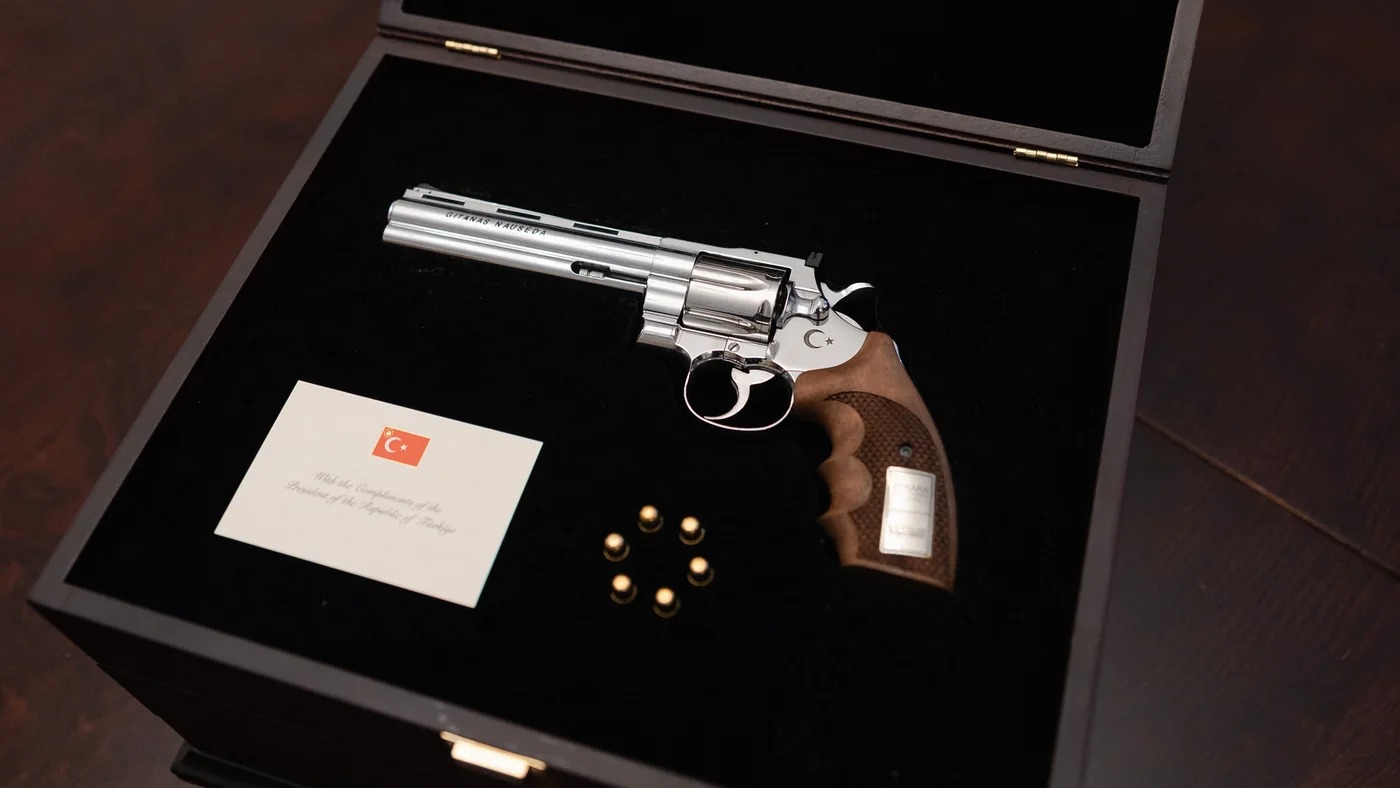
Turkish President Recep Tayyip Erdogan gave each head of state attending a personalised revolver with live ammunition. The message was pretty clear: Turkey has one of the world’s largest defence industries. We are open for business.
At The Hague last year, NATO’s European members pledged a new target of 5% military spending (3.5% on core defence requirements, 1.5% on defence-related investments). This year’s show was about making all that a concrete reality, the ‘how’ following 2025’s ‘what’. Despite all the bluster and, well, everything Trump said (back to that later), quite a bit was agreed. Most notable are two new initiatives: the NATO Front Door for Industry and the NATO Engine.
The Front Door for Industry is quite simply a new web portal through which companies can directly engage with NATO procurement, innovation programmes and capability development. It’s aimed at demystifying and streamlining military procurement and it’s remarkably easy to use.
Right now, if you’re a vehicle manufacturer, you can have a look here and express your interest in providing NATO with 200 4x4 pickup trucks (supply opportunity No. 26LBS003 if anyone is interested). They’ll even accept stock or used vehicles if you can guarantee a shorter lead time. There are currently 488 different adverts to supply everything from office space in Belgium (24OEM028) to cloud computing (26LQM001) and 120mm tank shells (26LBS018). Now, the big defence primes may not like this too much, as they already had access to these requests. However, if you’re new to the market or two chaps in a shed who’ve made something remarkable (looking at you, Accuracy International), then this is going to be genuinely useful.
The NATO Engine is rather different and potentially more consequential, currently a pilot scheme due for launch in September, the idea behind it is to unlock unused industrial space. The Request for Interest (Ref. RFI 02072026) states:
“The NATO Engine will operate as a network bringing together manufacturers and factories who have flexible production capacity together with companies, in particular non-traditional suppliers, who require facilities to scale their production under a contractor- or factory-for-hire model.”
What’s that mean? Well, if you own a factory that manufactures, say, lathes, and you have spare capacity. You can sign up to the NATO Engine and be linked with an engineer who’s designed defence technology but struggles with scaling up production. You can use your factory’s spare capacity to make that new bit of kit. Everyone makes money and NATO nations get their order.
What’s interesting about the initiative is that, again, it’s not focused on the big defence primes. It states that NATO is seeking to increase industrial capacity “in particular from the civilian sector, to scale new technological products to meet Allied defence needs”.
Both initiatives draw from lessons learned in Ukraine. They’ve set up scores of factories making everything from attack drones to radio jammers to fishing nets for anti-drone barriers. Much of this isn’t done at the direction of Kyiv. They’re civilian manufacturers who’ve switched to defence off their own back. I’ve been to some of the factories myself, they’re often small and could accurately be described as a cottage industry, with many of the people working there being volunteers. Of course, Ukraine is fighting for its life at the moment and NATO is not. However, the initiatives lay the groundwork for a quick switch to defence production and help accelerate manufacturing in the present, especially in Europe, which is ramping up significantly.
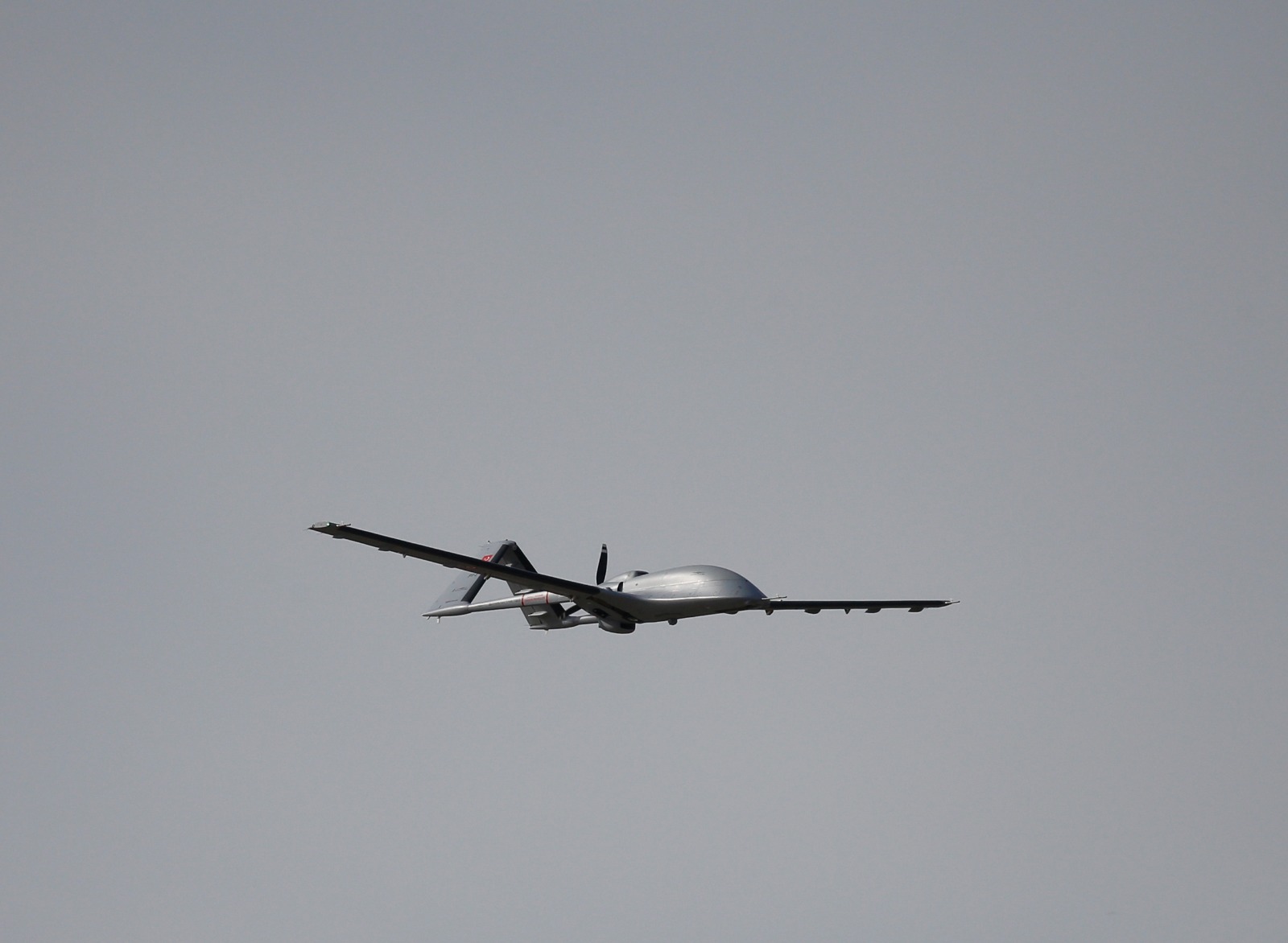
These procurement strategies are undoubtedly a good thing for the alliance. I was surprised that, despite the summit declaration stating that: “We will continue our work to eliminate defence trade barriers among Allies and leverage NATO’s partnerships to maximise defence industrial depth and cooperation, European companies are the ones likely to gain the most from these two initiatives.”
Europe’s SAFE and Resilience 2030 (aka ReArm Europe) are pretty clear on the requirements needed to unlock funding. NATO did announce $50 billion in new procurements, but to access the SAFE money, most European procurements need to have 65% of their value originating from the EU/EFTA or Ukraine. This does not currently include the US, Türkiye and the UK.
This was not mentioned (bar one exception) at Ankara. NATO and the EU are pursuing similar industrial objectives while, on paper, carefully avoiding stepping on each other’s toes. But it seems inevitable as there is so much space for overlap. The summit documents never answer an obvious question: what happens when a requirement on the Front Door for Industry is for an EU nation and funded through SAFE? Does that lock out US or Turkish firms?
Imagine that NATO identifies a need for 500 drones. Front Door publishes that need and Germany decides to buy them using SAFE funds. These drones cannot simply be sourced from any NATO company, the procurement has to satisfy SAFE’s content and eligibility requirements. The same may apply for the NATO Engine.
Erdogan noted this. At the opening of the summit on Wednesday he said: “Restrictions among allies on defence cooperation, especially in the defence industry, must be lifted.”
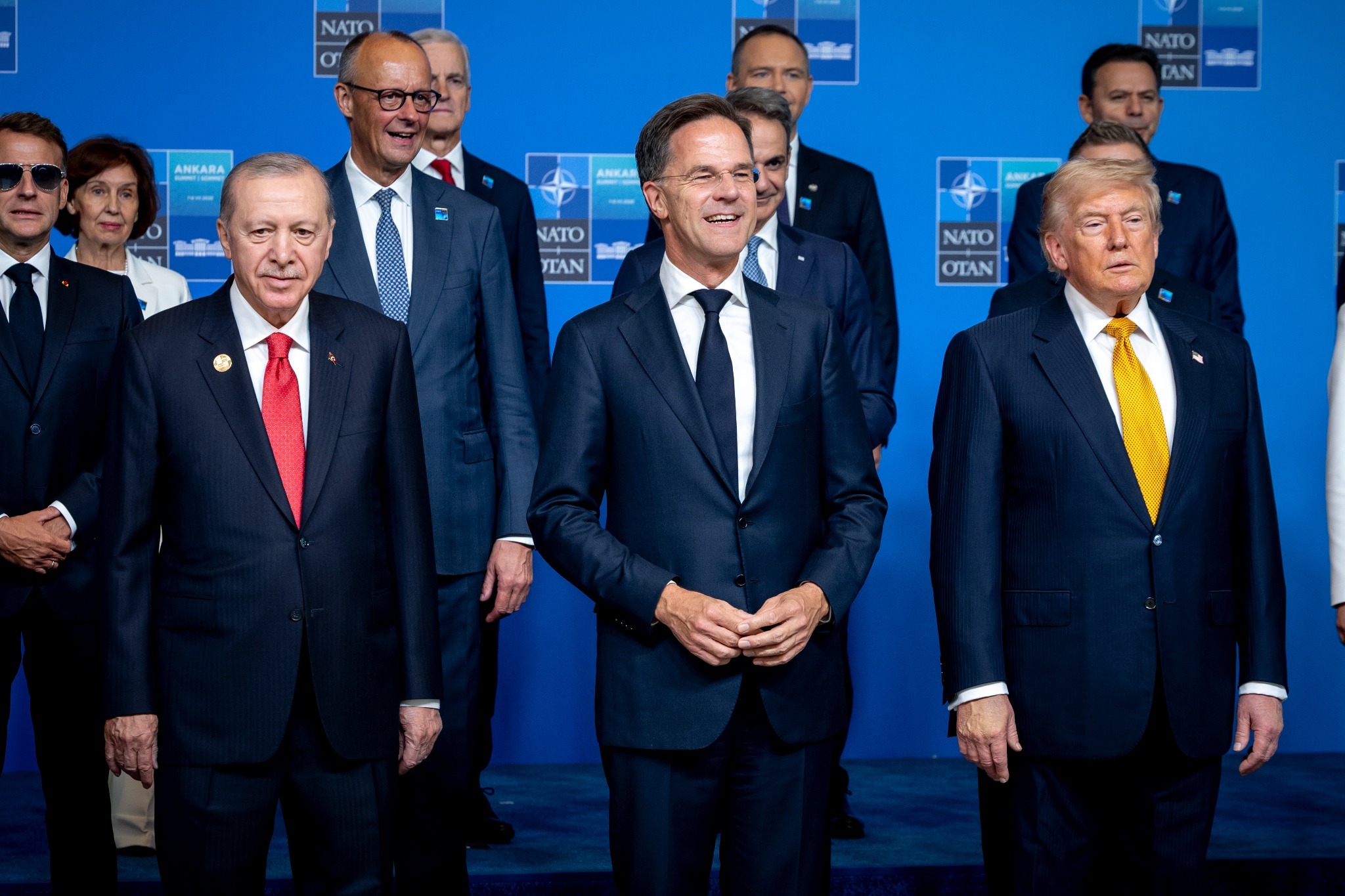
This was seemingly ignored by Trump. Perhaps Europeans have managed to simply say words to the effect of: “This is how it’s going to be” and the White House has decided not to pass comment. Surprising, given that Trump does not shy from speaking his mind. At the summit, he re-ignited his intentions to conquer Greenland (Danish territory) and ‘ordered’ (he doesn’t have the power to do it) that all trade ties with Spain be cut.
Trump has been speaking out against NATO since the late 1980s, when he spent around $95,000 on newspaper adverts criticising US alliance commitments after a trip to Moscow in 1987, leaving some to speculate on his motivations.
Regardless, it’s clear that Trump sees NATO as less an alliance of friends that acts as a significant force multiplier for the US than a transactional arrangement that only has value if he can see the benefit. He’s made it clear on multiple occasions that he cannot.
By the end of the summit, Trump seemingly u-turned, stating that there had been love and “a lot of unity.” Well, there certainly seems to be in the offices of European defence companies. I wonder how long the same will last in the US or Türkiye.
As I said last week, don’t expect European defence resurgence to be immediate. There are a lot of areas where Europe has a technology and production gap: fifth-generation fighters, global logistics chains and ballistic missile defence. The last of which came up at Ankara after Trump said that he’d be giving Ukraine the licensing rights to build their own Patriot missiles.
The Patriot is an excellent system. Europe doesn’t have an equivalent yet (France and Italy are working on one, as are the Ukrainians themselves) and Ukraine needs them yesterday. Ballistic and cruise missiles are the only weapons that Russia has that regularly get through Ukrainian air defence. When Trump made the announcement, many chalked this up as a huge win for Ukraine.
I’d hasten to pour cold water on this. Ukraine needs them now, not in the months or years it will take to get production up and running. There is also the question of how the logistics chain will work. The factories could be set up in Germany, which already has rights to Patriot production. If not, how are all the parts getting to Ukraine? Where will they be assembled? It would also leave production dependent on American intellectual property, sensitive components and political approval.
So, is Trump’s Patriot missile announcement a real boon? A meaningless off-the-cuff Trumpism? Or, perhaps, an attempt to keep Europe buying at least one vital system which the US would maintain control over?
That’s the contradiction at the heart of the Ankara summit. NATO announced a larger, faster and more flexible defence industry stretching across the alliance. Europe could use the initiatives NATO announced to strengthen its own manufacturers and reduce its reliance on the United States. The Front Door and NATO Engine may be alliance-wide, but SAFE may influence which companies land the contracts across 18 of the 32 allies. Given the scale of European rearmament, the biggest beneficiaries are likely to be European manufacturers, with American and Turkish firms at risk of finding themselves excluded from SAFE-funded procurements facilitated by the very NATO initiatives signed off in Ankara.
NATO has agreed to re-arm, the next struggle in the alliance may be over who gets to make the weapons. Europe has made the first move, Erdogan’s revolvers are a clear response to that. What the US does about this is currently an open question.

Reader comments
Subscribers can join the conversationSign in to join the conversation. Comments are open to everyone with a free account.
Sign in or create accountLoading comments…