
For more than seven decades, Pakistan's security establishment has managed the insurgency in Balochistan not solely through conventional military force but through an evolving ecosystem of proxies, tribal militias and state-sponsored Lashkars. Governments have changed, commanders have come and gone, insurgencies have risen and fallen, yet one constant has endured: where regular military power reaches its limits, irregular forces are recruited to fill the gap.
Parrhesia News can now reveal what appears to be the latest evolution of that strategy.
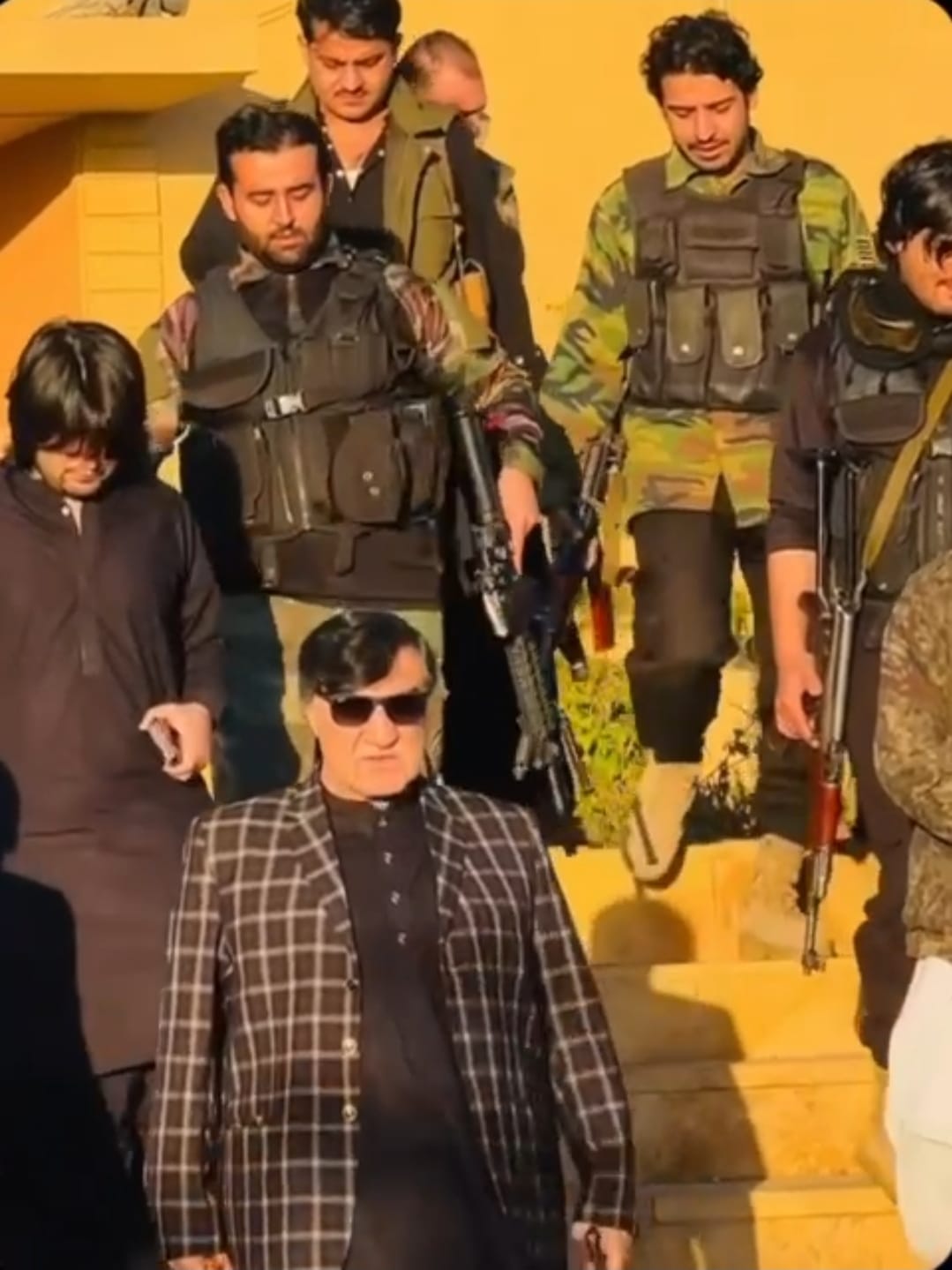
Following an investigation conducted by this publication, supported by authenticated video evidence and corroborated through multiple independent sources inside Balochistan, we have established that former members of Afghanistan's dissolved National Security Forces are now serving within armed formations aligned with Pakistan's counterinsurgency apparatus in Balochistan.
The significance of this finding extends well beyond the identities of the men appearing in footage obtained by Parrhesia News.
It raises profound questions about the regional consequences of Afghanistan's collapse, Pakistan's long-standing reliance on proxy warfare, and the international community's abandonment of thousands of trained soldiers who have since become vulnerable to recruitment by the highest bidder.
The Investigation
The evidence reviewed by Parrhesia includes video material obtained from sources on the ground and subsequently verified through an independent network of local contacts.
The investigation was led jointly by this publication's authors, with extensive field verification undertaken by veteran Pakistan-Afghanistan journalist Shahid Qazi, whose reporting on regional security, human rights and political affairs spans more than two decades. A graduate in Political Science from the University of Karachi, Qazi previously worked with NBC News (USA) and ITV News (UK) before establishing The Unmuted Voice, focusing on Pakistan, Afghanistan and Balochistan.
According to the investigation, the men appearing in the footage have been identified by multiple local sources as former members of Afghanistan's security forces who fled their country following the Taliban's return to power in August 2021.
A still from video material reviewed during the investigation. Parrhesia News says the identities and reported roles were corroborated through sources on the ground.
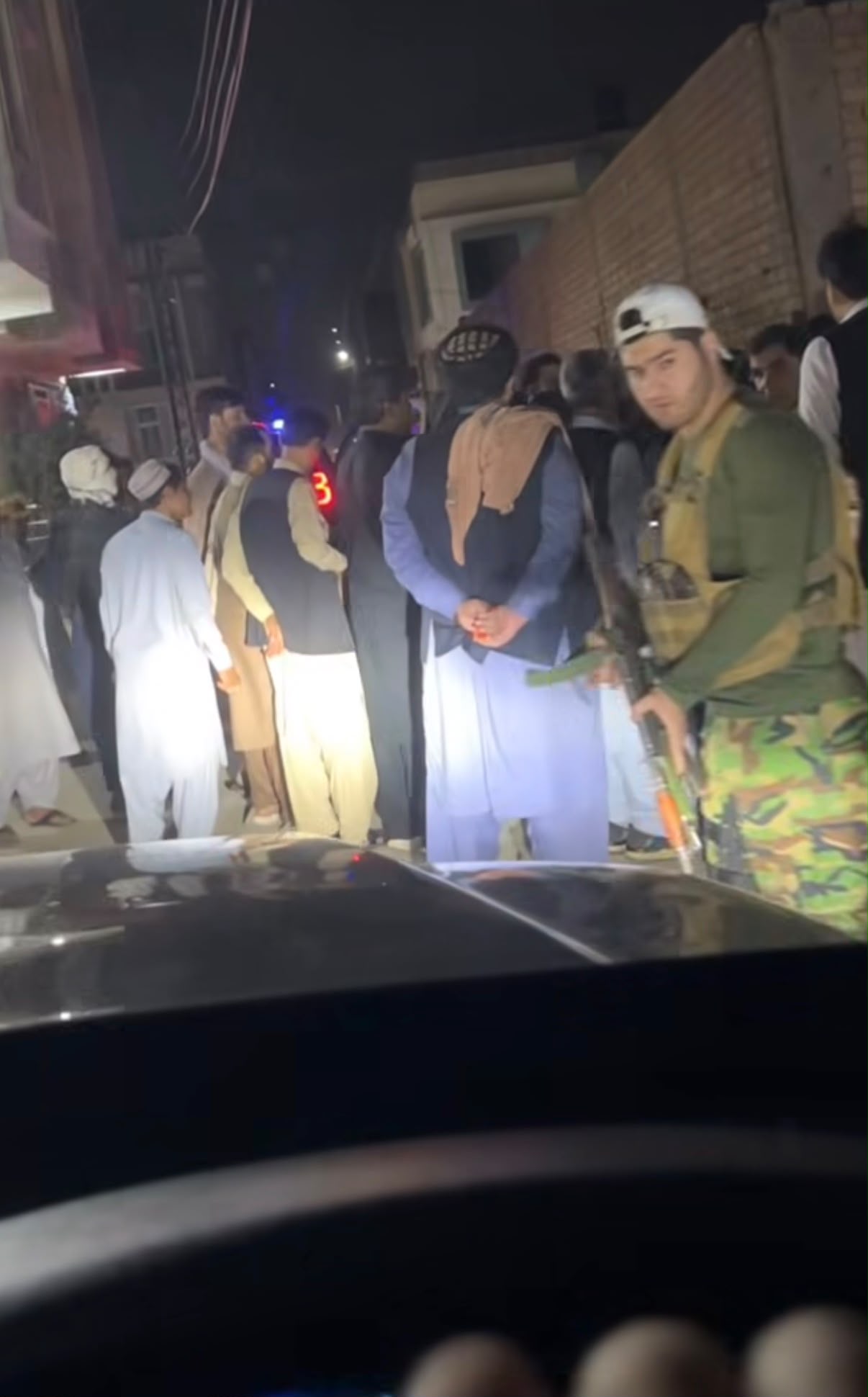
Their current role, according to sources familiar with their deployment, is to support armed Lashkars operating under the patronage of Pakistan's security establishment in Balochistan.
These formations have historically supplemented the Pakistan Army, Frontier Corps (FC) and intelligence agencies by undertaking local security operations, providing intelligence, maintaining territorial control and confronting Baloch insurgent organisations.
The emergence of former Afghan soldiers within these networks represents a notable development in Pakistan's counterinsurgency model.
A Long-Established System
The existence of state-sponsored Lashkars in Balochistan is neither new nor controversial.
For decades, Pakistan has relied upon locally recruited tribal militias and armed intermediaries to project state authority across a province comprising approximately forty-four per cent of the country's landmass.
Successive insurgencies have seen different personalities emerge, yet the underlying structure has remained remarkably consistent.
These armed groups have frequently operated alongside state security institutions while maintaining sufficient separation to provide plausible deniability.
Human rights organisations, investigative journalists and local activists have long documented allegations ranging from enforced disappearances and collective punishment to intimidation and economic predation within communities caught between insurgents and pro-state militias.
The identities of the commanders have changed; the strategic doctrine has not. What appears to have changed is the composition of the manpower.
Why Recruit Former Afghan Soldiers?
The answer may lie not in ideology but in simple military economics.
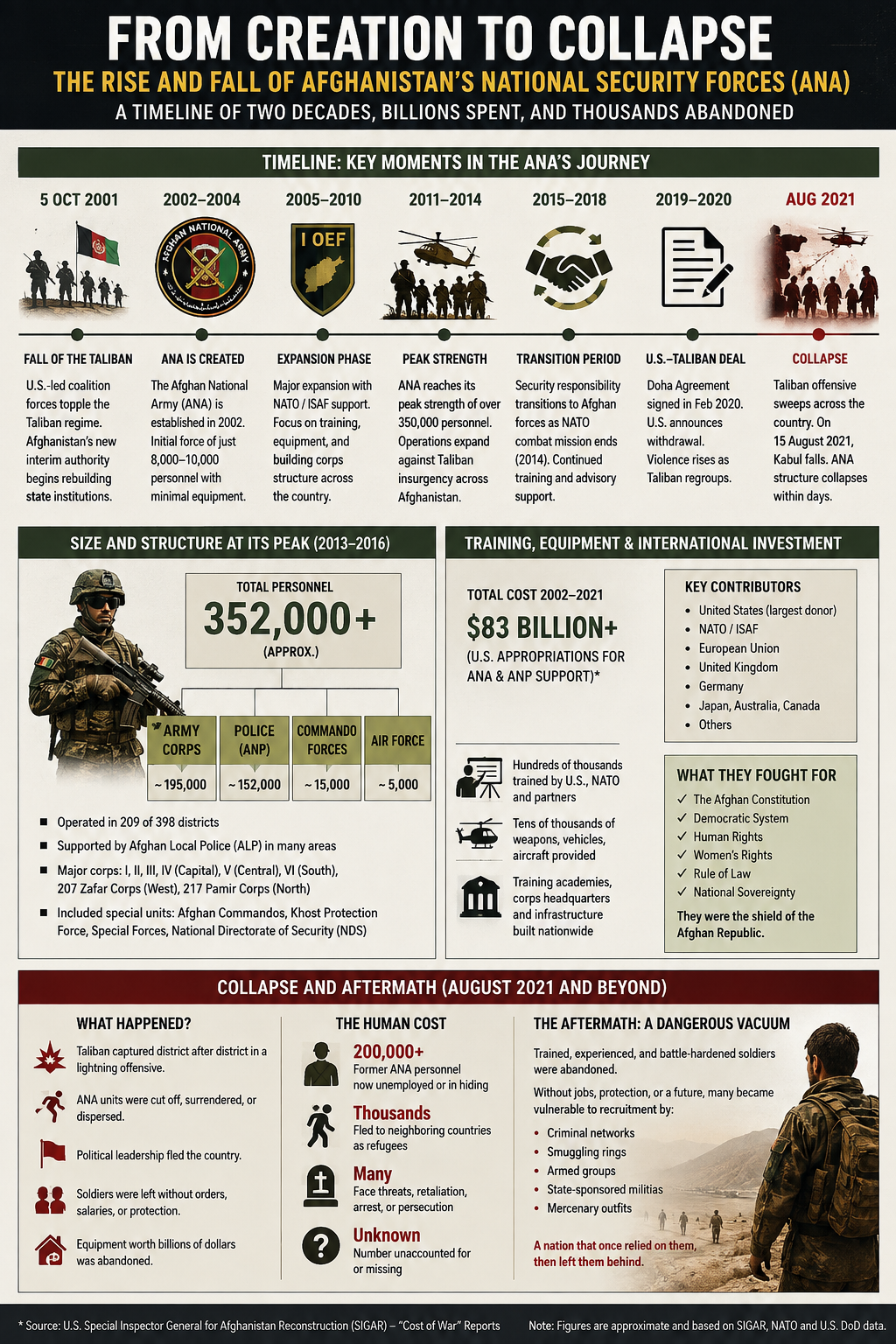
The collapse of the Afghan Republic left tens of thousands of professionally trained soldiers unemployed almost overnight.
Many had served alongside NATO forces. Many possessed years of combat experience. Many suddenly found themselves hunted, impoverished and abandoned.
History demonstrates that large numbers of trained soldiers rarely remain inactive when legitimate employment disappears.
Across the world, failed states have repeatedly produced markets for military labour.
From the Wagner Group's recruitment of former Russian servicemen to Gulf states employing Sudanese and Yemeni fighters, modern conflicts increasingly rely upon experienced foreign manpower operating through deniable structures.
South Asia appears no different.
For Pakistan, recruiting former Afghan soldiers offers several obvious advantages.
They possess military discipline.
They understand frontier warfare.
They require little additional training.
Most importantly, they can reinforce overstretched local proxy networks without formally expanding Pakistan's regular armed forces.
An Army Under Pressure
This development also raises uncomfortable questions about Pakistan's own military capacity.
The Pakistan Army today is simultaneously engaged in counterterrorism operations, internal security duties, border management, political intervention and an expanding range of domestic responsibilities.
Its critics argue that decades of political engineering, institutional corruption and expanding commercial interests have steadily diverted the military away from its primary professional mission.
Maintaining control over Balochistan—a vast province characterised by difficult terrain and persistent insurgency—has therefore become increasingly dependent upon irregular formations capable of operating where conventional military deployments prove politically or operationally costly.
If former Afghan soldiers are now supplementing these forces, it suggests a security establishment seeking additional manpower without publicly acknowledging the extent of its operational overstretch.
Mercenaries—Not Ideologues
Perhaps the most important finding of this investigation concerns motivation.
Sources consistently emphasise that these former Afghan soldiers are acting primarily as mercenaries.
Their participation appears driven by survival rather than ideology.
Having lost their state, their salaries and their future after 2021, many simply sought employment wherever military skills remained valuable.
That distinction matters.
The evidence gathered during this investigation does not suggest that these men have embraced Pakistan's strategic objectives toward Afghanistan.
Indeed, several sources maintain precisely the opposite.
While willing to fight in Pakistan for financial survival, they remain unwilling to participate in any future military campaign directed against Afghanistan itself.
If accurate, this represents an important limitation on Islamabad's ability to convert former Afghan soldiers into instruments of regional influence.
They may serve Pakistan's internal security objectives.
They are unlikely to become willing participants in another attempt to reshape Afghanistan's political future.
Divide, Rule—and Manage
This investigation also invites a broader strategic interpretation.
For decades, Pakistan's security establishment has pursued influence across Afghanistan by cultivating multiple centres of power rather than relying upon a single political actor.
Maintaining relationships across competing factions has long formed part of Islamabad's regional security doctrine.
Recruiting former Afghan soldiers into Pakistan's internal proxy networks may therefore serve two complementary purposes.
First, it strengthens counterinsurgency operations inside Balochistan.
Second, it preserves influence among elements of Afghanistan's former security establishment should regional political circumstances change.
Whether this ultimately reflects strategic foresight or strategic overreach remains an open question.
History suggests that proxy forces rarely remain permanently loyal to those who employ them.
The International Community's Forgotten Responsibility
There is another actor whose responsibility deserves scrutiny.
The international coalition invested billions of dollars over two decades building Afghanistan's security institutions.
It trained officers.
It equipped soldiers.
It created one of the region's largest professional armies.
When Kabul fell, that investment was abandoned almost overnight.
Thousands of former soldiers were left without salaries, protection or credible resettlement pathways.
The consequences were entirely predictable.
When governments abandon trained military personnel without offering lawful alternatives, someone else will eventually purchase their expertise.
Today's mercenary is often yesterday's ally.
• Questions That Demand Answers
• Parrhesia's investigation raises a series of questions that merit official scrutiny rather than political dismissal.
• Who authorised the recruitment of former Afghan soldiers?
• Who finances their deployment?
• Through which intermediaries were they brought into these networks?
• What legal status do they hold inside Pakistan?
How extensive has this recruitment become?
And if foreign fighters are now required to reinforce Pakistan's proxy architecture in Balochistan, what does that reveal about the sustainability of the state's existing security strategy?
Neither Islamabad nor the international community can credibly ignore these questions.
Editorial Analysis
The appearance of former Afghan National Army personnel within Pakistan's proxy security architecture inevitably raises wider questions about Islamabad's long-standing ambitions in Afghanistan. For decades, Pakistan's security establishment has sought to shape political outcomes west of the Durand Line by cultivating armed proxies, exploiting rivalries among Afghan factions and maintaining leverage over successive governments in Kabul. According to regional security sources consulted by Parrhesia News, elements within the Pakistani establishment continue to view the current Taliban administration as insufficiently compliant with Pakistan's strategic objectives, particularly over the Tehrik-i-Taliban Pakistan (TTP), border disputes and Kabul's increasingly independent foreign policy. Against that backdrop, the recruitment of former Afghan soldiers may serve purposes extending beyond Balochistan. While there is no public evidence that these men have been deployed inside Afghanistan, their military experience, language skills and familiarity with the operational environment make them a potential reserve force should Pakistan seek to support future efforts aimed at influencing—or destabilising—the political balance in Kabul. Ironically, sources familiar with the recruited personnel suggest that many of these former soldiers harbour no desire to fight against their own countrymen, viewing themselves instead as mercenaries earning a livelihood after being abandoned by the international community. If that assessment is correct, Islamabad may find that while money can purchase military labour, it cannot necessarily purchase political loyalty.
This investigation is not simply about a handful of former Afghan soldiers appearing in one province.
It is about the evolution of warfare in South Asia.
The region is witnessing the emergence of an increasingly privatised security environment where states rely less upon uniformed soldiers and more upon deniable intermediaries, tribal militias and mercenary networks.
Balochistan may represent the latest laboratory for this model.
If so, the implications extend far beyond Pakistan.
The collapse of one state's army has become another state's manpower reserve.
That should concern every government that spent two decades building Afghanistan's security institutions before walking away from the men who served them.
The tragedy of these former Afghan soldiers is not merely that they have exchanged one battlefield for another.
It is that they now embody the ultimate failure of modern interventionism.
They defended a republic that no longer exists.
They were abandoned by allies who once celebrated their service.
And today, according to Parrhesia's investigation, some have become disposable instruments in a conflict that is not even their own.
South Asia has always produced proxy wars.
It is now producing a market for proxy soldiers.
That should alarm every government with an interest in the region's future.



Reader comments
Subscribers can join the conversationSign in to join the conversation. Comments are open to everyone with a free account.
Sign in or create accountLoading comments…