
The campaign to vilify the Pakistan Tehreek-e-Insaf (PTI) is in full swing. The ruling alliance needs to justify an unconstitutional and undemocratic move—the imposition of an emergency and governor’s rule in Khyber-Pakhtunkhwa (KP)—actions it claims to have fought against in the past.
PPP Chairman Bilawal Bhutto, who claimed just a few days ago that his party opposed imposing emergency rule in KP, radically changed his position while speaking in the National Assembly in support of governor’s rule. Targeting the PTI, he said that “They will have to accept, even if not publicly, but the responsible leadership of the opposition knows that the PTI itself carried out a political suicide attack on its KP government.” This approach attempts to craft and roll out a narrative where responsibility for the dissolution of the PTI-led government in KP is placed on the party that was actually the victim of the decision.
Prime Minister Shehbaz Sharif, who had publicly stated that the PTI should pursue talks and that he was open to sitting with the party leadership, defended the imposition of the emergency. He stated, “We made every possible effort to avoid taking this extreme step. We held negotiations with an open heart, but no positive response came from the other side.”
In their latest statements, after the dissolution of the provincial government and the imposition of emergency, one of the main arguments given by the federal government to justify its action is that the PTI-led government had failed to fight rising terrorism in the restive province. The PTI is being accused of being lenient towards groups like Tehreek-i-Taliban Pakistan (TTP). Addressing a presser after the removal of the PTI-led government, Information Minister Attaullah Tarar alleged that the PTI-led government had a “nexus” with terrorist groups. He said that “Terrorists have a clear say in how each district will be run.”
These are severe allegations, designed more to delegitimise the PTI than to provide a credible rationale for why a national party would behave in such a manner. Ultimately, the people of KP have consistently demanded peace, strongly opposing any further military operations in the region to prevent a recurrence of mass suffering and displacement. More importantly, the PTI has won three consecutive provincial elections in KP with an overwhelming majority. If claims that the party shares a "nexus" with terrorist organisations hold any water, why would the local population decisively vote for them three times—especially during the 2024 elections, when the entire state machinery was actively working against the party?
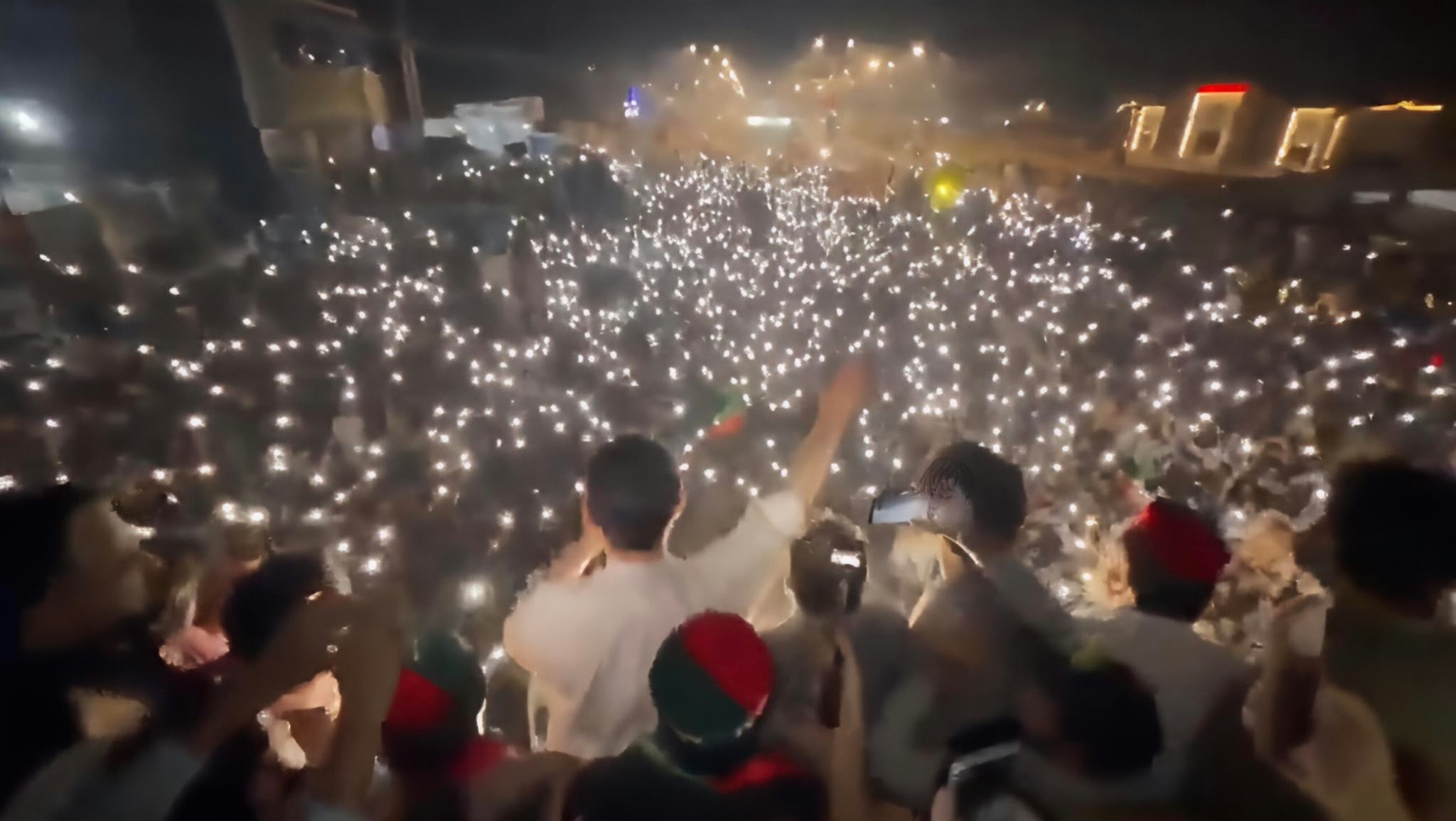
The reality is that the PTI had recently relaunched its protests and confrontational politics, once again using KP as its launching pad. PTI’s strong public backing was swiftly downplayed by state critics claiming that the party’s influence remains strictly confined to KP. In response to this rising momentum, KP Governor Faisal Karim Kundi firmly warned that the long march would not be allowed to proceed beyond Attock—the strategic border district connecting KP to Punjab. If the march didn’t have much support, what was the need to stop it?
This is precisely where the issue of provincial terrorism and rising insecurity is being utilised to justify the move. Ultimately, the only truly debatable aspect in this entire unfolding series of events is whether the PTI-led administration actually facilitated or hampered counter-terrorism efforts in KP.
That argument contains profound contradictions. If security was the primary concern, why did the proposed protest become the central issue in talks between the PTI and the federal government? This paradox is clearly illustrated by the stern warning issued by Interior Minister Mohsin Naqvi. When asked about the ministry's strategy for handling the PTI's planned September 27 march, he stated, “This time, we will fulfil our role completely. As I said, it will be once and for all.” Yet, even after those subsequent negotiations collapsed, Prime Minister Shehbaz Sharif still advised the PTI to let better sense prevail, abandon its march, and return to the negotiation table.
It is no secret that the hybrid government—in which the civilian leadership proactively abides by dictates from Rawalpindi—rationalises its decisions post facto. This reality is underscored by the sharp contradictions between the past statements of Bilawal Bhutto-Zardari, Shehbaz Sharif, and Mohsin Naqvi, and the position they have adopted following the imposition of emergency and governor’s rule in KP.
Still, if terrorism is the primary justification for this decision, why isn’t the same rule applied in Balochistan? As Prime Minister Shehbaz Sharif stated while justifying the decision: “Every day, our people, our armed forces, and our police personnel are being killed. There are daily sacrifices in Balochistan and Khyber Pakhtunkhwa. If this brutality is not completely eliminated, the progress we have made over the past two and a half years will come to a halt.” Under this logic, must we assume that "progress" will only halt because of KP, and not due to Balochistan? Data shows that Balochistan actually recorded the highest number of armed attacks, and its security situation remains the most severe. Yet, there is no sign that the Balochistan government will face dissolution.
The narrative being rolled out to justify the decision to impose emergency rule in KP fails to capture the ground realities; it obscures the fact that the federal government was simply done with the PTI-led provincial administration. This underlying message had been growing clearer over the last couple of months, as the local government was increasingly overlooked even in routine administrative work. This marginalisation coincided with the steadily expanding administrative role of Governor Faisal Karim Kundi.
At the same time, the road ahead may not be easy. If militant attacks continue unabated even while the federation governs the province through a committee headed by Deputy Prime Minister and Foreign Minister Ishaq Dar, the situation could deteriorate further. Moreover, if some sections of PTI supporters develop sympathy for the armed groups, the situation could become precarious; they might argue that they are already being labelled as such.
The challenges for the Sharif government are both numerous and serious. Not only does it need to address the threat of armed attacks, but it must also ensure that the local population does not suffer in the process. Otherwise, popular discontent could be weaponised by the PTI. Consequently, the apparent stability after the dissolution of the PTI-led government may not last long. The coming few months will be crucial and interesting to watch.


Reader comments
Subscribers can join the conversationSign in to join the conversation. Comments are open to everyone with a free account.
Sign in or create accountLoading comments…