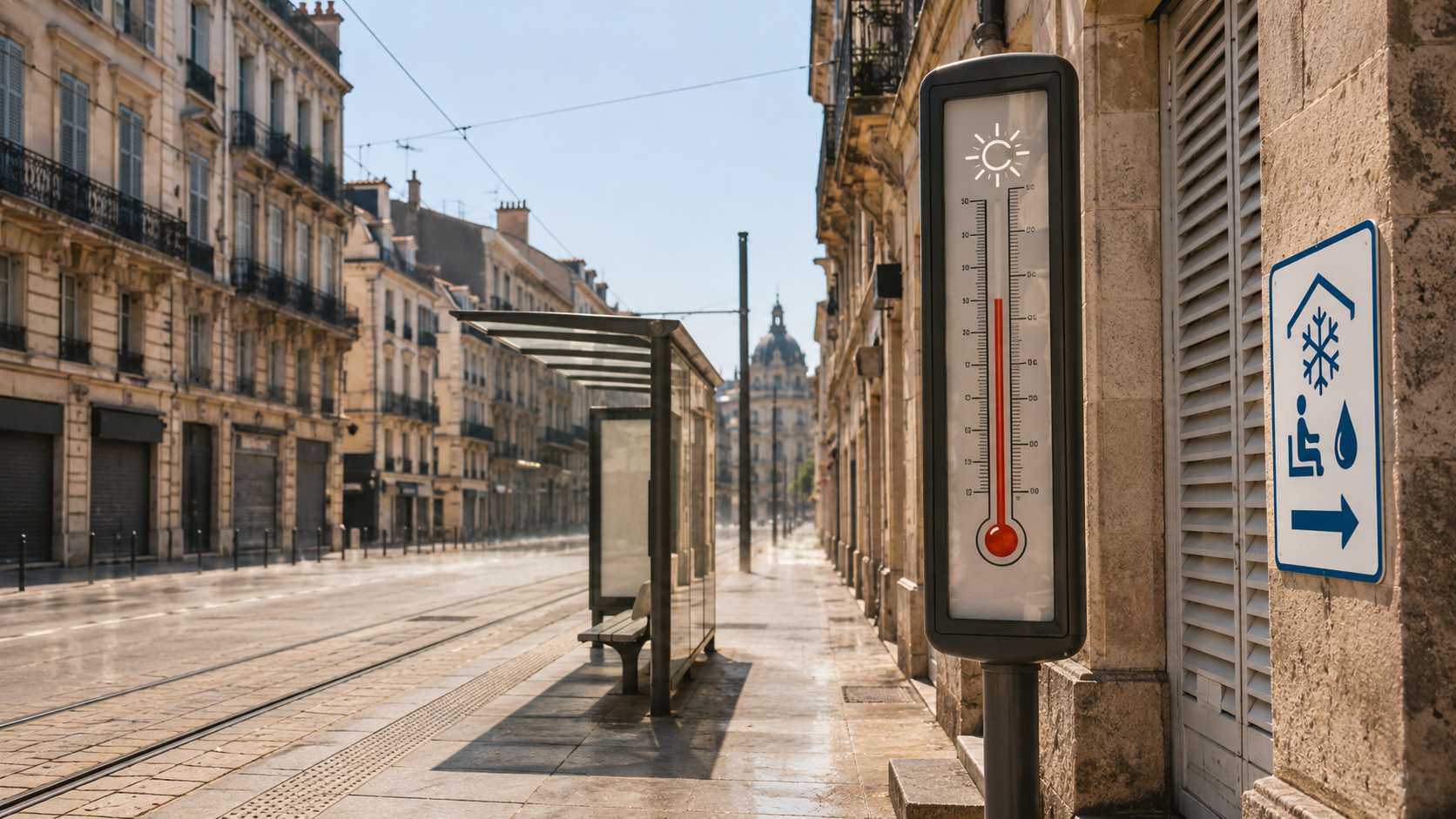
Europe's latest heatwave has moved climate adaptation from policy language into the most concrete of public-health questions: who can stay cool, who gets checked on, and whether hospitals, care homes and cities are prepared for heat that arrives earlier and hits harder.
Santé publique France said an exceptional heatwave beginning in mid-June was marked by a rise in deaths. AP and Le Monde reported around 1,000 excess deaths in France, a figure that remains preliminary because mortality data can change as registrations are completed.
The public-health agency's wider heat-monitoring work shows why the issue is now central to European resilience. Heatwaves can drive excess mortality and emergency-room use, with older people, isolated residents, outdoor workers and people with chronic illness among those most exposed.
Attribution science strengthens the climate link. World Weather Attribution published a rapid analysis on June 26 saying fossil-fuel emissions have rapidly worsened European heatwaves in recent decades. Its summary said parts of France, Germany, Italy, Spain and southern England were experiencing temperatures 5 to 12 degrees Celsius above seasonal averages, with June records and annual records being challenged.
Rapid attribution studies are not the same as long-form peer-reviewed climate assessments, and their uncertainty ranges matter. But WWA's work is built on established methods and is widely used to evaluate how human-caused warming changes the likelihood and severity of extreme weather.
The adaptation challenge is political because the solutions are costly and uneven. Cities need shade, cooling centres, greener streets, better housing standards and plans for people who live alone. Health systems need early-warning protocols and staffing during heat spikes. Power grids must handle cooling demand without failing when households need electricity most.
The most difficult lesson is that a heatwave does not have to look dramatic to be deadly. Mortality often rises quietly, in apartments, care homes and overheated neighbourhoods far from visible disaster zones. Europe's current crisis is therefore not only a weather story. It is a measure of whether governments have adapted fast enough to the climate they already have.
Reader comments
Subscribers can join the conversationSign in to join the conversation. Comments are open to everyone with a free account.
Sign in or create accountLoading comments…