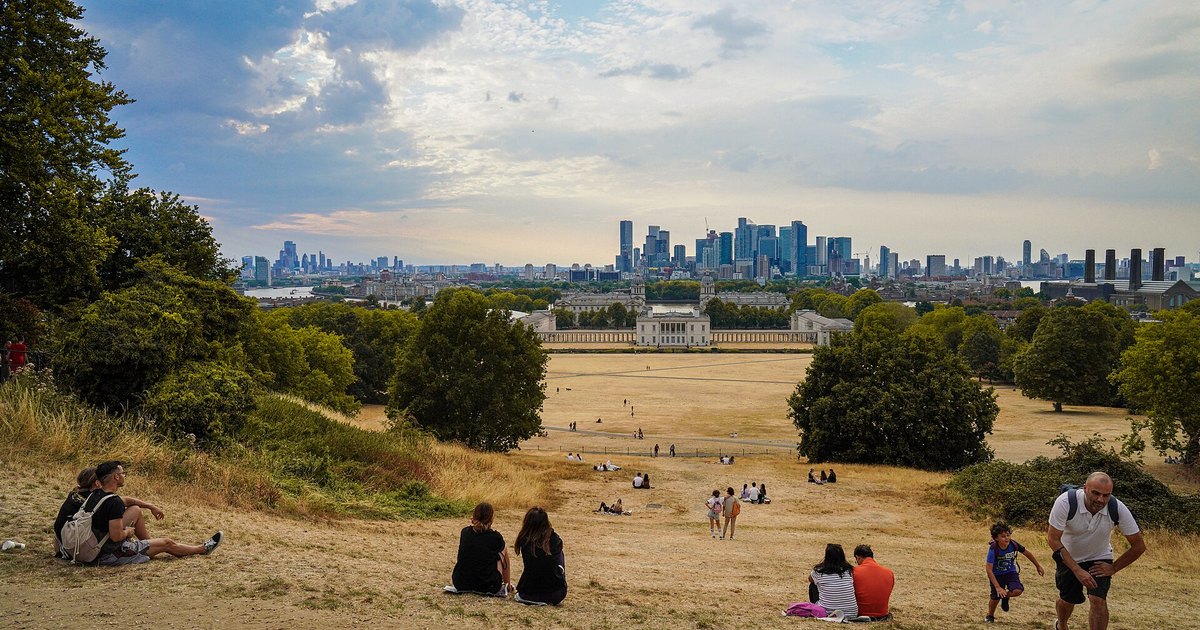
A fifth heatwave approaches
Britain is bracing for what forecasters say could become its fifth heatwave of 2026, with temperatures potentially reaching 36C in England by the middle of next week as drought and wildfire risks intensify.
Yellow heat-health alerts came into force on Saturday for most of England and run until 9pm on Tuesday, excluding the North East and North West. The alerts are designed for health and care services and signal a greater risk to vulnerable people during prolonged heat.
The Met Office expects East Anglia and the South East to see the highest temperatures. Values could rise from around 30C this weekend into the low-to-mid 30s by Wednesday, with 36C possible on Wednesday or Thursday if the hottest scenario is realised.
Heatwave status is based on local thresholds being exceeded for three consecutive days, so the event will only be confirmed once observations meet those criteria.
Water storage slides
Heat is arriving on top of an increasingly serious water problem. The Environment Agency said last week was the seventh consecutive week in which England received less than 10mm of rain.
Average reservoir storage has fallen to 69%, from 72% a week earlier, and is almost 12% below the long-term average for this point in the year. Five reservoirs are classed as having exceptionally low levels.
Several more areas could move towards or into drought next week, adding to parts of England already under drought conditions. Restrictions on water abstraction are also being prepared in parts of East Anglia to protect unusually low river flows.
Fire risk rises with the temperature
The same dryness increases the consequences of any ignition. The Fire Severity Index indicates that, if fires start on Sunday, they could become exceptionally severe across almost all of eastern and south-eastern England.
The index does not measure the probability that a fire will start. It measures how severe a fire could become under current weather, fuel and moisture conditions.
That distinction is important after a summer in which grass, heath and woodland fires have already affected several parts of Britain.
A summer of cumulative stress
England and Wales have just recorded their driest July since records began in 1836, with 19 English counties receiving 1mm of rain or less.
The UK has also experienced 33 days this year on which the temperature exceeded 30C somewhere in the country. The record is 34 days, set in 1995, and forecasters expect it may be surpassed next week.
The important feature of this spell is therefore not only the possible 36C peak. It is the accumulation of heat on an already dry landscape, depleted water storage and services that have been responding to repeated extreme-weather episodes.
A single cooler day can interrupt the technical definition of a heatwave. It does not refill a reservoir or restore moisture to a field. That is why the next rise in temperature carries risks that have been building for weeks.
Reader comments
Subscribers can join the conversationSign in to join the conversation. Comments are open to everyone with a free account.
Sign in or create accountLoading comments…