
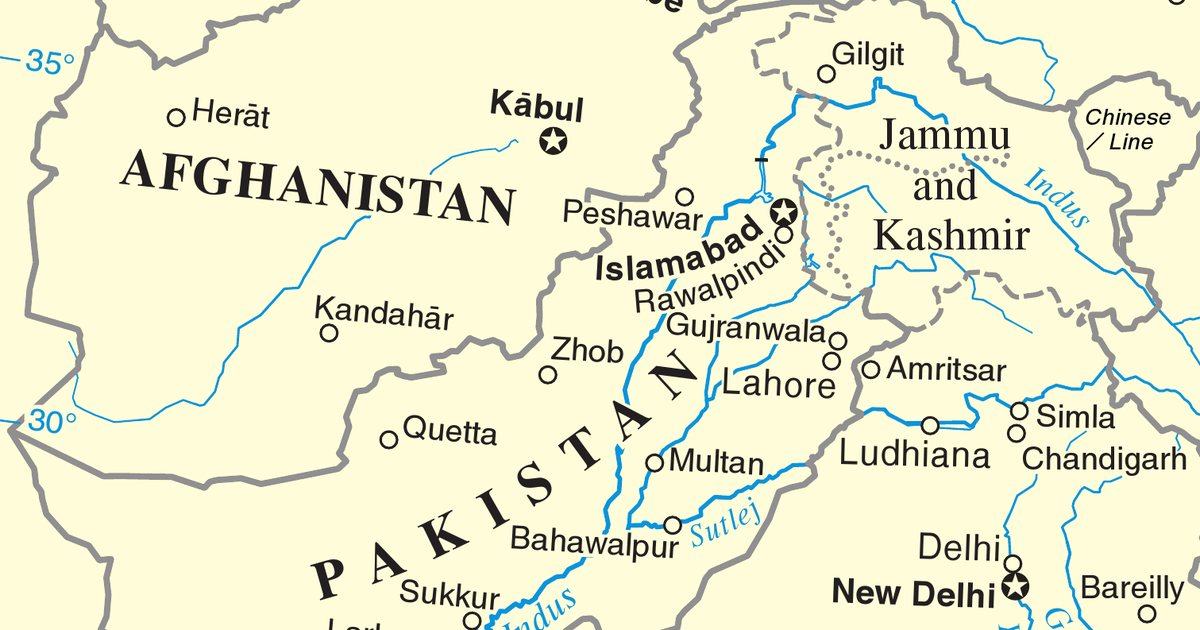
The United Nations says 499 civilians were killed and 1,216 others injured inside Afghanistan during nine months of cross-border hostilities involving Afghanistan’s de facto security forces and the Pakistani military.
The figures, published by the United Nations Assistance Mission in Afghanistan on 28 July, cover the period from 1 October 2025 to 30 June 2026. Together, they amount to 1,715 civilian casualties recorded on the Afghan side of a frontier that has moved from periodic tension to sustained armed confrontation.
UNAMA stressed that its mandate is limited to incidents inside Afghanistan. The total therefore does not include civilians killed or injured in Pakistan, and it should not be presented as a complete casualty count for both countries.
A border conflict with a growing civilian toll
Relations between Islamabad and Afghanistan’s Taliban authorities have deteriorated sharply over Pakistan’s allegation that the Tehrik-i-Taliban Pakistan, or TTP, uses Afghan territory to plan and launch attacks. Pakistan says the group has benefited from a permissive environment across the border. Kabul denies harbouring militants and argues that Pakistan’s internal security crisis cannot be solved through strikes inside Afghanistan.
The dispute has repeatedly escalated into artillery exchanges, ground fighting and airstrikes in populated border provinces. UNAMA’s latest total indicates that the civilian consequences are no longer confined to isolated incidents. They have accumulated across nine months of hostilities despite calls for ceasefires and diplomatic de-escalation.
The 28 June strikes
One of the most serious episodes documented in the latest reporting occurred on 28 June in eastern Afghanistan.
UNAMA’s updated findings say two successive airstrikes hit a residential building in Chamkani district of Paktya province, killing 22 civilians, including five children, and injuring at least 185 others. Most of the deaths and injuries were recorded after the second strike, when residents had gathered to rescue people trapped in the rubble.
UNAMA’s initial statement, released the following day, also recorded six civilian deaths in Gyan district of Paktika province and injuries to two children in Marawara district of Kunar province. Across the three provinces, the mission confirmed at least 28 civilian deaths.
The sharply revised Paktya injury count illustrates why early casualty figures from active conflict zones can change as hospitals, families and investigators reconcile information. It also means that the widely circulated claim that exactly 189 people were injured across the three provinces should not be treated as settled without a clearer official breakdown.
Concern over rescuers and first responders
The report’s description of a second strike hitting people who had gathered to help the wounded raises particular concern under international humanitarian law.
Medical personnel, humanitarian workers and first responders receive special protection while carrying out their duties. Parties to a conflict are also required to distinguish between military targets and civilians, take feasible precautions and avoid attacks expected to cause disproportionate civilian harm.
Civilian casualties alone do not automatically establish that a war crime occurred. Determining legality requires evidence about the intended target, the information available to those ordering the strike, the weapons used and the precautions taken. The scale and circumstances of the Paktya incident nevertheless strengthen the case for an independent and transparent investigation.
Pakistan rejects accusations of deliberate civilian targeting
Pakistan has denied that its military deliberately targeted civilians. In a written response cited in reporting on the UN findings, Pakistan’s Foreign Ministry said the Taliban authorities continued to provide a permissive environment for militant organisations.
Islamabad said its strikes were directed exclusively at identified militant hideouts, sanctuaries and support infrastructure linked to groups responsible for attacks inside Pakistan. The response did not provide an overall figure for civilians killed or injured by the border fighting, and it did not directly address UNAMA’s Afghan casualty total.
The competing claims reflect the central dispute driving the crisis. Pakistan argues that it is acting against an armed threat that Kabul has failed to contain. Afghanistan’s de facto authorities reject that accusation and condemn Pakistani strikes as violations of sovereignty.
What the UN figures show — and what they do not
UNAMA’s total should be read carefully. It documents civilian harm caused by the cross-border hostilities inside Afghanistan. It does not state that every one of the 499 deaths was caused by the Pakistani military, nor does it provide a complete accounting of casualties inside Pakistan.
What it does establish is the scale of the protection crisis. Nearly 500 civilian deaths and more than 1,200 injuries over nine months show that the frontier is no longer experiencing only sporadic violence. The fighting is creating a sustained pattern of harm in communities already affected by displacement, poverty, damaged infrastructure and limited access to healthcare.
Earlier UNAMA reporting warned that border violence had displaced thousands of families, damaged humanitarian and medical facilities and interrupted food assistance in affected provinces. Each new escalation therefore lands on communities with fewer resources to absorb another shock.
Pressure for accountability and diplomacy
UNAMA has repeatedly called on all parties to protect civilians, comply with international law and resolve their differences through diplomacy. Those appeals have so far failed to prevent recurring strikes and clashes.
Meaningful accountability would require more than competing official statements. It would require disclosure of targeting decisions, credible investigations into incidents involving civilian deaths, access for independent monitors and effective remedies where violations are established.
The latest figures should also sharpen international attention on the political failure behind the violence. Pakistan and Afghanistan remain economically, socially and geographically intertwined. Yet their security relationship is increasingly defined by accusation, retaliation and the use of force across a disputed and heavily populated frontier.
The UNAMA report does not resolve the dispute over the TTP or determine responsibility for every casualty. It does, however, make one conclusion difficult to avoid: civilians are paying an extraordinary price for a conflict that neither side has been able to control or end.


Reader comments
Subscribers can join the conversationSign in to join the conversation. Comments are open to everyone with a free account.
Sign in or create accountLoading comments…