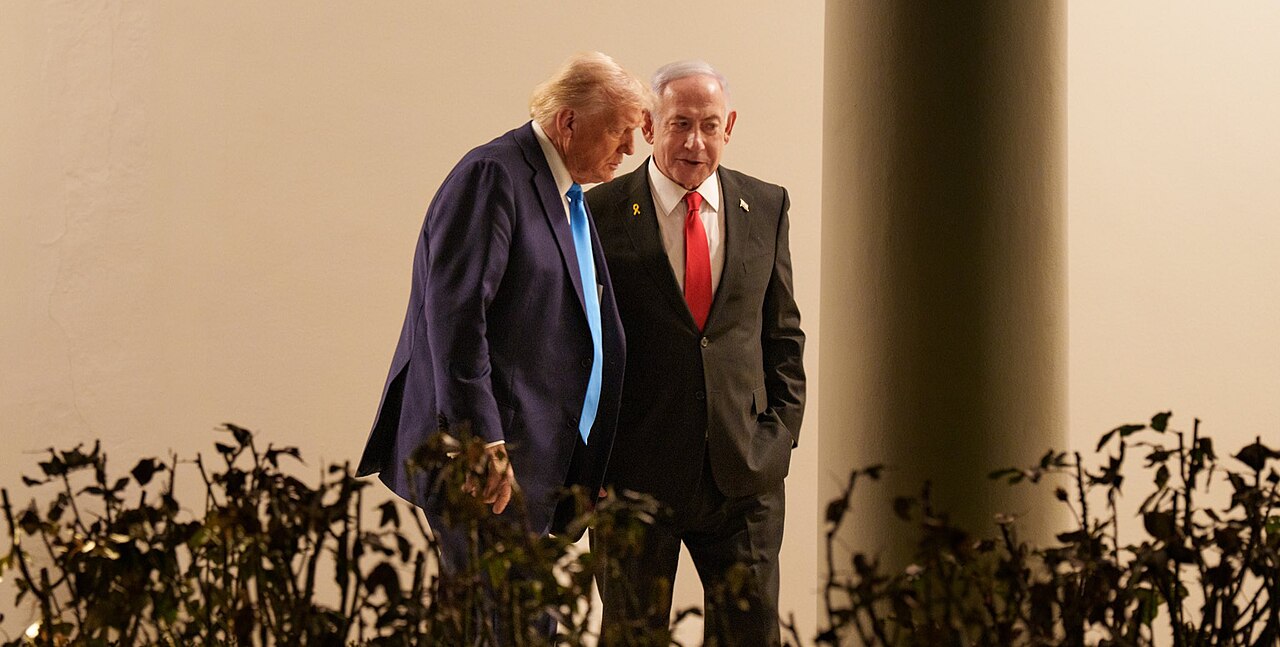
Donald Trump and Benjamin Netanyahu have met at the White House for the first time since the United States and Israel launched their war against Iran, bringing two closely aligned but increasingly pressured leaders together at a pivotal moment for the Middle East.
The closed-door meeting lasted about 90 minutes. The White House described the talks as positive and productive, while Netanyahu called the meeting excellent. Both sides emphasised their shared objective of preventing Iran from acquiring a nuclear weapon.
The warm public language could not conceal the difficult context. The war has imposed military, economic and political costs across the region. In the United States, renewed pressure on energy prices and public unease over the conflict are sharpening the domestic stakes ahead of the midterm elections. In Israel, Netanyahu faces his own political timetable and questions over how long the fighting can continue without a credible diplomatic end state.
An alliance under pressure
Washington and Jerusalem remain deeply integrated militarily and strategically. Yet the relationship has shown signs of strain as the conflict has developed. Trump has at times appeared frustrated by Israeli disclosures and by the possibility that decisions taken in Jerusalem could complicate American diplomatic options.
Netanyahu, meanwhile, must balance dependence on US military and diplomatic backing with pressure from allies at home who favour a more expansive campaign. That creates a familiar but increasingly consequential tension: Israel wants freedom of action, while the White House wants to preserve enough control to manage escalation and eventually negotiate an exit.
The meeting therefore mattered less as a ceremonial display of unity than as a test of whether the two governments still agree on the sequence of their next moves. Preventing an Iranian nuclear weapon is a broad objective. The harder questions concern how that objective is defined, what military action is considered sufficient and what political settlement could follow.
Lebanon, Gaza and regional diplomacy
The leaders also discussed a US-Israel-Lebanon framework concerning Hezbollah and the possibility of expanding the Abraham Accords. Those issues are connected to the wider war because any durable reduction in regional fighting will require arrangements that extend beyond the Iranian nuclear file.
Lebanon remains especially sensitive. Israeli operations and Hezbollah activity have repeatedly threatened to widen the conflict, while any stabilisation plan would depend on the capacity of Lebanese institutions and international partners to operate in contested areas.
Gaza also remains part of the diplomatic landscape. Even where the current talks were dominated by Iran, Washington cannot separate the credibility of broader regional agreements from continuing questions about Palestinian security, governance and humanitarian conditions.
The search for an off-ramp
The central test will be whether the meeting produces a practical route from military coordination to political strategy. A positive readout does not by itself establish agreement on when the fighting should stop or what concessions either side would accept.
For Trump, the goal is likely to preserve leverage while limiting the economic and electoral damage of an open-ended conflict. For Netanyahu, the priority is to ensure that any pause does not leave Iran capable of rebuilding the military and nuclear infrastructure Israel set out to destroy.
Their partnership remains one of the most powerful in international politics. But power does not eliminate conflicting interests. The military alliance is intact; the question is whether it can now produce a political outcome that both governments can defend.


Reader comments
Subscribers can join the conversationSign in to join the conversation. Comments are open to everyone with a free account.
Sign in or create accountLoading comments…