
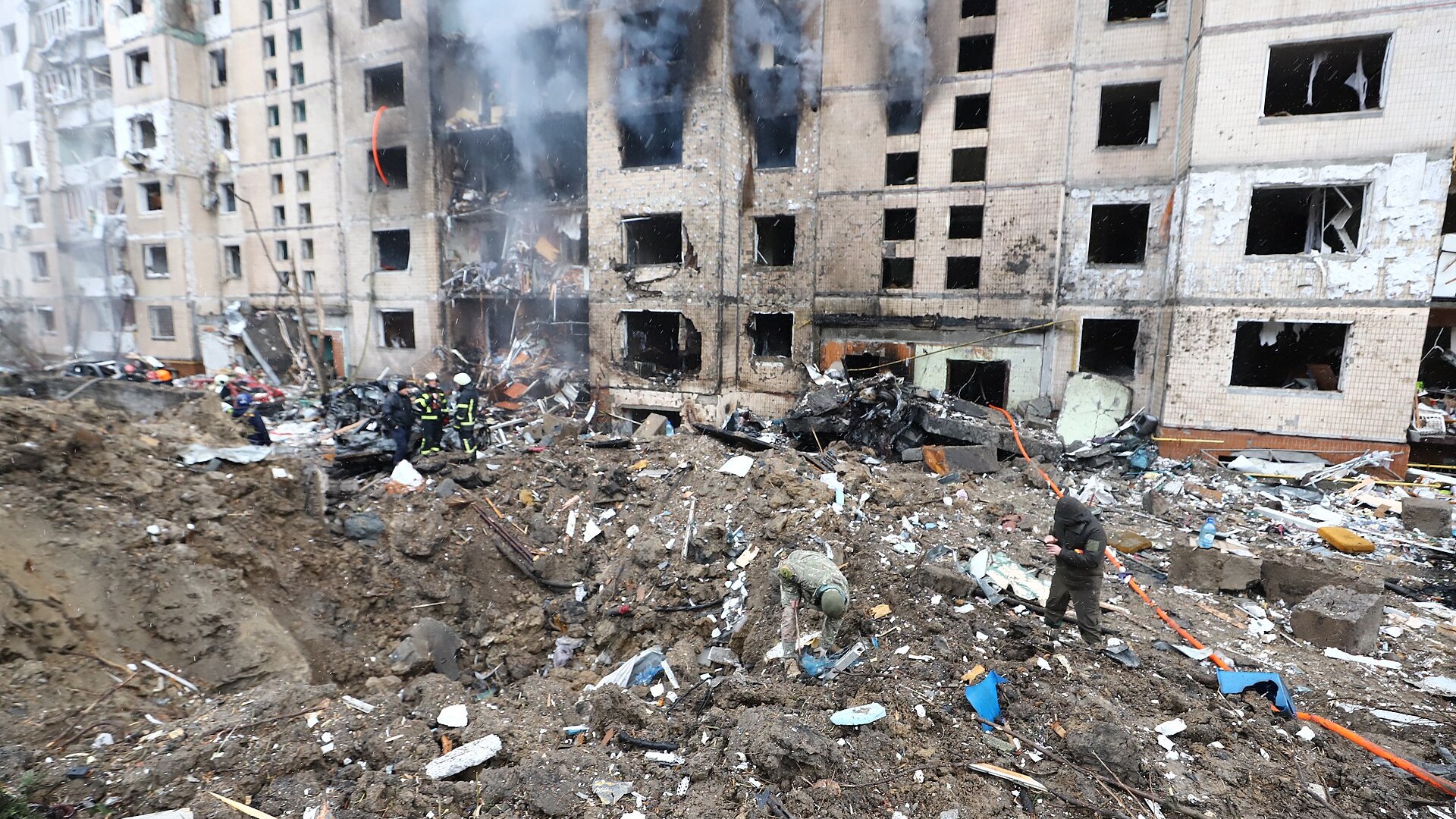
A Russian strike near a bus stop in the eastern Ukrainian city of Kramatorsk killed 30 people, Ukrainian officials said, as a new wave of attacks placed further pressure on the country’s electricity system.
According to the Associated Press, a guided bomb exploded beside buses at the stop. The report said the incident was one of several strikes that brought civilian casualties and fresh disruption to energy supplies. The battlefield account could not be independently verified in full.
The attack came as Kyiv faced emergency power restrictions. Ukraine’s energy operators ordered outages in the capital after further strikes damaged or threatened parts of the electricity network. The restrictions underline the wider strategic pressure created by attacks on infrastructure: the effects are measured not only in destroyed facilities, but also in the ability of households, hospitals and public transport to function through winter.
Ukrainian officials also said a strike the previous day in Pryluky killed 22 people, including five children. Those figures, and the attribution of responsibility, remain part of the wartime claims that must be read with appropriate caution while investigations continue.
For civilians, however, the distinction between a direct hit and a system under sustained attack is increasingly hard to feel. A damaged power network can mean no heating, limited communications and uncertain access to water or medical care. Emergency outages are intended to prevent a wider collapse, but they transfer the cost of the war into homes far from the front line.
The attacks also arrive as Ukraine seeks additional air-defence support from its partners. President Volodymyr Zelenskyy has urged NATO countries to help protect energy sites and cities, while Russian strikes continue to test whether Ukraine can keep essential services operating during the colder months.
The immediate facts remain contested in places, but the humanitarian pattern is clear: civilian transport and critical infrastructure are again bearing the consequences of the war. Independent casualty verification will be essential as rescue and repair efforts continue.


Reader comments
Subscribers can join the conversationSign in to join the conversation. Comments are open to everyone with a free account.
Sign in or create accountLoading comments…