
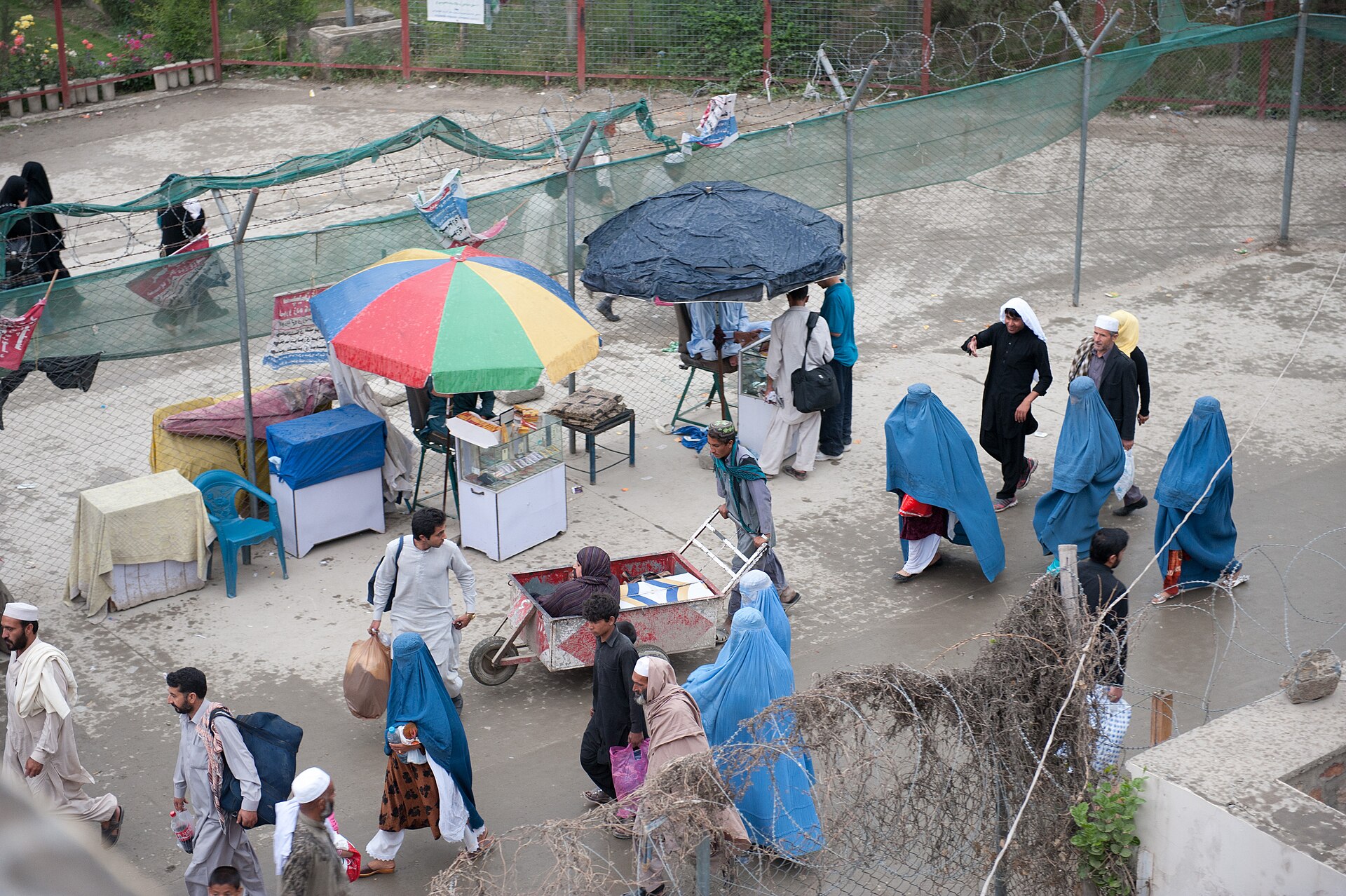
Pakistan has always had a rather flexible definition of sovereignty. When somebody else supports an armed group operating against Pakistan, it is terrorism, foreign interference and usually an Indian conspiracy. When Pakistan does roughly the same thing across somebody else’s border, it becomes strategic necessity. For decades this distinction served Islamabad remarkably well. The country acquired influence in Afghanistan and Kashmir far beyond what its economic or conventional political power might have suggested, while retaining enough distance from the organisations involved to deny responsibility whenever circumstances required it.
The Taliban were the most successful product of that policy. Islamabad supported them through the 1990s, sheltered their leadership after 2001 and spent two decades insisting that the Afghan war could not be won militarily while providing precisely the strategic depth that allowed the Taliban to survive it. When Kabul fell in August 2021, Pakistan’s generals appeared to have obtained almost everything they had wanted: the republic they distrusted was gone, India’s influence had been sharply reduced and a movement they had cultivated for decades controlled Afghanistan. Five years later, the strategic triumph looks rather less impressive and the machinery appears to be running in reverse.
An investigation by Adil Raja and Shahid Qazi raises the possibility that former members of the Afghan Republic’s security forces are being recruited into irregular formations operating against the Baloch insurgency. The allegation remains difficult to verify independently, although concerns about the recruitment of former Afghan security personnel have also surfaced publicly in Pakistan. Muhammad Amir Rana, director of the Pak Institute for Peace Studies, referred in Dawn in July to reports circulating among political and civil society circles in Balochistan that Afghans were being recruited for functions previously entrusted to private militias. If confirmed, the story would be important.
But not because Pakistan has suddenly discovered mercenaries. Balochistan has been living with outsourced violence for decades. The province's sheer size and its difficult terrain have always made direct control expensive. More importantly, direct repression is visible while irregular repression is deniable. Successive governments and military establishments therefore developed a landscape populated by tribal lashkars, local strongmen, surrendered insurgents, religious militants and armed groups whose formal relationship with the state remained conveniently difficult to define.
During the American war on terror, even foreign private contractors joined Balochistan's crowded security landscape. Blackwater, later renamed Xe Services, operated at Shamsi airbase, the secret CIA facility in Balochistan associated with the US drone campaign. A former American official told The Guardian in 2009 that Blackwater personnel guarded the base and assisted in loading Hellfire missiles onto CIA drones. Two years later US officials acknowledged that the company had held contracts connected with the Shamsi operation.
Blackwater was not hired to suppress the Baloch insurgency, but its presence illustrates something larger about the province. Balochistan had become a space in which conventional ideas about who was exercising armed power, under whose authority and with what accountability could become surprisingly elastic. American contractors served an American covert war from Pakistani territory while Islamabad publicly protested violations of Pakistani sovereignty. Eventually Pakistan ordered the United States out of Shamsi in 2011.
For the Baloch themselves, however, deniable armed power was hardly an American invention. By the late 2000s, reports of locally recruited pro-state militias had become an established feature of the conflict. Some were called peace committees, others tribal lashkars. Baloch activists generally used a less charitable expression: death squads. The Pakistani military and intelligence agencies have consistently rejected allegations that they created or controlled such groups, but Pakistani reporting and international research have documented accusations that Baloch gunmen-for-hire were used against nationalist organisations and activists. A Carnegie study published in 2013 explicitly compared the alleged system with the Al Shams and Al Badr militias employed by Pakistan during the 1971 war in East Pakistan.
The comparison is useful because it shows the continuity. Before Balochistan there was East Pakistan. Then came the Afghan jihad, when Pakistan became the principal conduit through which money, weapons and fighters flowed to the mujahideen fighting the Soviet occupation. Kashmir produced another collection of organisations that combined ideological commitment with strategic utility. Afghanistan then produced the Taliban, sheltered and sustained during their long war against the republic that followed the American intervention. Different wars, different ideologies, remarkably similar method.
A proxy is cheaper than an army division, politically less expensive when killed and infinitely more convenient when accused of atrocities.
The attraction is obvious. A proxy is cheaper than an army division, politically less expensive when killed and infinitely more convenient when accused of atrocities. It can gather intelligence that outsiders cannot obtain, settle scores the state would prefer not to settle openly and terrorise communities without creating a paper trail ending neatly at a government ministry. Balochistan brought this foreign-policy technique home.
Human Rights Watch and other organisations have documented for years enforced disappearances, extrajudicial killings and other abuses attributed to Pakistani security institutions in the province and continue to describe grave abuses by Pakistani law-enforcement agencies. The alleged recruitment of former Afghan soldiers would therefore not represent a new doctrine. It would represent its latest mutation.
And this is where the story becomes considerably more interesting. The men allegedly entering these networks belonged to the army that Pakistan spent twenty years regarding with suspicion because it served the Afghan Republic, maintained close relations with India and fought the Taliban. They were trained and financed largely by the United States and its allies to defeat precisely the movement whose leadership Pakistan was accused of sheltering. In 2021 their state collapsed. The Taliban entered Kabul, the Western coalition left and a large professional security force effectively disappeared overnight.
Some former soldiers escaped. Others went underground. Many found themselves without salaries, protection or a future. What Washington and its allies had spent billions creating did not evaporate: it became unemployed military expertise. If some of those men are now selling that expertise in Balochistan, the historical irony hardly requires embellishment. Pakistan helped sustain the Taliban who destroyed their army and may now be employing survivors of that army to fight another insurgency inside Pakistan.
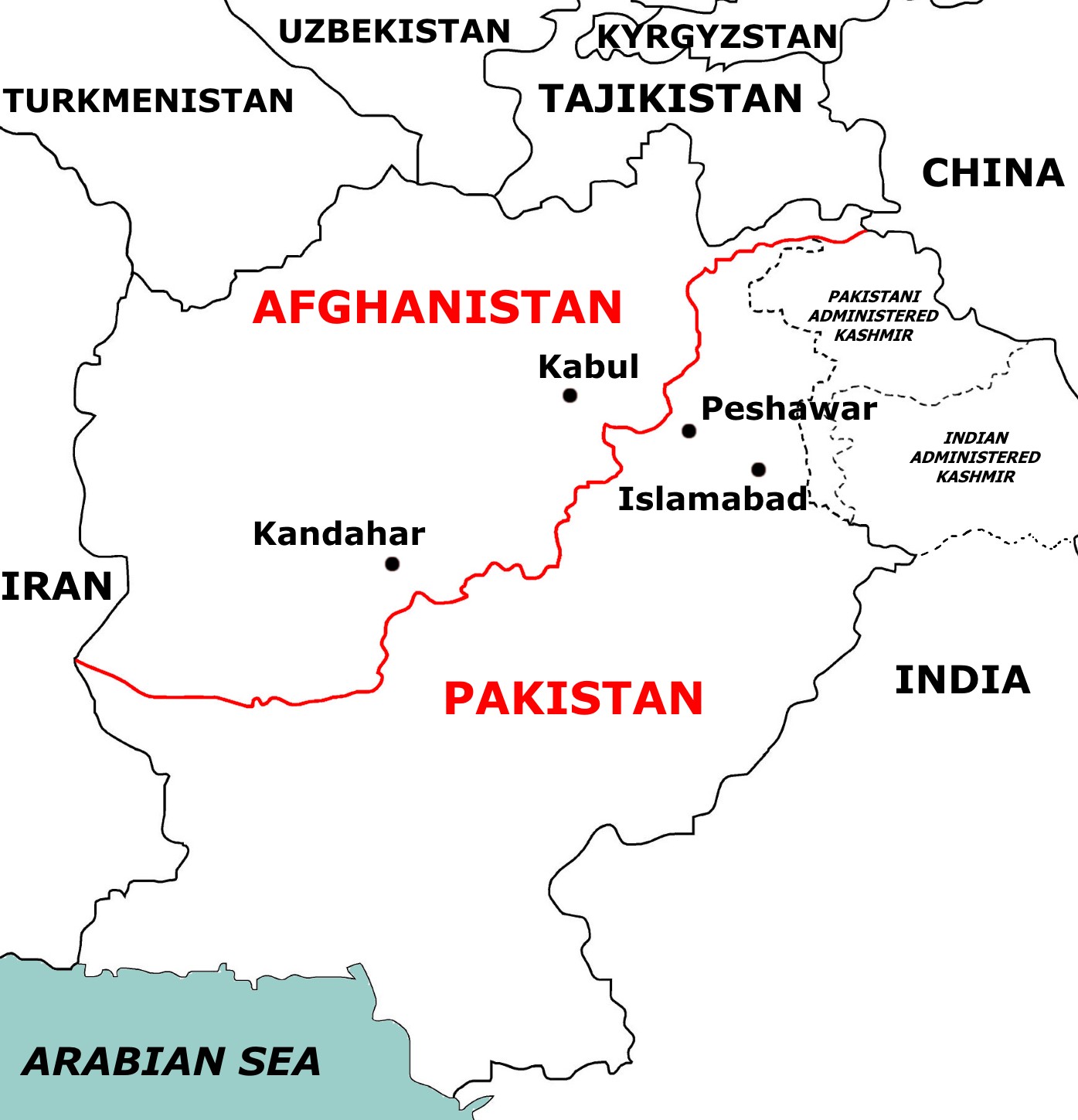
At the same time, Islamabad's relationship with its former Afghan protégés has collapsed. Pakistan presents the TTP as essentially an Afghan problem and repeatedly accuses Kabul of allowing militants to operate against Pakistan. The Taliban reject the accusation and increasingly accuse Islamabad of violating Afghan sovereignty and supporting forces hostile to their regime. Pakistan's own foreign ministry faced the uncomfortable issue directly on July 30, when reporters asked about anti-Taliban fighters operating in Badakhshan near the Chitral border and about Sepahian-e Mihan, a newly emerged resistance formation. The spokesman said he had no information about the group or its motives.
Sepahian-e Mihan had announced itself less than two weeks earlier by attacking Yaftal-e Payeen in Badakhshan, disarming Taliban personnel and temporarily occupying the district administration building. The occupation lasted only hours, but it was the first reported seizure of a district headquarters by an anti-Taliban force since 2021. There is no public evidence that Pakistan created or finances Sepahian-e Mihan. Nor is there evidence that Islamabad currently controls the wider Afghan resistance. Claims circulating in Afghanistan that Pakistan is cultivating anti-Taliban elements should therefore be treated as allegations, not facts.
Strategically, however, the possibility is hardly implausible. Pakistan no longer needs the Taliban to conquer Afghanistan. It needs them to behave. The objective has changed from securing a friendly government in Kabul to acquiring leverage over an increasingly hostile one. An anti-Taliban rebellion does not have to overthrow the Islamic Emirate to become useful to Islamabad. It merely has to impose costs.
Badakhshan is particularly interesting because the Taliban are already dealing there with local resentment, conflicts over mining wealth, tensions with Tajik commanders and attempts to disarm locally recruited fighters. Sepahian-e Mihan may disappear tomorrow; the structural problems that allowed it to appear will not. Pakistan understands such fractures extremely well. It has spent most of its history learning how to exploit them.
The resulting picture is almost surreal. Islamabad expels hundreds of thousands of Afghans while describing their presence as a security risk, yet former Afghan soldiers may be useful enough to recruit. It accuses Afghanistan of harbouring militants attacking Pakistan while itself facing accusations of providing space to militants attacking Afghanistan. It condemns foreign sponsorship of the Baloch insurgency while having spent decades defending relationships with armed organisations whenever they served Pakistan's own regional interests. There is no contradiction here if one understands the doctrine correctly. The Pakistani security establishment has never really objected to proxies. It objects to proxies belonging to somebody else.
Its difficulty is that proxies have a disconcerting tendency eventually to belong to themselves. The Taliban are the most spectacular example. Pakistan helped preserve a movement that eventually conquered Afghanistan, only to discover that victory had freed it from Pakistani dependence. Ideological affinity did not erase Afghan nationalism, the Durand Line or competing state interests. Islamabad's celebrated strategic depth became another hostile frontier.
The same warning applies to mercenary manpower in Balochistan. Men who fight because they need salaries are employees, not allies. Their loyalty lasts approximately as long as their employment. Nor does a proliferation of irregular armed groups make a state stronger simply because they happen, for the moment, to shoot at its enemies.
Pakistan has repeatedly confused the ability to mobilise violence with the ability to control its consequences.
Pakistan has repeatedly confused the ability to mobilise violence with the ability to control its consequences. East Pakistan should have settled the argument. Afghanistan should have settled it again. The TTP ought to have made the lesson impossible to miss. Yet the machinery survives, because outsourcing force solves immediate problems and Pakistani security policy has always possessed an extraordinary appetite for immediate solutions whose consequences can be assigned to the next crisis.
Former Afghan soldiers in Balochistan would therefore be more than another curious episode in Pakistan's long counterinsurgency. They would complete a circle. Yesterday Pakistan exported proxies into Afghanistan. Today Afghanistan exports instability into Pakistan. Pakistan may now be importing the remnants of one Afghan army to suppress the Baloch while contemplating relationships with other Afghans capable of putting pressure on the government in Kabul. Forty years of strategic engineering have produced a regional market in fighters, insurgents, abandoned soldiers and former clients in which almost everybody can eventually be employed against everybody else. Pakistan did not invent that world. But few states have worked harder to build it.
Reader comments
Subscribers can join the conversationSign in to join the conversation. Comments are open to everyone with a free account.
Sign in or create accountLoading comments…