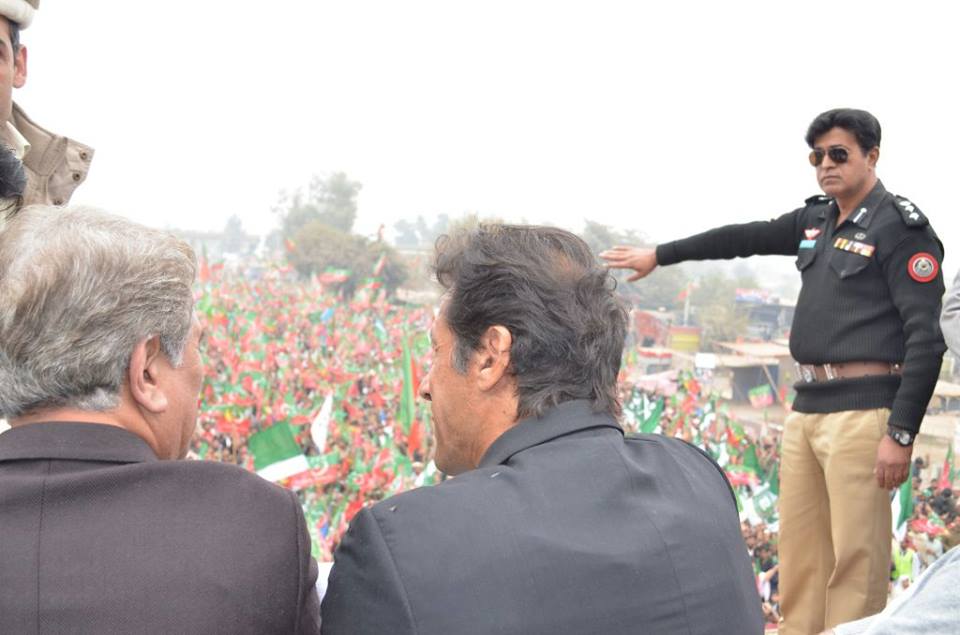
The undisputed protagonist of Washington’s latest change of attitude towards Pakistan was not Pakistan’s prime minister, not its parliament, not its civilian diplomacy. It was Asim Munir, the head of the army, the man who promoted himself Field Marshal after the famous four days of conflict with India and who then travelled to the United States as if he were the elected representative of a normal country. He was not. He was exactly what Pakistan has always produced at decisive moments: a general with the briefcase, the nuclear button and the sales pitch. Last August, in Florida, Munir had the brilliant idea of threatening half of humanity during a charity gala. “We are a nuclear power. If we fall, we take half the world with us,” he said, before adding, just in case the message was not sufficiently deranged, that Pakistan could target India’s Indus dams and the Jamnagar refinery. Nuclear blackmail delivered on American soil, with the elegance of a mafia boss and the strategic depth of a suicide note. Zelensky was shown the door for much less. Munir, instead, was invited to lunch. Smiling photographs, polite handshakes, toasts, pats on the back. The reason was simple. Munir had something to sell. Not democracy, which Pakistan never really possessed. Not stability, which exists only in Pakistani press releases. He sold geography and minerals. Copper, gold, lithium, rare earths, access to the Arabian Sea, proximity to Iran, Afghanistan, Central Asia and China: the real currency of power in the new world order. And almost all of it passes through, or lies under, Balochistan, the province Pakistan treats as a colony, a military zone and a bank vault at the same time.
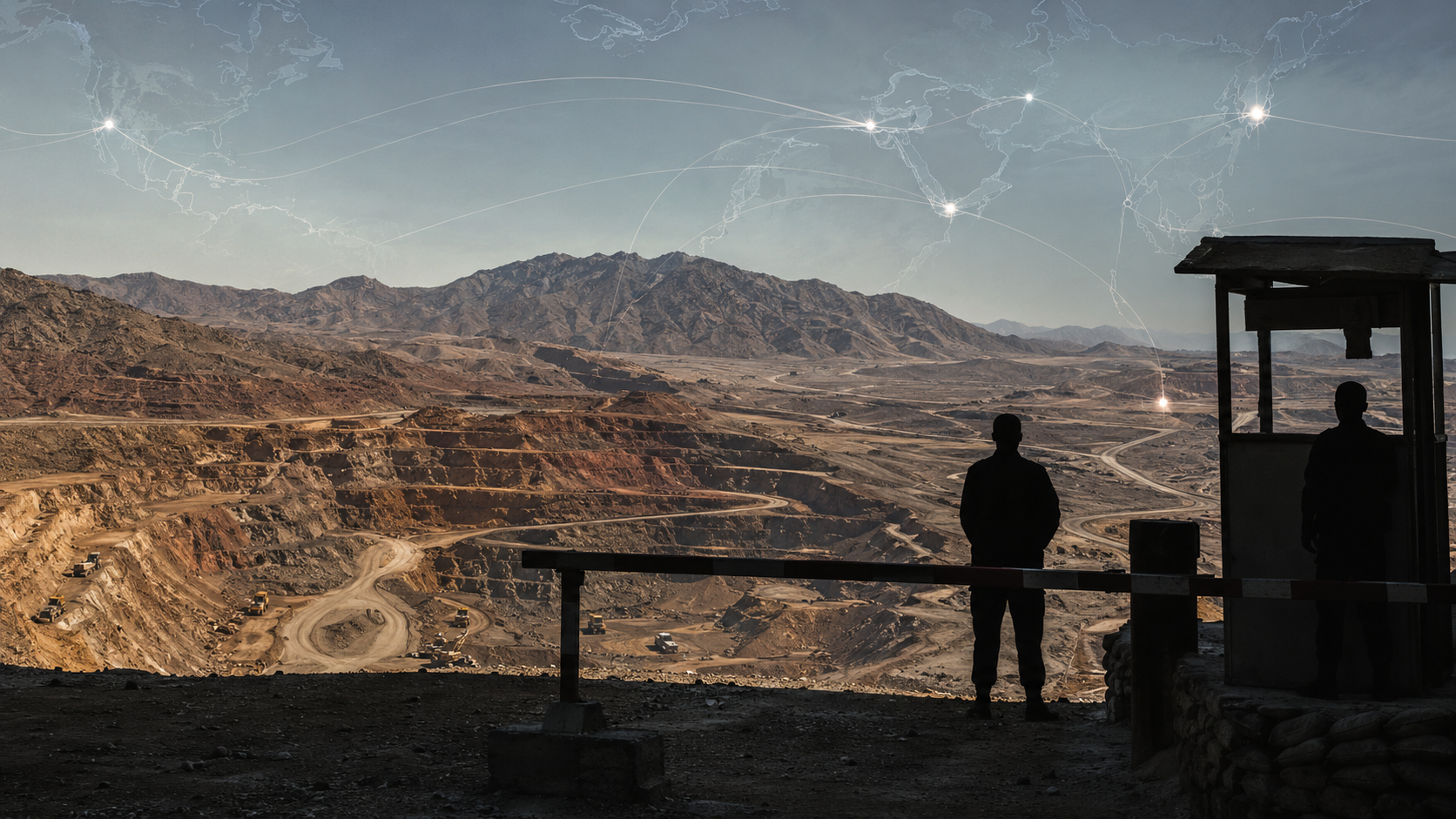
At the centre of this new bargain was Reko Diq, in Chagai district, one of the largest undeveloped copper and gold deposits on the planet. Figures alone explain Washington’s sudden affection for Islamabad: almost six billion tonnes of ore, more than forty-one million ounces of gold, billions of pounds of copper, and decades of production projected for a world hungry for chips, missiles, electric vehicles, artificial intelligence infrastructure and energy transition metals. The updated plans spoke of a mine life of thirty-seven years, a first phase capable of producing around 200,000 tonnes of copper per year, and a second phase that would double output to roughly 400,000 tonnes. Whoever controls Reko Diq controls not simply a mine, but a fragment of the future industrial order. This is what Munir whispered into Trump’s ear: Pakistan may be bankrupt, violent, unreliable and permanently on the edge of default, but it sits on treasure. And the treasure is Balochistan.
The numbers were irresistible. The first phase alone was valued at around 5.5 to 5.7 billion dollars, with a second phase expected to increase of another 3.3 to 3.5 billion. Overall capital estimates had climbed close to nine billion dollars. Islamabad, naturally, presented this as salvation: seventy-four billion dollars in free cash flow over thirty-seven years, enough to be sold to the Pakistani public as economic resurrection and to foreign investors as the bargain of the century. Hence the sudden American language on “critical minerals”, the half-billion-dollar memorandum with U.S. Strategic Metals, the 1.25 billion dollar financing line from the U.S. Export-Import Bank, the hundreds of millions committed by the IFC and the Asian Development Bank, and the attempt to turn Reko Diq into the flagship of a new U.S.–Pakistan economic axis.
For Washington, Reko Diq was not simply a mining project. It was a way of entering a mineral landscape long dominated by China, of reducing dependence on Chinese-controlled supply chains, and of inserting itself into a corridor that links the Arabian Sea, Central Asia, Iran and western China. For Islamabad, it was a way of selling the same province twice: Chinese yuan on one side, American dollars on the other, Baloch land as the main course served to whichever guest was more useful that month.
Because China was already there. It had been there for years, through CPEC, through Gwadar, through Saindak, through Duddar, through roads, fences, ports, compounds, engineers, soldiers and contractors. Balochistan had already been transformed into Beijing’s economic rear, a corridor to the Indian Ocean and a warehouse of extractive projects sealed by Pakistani military protection. Duddar, the only underground mining project in Pakistan, operated through Chinese state companies in Lasbela. Saindak, leased to the Metallurgical Corporation of China in 2002, had its contract extended again and again, most recently for fifteen years in 2022, without the consent of the Baloch people. The model was always the same: secrecy, extraction, military posts, corporate social responsibility on paper, poverty on the ground.
Duddar and Saindak were the old grammar of exploitation. Reko Diq was something different. It brought the United States directly into the mineral belt of Balochistan, close to China’s existing footprint, close to Gwadar, close to Iran, close to Afghanistan, close to the same Chagai district where Pakistan carried out its nuclear tests. At that point Reko Diq ceased to be a mining project. It became a geopolitical trigger.
The trigger matters because Balochistan is no longer a peripheral province in a peripheral country. It is the hinge between several theatres at once. To the south lies Gwadar, the Chinese door to the Indian Ocean. To the west lies Iran, now at the centre of a regional war that has redrawn calculations from Washington to Riyadh, from Tel Aviv to Beijing. To the north lie Afghanistan and Central Asia, where Pakistan has lost much of the influence it once claimed as strategic depth. To the east lies India, against which Islamabad continues to deploy the language of nuclear blackmail and proxy pressure. In the middle lies Balochistan: militarised, impoverished, rebellious, and suddenly indispensable to every map of critical minerals, maritime access and regional containment.
This is why the November 2025 attack on the Frontier Corps headquarters in Nokundi and the BLA’s Operation Herof 2 in January 2026 were not ordinary incidents. Both targeted the exact geography linking mines, military infrastructure and foreign interests. The insurgency no longer acts as scattered rebel cells. It operates with specialised units, intelligence, coordination and strategic clarity. Its message to foreign companies is unmistakable: your investment is an act of complicity in occupation. In the Baloch reading of the conflict, international companies are not neutral. They are instruments of Pakistani sovereignty over a land whose people have never consented to the bargain.
This is the point Washington and Islamabad prefer not to understand. In Balochistan, investment is never only investment. A mine is a garrison. A road is a military corridor. A port is a strategic outpost. A foreign engineer is part of an architecture of control. Development is not perceived as development because it does not arrive with schools, hospitals, water and political representation. It arrives with checkpoints, disappearances, army convoys, fenced compounds and contracts signed elsewhere. In that context, Reko Diq is not an economic project exposed to a security problem. It is a security problem disguised as an economic project.
Then came the blow Islamabad had been pretending could never happen. Barrick placed Reko Diq under review, slowed development and extended the review period by twelve months. Officially, the project was not cancelled. In practice, it was frozen in everything but name. Security concerns in Balochistan, the wider instability in Pakistan and the war around Iran had turned the jewel of Pakistan’s mineral diplomacy into a risk file. The project that was supposed to prove Pakistan’s reliability instead proved the opposite: Islamabad cannot guarantee the territory it auctions.
The Iran war made this even more visible. Pakistan tried to present itself as mediator, messenger, indispensable Muslim interlocutor, carrying letters to Tehran and offering Trump an exit ramp. But geography is crueler than diplomacy. Balochistan touches Iran. Baloch communities live on both sides of the border. Militancy, smuggling routes, sectarian networks, intelligence operations and military anxieties cross that frontier more easily than official narratives do. The war did not make Balochistan peripheral. It made it central. Any instability in Iran immediately reverberates through Balochistan, and any major mining project in Chagai suddenly becomes exposed not only to local insurgency but to the entire convulsion of West Asia.
This is the contradiction at the heart of Pakistan’s new minerals diplomacy. Islamabad wants to sell Balochistan as a secure investment destination while governing it as occupied territory. It wants to reassure Washington without alienating Beijing. It wants to use instability as leverage while pretending instability does not exist. It wants dollars, yuan, Gulf money and international legitimacy, but offers investors an army instead of governance, fences instead of consent, and propaganda instead of political settlement.
China understands the danger. Beijing rarely reacts theatrically. It waits, calculates, pressures and buys. But the American entry into Reko Diq, however delayed or weakened, is a strategic warning for China. The United States is no longer merely watching CPEC from afar. It is trying to insert itself into the same mineral geography. Balochistan is therefore no longer just a Pakistani internal problem, nor only a China-Pakistan corridor. It has become a contested resource frontier in the new great game of strategic metals.
For Pakistan, this is a dangerous triangulation. Moving closer to Washington risks alarming Beijing, whose investments and military cooperation remain indispensable. Reassuring Beijing too much devalues the offer to America. Further militarisation confirms to investors that the province is unstable. Not militarising it means losing the only tool Islamabad has ever used to control the territory. Every option weakens another front.
For the Baloch insurgency, the battlefield has changed. Attacking the economic architecture of occupation internationalises the cost of Pakistani control. Nokundi and Herof 2 were political communication by military means — a direct challenge to the assumption that Balochistan can be turned into collateral for Islamabad’s foreign policy. And this is exactly where Islamabad’s diplomatic problem begins.
In June 2026, Pakistan and China tried to place the Baloch Liberation Army and its Majeed Brigade on the UN 1267 sanctions list. The goal was clear: to certify internationally that the only issue in Balochistan is “terrorism”. The move stalled. The United States, the United Kingdom and France placed a technical hold on the proposal. Even among Pakistan’s partners there was hesitation to transform Islamabad’s internal war into an automatic multilateral counter-terrorism file.
Pakistan can label every Baloch protester, doctor, student or activist a terrorist at home. It cannot fully control how the rest of the world reads the conflict. Terrorism is administratively convenient: it erases history, resources, enforced disappearances, military rule and the absence of consent. But once Balochistan becomes entangled with critical minerals, great-power rivalry and regional geography, it can no longer be reduced to Pakistan’s preferred vocabulary.
The technical hold on the UN listing was a small but significant crack in that narrative. France, Britain and the United States were not endorsing the BLA. They were protecting their own room for manoeuvre. They were signalling that the Balochistan file now belongs to a larger chessboard: China’s corridor to the Arabian Sea, America’s search for critical minerals, Iran’s war, Afghanistan’s instability, India’s security calculations and the future of global supply chains. That is precisely what Islamabad fears.
In the end, Reko Diq exposes the lie on which Pakistan has built every project in Balochistan: that development can be imposed at gunpoint and still be called development. It cannot. A mine without consent is not development. A port surrounded by checkpoints is not development. A road built for Chinese convoys while villages lack water is not development. It is extraction with better PowerPoint slides.
Reko Diq was supposed to rescue Pakistan’s economy, seduce Washington, reassure Beijing and discipline Balochistan. Instead, it has revealed the opposite: Pakistan is trying to auction a province it no longer fully controls. The question is no longer whether foreign investors can make money in Balochistan. The question is how much political, military and reputational risk they are willing to buy from a Field Marshal who sells treasures buried under someone else’s land.
Reko Diq is not a development project. It is a geopolitical accelerant. For Washington, it is critical minerals. For Beijing, strategic depth. For Islamabad, a bargaining chip. For the Baloch, the latest chapter in a long history of occupation and theft. And like every accelerant poured onto an already burning region, it does not extinguish the fire. It makes the explosion inevitable.
Reader comments
Subscribers can join the conversationSign in to join the conversation. Comments are open to everyone with a free account.
Sign in or create accountLoading comments…