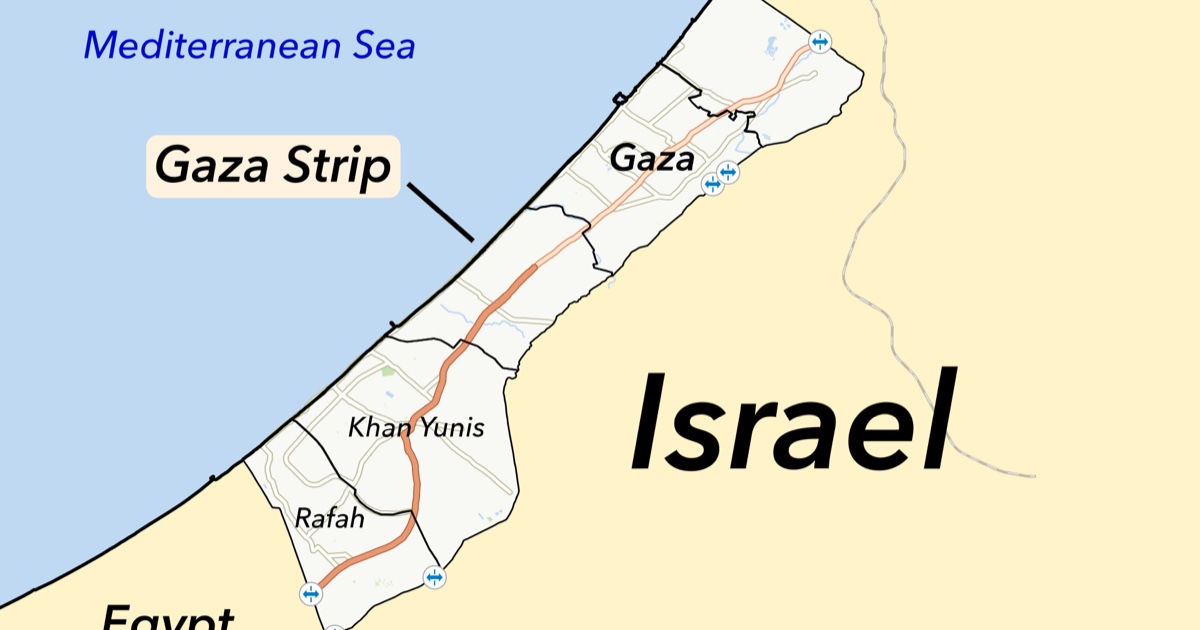
Hamas has agreed to a phased framework for disarmament in Gaza, according to officials and a document obtained by the Associated Press, creating the most detailed plan yet for transferring security and political authority away from the group.
The agreement links the collection and storage of weapons to an Israeli withdrawal, the arrival of a new Palestinian technocratic administration and the deployment of an International Stabilization Force. It also envisages the eventual decommissioning of heavy weapons, military production sites and Hamas' extensive tunnel network.
What the agreement says
Police weapons are to be transferred to the US-backed National Committee for the Administration of Gaza when that body arrives in the enclave. The committee is intended to manage civilian government and work with a new Palestinian police force.
The more difficult military phase would begin after the committee and international force are in place. Heavy weapons would be collected and stored inside Gaza under Palestinian technocratic supervision, while military sites and tunnels would be progressively decommissioned. Officials involved in the process said weapons would not be handed directly to Israel or to a non-Palestinian party.
Disarmament and withdrawal are tied together
The central difficulty is sequencing. The agreement links each stage of disarmament to a phased Israeli withdrawal from territory it controls. An Israeli official, however, said there would be no withdrawal from the roughly 60% of Gaza currently held by Israel before Hamas is disarmed and the territory demilitarised.
That difference is not semantic. If Israel requires disarmament before withdrawal while Hamas expects the two processes to move together, implementation could stop before it begins. Israel is not a signatory to the agreement, which is between Hamas and countries helping to negotiate and guarantee the ceasefire, including the United States, Turkey, Egypt and Qatar.
A long and uncertain timetable
US and Board of Peace officials have described a process that could take between 200 and 350 days, although that timeline was not included in the agreement obtained by AP. Even that estimate may be optimistic because Gaza's weapons are dispersed, many tunnels are damaged or inaccessible and command structures have been transformed by the war.
Verification will also be difficult. Inspectors would need to determine whether weapons have been surrendered, stored or moved; whether production sites are closed; and whether tunnels have been destroyed or merely sealed. Any dispute could become a reason for one side to suspend its obligations.
Who would govern and secure Gaza
The plan envisions a technocratic Palestinian committee taking over civilian administration while a new police force and the International Stabilization Force assume security responsibilities. The arrangement is intended to prevent a return to direct Hamas rule while avoiding indefinite Israeli military government.
Its legitimacy will depend on whether Palestinians see the committee as accountable and capable, whether Israel permits it to operate across the territory and whether international forces have a clear mandate. Reconstruction, aid distribution, border management and the return of displaced people will all depend on those institutions functioning.
The critical test
The agreement is significant because Hamas has accepted a defined process for relinquishing arms and governing authority. It does not, however, resolve the conflict by itself. The decisive questions are whether Israel accepts a linked withdrawal, whether the guarantors can enforce each phase and whether breaches are addressed without triggering renewed war.
For Gaza's population, the value of the plan will be measured less by diplomatic language than by changes on the ground: reduced violence, freedom of movement, reliable aid, functioning government and a credible path to reconstruction. Until implementation begins, the framework remains an important but fragile promise.

Reader comments
Subscribers can join the conversationSign in to join the conversation. Comments are open to everyone with a free account.
Sign in or create accountLoading comments…