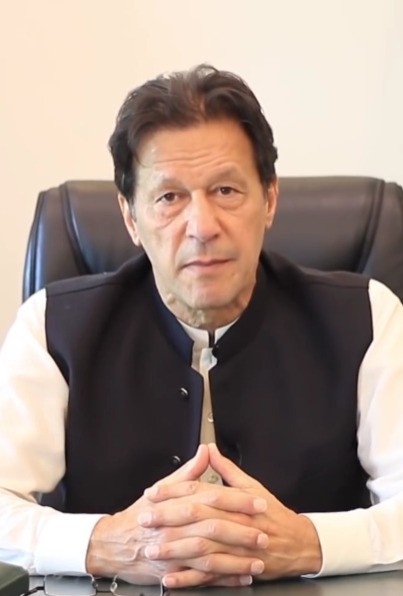
When I interviewed Imran Khan for my film about him as prime minister of Pakistan in November 2020, Nietzsche’s words came to mind: “What does not kill me makes me stronger.” Few could have imagined then how brutally that proposition would be tested—or how powerfully Khan would come to embody it.
On August 3, I wrote that Pakistan’s rulers had tried to make Imran Khan “the invisible man of Pakistan”: removed from television screens, hidden behind prison walls, deprived of normal family contact and independent medical attention, and rendered inaccessible in the hope that political memory would eventually fade.
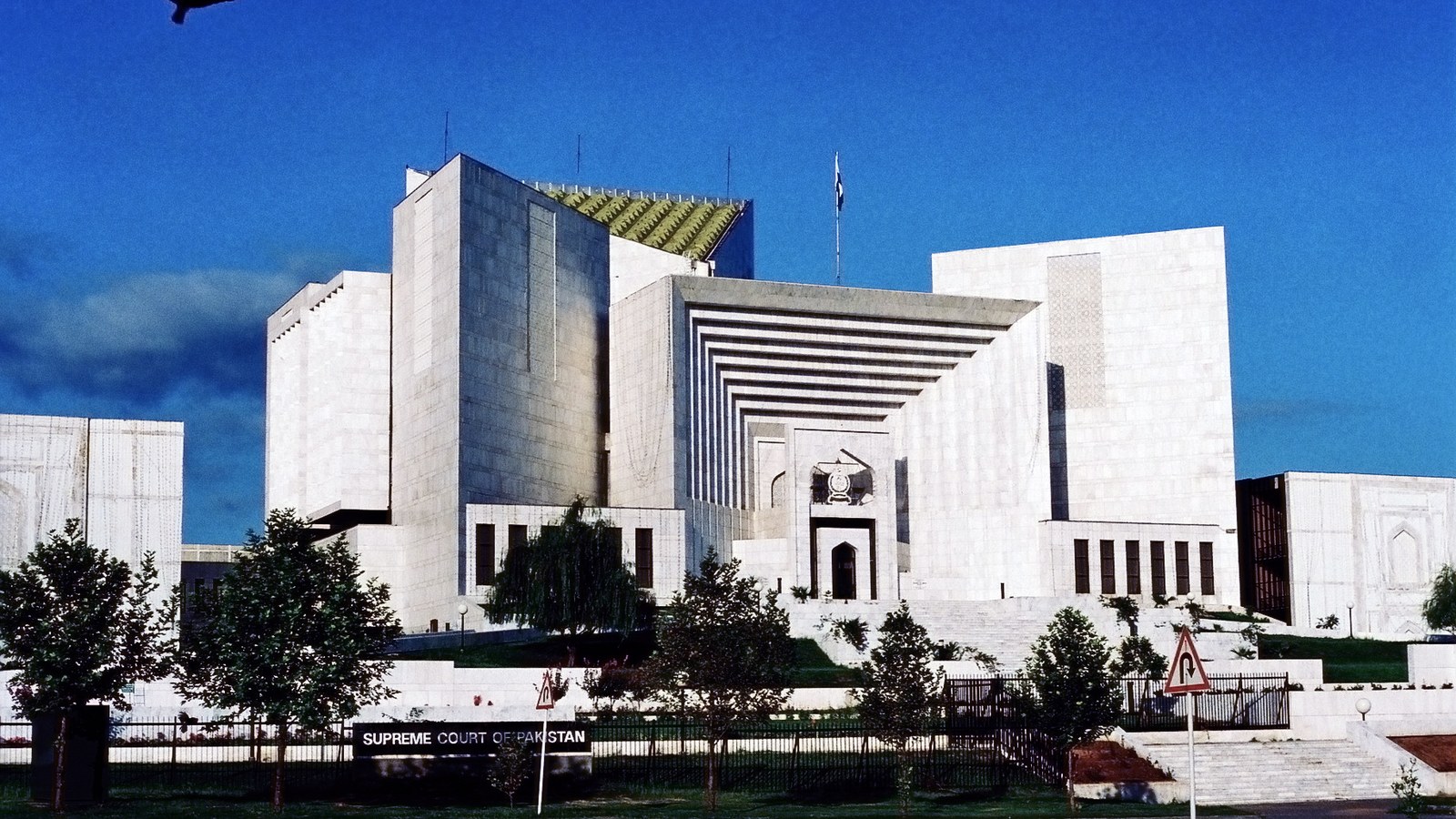
Two weeks later, the Supreme Court’s decision to transfer him from Adiala Jail to Shifa International Hospital has exposed the limits of that strategy. The Court has sought Khan’s complete medical record, information about meetings with his sisters and calls with his sons, and has ordered medical treatment amid reports of high blood pressure, palpitations, anxiety and deteriorating health.
This is not freedom. It is not vindication. Nor is it, yet, the restoration of constitutional rule. But it is an unmistakable crack in the system constructed to make Khan disappear.
The question is not merely why the Court intervened. It is why Asim Munir’s regime could no longer prevent that intervention.
For three years, Pakistan’s ruling order has tried to resolve a political crisis through confinement: isolate Khan, weaken PTI, intimidate the media, restrict access to lawyers, control family visits, and wait for public attachment to dissolve. But the strategy failed because it misunderstood Khan’s place in Pakistan.
He is no longer merely a politician seeking office. For millions, he represents a larger grievance: electoral manipulation, economic hardship, institutional decline and the conviction that unelected power has overridden the people’s mandate.
The authorities attempted to turn Khan into an absence. Instead, they made him an unavoidable question: Why is he denied meaningful access to his doctors? Why are his sons prevented from seeing their father? Why must his sisters fight repeatedly for ordinary family meetings? Why is transparency feared?
The Family That Refused Silence
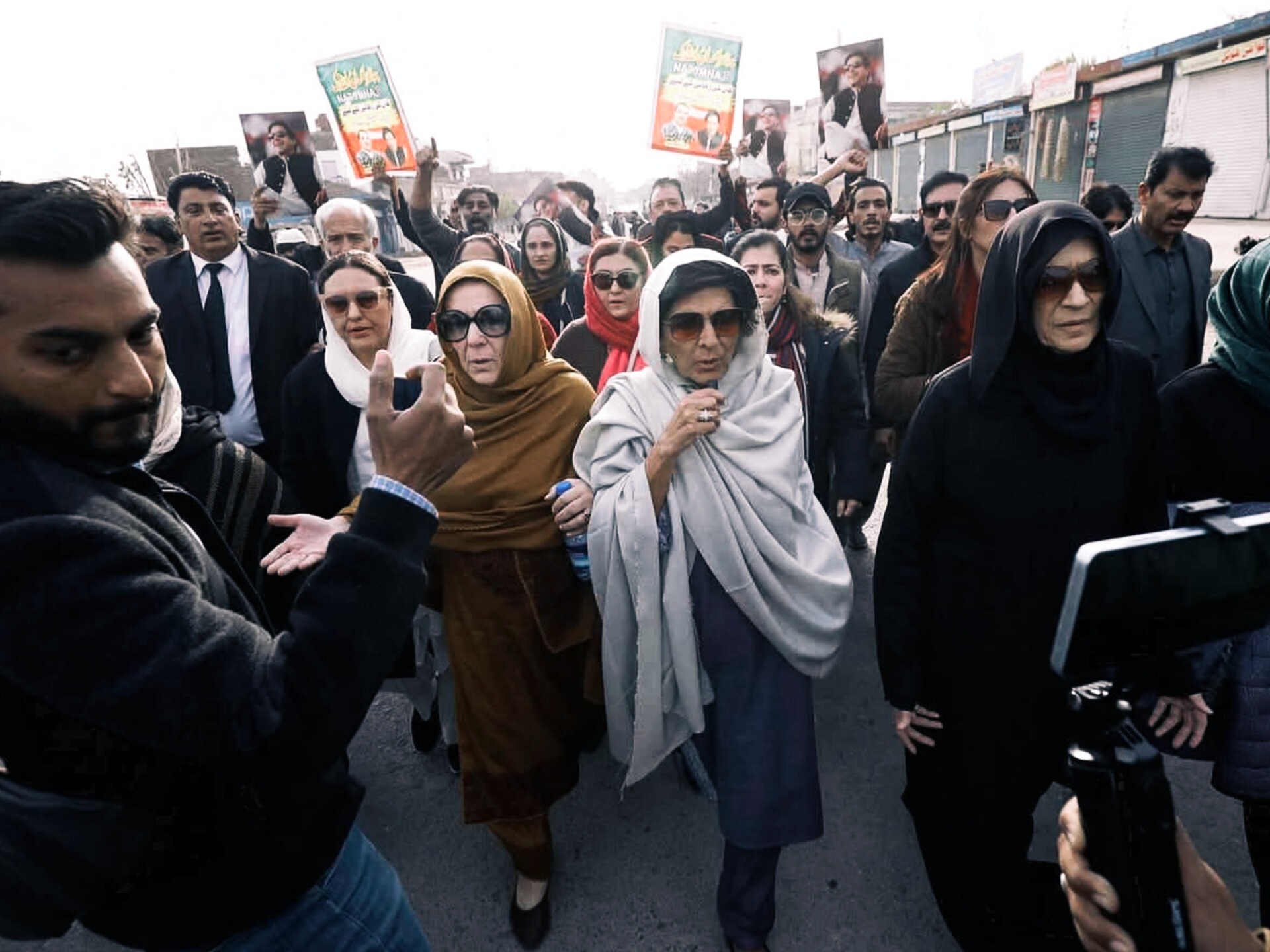
One of the most consequential sources of pressure on the regime has been Khan’s own family. His sisters—Aleema Khan, Dr. Uzma Khan, Noreen Khan and Rubina Khan, who is in exile—have refused to allow his detention to become routine. They have repeatedly sought access, spoken publicly, pursued legal remedies and challenged official accounts of his health and treatment.
Aleema Khan’s large public gatherings shocked the establishment. Her warning that continued repression could produce greater unrest, at a time of heightened regional instability, intensified pressure on Asim Munir’s government. Dr. Uzma’s petition called for Khan’s transfer to Shifa International Hospital, access to his personal physicians, regular family meetings, legal consultation and disclosure of his medical reports. The Supreme Court ordered that her petition be heard alongside Khan’s own medical plea.
Such persistence matters because it transforms a prison complaint into a documented public record. Every rejected visit, every unanswered question and every withheld medical report becomes evidence of a state unable to defend its conduct in daylight.
Khan’s sons, Kasim and Suleiman, have played an equally important role. From abroad, they have carried a burden no children should have to bear: publicly campaigning for proof of their father’s wellbeing and demanding the most basic rights of family contact and independent medical care. In February, Kasim said that the continuing denial of medical treatment and visas amounted to cruelty and “collective punishment.”
Their activism has moved beyond social media. In March, Kasim and Suleiman raised their father’s detention at a UN Human Rights Council side event in Geneva, bringing allegations of isolation, inadequate medical care and denial of family visits before an international audience. Their intervention changed the nature of the crisis. What the authorities hoped would remain a controlled domestic matter became an issue of international human-rights scrutiny.
That is a profound political complication for Munir’s regime. A father held incommunicado is one story inside Pakistan. Two British-raised sons speaking in London, Geneva and international media transform it into a global question of accountability.
Multiple Global Imran Khan Rallies
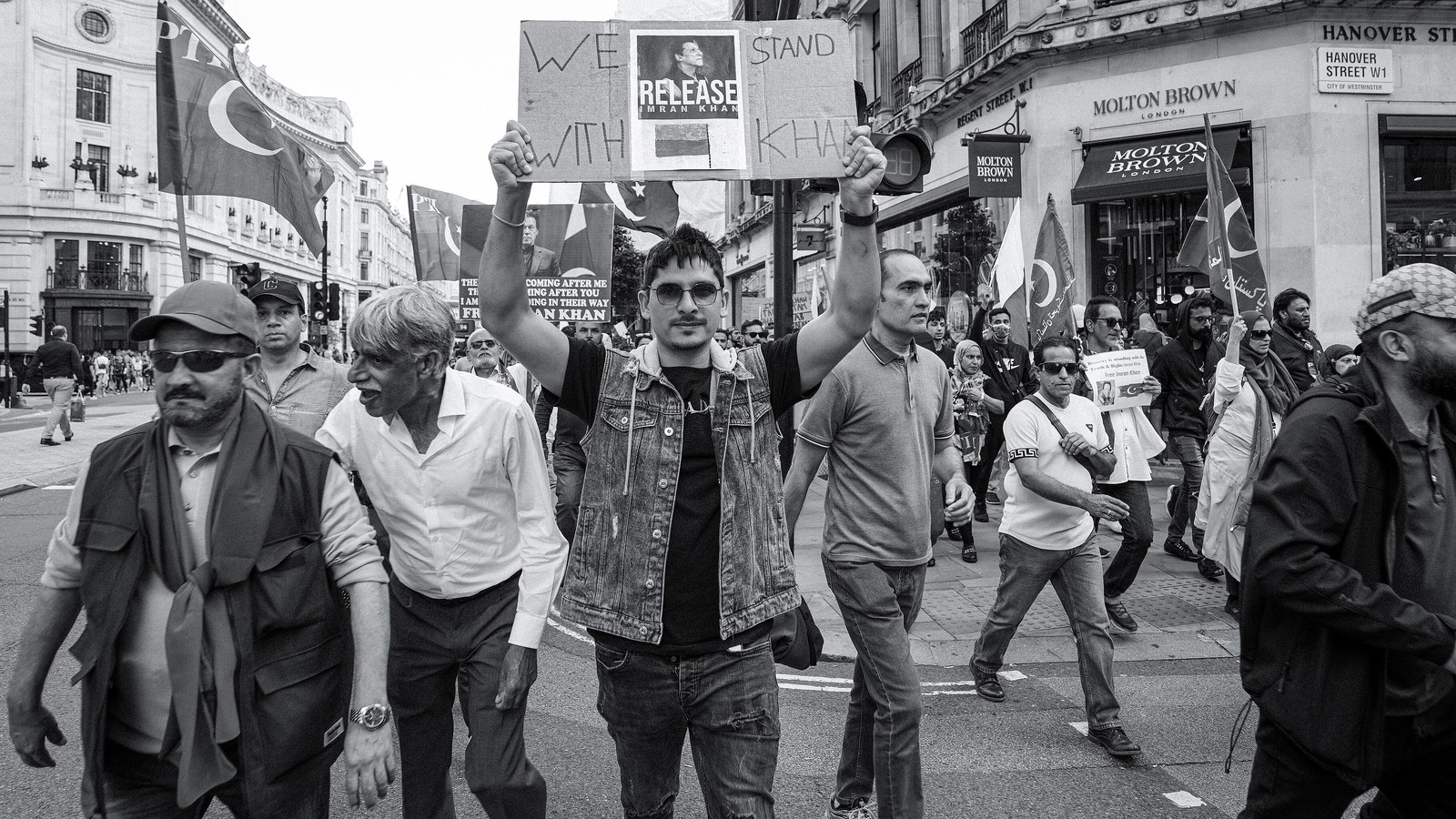
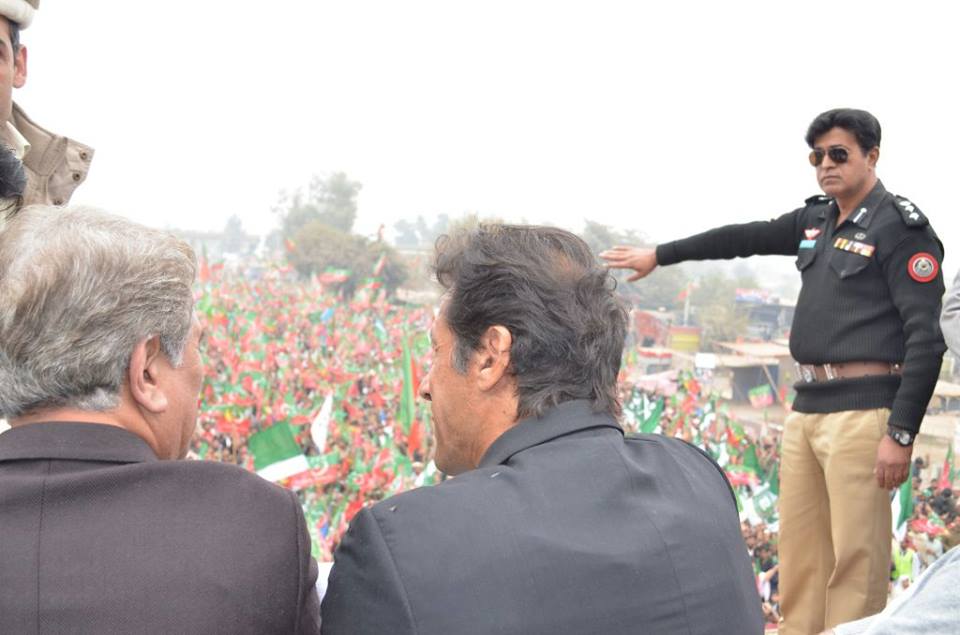
The Pakistani diaspora has become an enduring source of pressure. Across the United States, Britain, Canada, Europe, Australia and the Gulf, supporters have organised multiple global Imran Khan rallies, public demonstrations, parliamentary meetings, media campaigns and digital mobilisations demanding his release, humane treatment, family access and independent medical care.
These are not isolated expressions of online outrage. They represent a coordinated global refusal to accept the official narrative that Khan’s imprisonment is merely an ordinary legal matter. From Washington to London, Toronto to Melbourne, and across cities in Europe and the Gulf, overseas Pakistanis have ensured that Khan’s detention remains visible in political spaces beyond the control of Pakistan’s censorship machinery.
A “Release Imran Khan” rally outside the US Capitol in Washington in June illustrated the political significance of this movement. Diaspora communities can lobby elected representatives, engage journalists, work with human-rights organisations, address public forums and bring their concerns directly to the institutions that shape Pakistan’s international standing.
This activism does not, by itself, compel policy change in Islamabad. But it raises the cost of repression. It keeps Khan’s condition in public view. It ensures that every visa denial, every family restriction, every withheld medical record and every report of deteriorating health can travel beyond the boundaries of Pakistan’s controlled media environment.
Pressure From Every Direction
The regime now faces pressure from public anger at home, a judiciary increasingly unable to ignore medical and family-rights claims, coalition tensions over provincial restructuring, and a worldwide diaspora movement determined to internationalise Khan’s treatment.
PPP’s resistance to dividing Sindh or imposing new provinces without consensus also signals that the governing arrangement is not as cohesive as it appears. Saeed Ghani has categorically opposed Sindh’s division, while PPP leaders insist that the creation of new provinces requires public and political consensus. The party may not be preparing an immediate break, but it is protecting its political base and warning against decisions imposed from above.
Externally, Pakistan seeks strategic relevance and international respectability. But no state can indefinitely claim diplomatic maturity while treating a former elected prime minister as a political prisoner whose health, family access and medical care require Supreme Court intervention.
The transfer to Shifa International Hospital is therefore best understood as a controlled concession made under pressure. It reduces the immediate risk of a medical catastrophe. It gives the judiciary a limited opening. And it acknowledges, however reluctantly, that Khan cannot be hidden forever.
The invisible man is visible again—not only because a court ordered a hospital transfer, but because his sons, sisters, loyal friends and a movement of multiple global Imran Khan rallies across the planet refused to let silence become the final verdict.
Reader comments
Subscribers can join the conversationSign in to join the conversation. Comments are open to everyone with a free account.
Sign in or create accountLoading comments…