
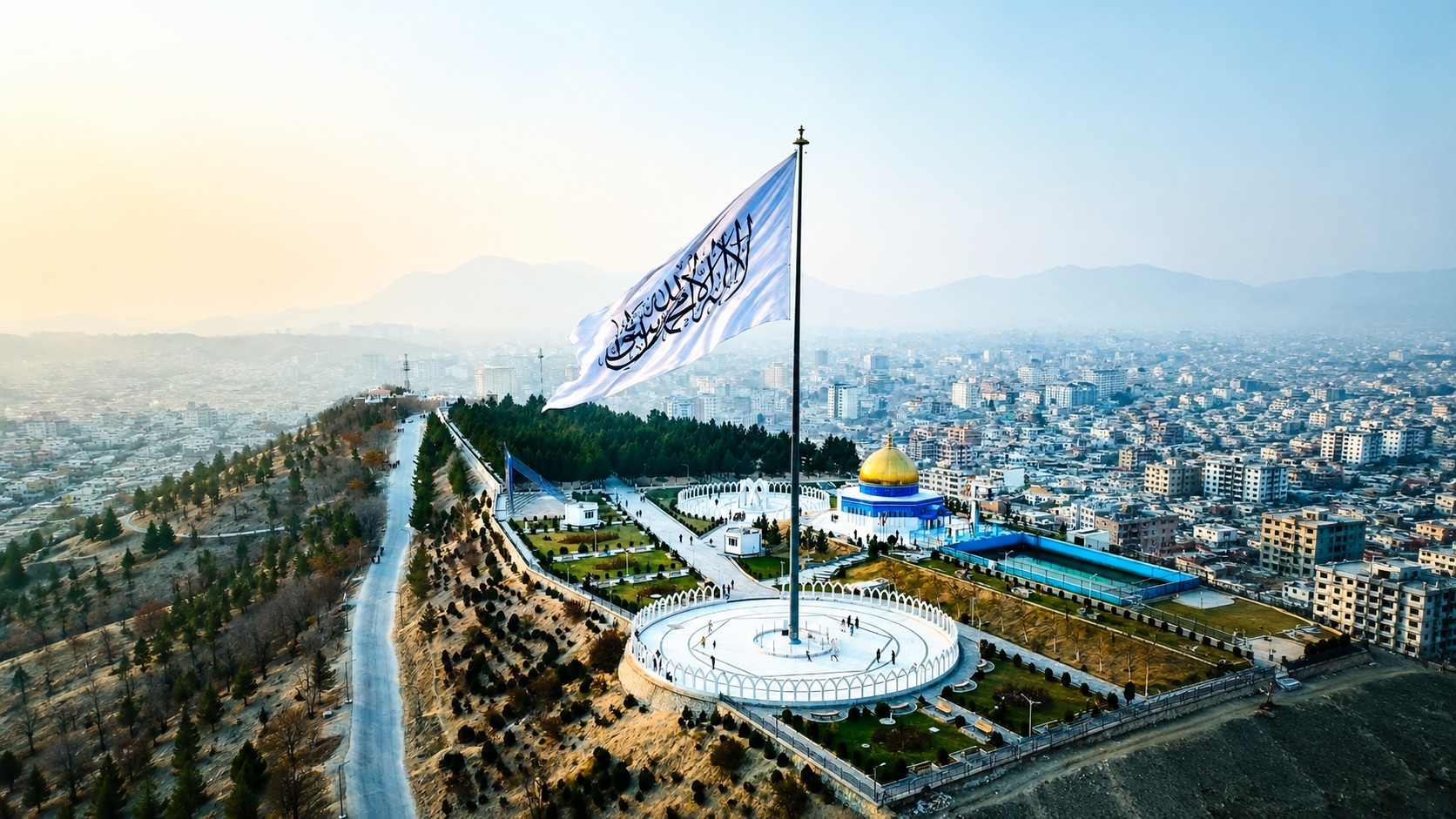
On 15 August 2021, the Taliban entered Kabul and the political order built over the previous two decades collapsed with extraordinary speed. The Afghan Republic's security forces dissolved, foreign troops completed their withdrawal, aid flows were disrupted and much of the international commentary assumed that institutional and economic breakdown would follow.
The shock was real. Afghanistan's economy contracted sharply in 2021 and again in 2022. Banking channels were constrained, development assistance fell and millions of households were pushed deeper into hardship. Yet five years later, the country has not followed the trajectory many expected. The state did not disintegrate. A new nationwide civil war did not emerge. The authorities in Kabul retained control of the national territory, customs and revenue collection became more centralized, the Afghani stabilized after its initial plunge and one of the world's largest opium economies was reduced to a fraction of its former size.
That does not make Afghanistan prosperous, politically inclusive or free of danger. It does mean that the analytical baseline has changed. The question in 2026 is no longer whether the Afghan state can survive the end of the Republic. It is whether the stability that followed can be converted into jobs, investment, functioning public services and a political order capable of sustaining legitimacy at home and abroad.
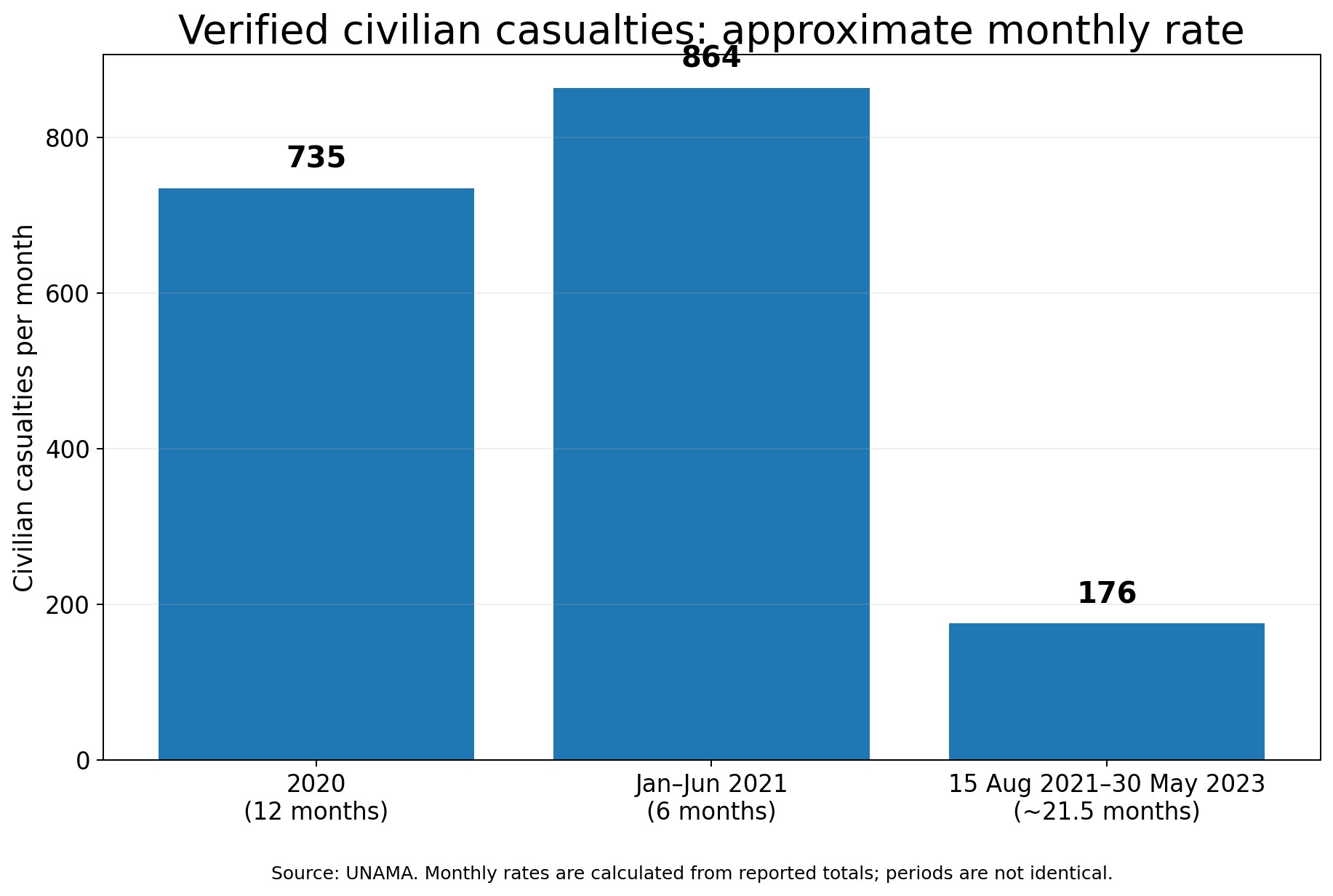
Source: UNAMA. Monthly rates are calculated from reported totals; periods are not identical.
The most important change is the one people notice by its absence
For most Afghans, the defining fact of the post-2021 period is not a new institution or policy. It is the end of the nationwide Taliban-versus-Republic war that had shaped daily life for years.
UNAMA recorded 8,820 civilian casualties in 2020, including 3,035 deaths. In the first six months of 2021 alone, it recorded 5,183 civilian casualties as the conflict intensified. By contrast, UNAMA documented 3,774 civilian casualties between 15 August 2021 and 30 May 2023. The post-takeover period remained violent — especially because of ISIS-K bombings and improvised explosive devices — but the civilian casualty burden was dramatically lower than during the final war years.
The reason is structural as much as administrative. One of the principal belligerents became the government, the former national army disappeared and foreign combat operations ended. That is not the same thing as saying Afghanistan became peaceful in every sense. It is, however, a major change for civilians, traders, farmers and travelers who no longer live inside a country divided by an active nationwide front line.
United Nations reporting through 2026 also describes a territorial reality very different from the final years of the Republic: the de facto authorities maintain national territorial control and armed opposition groups have not recreated a rival state or a serious territorial challenge. The country remains exposed to terrorism and localized violence, but the fragmented battlefield has largely disappeared.
Afghanistan's post-2021 story is not the disappearance of risk. It is the replacement of a fragmented battlefield with a centralized, lower-conflict state.
A quieter state has also become a more centralized state
The end of the war created space for a different kind of state-building. Ministries, provincial governors and district administrators were placed under a tighter chain of command. Customs posts and revenue collection were centralized. Checkpoints that had once fed multiple patronage networks were reduced or brought under central control.
This is one area where World Bank surveys provide useful independent evidence. In a 2022 survey, roughly 82 percent of firms said they had made unofficial payments before August 2021, while fewer than 10 percent reported doing so after the takeover. A later survey found that 92 percent of respondents said their businesses had not made unofficial payments or bribes to the interim authorities, although customs and tax interactions still presented problems.
These findings should not be stretched into a claim that corruption has vanished. Firm surveys capture only part of the economy, and favoritism or abuse may take forms that do not appear in a bribery question. But they do suggest a meaningful change in the everyday cost of doing business — and help explain why revenue collection has improved despite a much poorer economy.
The clearest policy result: opium cultivation collapsed
The strongest independently verified post-2021 policy result is the narcotics ban. UNODC estimated 177,000 hectares of opium poppy cultivation in 2021 and 233,000 hectares in 2022. After the April 2022 ban began to be enforced, cultivation fell to 10,800 hectares in 2023, remained low at 12,800 hectares in 2024 and declined again to about 10,200 hectares in 2025.
That leaves cultivation roughly 96 percent below the 2022 level. UNODC also recorded a collapse in opium production. Whatever one's view of the authorities in Kabul, few policy shifts in Afghanistan over the past five years have produced such a clear before-and-after result in independently monitored data.
There is, however, a real economic cost. The poppy economy provided income to farmers and labourers in districts where profitable alternatives are scarce. UNODC has warned that many farmers remain vulnerable and that alternative livelihoods are essential. A successful narcotics ban is therefore a major security and governance achievement, but it is not a substitute for rural development.
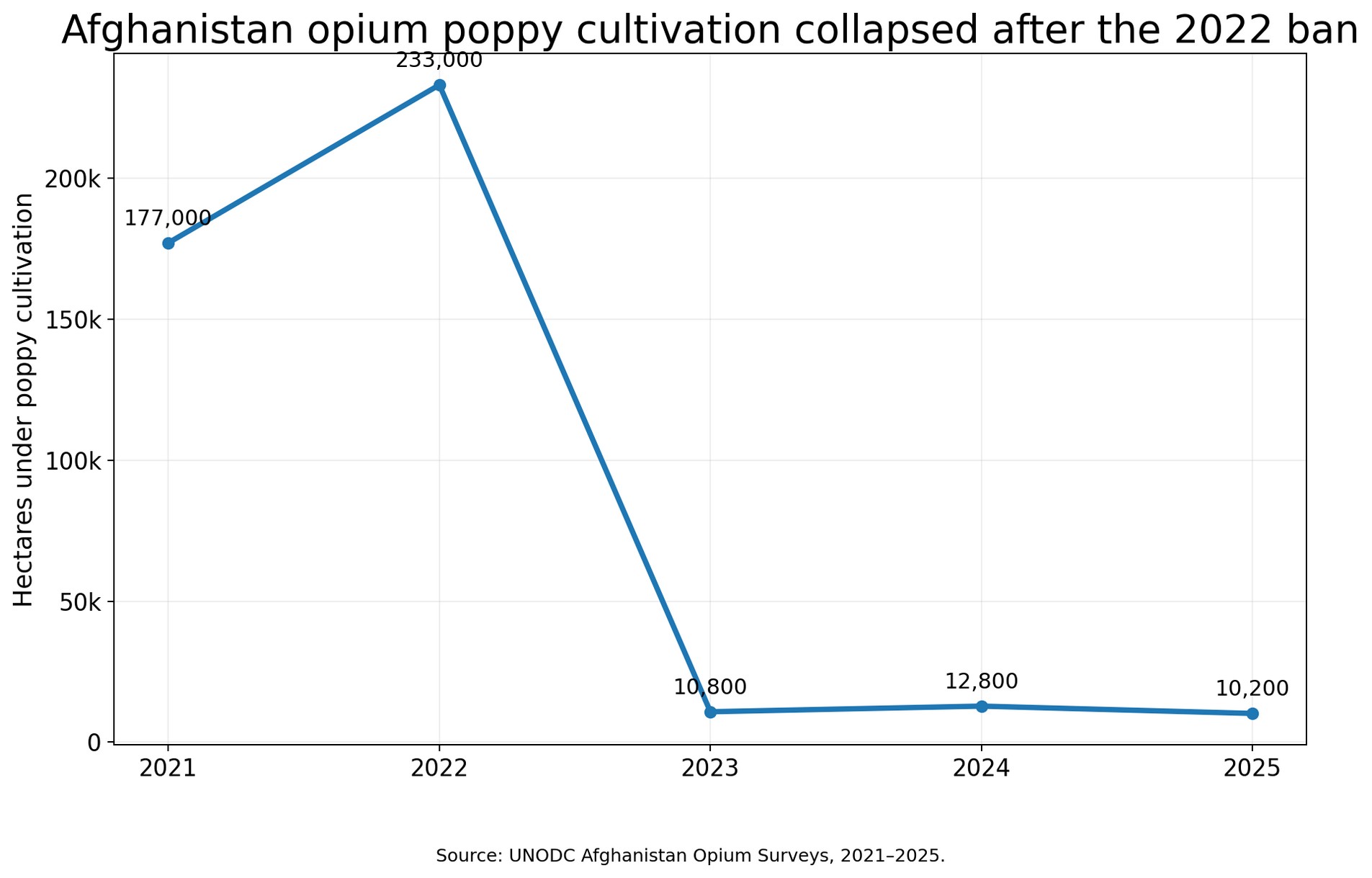
UNODC estimates show the scale of the post-ban decline in opium poppy cultivation. Source: UNODC Afghanistan Opium Surveys, 2021–2025.
The economy did not recover quickly — but it stopped collapsing
Afghanistan is not experiencing an economic miracle. The World Bank estimates that real GDP contracted by 20.7 percent in 2021 and another 6.2 percent in 2022. Growth then returned: 2.3 percent in 2023, 1.9 percent in 2024 and an estimated 4.8 percent in 2025.
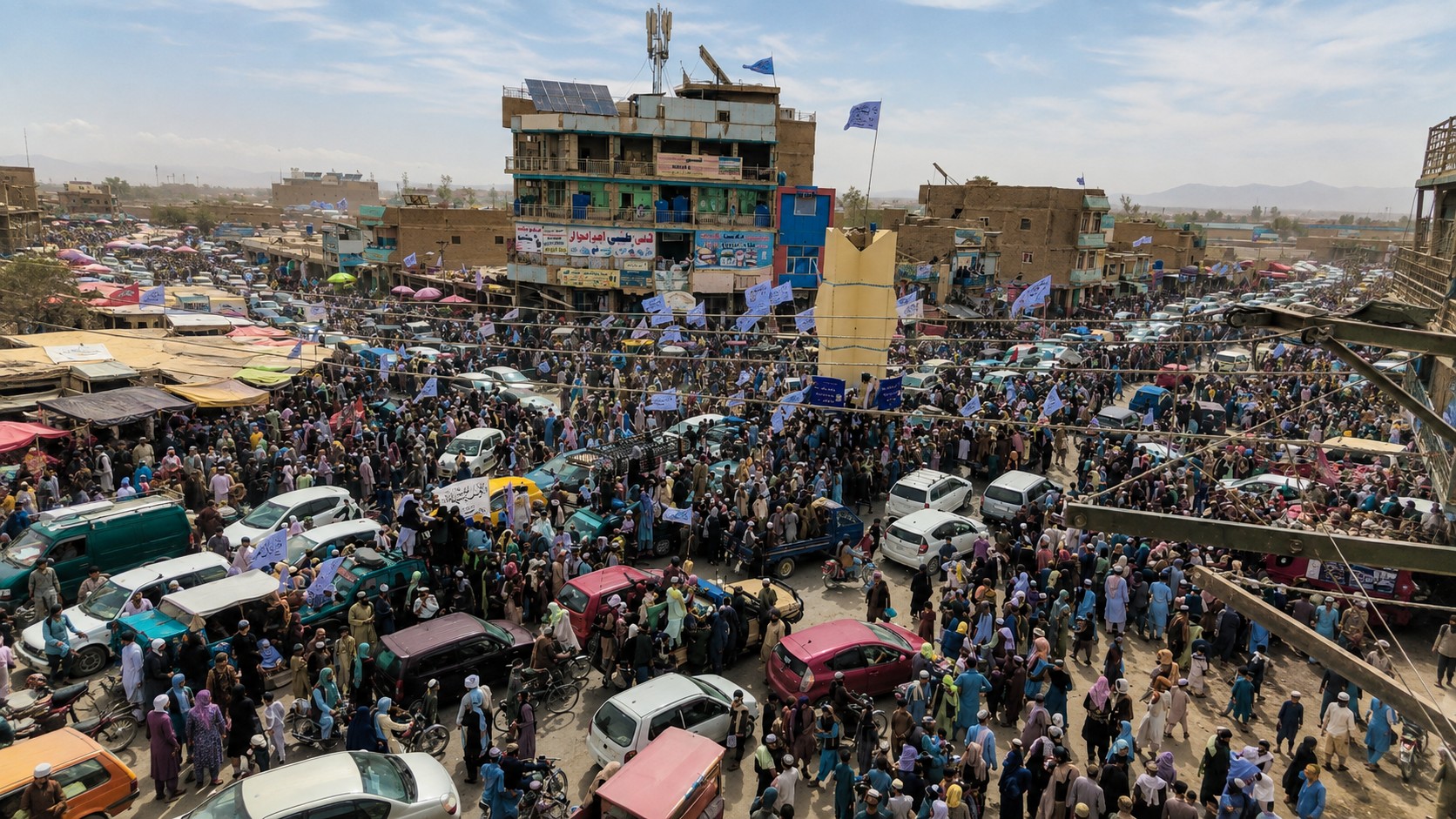
That recovery is incomplete, but it matters because it contradicts the assumption of continuous post-2021 economic freefall. More striking is the improvement in domestic revenue collection. The World Bank estimates domestic revenue at 11.1 percent of GDP in 2021, rising to 15.1 percent in 2022, 15.6 percent in 2023, 19.2 percent in 2024 and 19.8 percent in 2025.
In practical terms, the Afghan state is financing a larger share of itself from the domestic economy than it did at the moment of transition. This does not replace the development aid and external financing lost after 2021, but it does point to greater fiscal discipline and administrative reach.
Domestic revenue rose materially after 2021, strengthening fiscal self-reliance even as foreign grants declined. Source: World Bank, Afghanistan Development Update, Spring 2026.
The currency tells a similar, if incomplete, story. The Afghani weakened during the initial crisis, then appreciated against the US dollar through 2025. That stability reflects tight monetary management and external cash flows as well as domestic confidence, so it should not be confused with household prosperity. Still, currency disorder on the scale feared in 2021 did not materialize.
The annual-average AFN/USD exchange rate strengthened after 2022. This is a measure of monetary stability, not a complete measure of household welfare. Source: World Bank.
The returnee shock has tested the state — and exposed its limits
One of the least appreciated tests of Afghanistan's post-war stability has come from the return of millions of Afghans from Pakistan and Iran. IOM estimates that about 6.04 million people returned from the two neighbouring countries between mid-September 2023 and 30 May 2026. During Afghanistan's 2025 fiscal year alone, the World Bank estimates around 3.7 million people returned.
The immediate result was contradictory. Returnees added demand to the economy and helped lift aggregate growth, but population growth outpaced output. The World Bank estimates that real GDP grew 4.8 percent in 2025 while real GDP per capita fell about 5.6 percent.
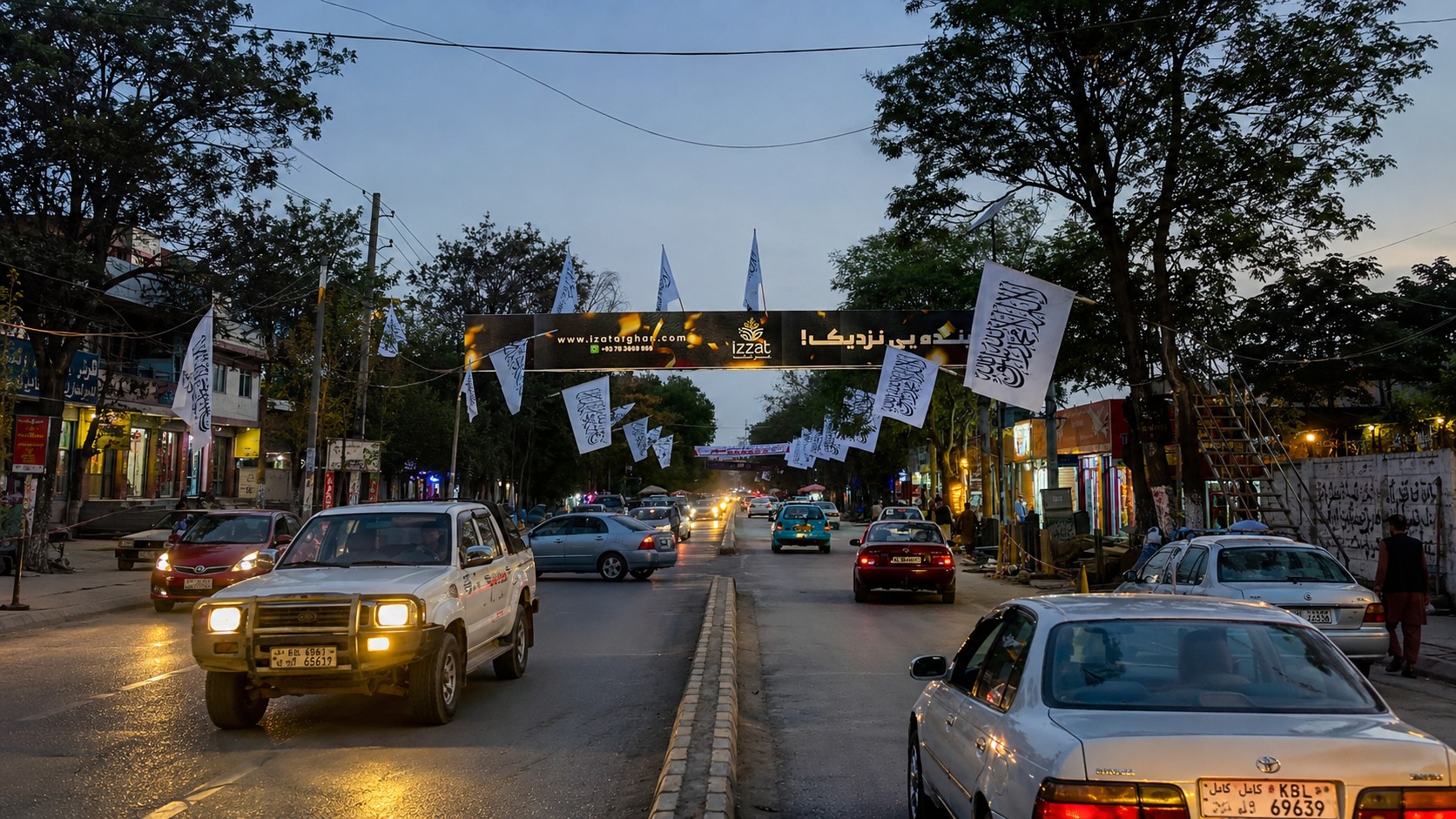
The positive part of this story is institutional: a fragile state absorbed a population movement measured in millions without the collapse of central administration or the outbreak of another nationwide civil war. The negative part is socioeconomic: housing, jobs, rents, schools, healthcare and household incomes have come under severe pressure. Absorption is not the same as successful reintegration.
The 2025 returnee stress test: aggregate growth rose, but population growth was faster and per-capita income fell. Source: World Bank, Afghanistan Development Update, Spring 2026.
Infrastructure is beginning to reflect the security dividend
The de facto authorities' five-year performance report contains a long catalogue of roads, rail projects, dams, mining contracts, urban works and energy schemes. Official lists of projects should always be treated cautiously: an announcement is not a completed asset, and a memorandum is not investment already deployed.
Even so, infrastructure has analytical value as a secondary indicator of state capacity. A government able to keep major roads open, collect customs revenue, sustain multi-year construction and administer contracts is operating in a fundamentally different environment from a government fighting to hold provincial centers and transport corridors.
The Qosh Tepa Canal has become the clearest symbol of that ambition. It should not be presented as a finished transformation, and its regional water implications remain sensitive. But its scale illustrates how the authorities are attempting to convert the end of the war into agricultural and physical infrastructure rather than merely into coercive control.
The biggest gap in the positive story: rights and inclusion
A fair assessment cannot stop at security, revenue and infrastructure. Afghanistan's greater internal stability has been accompanied by severe restrictions on women and girls, and those restrictions are not only a human-rights issue; they are also a long-term economic and state-capacity problem.
Girls remain barred from formal secondary education beyond the sixth grade and women remain excluded from universities. United Nations reporting in 2026 warned that the continuation of education and employment restrictions could deplete the future supply of female teachers and health workers. Restrictions on women's medical education have also raised concerns about access to healthcare in a society where women often require female providers.
This is the central limitation of any attempt to present the post-2021 order as an uncomplicated success.
A country can be more secure while simultaneously narrowing the public space available to half its population. If the authorities want international recognition, investment and a durable development settlement, the question of women's education and participation will remain impossible to separate from the country's economic future.
ISIS-K and Pakistan are the unfinished security chapters
The end of the nationwide war did not eliminate terrorism. ISIS-K has retained the ability to strike civilians, religious sites and high-profile targets. Minority communities have remained particularly vulnerable to some of its attacks.
The more dangerous change in 2026 has been along the Pakistan frontier. United Nations reporting has documented cross-border air strikes, shelling, drone activity, casualties and displacement. This changes the nature of the security test facing Kabul. Afghanistan no longer has to defeat a rival government controlling large areas of its own territory; it now has to prevent terrorist activity and border disputes from drawing the country into a wider regional confrontation.
Internal territorial control gives the authorities more capacity to manage that challenge. It does not guarantee success. The next phase of Afghanistan's stability will depend heavily on whether Kabul and Islamabad can avoid turning a difficult security relationship into a prolonged interstate conflict.
A different Afghanistan — and a different set of problems
Five years after 15 August 2021, the most defensible assessment is neither triumphalist nor dismissive. Afghanistan remains poor. Investment is weak. The banking system is shallow. Food insecurity and drought continue to hurt households. The return of millions of Afghans has reduced per-capita incomes despite renewed GDP growth. Women and girls face restrictions that carry profound social and economic consequences. ISIS-K remains dangerous, and relations with Pakistan have become volatile.
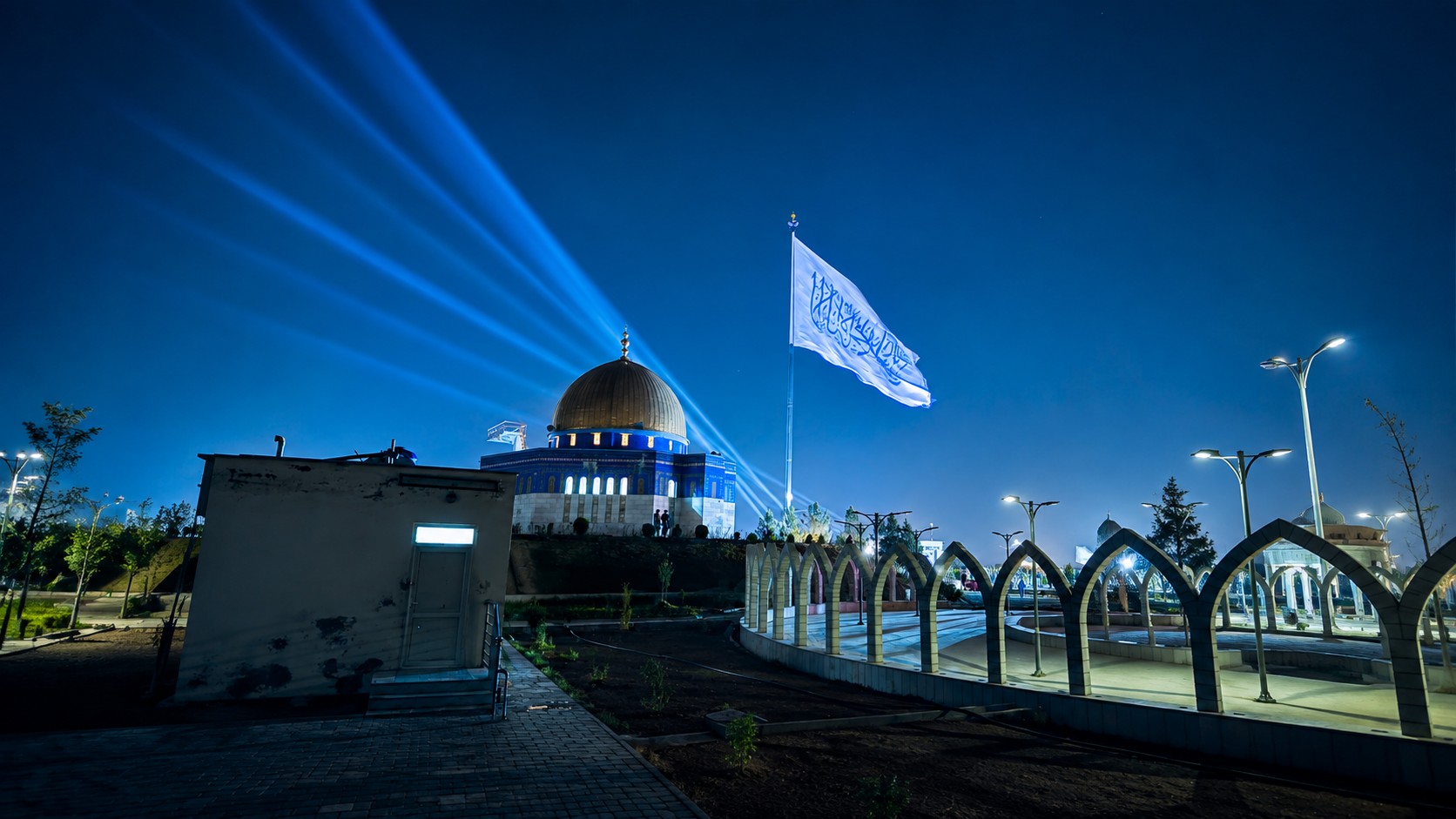
But several measurable changes are equally difficult to deny. The nationwide war ended. Civilian casualties fell sharply from the final conflict years. The central authorities maintain territorial control. Firms report substantially fewer unofficial payments than before the takeover. Opium poppy cultivation remains a small fraction of its 2022 level. Domestic revenue collection has strengthened. The currency has remained comparatively stable. Millions of returnees have entered the country without triggering state collapse.
Those outcomes matter because they show that Afghanistan in 2026 is not simply the Afghanistan of 2021 under a different flag. It has moved from a fragmented battlefield and heavily aid-dependent war economy toward a more centralized, lower-conflict and fiscally tighter state.
The challenge now is more demanding than survival. The security dividend must become an economic and social dividend. That requires investment, jobs, functioning services, predictable regional relations and a broader conception of national participation. Stability has created an opportunity Afghanistan did not have during the war. Whether the authorities use that opportunity will determine what the next five years look like.
For now, the evidence supports a conclusion that would have sounded improbable in the chaotic days of August 2021: Afghanistan is more internally stable than many expected. The question is whether that stability can become a platform for a more prosperous, inclusive and internationally connected country.
Editorial data note
This feature was prepared by the Parrhesia News Editorial Team from the five-year research dossier supplied for publication. Claims from the Islamic Emirate of Afghanistan's performance report were treated as government-reported unless independently supported. Independent verification was drawn principally from UNAMA, UN Secretary-General reporting, the World Bank, UNODC, IOM and UNHCR. The section on women's education and participation reflects current United Nations reporting and is included to preserve a balanced assessment of the post-2021 record.
Reader comments
Subscribers can join the conversationSign in to join the conversation. Comments are open to everyone with a free account.
Sign in or create accountLoading comments…