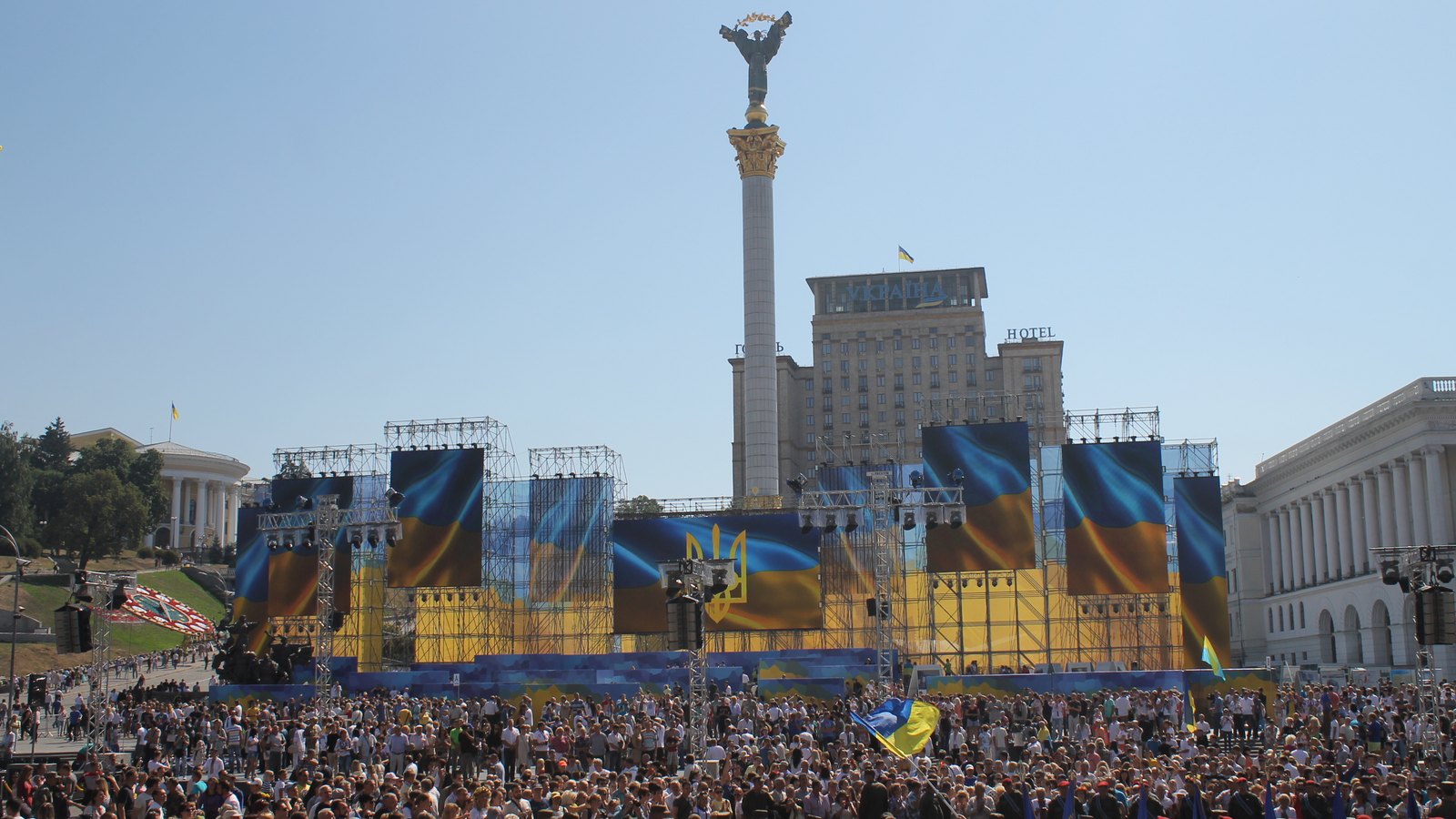
European leaders joined President Volodymyr Zelenskyy in Kyiv on Monday as Ukraine marked the 35th anniversary of its independence under the pressure of a war that has outlasted multiple diplomatic efforts.
The visitors included European Council President António Costa, British Prime Minister Andy Burnham, Luxembourg Prime Minister Luc Frieden and Moldovan President Maia Sandu, according to The Associated Press. Their presence was a political statement, but it was also backed by a new European defence decision: the European Commission approved 6.1 billion euros in procurement for air-defence systems, missiles, ammunition and radar.
The money forms part of the 90 billion euro Ukraine Support Loan. The Commission’s announcement said Ukraine can request payments by submitting contracts with defence companies, which the Commission will review before funds are released. That means the approval is significant but does not mean every system has already been delivered or that the full sum will move immediately into the battlefield.
At the Independence Day ceremony, Costa described European solidarity as political, financial, humanitarian, military and diplomatic. He said the EU would continue supporting Ukraine during the war, future peace negotiations and reconstruction, and argued that Ukraine’s future membership of the European Union was central to long-term security and democratic stability.
The language reflects Europe’s attempt to make support durable. The war has become a test not only of ammunition and air defence but of whether European governments can sustain a political commitment while the front line changes slowly and attacks continue against cities and infrastructure. A multi-year financing structure is intended to give Kyiv and defence manufacturers more certainty than one-off emergency announcements.
Ukraine’s position remains that support must serve a just peace rather than a settlement imposed under military pressure. Zelenskyy said the arrival of European leaders showed that Ukraine’s future was tied to the security of Europe, while the European Council’s statement said peace must affirm Ukraine’s independence, sovereignty and territorial integrity.
The public show of unity came as violence continued. AP reported Ukrainian claims of Russian attacks on ports, energy infrastructure and cities, alongside Russian reports of Ukrainian drone attacks and deaths in Krasnodar. The report said the competing battlefield claims could not be independently verified. That caveat is important: a diplomatic ceremony can be confirmed, while the wider military picture remains partly contested.
Today’s event therefore carries two messages. Europe wants Moscow to understand that support will continue beyond a single news cycle, and Ukraine wants its allies to understand that peace talks cannot be separated from the country’s ability to defend itself. The 6.1 billion euro package is a concrete commitment, but the longer test will be whether procurement, delivery and political unity survive the next phase of the war.


Reader comments
Subscribers can join the conversationSign in to join the conversation. Comments are open to everyone with a free account.
Sign in or create accountLoading comments…