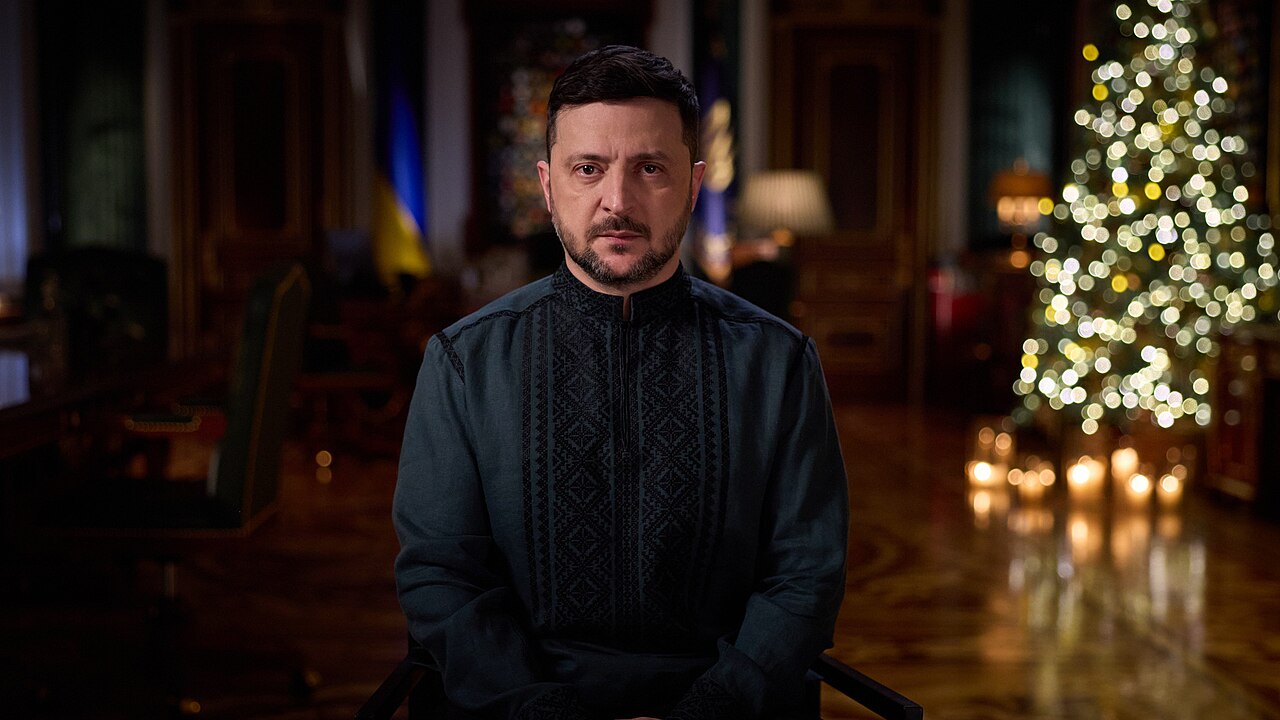
Prime Minister Andy Burnham has hosted Ukrainian President Volodymyr Zelenskyy at HM Naval Base Portsmouth, using his first international meeting since taking office to signal continuity in Britain's support for Ukraine.
The choice of visitor and venue was deliberate. Zelenskyy was the first foreign leader received by the new prime minister, while the naval base placed defence and security at the centre of the encounter.
According to the official Downing Street readout, Burnham paid tribute to the resilience of the Ukrainian people and said the meeting should demonstrate his personal commitment to the country as it continues to resist Russia's invasion.
Battlefield innovation
The two leaders reviewed the battlefield situation and discussed Ukraine's rapid adaptation of technology and tactics. Ukraine has repeatedly used inexpensive drones, electronic warfare and locally developed systems to expose weaknesses in larger Russian formations.
Downing Street said the leaders agreed that this approach would also shape the future of European security. That assessment reflects a wider shift in defence planning across NATO, where the war has accelerated demand for drones, counter-drone systems, long-range weapons and faster procurement.
The talks also covered further diplomatic and military collaboration. Burnham said he hoped to visit Ukraine soon, a step that would provide an early opportunity to turn the symbolic message of the Portsmouth meeting into more specific commitments.
Continuity after a leadership change
Britain has been one of Ukraine's most consistent European supporters since Russia launched its full-scale invasion in 2022. A change of prime minister inevitably raised questions about whether that position would shift, particularly as the new government begins setting its spending and foreign-policy priorities.
The Portsmouth meeting was intended to answer the immediate political question. Burnham presented support for Ukraine as a continuing national commitment rather than a policy tied to one administration.
That continuity matters to Kyiv. Ukraine depends on predictable military supplies, training, intelligence cooperation and diplomatic support. Sudden uncertainty in any major allied capital can affect battlefield planning and Russia's calculations about Western endurance.
What remains unclear
The official account was strong on political intent but limited on new deliverables. It did not announce a fresh funding package, a new weapons total or a binding timetable for additional programmes.
Those details will determine the practical significance of the meeting. Britain faces its own defence-industrial constraints, while Ukraine continues to require air-defence missiles, ammunition, long-range systems and support for domestic production.
The meeting nevertheless established the new government's opening position. Burnham chose Ukraine for his first international signal and a naval base for the setting. The message was that Britain intends to remain engaged, both in the immediate war and in the longer reconstruction of European security.


Reader comments
Subscribers can join the conversationSign in to join the conversation. Comments are open to everyone with a free account.
Sign in or create accountLoading comments…