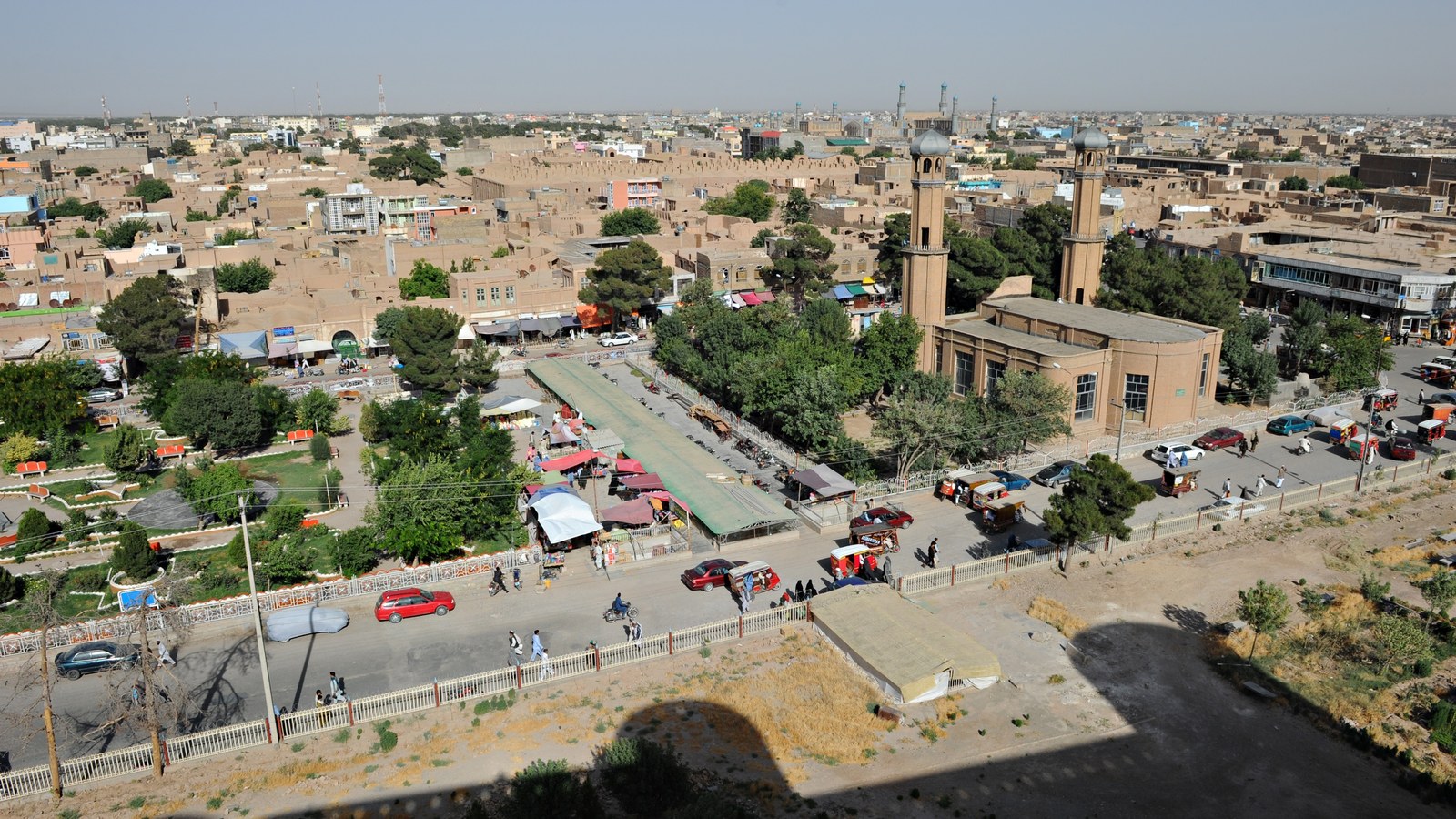
Something unusual happened in Kabul on 7 September 2026.
Afghanistan's Ministry of Mines and Petroleum signed a long-term oil and gas agreement with Saudi Arabia's Delta International. On paper, it was an energy deal. The Saudi company will initially invest $200 million in exploration and development of the Kushk–Tirpul basin in western Afghanistan. The exploration period is eight years. The contract runs for twenty-five.
But the most interesting person in the room did not represent Saudi Arabia or Afghanistan.
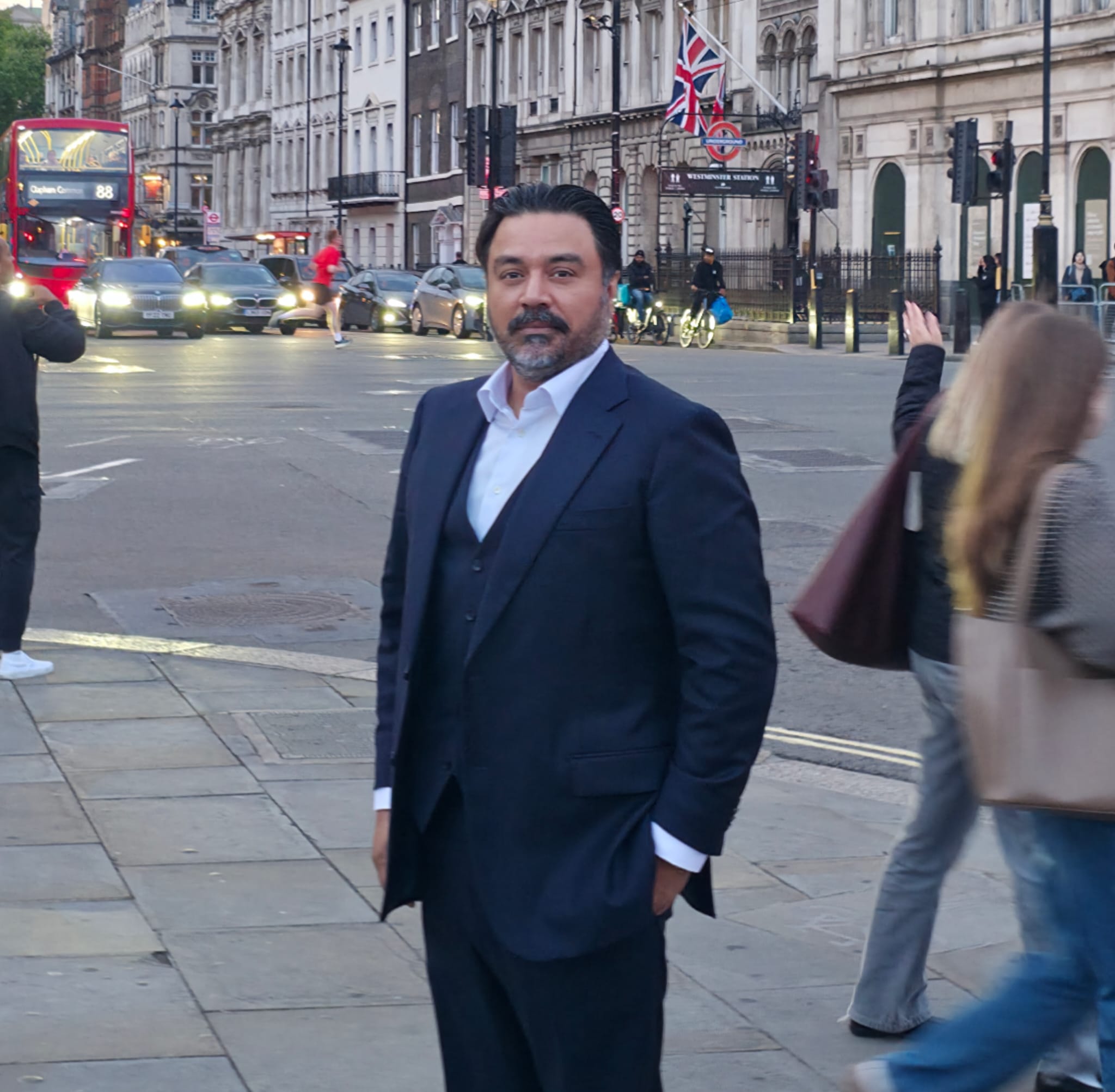
Zalmay Khalilzad was there.
The former American ambassador to Afghanistan and former U.S. Special Representative for Afghanistan Reconciliation sat among senior Afghan officials as the agreement was signed. Khalilzad was not representing Washington. There is no evidence that the United States government sponsored or endorsed this agreement, and it would be wrong to suggest otherwise.
Yet his presence cannot simply be treated as ceremonial either.
This was not even Khalilzad's first appearance around the project. In October 2025, he was present when Delta International's chief executive met Deputy Prime Minister Mullah Abdul Ghani Baradar in Kabul to discuss gas exploration, extraction and pipelines.
That makes the signing worth looking at from a much wider perspective.
The real significance may not ultimately be how much gas Delta finds beneath western Afghanistan. It may be that Afghanistan is entering a new phase in which economic engagement begins to move ahead of diplomatic recognition.
For five years, much of Western policy was constructed around isolation. The Taliban government would remain unrecognised; Afghanistan would struggle to access international finance; large investors would stay away; diplomatic pressure would eventually force concessions.
That strategy has not entirely disappeared. Nor have the reasons behind it.
But the world surrounding Afghanistan has changed considerably.
Russia has recognised the government in Kabul. China is doing business. Iran has become one of Afghanistan's most important economic partners. Central Asian states are building transport and energy links. Emirati companies are entering logistics. Saudi capital has now entered hydrocarbons. European officials have started holding direct technical discussions with Afghan representatives.
Formal recognition remains scarce. Practical engagement does not.
That distinction may now matter more than the diplomatic terminology.
First, What Has Actually Been Signed?
Some of the reporting around this agreement has already run ahead of the facts.
There are headlines referring to a $50 billion or even $60 billion Saudi investment in Afghanistan. That is misleading.
The immediate investment publicly announced by the Afghan authorities is $200 million.
The agreement covers exploration and possible development in the Kushk–Tirpul area between Herat and Badghis. Afghan government reporting describes seven gas blocks covering roughly 22,000 square kilometres. Delta's broader description refers to an exploration area of approximately 23,317 square kilometres and includes geological and geophysical surveys, seismic work, exploratory drilling and reservoir assessment.
There is much more attached to the project.
Delta also intends to study how any natural gas discovered could supply Herat city, Herat Industrial Park, electricity generation and other domestic energy requirements.
Then there is the much more ambitious proposal: a roughly 700-kilometre gas pipeline from the Herat region towards Spin Boldak in Kandahar. Delta calls it the CentGas – Corridor of Prosperity. The possible cost has been estimated at around $10 billion over ten years.
Beyond that comes the larger vision—field development, gas infrastructure, pipelines and associated energy facilities—which Delta has described in potential investment terms ranging from approximately $50 billion to $60 billion.
The word potential is critical.
None of that money should presently be described as committed investment.
The later stages depend upon something much less glamorous than political announcements: whether drilling actually proves sufficient commercially recoverable gas; whether projects make economic sense; whether financing can be obtained; whether regulatory approvals are granted; and whether investors finally decide that the risk justifies the return.
In other words, the $200 million matters precisely because it is the part where somebody begins spending money to find out.
That is how serious resource development starts. Not with trillion-dollar claims about what might be underground, but with seismic surveys, drilling rigs, engineers and capital put at risk.
Kushk–Tirpul: what is committed — and what is not
| Committed / contracted | Conditional / proposed |
|---|---|
| $200 million initial investment | ≈700 km proposed CentGas pipeline |
| 8 years exploration period | ≈$10 billion indicative pipeline investment |
| 25 years contract duration | $50–60 billion broader programme figures |
| ≈22,000 km² basin area, 7 blocks (official Afghan announcement) | Depends on reserves, commercial feasibility, financing and regulatory approvals |
Sources: Afghanistan GMIC; Arab News; Amu TV. Figures as publicly reported on 7–8 September 2026. The immediate $200 million commitment should be separated from the much larger conditional programme figures.
Khalilzad's Presence Matters — But Not for the Reason Some May Assume
There is an obvious temptation to see Zalmay Khalilzad at the ceremony and conclude that Washington is somehow behind the agreement.
There is presently no evidence for that.
In fact, the available evidence points in the opposite direction. Only days before the Saudi agreement, the U.S. State Department was reported to have rejected Kabul's recent invitation for American participation in Afghanistan's critical-minerals sector. Afghan Foreign Minister Amir Khan Muttaqi had openly invited U.S. investment not only in mining but also infrastructure, agriculture and trade.
So this is not an American investment breakthrough disguised as a Saudi transaction.
But foreign policy rarely changes overnight.
Governments do not usually announce on Monday that a country is isolated and then declare on Tuesday that everything has changed. They start talking. Former officials appear. Technical contacts develop. Private companies test the environment. Third countries provide political bridges. Commercial relationships are created in sectors where interests overlap. Exceptions accumulate. Eventually policy begins catching up with reality.
Khalilzad is particularly interesting in this context because he occupies an unusual position. Few Americans know the present Taliban leadership as well as he does. Few have negotiated with them for as long. His presence therefore carries political meaning even when it carries no official American authority.
And there is another important detail. He publicly described the agreement as evidence that Afghanistan is increasingly 'ready for business'.
That phrase deserves attention.
Five years ago, Afghanistan was discussed in Washington almost exclusively in the language of withdrawal, defeat, evacuation, terrorism, sanctions, hostages and human rights.
Now one of the most recognisable former American officials associated with Afghanistan is sitting in Kabul at an international energy-investment ceremony talking about business.
That does not constitute recognition. But it illustrates how far the conversation itself has moved.
Afghanistan's Isolation Is Becoming More Complicated Than the Word Suggests
Afghanistan remains diplomatically constrained. That should not be disputed merely to make an argument.
Most Western governments still do not recognise the current government. Afghan access to international financial channels remains difficult. Sanctions create serious obstacles. Restrictions on women and girls continue to poison relations with Europe and North America. Banking, insurance and long-term commercial financing remain enormously complicated.
But describing Afghanistan simply as 'isolated' is increasingly inadequate.
Russia crossed the formal threshold in July 2025, becoming the first country to recognise the Taliban-led government. Other countries have gone considerably further in practice than their official language would suggest.
China has accepted Afghan diplomatic representation and developed economic relations without extending equivalent formal recognition. Central Asian states increasingly deal with Kabul as the authority controlling a country essential to their trade and security interests. The Gulf states have expanded diplomatic and economic contacts. India has steadily rebuilt its relationship.
And Europe itself is beginning to discover the difference between refusing recognition and refusing contact.
In June 2026, representatives of the European Commission and several EU member states met a Taliban delegation in Brussels. The subject was principally migration and the return of Afghans without a legal right to remain in Europe. European officials were extremely careful to call it a technical discussion rather than political recognition.
That distinction is legally and politically important. It also proves the larger point.
When Europe needs something from the authorities in Kabul, Europe talks to the authorities in Kabul.
That is functional engagement.
It is quite possible that Afghanistan's route back into international affairs will proceed increasingly through this model: practical relationships without the ceremony of diplomatic recognition.
The Saudi agreement could therefore be significant not because Riyadh has changed Afghanistan's formal status, but because it demonstrates another area in which formal status is becoming less decisive than practical interests.
Practical engagement is moving faster than formal recognition
| Date | Entity | Development |
|---|---|---|
| Jul 2025 | Russia | Formal recognition of the Taliban-led government |
| Dec 2025 | DP World | Agreement to assess and develop Hairatan and Torkham border facilities |
| Oct 2025 | Delta / Khalilzad | Baradar meets Delta CEO in Khalilzad's presence on gas investment |
| Jun 2026 | European Union | Taliban delegation holds operational talks in Brussels |
| Jul 2026 | China–Iran route | First direct Beijing-to-Herat rail shipment reported |
| Sep 2026 | Saudi + Russia | Delta energy deal and Russian TNG contracts signed in the same week |
Reading the pattern: recognition remains limited, but commercial, transport, migration and technical relationships are becoming institutionalised. Sources: Washington Institute; DPMEA; Engineering News-Record / DP World reporting; Euronews; Ariana News; GMIC; Xinhua.
The Terrorism Question Has Also Become More Nuanced
There is another narrative that needs careful examination.
For much of the last twenty-five years, Afghanistan was almost synonymous internationally with terrorism. That association was understandable. Al-Qaeda operated there. The September 11 attacks transformed Afghanistan into the centre of a global war. For twenty years, the country was discussed primarily through counter-terrorism, insurgency and military strategy.
Today, the security picture is different.
It would be dishonest to say the terrorism problem has disappeared. It has not.
ISIL-K remains a threat. The presence and activities of the TTP have become one of the most dangerous issues between Kabul and Islamabad. Questions concerning other militant organisations continue to worry Afghanistan's neighbours and the wider international community.
The United Nations said in March that the de facto authorities had been generally effective in combating ISIL-K, while in the same briefing warning that serious concerns remain about other extremist groups and Afghanistan's counter-terrorism commitments.
Both facts need to be held together.
This is not an Afghanistan free of security threats. But nor is it accurately described as an ungoverned territory in which insurgents control large parts of the country and foreign investors cannot travel outside fortified compounds.
For investors, that distinction changes the calculation.
During the previous twenty years, a mining or energy company had to consider not merely ordinary operating risk but insurgency, territorial contestation, roadside bombs, attacks on construction crews, contractors protected by foreign troops, and uncertainty over whether a project would remain accessible at all.
The questions are different now.
Can a contract be enforced? Can engineers reach the site? Can equipment be transported? Can a drilling programme operate continuously? Will pipelines be protected? Will the tax regime remain predictable? Can revenues be transferred internationally?
These are still difficult questions. But they are questions associated with investment risk rather than war-zone impossibility.
The old terrorism-centric picture of Afghanistan has not vanished. It is simply becoming insufficient to explain the country that now exists. And every serious foreign company that begins operating there further weakens the idea that Afghanistan can only be understood through the security language of the post-9/11 era.
Afghanistan's Resource Wealth: Huge Potential, Dangerous Exaggeration
The debate over Afghanistan's natural resources has often been damaged by sensationalism.
For years, headlines have described the country as sitting on one trillion, two trillion or even three trillion dollars of mineral wealth. Those figures create expectations that geology cannot necessarily deliver.
Mineral resources beneath the earth are not money in a bank account.
A copper deposit requiring billions of dollars of electricity, railways, water infrastructure and processing facilities may be commercially useless until those things exist. Lithium that cannot be efficiently extracted or transported may have enormous theoretical value and little immediate commercial value. Oil without refining and transport infrastructure presents the same problem.
Afghanistan nevertheless possesses a genuinely important geological endowment: copper, iron ore, gold, rare-earth elements, coal, gemstones, oil and natural gas.
The United States knows this particularly well because American agencies spent years helping map it.
In August 2026, the U.S. Geological Survey published a new assessment of the wider Amu Darya and Afghan-Tajik geological provinces. Across those transnational basins—which extend through Afghanistan and neighbouring states—the USGS estimated mean undiscovered technically recoverable conventional resources of approximately 442 million barrels of oil and 218 trillion cubic feet of natural gas.
Those numbers must also be used carefully. They cover wider geological basins across several countries, not Afghanistan alone.
But they underline something important. Interest in Afghanistan's hydrocarbons is not based merely upon political publicity. There is a serious geological case for exploration.
The importance of Delta's investment is therefore not that it proves Afghanistan possesses a fortune. It starts establishing what is actually there.
If commercially viable discoveries are made, the consequences can spread far beyond the wells themselves. Energy development brings drilling companies, engineering firms, storage facilities, pipelines, electricity generation, roads, telecommunications, financial services and technical training.
The most valuable result for Afghanistan may therefore not be the first cubic metre of gas. It may be a successful investment precedent.
International investors watch what happens to other international investors.
Why Western Companies Could Eventually Become Interested
This is where the agreement becomes strategically interesting.
Western governments may currently hesitate to deal directly with Kabul. Western companies also face sanctions, compliance requirements, reputational pressure and banking restrictions that Gulf, Russian, Chinese or regional companies can sometimes navigate more easily.
But Afghanistan possesses resources the industrial world increasingly wants.
Copper is essential for electrification. Rare earths feed advanced manufacturing. Lithium remains central to batteries. Hydrocarbons retain enormous regional importance. And Afghanistan sits between Central Asia's resources and South Asia's enormous consumer markets.
The first wave of Western commercial engagement, if it comes, may therefore look nothing like the return of the Western military presence that ended in 2021.
It could consist of drilling-service companies, geological consultants, mining-equipment manufacturers, commodity traders, engineering contractors, satellite-imaging companies, energy technology providers, logistics firms, insurers and project advisers.
None of these requires Washington to recognise the government in Kabul.
That is why practical engagement can advance while diplomatic recognition remains frozen.
Saudi Arabia and the wider Gulf may play a particularly useful role in that process. Riyadh, Abu Dhabi and Doha possess strong Western political and commercial relationships while maintaining considerably greater freedom to deal with Kabul.
They can occupy a space that neither China nor Russia can.
The West entering Afghanistan indirectly through commercially integrated Gulf partners is therefore considerably more plausible in the near term than American corporations arriving directly under an American diplomatic flag.
That may be the real geopolitical opening created by the Delta agreement: not Western re-entry today, but a mechanism through which Western re-entry could eventually become possible.
The Gulf Is Already Moving
Delta is not an isolated Gulf example.
In December 2025, Dubai-based DP World signed an agreement to assess and potentially develop Afghanistan's major land-border facilities at Hairatan and Torkham.
That is strategically significant.
Torkham links Afghanistan with Pakistan. Hairatan links it with Uzbekistan and the wider Central Asian network.
DP World is not a charity or humanitarian organisation. It is one of the world's major logistics companies. The agreement envisages feasibility work for modern cargo-handling systems, upgraded infrastructure, digital border processing and more efficient freight movement.
Again, the project requires feasibility work before the full investment is realised. That caveat should be remembered. But the direction is unmistakable.
Saudi interests are looking at energy. Emirati capital is looking at logistics. Qatar remains deeply involved politically. Other Gulf companies are watching.
Khalilzad said around the Delta agreement that companies from Saudi Arabia, Qatar, Azerbaijan and Norway had shown interest in Afghan investment, particularly hydrocarbons. It will be important to see whether those interests turn into signed contracts.
But the larger story is already visible. The Gulf is becoming one of the bridges between Afghanistan and a financial world from which Kabul was expected to remain largely excluded.
Pakistan Is No Longer Afghanistan's Only Door
For Pakistan, the consequences may be more profound than they initially appear.
For decades, geography gave Islamabad a powerful economic instrument. Afghanistan is landlocked. Pakistan offered the shortest route to the Arabian Sea. Karachi and Port Qasim therefore served not simply as commercial facilities but as strategic assets in Pakistan's relationship with Kabul.
Border closures hurt both countries. But historically they hurt Afghanistan more. That created leverage.
Kabul's current policy appears increasingly designed to ensure that such leverage can never again be exercised to the same extent.
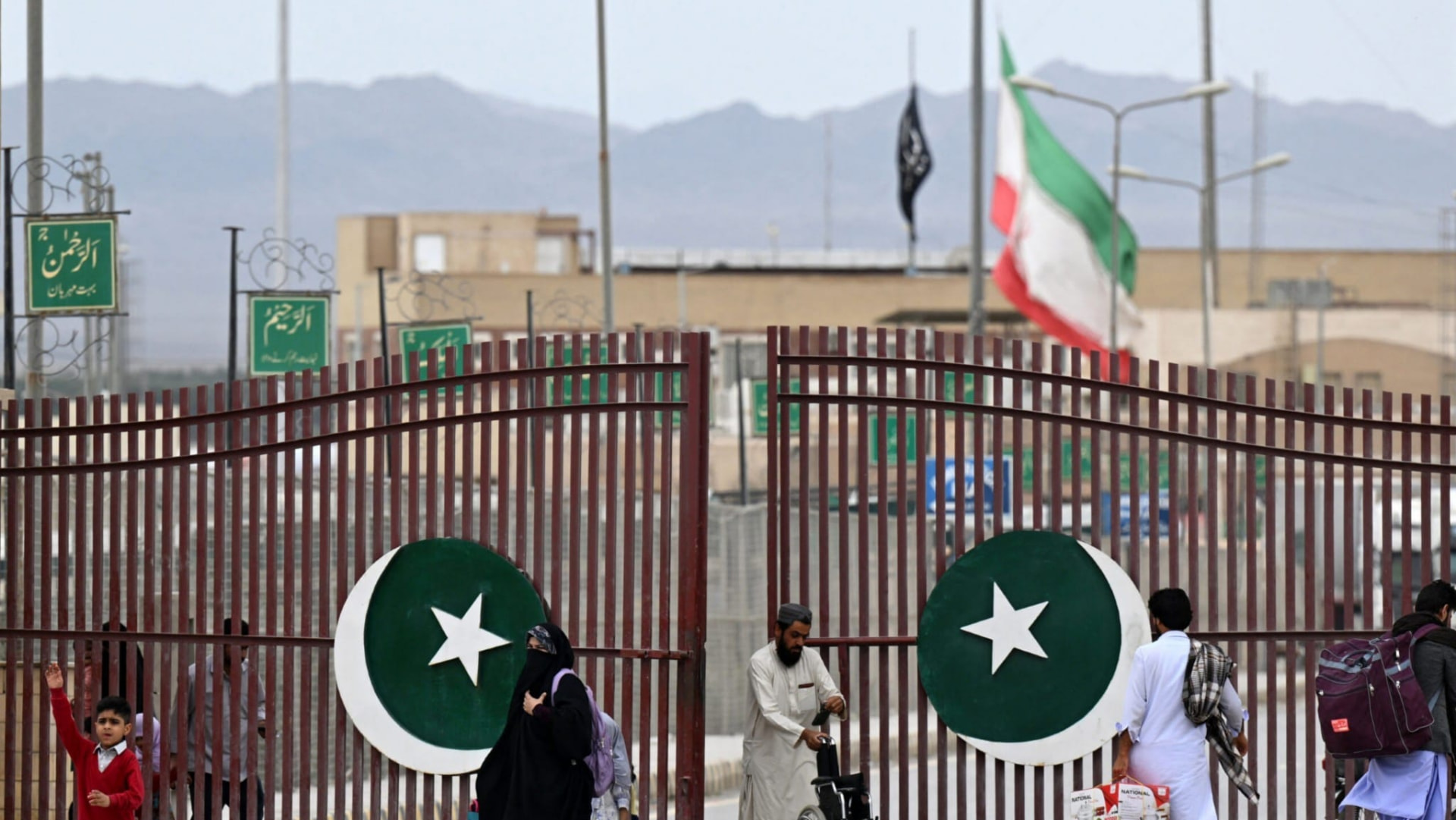
The transformation became particularly visible after repeated Pakistan-Afghanistan border disruptions.
The World Bank's June 2026 Economic Monitor reported that Central Asian corridors had become Afghanistan's largest import channel, accounting for 48 percent of imports. The Iran corridor accounted for another 46 percent, air imports about 5 percent, while trade through Pakistan remained negligible during the disruption.
That is an extraordinary change.
It does not mean Afghanistan no longer needs Pakistan. It means Afghanistan has demonstrated that it can survive without using Pakistan for virtually every international shipment.
There is a substantial difference between those two propositions.
Afghan commerce now has several directions: north through Uzbekistan, Kazakhstan and the wider Central Asian network; west through Iran; south through Pakistan when political conditions permit; and potentially eastward towards China as connectivity improves.
A direct rail shipment from Beijing to Herat in July illustrated how quickly these routes are evolving. A 500-tonne shipment left Beijing, crossed through Central Asia and Iran and reached Rozanak station in Herat using the Khaf–Herat railway.
For decades, Afghanistan's geographical disadvantage was that it had no sea. Its emerging strategy seems to be compensating for that disadvantage by having as many land routes as possible.
Pakistan should not necessarily view this as a zero-sum development.
A stable, resource-producing Afghanistan could ultimately become an important Pakistani market and energy supplier. Indeed, Delta's proposed CentGas route moves towards Spin Boldak. Geography therefore still leaves Pakistan in a potentially valuable position.
But Islamabad may increasingly have to compete for Afghan commerce instead of assuming geography guarantees it.
That is healthier for Afghanistan. It may eventually be healthier for Pakistan as well. The relationship becomes commercial rather than coercive.
Afghanistan's import routes: the Pakistan bottleneck was bypassed
| Central Asian corridors | Iran corridor | Air | Pakistan |
|---|---|---|---|
| 48% | 46% | 5% | Negligible |
The data do not mean Pakistan is irrelevant. They show that Afghanistan can now reroute a large share of imports when its traditional southern crossings are unavailable. Source: World Bank, Afghanistan Economic Monitor, June 2026 (ASYCUDA data).
And Then Russia Appeared — On the Same Day
Perhaps the most revealing detail of 7 September received far less international attention.
On the same day Afghanistan signed the Saudi agreement, the Ministry of Mines and Petroleum signed separate contracts connected to Russia's TNG company.
Approximately $2.8 million was allocated to monitoring and consultancy services in the Amu Darya oil basin. Another $11 million was attached to a flexible production facility at the Zamrad Sai block, which Afghan and Chinese reporting said could process up to 2,000 tonnes of oil per day when completed.
The Russian deal is financially tiny compared with what Delta is discussing. Politically, however, the timing is fascinating.
Saudi investment was being formalised in one part of Afghanistan's energy sector while Russian participation was being expanded in another.
One event involved Zalmay Khalilzad. The other involved a Russian company.
This is arguably the emerging Afghan strategy in a single day: do business with everybody, align exclusively with nobody.
That policy will be much easier to announce than to maintain.
Iran, Russia and China: The Difficult Balancing Act Ahead
Afghanistan's growing contact with Gulf and potentially Western-linked capital introduces a new problem.
For several years, Kabul has survived international isolation partly because neighbouring and non-Western powers continued engaging with it.
Iran is now deeply important to Afghanistan's trade. The Khaf–Herat railway is turning western Afghanistan towards Iranian transport networks. Iranian ports offer access to international shipping.
Russia has extended formal recognition and is developing commercial relations.
China brings something Afghanistan needs perhaps more than any other partner: capital, technology and enormous long-term demand for resources.
These countries stepped into spaces the West vacated.
If Western engagement now begins returning, even indirectly, Kabul cannot simply abandon those relationships. Nor would doing so be sensible.
Afghanistan's strategic advantage comes precisely from not becoming dependent upon any single power.
The country has already discovered the danger of dependence in its relationship with Pakistan. Repeating the same pattern with Beijing, Tehran, Moscow, Riyadh or Washington would solve little.
The most successful Afghan foreign policy would therefore be deliberately multi-directional: Chinese investment without Chinese domination; Iranian transit without becoming dependent upon Tehran; Russian political relations without joining Russia's geopolitical camp; Saudi and Emirati investment without allowing Gulf rivalries to shape Afghan decisions; Western technology and capital without the restoration of Western political tutelage; Pakistani trade without Pakistani control over Afghan access to global markets.
This resembles neutrality. But maintaining neutrality in a region where everyone has competing interests is considerably harder than declaring it.
Iran will watch American involvement closely. Russia will not welcome the restoration of strong Western influence on its southern approaches. China sees Afghanistan partly through the security of Xinjiang and partly through wider regional economic competition. Pakistan views almost every major Afghan foreign-policy relationship through the prism of its own security concerns. Saudi Arabia and the UAE possess their own strategic calculations. The Americans, if they return economically, will not do so in a geopolitical vacuum either.
Afghanistan will therefore face a paradox. The more successful it becomes in attracting international investment, the harder its foreign policy may become.
Stability Is Real — But It Should Not Be Romanticised
The argument for investment also requires honesty about Afghanistan itself.
Political control is considerably more consolidated than during the previous Afghan Republic. Large-scale insurgent warfare has ended. The same governing authority controls the major cities, highways, borders and state institutions.
For business, political continuity matters. A company considering a twenty-five-year resource concession requires some expectation that the authority signing the agreement will still be able to enforce it next year.
But political stability does not mean Afghanistan has become economically healthy.
It remains one of the world's poorest countries. Millions require assistance. The return of Afghans from neighbouring states has placed enormous pressure on jobs, housing and services. The banking system remains constrained. Foreign financing is difficult. Infrastructure remains inadequate.
Restrictions on female education and employment impose both human and economic costs and remain perhaps the single greatest obstacle to wider Western normalisation.
There are also serious governance questions around extractive industries.
How will contracts be awarded? How transparent will revenues be? Where will royalties go? How will environmental damage be managed? How will disputes be settled? Will foreign investors have legal recourse? Will local communities benefit?
Countries do not become rich merely because oil, copper or gas exists underneath them. Many countries have demonstrated the opposite.
The Afghan government therefore has an opportunity, but also a test.
If foreign investment becomes associated with opaque contracts, elite enrichment or arbitrary government intervention, the opening will eventually close.
If contracts are honoured, revenues become predictable, projects remain secure and investors can calculate risk, the opening widens.
The Bigger Test Is Not Delta. It Is the Company That Comes After Delta.
That may be the most important point.
The first foreign investor does not transform an economy. The first successful investor can transform perceptions of it.
Imagine Delta spends $200 million. Its engineers work safely. Equipment moves from the border to the exploration area. Wells are drilled. The government honours the agreement. Commercial reserves are discovered. Profits and payments can move through legal financial mechanisms.
Local employment develops. The project survives political disagreements.
Another company watching from Riyadh, Abu Dhabi, Doha, London, Houston or Oslo begins asking a different question.
Not: 'Is Afghanistan investable?'
But: 'What would it cost us to enter?'
That is the moment when risk stops being absolute and starts being priced.
Once risk can be priced, capital begins making calculations. And capital has considerably fewer ideological memories than governments.
Engagement May Come Before Recognition
The old assumption was that Afghanistan would first achieve diplomatic recognition and economic normalisation would follow.
The opposite may be happening.
Trade first. Railways first. Mining contracts first. Oil exploration first. Migration agreements first.
Logistics first. Diplomatic terminology later.
This is not necessarily an endorsement of the current Afghan government. Countries dealing with Kabul can maintain profound disagreements about human rights, women, security or political inclusion.
It is simply recognition of another reality.
Afghanistan exists. Its government controls the country. Its neighbours must deal with it. Its resources are potentially valuable. Its geography is commercially important. Its instability would hurt everyone around it.
And after five years, waiting indefinitely for an entirely different Afghan political order has not prevented other countries from pursuing their interests.
The West is gradually confronting the same problem.
Isolation leaves influence to somebody else.
China did not wait. Russia did not wait. Iran did not wait. Central Asia did not wait. The Gulf is increasingly not waiting.
At some stage, Washington and Europe will have to decide whether remaining outside Afghanistan protects their interests—or merely ensures that others define its economic future.
A Possible Turning Point — Not Yet a Victory
The Delta agreement should therefore neither be dismissed nor exaggerated.
It is not presently a $60 billion investment. It is not American recognition. Zalmay Khalilzad was not representing Washington.
Afghanistan's banking and sanctions problems have not disappeared. Terrorism has not disappeared. Poverty has not disappeared. International political objections to the policies of the Afghan government have certainly not disappeared.
But something has changed.
A Saudi energy company has committed substantial initial capital to a long-term resource project. A former senior American diplomat closely associated with Afghanistan's last twenty years attended the ceremony. A major Emirati logistics company is investigating Afghan trade infrastructure. Russia is simultaneously increasing its role in Afghan hydrocarbons. Iranian and Central Asian routes increasingly carry Afghan commerce. Chinese freight is arriving in Herat by rail. Europe has begun speaking directly with Kabul where its practical interests require it.
Seen individually, every development can be dismissed as an exception.
Seen together, they describe a trend.
Afghanistan is not becoming universally recognised. It is becoming increasingly difficult to ignore.
And the distinction matters.
Conclusion
For two decades Afghanistan was a battlefield around which other states designed their strategies.
Its opportunity now is to become a marketplace through which those states pursue their interests instead.
That would represent a remarkable reversal. But it will require discipline in Kabul.
Security must remain credible. Militant organisations cannot be permitted to drag Afghanistan into new regional wars. Contracts must survive politics. Foreign capital must receive predictable treatment. Resource revenues must contribute to national development.
The unresolved issues preventing wider Western engagement—particularly women's rights, international banking access and counter-terrorism concerns—cannot simply be wished away.
Internationally, Afghanistan must resist the temptation to exchange one dependency for another.
Its relationship with Pakistan offers the clearest lesson.
Dependence creates leverage. Options create sovereignty.
The same principle should apply to everybody.
Trade with Pakistan, but preserve routes through Iran and Central Asia. Accept Chinese capital, but invite competitors. Maintain relations with Russia, but avoid geopolitical exclusivity. Welcome Saudi and Emirati investment. Leave the door open for American and European business.
Do not become anybody's strategic possession.
Afghanistan's greatest economic asset may ultimately not be copper, lithium, oil or gas. It may be geography.
For generations, that geography turned the country into a place where empires collided.
If Kabul is careful, the same geography could now allow Afghanistan to connect competing economic regions instead: Central Asia to South Asia; China to Iran; the Gulf to Eurasia; India to Central Asia; perhaps eventually Western capital to Afghan resources.
The Delta agreement alone will not achieve any of this.
The wells may disappoint. The proposed pipeline may never be built. The larger investment figures may remain projections on paper.
But that is not why the agreement matters.
It matters because somebody has begun testing whether a different Afghanistan is commercially possible.
And if that test succeeds, 7 September 2026 may ultimately be remembered for something larger than an oil and gas contract.
It may be remembered as one of those moments when Afghanistan's international reintegration began in practice—before much of the world was ready to acknowledge that it had begun.
Sources & References
- Afghanistan Government Media and Information Center (GMIC) — official announcement of the Kushk–Tirpul contract. https://gmic.gov.af/en/news_details/261
- Arab News — Saudi agreement, contract duration and Khalilzad's 'ready for business' remarks. https://www.arabnews.com/business/afghanistan-saudi-group-sign-oil-gas-deal-for-kushk-tirpul-basin-exploration-3000931
- Amu TV — Delta's three-part programme, Herat gas-utilisation study and CentGas pipeline. https://amu.tv/251838/
- TOLOnews — Delta Energy programme and broader investment plans. https://tolonews.com/afghanistan-200750
- Office of the Deputy Prime Minister for Economic Affairs — October 2025 Baradar / Delta / Khalilzad meeting. https://dpmea.gov.af/1404-English-News-118
- Pajhwok Afghan News — investor interest from Saudi Arabia, Qatar, Azerbaijan and Norway. https://pajhwok.com/2026/09/07/firms-from-4-countries-keen-to-invest-in-afghanistan-khalilzad/
- Afghanistan International — U.S. State Department rejection of participation in critical-minerals development. https://www.afintl.com/en/202609028984
- World Bank — Afghanistan Economic Monitor, June 2026. https://thedocs.worldbank.org/en/doc/da300f3625779dfdc79e169bafca6f2a-0310012026/original/Afghanistan-Economic-Monitor-June-2026.pdf
- U.S. Geological Survey — 2026 assessment of undiscovered conventional oil and gas resources, Amu Darya and Afghan-Tajik basins. https://www.usgs.gov/publications/assessment-undiscovered-conventional-oil-and-gas-resources-amu-darya-basin-and-afghan
- UNAMA — March 2026 briefing to the UN Security Council. https://unama.unmissions.org/
- Washington Institute for Near East Policy — Five Years of Taliban Diplomacy: Recognition Without Concessions. https://www.washingtoninstitute.org/policy-analysis/five-years-taliban-diplomacy-recognition-without-concessions
- Euronews — June 2026 EU engagement with a Taliban delegation in Brussels. https://www.euronews.com/my-europe/2026/06/26/europes-taliban-dilemma-the-struggle-to-return-afghan-migrants
- Engineering News-Record — DP World agreement on Hairatan and Torkham. https://www.enr.com/articles/62126-dp-world-moves-to-upgrade-afghan-crossings-as-trade-routes-shift
- Ariana News — first direct Beijing-to-Herat rail shipment. https://www.ariananews.af/first-chinese-transit-shipment-arrives-in-herat-via-irans-railway-corridor/
- Xinhua — 7 September 2026 contracts with Russia's TNG company. https://english.news.cn/asiapacific/20260907/0e3afeebf53540da90aced6b9c4fdf98/c.html



Reader comments
Subscribers can join the conversationSign in to join the conversation. Comments are open to everyone with a free account.
Sign in or create accountLoading comments…