
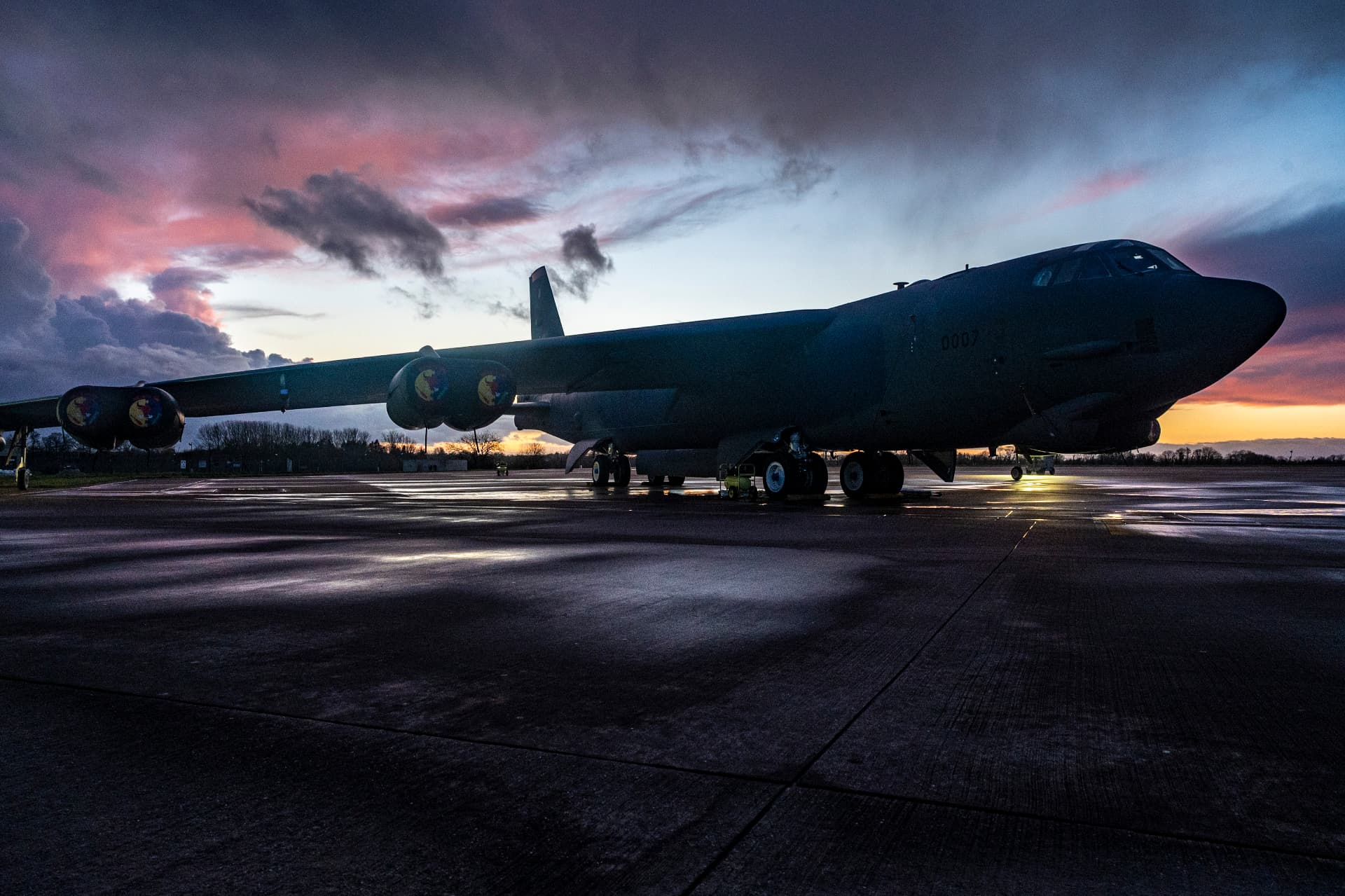
At 12.45am on Sunday, Gloucestershire Police received a report about three suspicious vehicles travelling towards RAF Fairford.
Within hours, five men had been arrested in the nearby village of Whelford. They were initially detained on suspicion of offences under the Explosives Act and later arrested on suspicion of preparing a terrorist act.
Counter Terrorism Policing is now leading the investigation.
A 400-metre cordon was established around the vehicles while the Army's Explosive Ordnance Disposal unit examined them. Around 85 households were advised to leave their homes as a precaution, with residents directed towards a nearby leisure centre.
The police operation is not in dispute. What remains unclear is what, if anything, investigators found inside the vehicles, whether any suspected devices were viable, and what the men may have intended.
The first warning
Reuters reported that a local farmer alerted police after seeing three large white vans near the base and a group of hooded or masked men moving towards the surrounding fields.
That account helps explain how the incident came to the attention of the authorities, but it is not by itself evidence of a terrorist plot. The police have confirmed that a call was received about suspicious vehicles. They have not publicly released the full evidence behind the arrests.
The men's identities, nationalities and legal representation have not been disclosed. No charges have been announced.
Why RAF Fairford matters
RAF Fairford is used by the United States military and has become politically sensitive because of its reported role in operations connected to the conflict with Iran.
Reuters reported that a local councillor said a specific threat had been made against the base several weeks earlier, prompting increased surveillance in the area. Iran's Revolutionary Guard has also previously warned that bases used to launch attacks against Iranian targets could be considered legitimate targets.
Those facts explain why the arrests have attracted immediate attention. They do not, however, establish that the men acted on behalf of Iran or that the incident was directed by the Iranian state.
British Defence Secretary Wes Streeting declined to speculate about the motive. He said it would be "very unwise" to draw conclusions while the investigation remained active.
President Donald Trump said the suspects had been under observation and were allegedly seeking to cause "big damage". That is an account of the president's understanding of the case, not a finding that has been publicly substantiated by investigators.
The unanswered questions
The central questions are now evidential.
What did the bomb-disposal team find in the vehicles? Were the materials capable of causing an explosion? Why were the vehicles in the area, and were the men travelling towards RAF Fairford or somewhere else? Did investigators already have intelligence on the group, or did the operation begin with the public report?
The police have asked the public not to speculate while those questions are examined. That warning matters. Arrests under terrorism legislation are serious, but they are not convictions. The investigation must still establish intent, knowledge and responsibility.
For residents of Whelford, the incident has transformed a quiet rural area into the centre of a national security investigation. For the wider public, it has placed RAF Fairford's strategic role back into view.
The confirmed story is already significant: five arrests, three vehicles, a major evacuation and a counter-terrorism investigation close to a strategically important airbase.
Everything beyond that - including claims about motive, state involvement or a wider plot - must wait for evidence.
Reader comments
Subscribers can join the conversationSign in to join the conversation. Comments are open to everyone with a free account.
Sign in or create accountLoading comments…