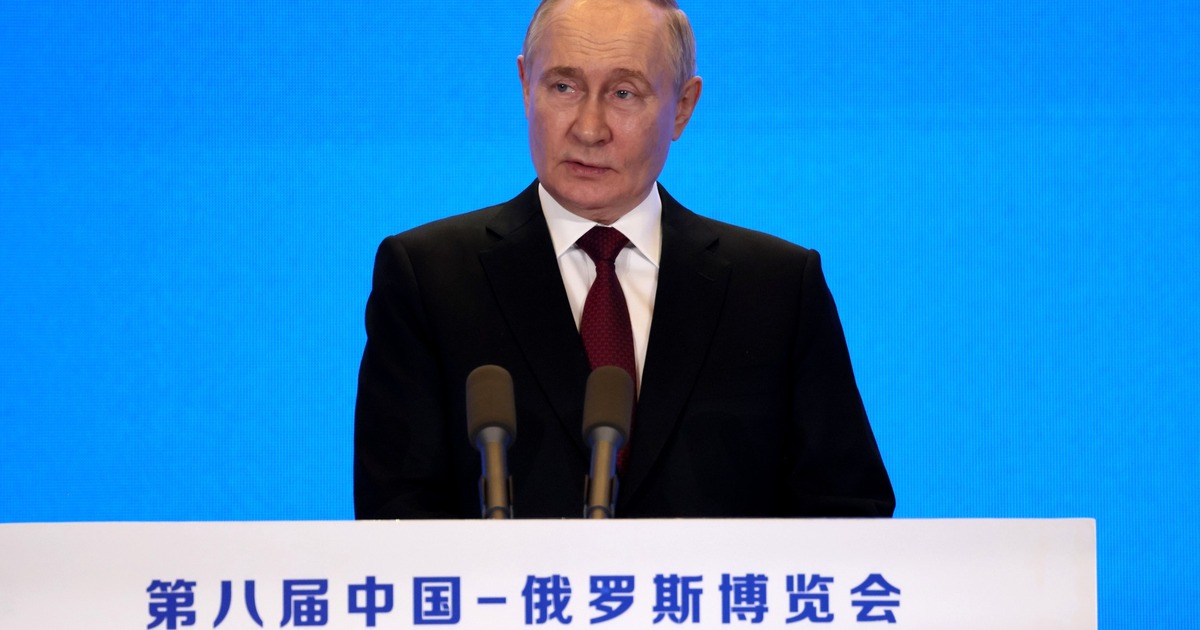
Four words that capture the fear at the heart of Vladimir Putin’s regime. Attributed to him through sources speaking to the Economist.
There are significant questions as to the veracity of this extraordinary statement that cannot be ignored. The Kremlin does not look kindly upon those who leak such sensitive information.
However, whether Putin said it or not, the statement itself rings true. If Putin is unable to exhibit some victory in Ukraine, then his continued survival is in question.
If nothing else, that is the core failure of autocracy.
That failure is three-fold.
First, Putin sees the war in Ukraine as existential for him personally. If he fails, he fears he will die. This is a man who fears death, who was overheard speaking with Chinese leader Xi Jinping about life extension technologies.
If ending the war is a threat to Putin’s life, then what’s best for Russia and what’s best for Putin may no longer be the same thing.
The second failure is that, to Putin, he is Russia. In a personalised autocracy like that of Putin’s Russia, a leader may often hear over and over that they are vital to the state from those wishing to please them for their advancement. Take the words of then deputy chief of staff Vyacheslav Volodin in 2014: “There is no Russia today without Putin.”
When a leader ceases to see themselves as a servant of the state, but rather a personification of the state itself, they become less able to conceptualise the state after them and more willing to take risks if they believe it will improve their odds of personal survival. This returns to the first failure; now you have a fear of personal death irrevocably tied to the fear of national collapse.
Thirdly, there is no working constitutional mechanism by which Putin may be removed from power. This was the case before the full-scale invasion of Ukraine but now, retirement is a less attractive option. If Putin removes his hands from the levers of power, then there is no guarantee of his safety. If the ultra-nationalists get in, then he is at risk over his failure to take Ukraine; if the liberals succeed, then he’s equally at risk from those seeking accountability and justice over the war.
Therefore, from Putin’s perspective, he must remain in power. However, the longer he remains in power and the greater the cost of his policies, the more dangerous relinquishing power becomes. With that, the incentives to remain in power grow. This feedback loop creates greater repression, violence and, frankly, human suffering until it eventually breaks.
Now, this is not to say that democracy is immune from those above sins. Democracies fail and democratic leaders make enormous mistakes.
However, compare the quote attributed to Putin to another by the late British Labour Party politician Tony Benn:
“If one meets a powerful person – Adolf Hitler, Joe Stalin or Bill Gates – ask them five questions: ‘What power have you got? Where did you get it from? In whose interests do you exercise it? To whom are you accountable? And how can we get rid of you?’ If you cannot get rid of the people who govern you, you do not live in a democratic system.”
Imagine yourself in the shoes of a Russian and ask these questions of Vladimir Putin today. Ask how you could work to get rid of him and what the consequences of that action may be.
Look to those who went before you: Boris Nemtsov: assassinated in Moscow; Alexei Navalny: killed in prison; the list goes on.
The consequences are lethal. So, ask again, knowing what you face should you fail.
It would not be unreasonable to theorise that violence would meet violence. That if you were to succeed, then killing the tyrant would seem like justice and safety from reprisal combined.
This is the world autocracy creates. Leaders cannot be seen to make significant errors; if they do, they have every incentive to double down and attempt to pry a victory from failure. The result for the nation they rule can be catastrophic.
Putin need only look at the fates of Muammar Gaddafi, Saddam Hussein and Benito Mussolini to see what catastrophic failure may mean.
That is not to say that all autocratic leaders meet this fate. Khrushchev survived Brezhnev’s coup in the USSR. In China, Hu Jintao gave way to Xi Jinping in 2012, the fifth leader of the nation since Mao Zedong’s death in 1976.
The difference here is the scale of failure. Putin, once heralded as the stabilising force that brought Russia out of the misery of the 1990s, has become the personification, by his own efforts, of Russia’s greatest loss of blood and treasure in war since WW2. The gains of his early presidency have been squandered. Russia has lost enormous quantities of blood and treasure, its people live under the threat of further mobilisation and its international position has become increasingly dependent upon transactional relationships with states such as China, Iran and North Korea.
In a democratic society, his party would likely lose the next election and the efforts would be made to correct their mistakes. He would retire to his garden office to write his memoir. For an, albeit imperfect, comparison, look to Bush or Blair. Their wars in Iraq and especially Afghanistan were failures, but neither man needed to stay in office to secure their safety. These men now exist as ‘elder statesmen’ on the speech circuit, writing memoirs or spending time practising their golfing drives.
This course is not open to Putin. If he’s unable to sell a flavour of victory in Ukraine, then his only options may be exile in the manner of Bashar Al-Assad or Idi Amin, or death.
When the stakes are this high, it is little wonder that he seems so willing to escalate, to risk expanding the war. It is very possible that Putin never said those four words, but the system of autocracy he built gives him every reason to fear that fate. That’s indictment enough.
Reader comments
Subscribers can join the conversationSign in to join the conversation. Comments are open to everyone with a free account.
Sign in or create accountLoading comments…