
A Sunday-morning alert, and an obvious question
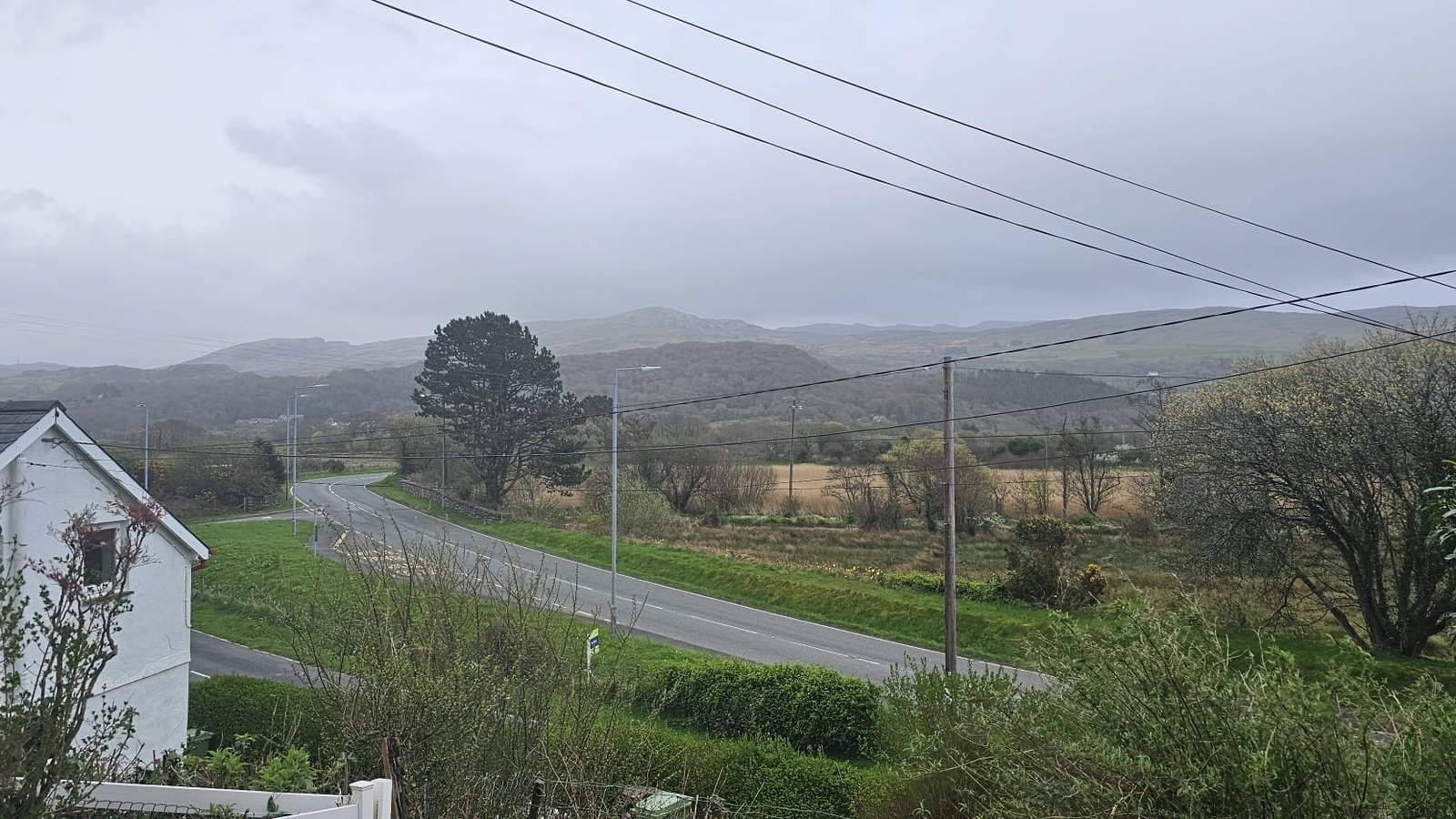
At 07:10 on Sunday morning, an alert reviewed by Parrhesia said UK Power Networks was aware of an unexpected power cut that might be affecting some properties in a local area. The location, recipient and incident reference are being withheld. The alert said advance warning had not been possible because the outage was not anticipated.
Then comes the question now hanging over every unexpected interruption: was it connected to reports that hackers linked to Iran forced a British generator offline? The evidence available to Parrhesia says no. The email does not mention hacking, Iran or the national grid. It does not identify a cause. It records a local alert — nothing more, and nothing less.
That distinction is essential, not cosmetic. The power-cut alert is dated Sunday, not Saturday. It documents an unexpected local outage, but it does not say why it happened. There is no public evidence connecting it to the separate reported cyber incident, and no responsible account should imply that it does.
An unexpected local outage can raise a legitimate question. It cannot, without evidence, answer it.
The Iran incident is a separate, serious report
The disclosure about the generator is new: reporting published over the weekend says hackers linked to Iran forced an unnamed British generating site offline last month. According to the Sunday Telegraph, the interruption lasted four days; the government has since confirmed that the incident involved a small-scale generator.
It was not a collapse of the national grid. The Department for Energy Security and Net Zero says there was no risk to the wider energy system. No public account has described lost supply to households, a system emergency, or an effect on national generation.
The attribution is reported. The evidence is not public.
The Telegraph identified the attackers as affiliated with the Iranian regime; other outlets have repeated that account as Iran-linked. Yet the public has not been shown a forensic report, an indictment, malware samples, infrastructure data, or a named intelligence assessment. The affected site has not been identified, officials say, for security reasons.
That does not make the allegation frivolous. It fixes the standard of language. Parrhesia can report an alleged Iran link, and the government's handling of the incident, without converting an unattributed account into a settled public fact. "Iran-linked" describes the reporting; it is not a substitute for an evidential chain.
The same restraint is needed on motive. The timing sits amid a sharply more dangerous confrontation between Tehran and Western governments, and the Guardian describes the incident as an apparent escalation. But the facts released so far do not show whether the target was selected for political signalling, reconnaissance, opportunism, or another purpose. The difference is not academic: motive shapes the response.
A small asset can expose a serious weakness
A generator's size does not determine the seriousness of a compromise. Energy systems are built around equipment that must do something in the physical world: open a valve, relay a measurement, start a turbine, trip a safety process, or pass a control signal. The National Cyber Security Centre calls this operational technology. Its safety and reliability demands are different from those of ordinary office networks.
The public evidence does not tell us which systems were touched here. It would be irresponsible to invent a pathway through a remote-access service, a supplier account, a programmable controller or a control-room network. What the episode does demonstrate is narrower and more durable: an intrusion associated in reporting with a hostile-state actor was serious enough to interrupt an operating asset.
That is why "no wider risk" should not be misread as "nothing to see". The grid absorbed the loss. That is resilience at work. But resilience is not a verdict on the security of every connected machine, supplier channel or small operator attached to the energy system.
The gap is visible in the policy
The government's energy-sector cyber strategy makes an unusually frank point: the existing Network and Information Systems regime does not cover the whole energy sector. It is focused on operators judged essential, while newer plans aim to understand risks, broaden baseline expectations and review thresholds over the coming years.
This does not establish that the affected generator fell outside that regime; its status is not public. It does explain why the case deserves more than a reassuring line about national supply. A small unit can matter in a highly distributed system, especially where it shares technology, contractors or remote connections with larger parts of the sector.
The NCSC's published guidance is practical rather than theatrical: separate operational networks from the open internet, broker necessary exchanges through a controlled boundary, reduce remote exposure and plan for manual recovery. Those are not headlines. They are the work that decides whether a cyber intrusion stays an IT incident or becomes an operational stoppage.
What the government should disclose
Officials are right not to turn an unnamed energy site into a target map. They can still tell the public and the sector more than they have. A useful account would set out the incident class, a rough chronology, whether safety systems performed as designed, whether operational technology was involved, the broad remedial action and the lessons sent to comparable operators.
That would not require publishing the plant's name or handing an adversary a route back in. It would let operators test their own assumptions against a real case, while allowing the public to distinguish between a contained interruption and a threat to national supply.
The conclusion is neither panic nor dismissal
The report that emerged this weekend is serious precisely because it is bounded. One small generator was reportedly kept offline for four days. Britain did not go dark. The Sunday alert reviewed by Parrhesia documents a separate unexpected local outage, not evidence of an Iranian operation. The alleged Iranian connection to the generator shutdown has been reported, but its supporting technical case has not been made public.
If investigators ultimately substantiate the attribution, the episode will mark a troubling move from probing infrastructure to interrupting operations. If the public account changes, the case for candour becomes stronger, not weaker. In either outcome, the lesson is the same: do not inflate the incident into a blackout; do not shrink it into a footnote.

Reader comments
Subscribers can join the conversationSign in to join the conversation. Comments are open to everyone with a free account.
Sign in or create accountLoading comments…