
In 1970, Pakistan held its first general election under General Yahya Khan. Sheikh Mujibur Rahman’s Awami League won a clear nationwide mandate and, through its overwhelming victory in East Pakistan, secured the parliamentary right to form the federal government.
Yet General Yahya Khan and the West Pakistani establishment would not transfer power. The National Assembly was postponed, negotiations failed, Mujib was arrested on the night of March 25, 1971, and a military crackdown began in East Pakistan.
The result was not national unity, but civil war, Indian military intervention, the birth of Bangladesh, the surrender of Pakistani forces in Dhaka, and Yahya Khan’s removal from office.
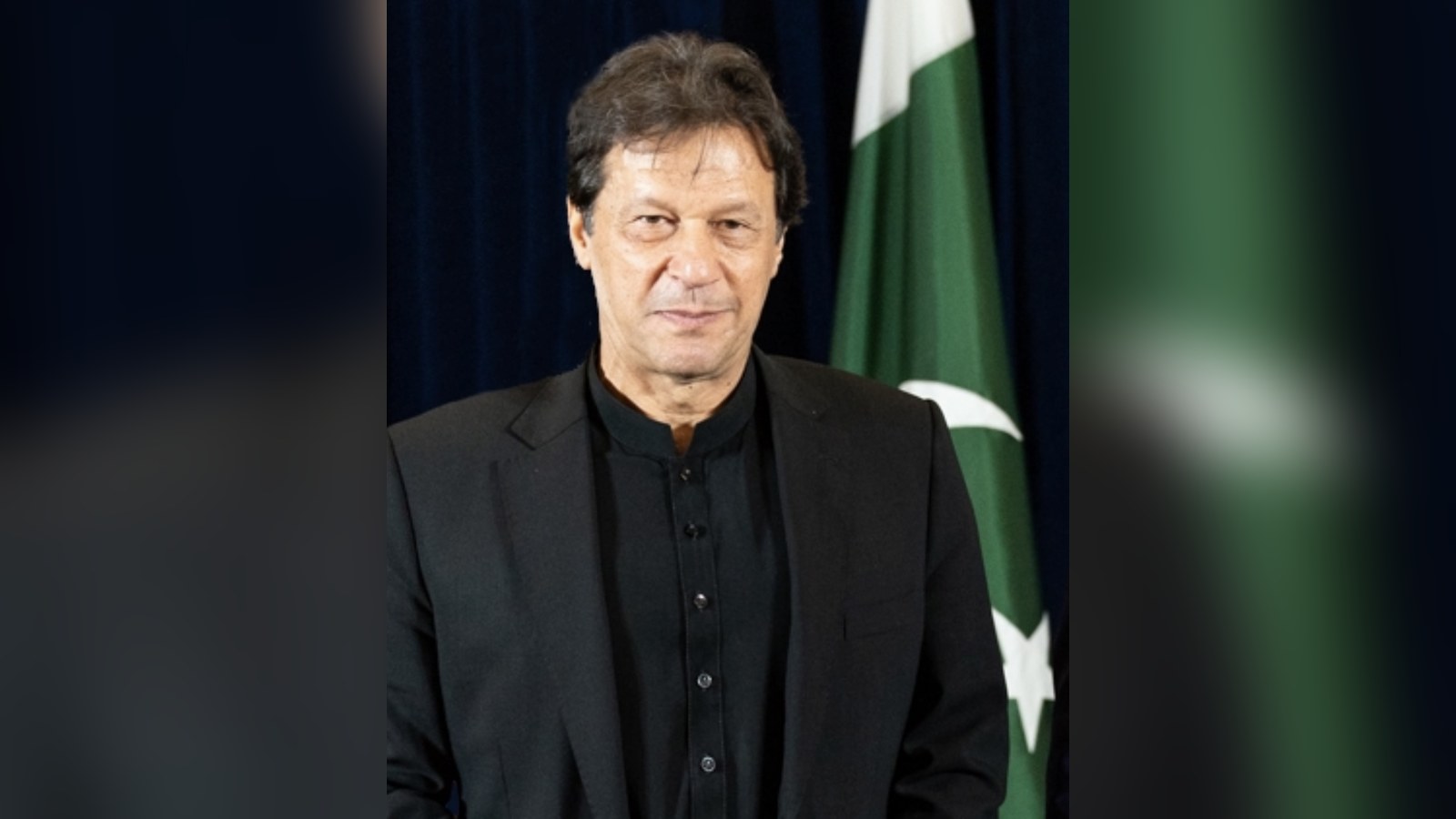
History does not repeat itself mechanically. Pakistan in 2026 is not Pakistan in 1971, and Imran Khan is not Sheikh Mujibur Rahman. Yet the parallel remains morally and politically serious: a popular electoral mandate cannot indefinitely be extinguished by silencing its leader.
Imran Khan’s removal through the April 2022 vote of no confidence was followed by the publication of Pakistan’s diplomatic “cipher.” The cable, first reported by Ryan Grim and Murtaza Hussain at The Intercept and later republished in full by Drop Site News, recorded then-Ambassador Asad Majeed Khan’s account of a meeting with U.S. official Donald Lu. According to the published document, Lu said that if the no-confidence vote succeeded, “all will be forgiven in Washington”; otherwise, Pakistan could face difficulties in its relationship with Washington.
Khan’s incarceration from August 2023, after General Asim Munir had assumed office, transformed a political contest into a broader test of constitutional legitimacy.
The February 2024 election sharpened that test. Imran Khan was in prison, disqualified from contesting, and unable to campaign publicly. His candidates were stripped of the familiar cricket-bat symbol and forced to contest as independents under unfamiliar ballot symbols.
Their access to conventional media was severely curtailed, while party workers, candidates, and supporters faced arrests, restrictions, and pressure to abandon their political affiliation.
Yet, despite those extraordinary constraints, Imran Khan-backed independent candidates emerged as the largest bloc in the National Assembly’s general-seat contest.
The New York Times described the result as a stunning outcome: Khan-aligned candidates won more seats than any other grouping despite the obstacles imposed upon them. CNN’s Fareed Zakaria also recognised the extraordinary resilience of Khan’s support. Rarely has an incarcerated political leader—unable to canvass, deprived of his party symbol, marginalised from conventional media, and barred from contesting—still succeeded in mobilising such a vast number of supporters to vote.[nytimes +3]
Allegations of widespread manipulation were amplified by Liaquat Ali Chattha, then Commissioner of Rawalpindi Division. On February 17, 2024, he publicly alleged that results in 13 National Assembly constituencies across Rawalpindi Division had been manipulated. He claimed that Imran Khan-backed candidates leading by as many as 70,000 votes had been converted into losing candidates, and he said that he accepted responsibility for wrongdoing under his supervision. Chattha also made allegations against the Chief Election Commissioner.
The army chief constructed a “form 47 “ weak coalition government led by Prime Minister Shehbaz Sharif, to form the cabinet.
Despite robust support from President Trump and his administration, as favorite field Marshall and mediator,
the aftermath has produced the central paradox of the Munir era: the more extensively Imran Khan is denied his human rights , the more he becomes an emblem of the very democratic deficit his opponents insist does not exist.
The latest controversy at Lord’s, following Michael Atherton’s Sky Sports interview with Khan’s sons, exposed that failure on an international stage. Pakistan’s cricket establishment could object to the timing or venue of the interview, but it could not prevent the world from hearing the story of a former World Cup-winning captain and prime minister held in prison while his family appealed for access and medical care.
Yahya Khan’s final lesson is the most sobering. In 1971, even as the political and military crisis in East Pakistan was spiralling beyond control, the regime continued to project confidence, authority, and command. Until the penultimate stages of the war, General A. A. K. Niazi’s Eastern Command maintained the outward posture that the situation remained under control. Yet on December 16, 1971, the reality could no longer be concealed: Pakistan’s Eastern Command surrendered in Dhaka, in full public view, to the Indian Army.
That surrender was not simply a military defeat. It was the final consequence of a leadership that confused administrative control with national consent, coercive power with political legitimacy, and public messaging with reality. The distance between official declarations of control and the eventual surrender was the distance between a state that could still command institutions and one that had lost the confidence of the people it sought to govern.
Yahya Khan discovered too late that force cannot manufacture consent. The lesson for Pakistan’s present rulers is not that the country needs another catastrophe. It is precisely the opposite. Pakistan needs a constitutional exit: transparent trials, independently verifiable medical care, full access to family and lawyers, an end to electoral engineering, and a political settlement rooted in the people’s vote.
The alternative is not stability. It is a prolonged crisis in which the state’s authority weakens each time it attempts to silence the man it has failed to defeat.


Reader comments
Subscribers can join the conversationSign in to join the conversation. Comments are open to everyone with a free account.
Sign in or create accountLoading comments…