
Ever since Donald Trump ran for president, I feel as though a veil was lifted from our eyes.
Trump did not create what I call "Third Worldism" in the West. He exposed it.
His rise revealed something that had been developing for years: a tendency to judge the West by its worst actions while judging its opponents by their best intentions.
When Western countries do something wrong, we are often encouraged to see it as evidence of what the West fundamentally is.
When a government or movement hostile to the West does something wrong, we are more likely to search for an explanation: colonialism, poverty, sanctions, foreign interference, history.
Those things can be real. But they cannot become excuses for abandoning universal morality.
Third Worldism Is Not Nobility
Historically, Third Worldism emerged from a very understandable place.
Newly independent countries in Asia and Africa wanted to escape Western domination and the Cold War rivalry between America and the Soviet Union. The 1955 Bandung Conference brought together 29 Asian and African governments around principles including sovereignty, self-determination, non-aggression and opposition to colonialism.
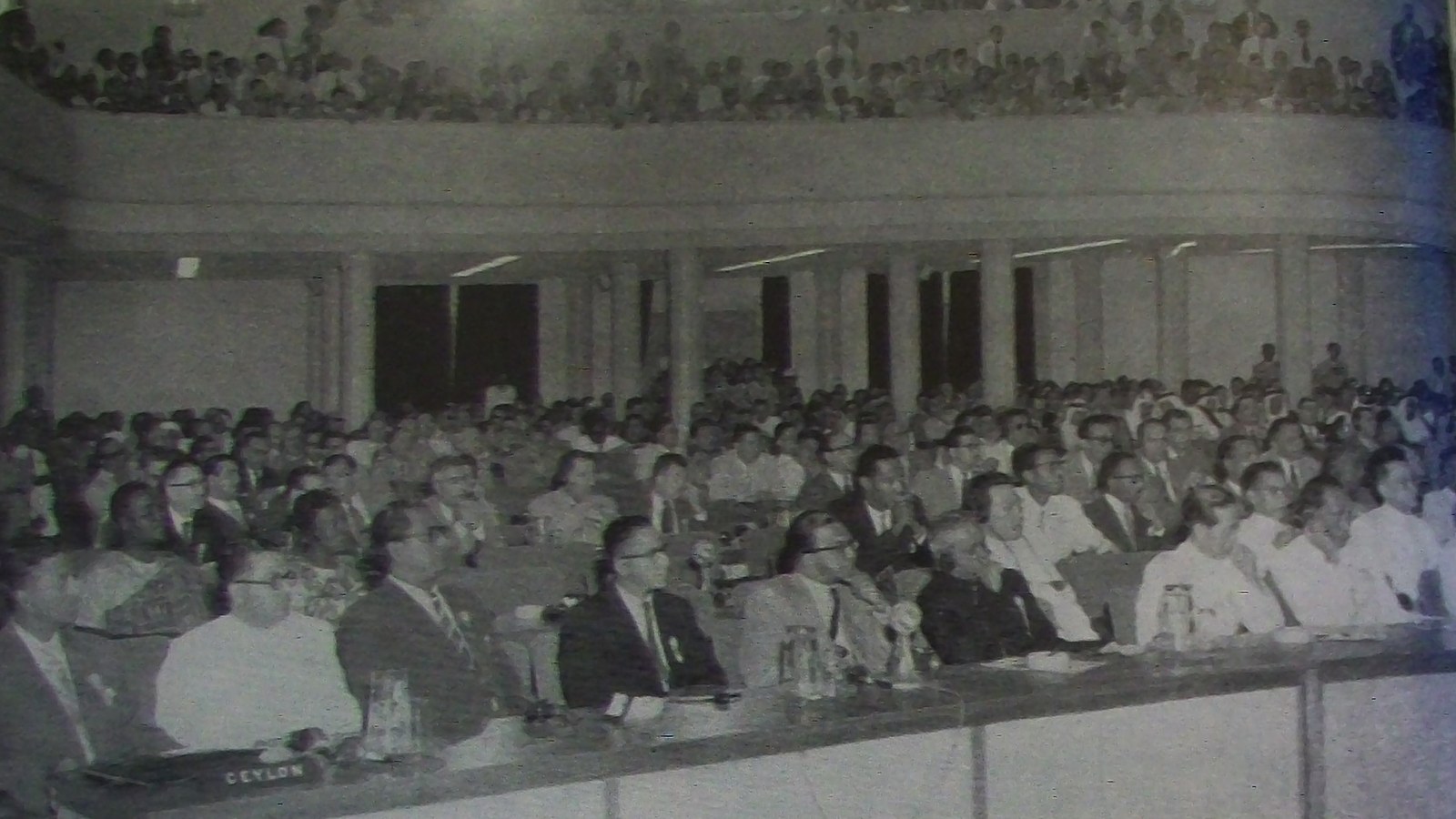
There was nothing inherently wrong with that.
The problem comes when opposition to the West becomes a moral identity in itself. When we begin to assume that because someone is poorer, colonised, oppressed or hostile to Western power, they must therefore be on the side of justice.
But suffering does not make someone virtuous.
Being oppressed does not make a government incapable of oppression. Being colonised does not make a movement incapable of brutality. And being the enemy of a powerful country does not automatically make you the good guy.
This is where the simple oppressor-versus-oppressed framework becomes dangerous. It divides the world into moral categories before we have even examined what people have actually done.
The Problem of Unequal Moral Standards
The deeper problem is that we often apply different moral standards depending on who is acting.
Imagine two governments imprison political opponents. If one is Western, we may describe it as authoritarian, imperialist or proof of systemic corruption. If the other is hostile to the West, we are more likely to ask what circumstances produced the repression.
That distinction matters because explanation and justification are not the same thing.
History matters. Poverty matters. Colonialism matters. Foreign intervention matters. But understanding why someone commits an injustice does not make the injustice less unjust.
Consider the Khmer Rouge.
Its leaders presented their revolution as liberation from foreign domination and an attempt to create a radically egalitarian society. Yet between 1975 and 1979, roughly two million people died through execution, starvation, forced labour and persecution.
The fact that Cambodia had experienced war, foreign intervention and colonialism helps us understand the circumstances in which the Khmer Rouge emerged. It does not excuse what the Khmer Rouge did.
The same principle applies to authoritarian governments such as Saddam Hussein's Iraq. Saddam could be a victim of Western policy in one context and a perpetrator of terrible crimes in another. The fact that America opposed him did not make him a freedom fighter.
We have to be capable of saying: America can do something wrong, and Saddam Hussein can also do something wrong.
These statements are not contradictory.
Afghanistan and the Victimhood Trap
Afghanistan provides another useful example.
There are perfectly legitimate reasons to criticise Western policy in Afghanistan. The Soviet invasion, decades of war, the Taliban's rise, America's twenty-year intervention and the chaotic withdrawal all form part of a complicated history. Afghans have suffered enormously, often because of decisions made by foreign powers.
But suffering does not erase agency.
The Taliban are not simply victims of Western foreign policy. They are also responsible for their own actions.
Since returning to power, they have imposed severe restrictions on women and girls, including barring girls from secondary education and women from universities and large parts of public life.
The point is not that Afghans are uniquely bad. It is precisely the opposite.
Afghans are human beings, and therefore capable of the full range of human behaviour: courage, kindness, cruelty, selfishness, generosity and everything in between. They should not be reduced either to victims or villains.
The same principle applies when Afghans come to Britain.
The vast majority of Afghan migrants should not be treated as criminals simply because they are Afghan. That would be collective guilt, and collective guilt is precisely the kind of thinking I am arguing against.
But neither should the fact that someone is a refugee or migrant make criticism of their individual actions somehow forbidden.
There have been deeply disturbing cases involving Afghan nationals in Britain.
In December 2025, two Afghan asylum seekers were sentenced to lengthy custodial terms after admitting the rape of a 15-year-old girl in Warwickshire. In March 2026, Afghan asylum seeker Ahmad Mulakhil was sentenced to 15 years after being convicted of abducting and raping a 12-year-old girl in Nuneaton. (Crown Prosecution Service)
These cases do not prove that Afghan migrants as a group are dangerous. They prove something much simpler: being a victim of circumstances does not make an individual incapable of committing terrible acts.
And that distinction matters.
If an Afghan man commits rape in Britain, we should not excuse him because Afghanistan has suffered from war. If a British man commits rape, we should not excuse him because Britain has a difficult history. The victim should matter more than the perpetrator's nationality.
That is what a universal moral standard looks like.
The Victim Is Still a Moral Agent
There is another problem with seeing everything through the lens of victimhood: it can become strangely patronising.
If we constantly describe people in poorer or non-Western countries as victims of history, Western imperialism or global capitalism, we can end up treating them as though they have no meaningful agency of their own.
People make choices.
Governments make choices. Political movements make choices. Individuals make choices.
To recognise someone's suffering should not mean denying their responsibility.
This is particularly important when discussing countries such as Pakistan.
Imran Khan has been imprisoned since 2023 amid a large number of legal cases. Khan and his supporters say the prosecutions are politically motivated; Pakistani authorities dispute that characterisation, and some of the convictions against him have subsequently been overturned, suspended or otherwise challenged.
Whatever one's view of Khan, the wider point remains: it is possible to criticise Western interference in Pakistan while also examining Pakistan's own political institutions, corruption and treatment of political opponents. One does not cancel out the other.
Morality Has to Be Universal
This principle becomes even clearer when we move away from geopolitics and look at ordinary political questions such as immigration.
Suppose a British citizen lies on an official application to obtain a benefit. We generally understand that as fraud.
If someone enters the country by deliberately deceiving immigration authorities, manipulates visa rules or enters a sham marriage to obtain immigration status, we should be able to condemn that behaviour too.
That does not mean we should hate immigrants. It means the moral standard should not change depending on someone's background.
Compassion is perfectly compatible with rules. We can recognise that someone may have come from poverty, persecution or difficult circumstances while still saying: you are responsible for your actions.
The same principle should apply in the opposite direction. A British citizen who behaves badly does not become innocent because he is British. An immigrant does not become guilty because he is an immigrant.
Nationality should not determine morality.
No Civilisation Has a Monopoly on Sin
None of this requires pretending that the West has been good throughout history.
Western governments have committed enormous crimes. Colonialism was real. Slavery was real. Imperialism was real. Western governments have invaded countries, supported dictators, lied to their own populations and abused prisoners.
The Iraq War is an obvious modern example.
The UK's own Iraq Inquiry found serious failures in the government's decision-making, its assessment of intelligence surrounding weapons of mass destruction, its planning for the aftermath of the invasion and its handling of the risks involved.
The death of Baha Mousa, an Iraqi hotel receptionist who died in British military custody after being brutally abused, revealed further failures in British military doctrine, training and command.
These things should be condemned.
But here is the crucial point: the West can be wrong without being uniquely evil.
Acknowledging Western crimes does not require romanticising its opponents. Condemning the Iraq War does not require believing Saddam Hussein was a good man. Condemning colonialism does not require believing every anti-colonial movement was virtuous.
We should be capable of holding two thoughts in our heads at once.
The Alternative Is Universalism
The alternative to Third Worldism is not Western chauvinism.
It is universalism.
Universalism means that the same basic moral principles apply regardless of geography, nationality, race, religion or political allegiance.
If torture is wrong, it is wrong when America does it and when an American enemy does it.
If political imprisonment is wrong, it is wrong when a Western government does it and when a non-Western government does it.
If corruption is wrong, it is wrong whether the corrupt politician is supported by Washington, Moscow, Beijing or nobody at all.
And if an ordinary person lies, cheats, steals or abuses a system, their circumstances may help us understand their behaviour, but those circumstances do not automatically erase their responsibility.
This does not mean refusing to understand history. Quite the opposite. Universalism allows us to understand history without becoming trapped by it.
We can condemn colonialism without romanticising the societies that emerged from colonialism. We can oppose Western intervention without assuming that every opponent of the West is virtuous. We can sympathise with victims without pretending that victims are incapable of wrongdoing.
That, to me, is the mature position.
We should not judge people according to which side of the geopolitical map they happen to occupy. We should judge them according to what they actually do.
The West has sinned. Other civilisations have sinned. Governments have lied, oppressed and murdered in the name of causes ranging from nationalism to communism to religion to democracy.
No civilisation has a monopoly on virtue.
And no civilisation has a monopoly on sin.
The moment we stop applying the same moral standard to everyone, morality becomes tribalism.
We should not need an enemy to tell us who the good guys are.


Reader comments
Subscribers can join the conversationSign in to join the conversation. Comments are open to everyone with a free account.
Sign in or create accountLoading comments…