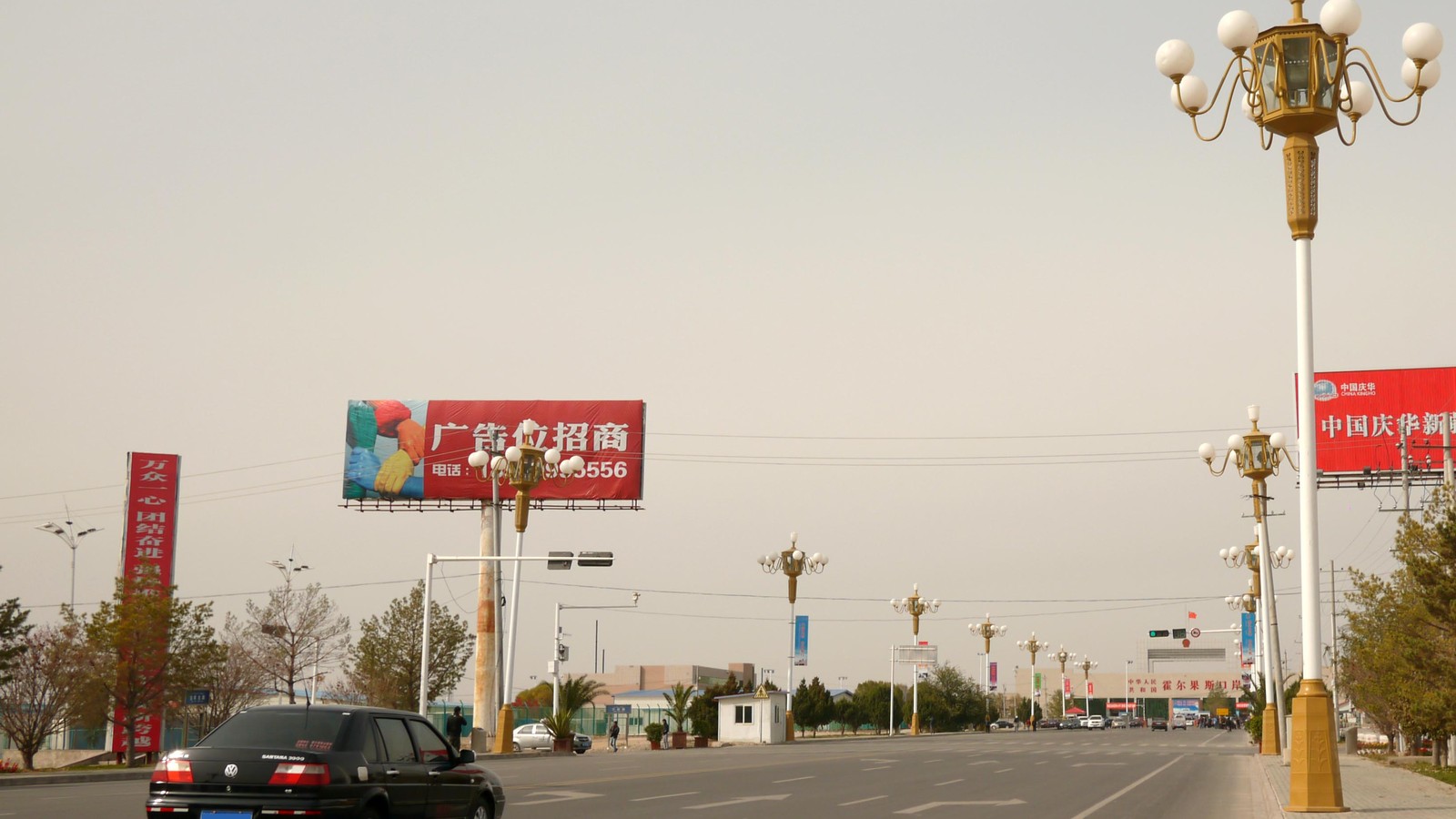
Central Asia has quietly become one of the most valued Geo-political regions on the planet. Wedged between Russia, China, South Asia, and the Middle East, its five republics, namely, Kazakhstan, Uzbekistan, Kyrgyzstan, Tajikistan, and Turkmenistan, sit atop vast reserves of uranium, rare earths, and hydrocarbons, and straddle the trade arteries linking Asia to Europe. That geography, once seen as a Soviet-era backwater, is now a magnet for global capital and diplomacy.
In 2024, Uzbekistan alone drew roughly 35 billion dollars in investment and 27 billion dollars in exports, with Tashkent's International Investment Forum hosting delegations from the US, Russia, China, the Gulf, and Europe. Washington has stepped up outreach via the B5+1 forum, with envoy Sergio Gor admitting the US had long overlooked the region, while Brussels has committed a 12 billion-euro Global Gateway package atop 10 billion euros already mobilized. Kazakhstan, meanwhile, is investing heavily in the Middle Corridor, a Caspian route to Europe backed by an 846 million-dollar World Bank guarantee, as Gulf states expand into logistics and renewables. Central Asia has clearly earned a bigger seat at the global table.
China's Rising Grip Through the Belt and Road
Chinese investment in Central Asia has been significant for the region’s overall economic health. Trade between Beijing and the five republics crossed 100 billion dollars for the first time in 2025, hitting a record 106.3 billion dollars by the SCO's own count. Kazakhstan and Uzbekistan alone hold Chinese investment stocks of 11.4 billion and 10.7 billion dollars respectively, spreading well beyond extractives into manufacturing and energy. The flagship of this push is the China-Kyrgyzstan-Uzbekistan railway, a 500-kilometre line finally under construction after decades of delay, designed to save up to eight days of transit time to Europe while bypassing Russia entirely.
This momentum was on full display at the Shanghai Cooperation Organization summit in Bishkek on September 1, 2026, marking the SCO's 25th anniversary. Leaders signed 28 documents, including the Bishkek Declaration, new security mechanisms, and plans for logistics and AI cooperation. Kyrgyzstan's President Sadyr Japarov deemed the CKU railway as a strategic project, while Kazakhstan pitched a transport connectivity strategy through 2035. Notably, during Xi Jinping's visit to Kyrgyzstan, Bishkek explicitly reaffirmed its support for Beijing on Xinjiang-related matters while agreeing to deepen law-enforcement and information-security cooperation, a political concession that speaks volumes about where leverage now sits.
An Old Playbook: From Guest to Host
None of this is accidental. It echoes a Stratagem drawn straight from classical Chinese strategic thought, that is, one of the Thirty-Six Chinese Stratagems known as "making the host and the guest exchange places; 反客为主," which counsels an external party to enter as a humble guest, build influence from within, and gradually become the master of the house. Applied geopolitically, China arrives as an investor and partner, then steadily reshapes the rules, standards, and security vocabulary its hosts must live by.
Central Asians themselves have sounded the alarm before. Kazakhstan's 2016 land-reform protests, the largest since 2011, erupted precisely over fears that farmland would end up leased to Chinese firms, forcing then-president Nazarbayev to impose a moratorium later extended to 2027. In Kyrgyzstan, criticism of Chinese influence has become genuinely risky: officials have published personal details of citizens accused of "inciting ethnic hatred" for questioning Chinese projects, echoing near-identical language used in Kazakhstan to prosecute 19 activists who protested Xinjiang policies.
A recent, pointed analysis in The Diplomat argues the SCO itself is becoming the vehicle for this transformation. Beijing successfully got Muslim-majority members, Iran, Pakistan, Kazakhstan, Kyrgyzstan, Tajikistan, and Uzbekistan to endorse anti-"terrorism, separatism, and extremism" language that is, in substance, aimed at China's own Uyghur population. The piece cites ASPI research estimating that roughly 16,000 of Xinjiang's 24,000 mosques have been damaged or destroyed, and flags that Chinese surveillance firms like Dahua and voice-recognition specialists like iFLYTEK, both linked to Uyghur-monitoring systems, are already active in Central Asian security environments. A new Chinese law from July 2026 called that Ethnic Unity Law, even claims extraterritorial reach to pursue individuals and organizations outside its borders. The underpinnings are clear: the SCO "should not become the vehicle through which Beijing's definitions of security, political loyalty, and ethnic identity become normalized across the Turkic world".
This development fits a familiar pattern. Barely a week after the Bishkek SCO summit, Beijing's Public Security Minister Wang Xiaohong convened police chiefs from Kazakhstan, Kyrgyzstan, Tajikistan, Turkmenistan, and Uzbekistan, pressing them to jointly combat the "three evil forces": terrorism, separatism, and extremism, while safeguarding Belt and Road infrastructure. That phrase is not neutral security jargon; it is the same doctrinal language Beijing has used for decades to justify its crackdown on Uyghurs in Xinjiang, where mass internment, mosque demolitions, and pervasive surveillance have been carried out under the banner of fighting "extremism". By exporting this framework through joint law enforcement training and intelligence sharing, China risks pressuring host governments to police their own Muslim populations with the same suspicion Beijing applies at home. Moreover, such mechanisms could give China on ground intervention capabilities inside Central Asian territory under the guise of counterterrorism cooperation, effectively bypassing the sovereignty of these nations and normalizing Chinese security personnel or operations on foreign soil.
The Coercion Toolkit
Central Asia would do well to study how Beijing treats its partners who step out of line elsewhere. When Lithuania allowed a "Taiwanese" representative office in Vilnius in 2021, China deleted the country from its customs system, blocked nearly 90 percent of bilateral trade, and warned multinationals sourcing Lithuanian parts that they too could be frozen out. Manila faced quarantine measures and an outright ban on bananas and pineapples after a South China Sea standoff in 2012; Seoul endured tourism boycotts after deploying THAAD; Canberra was hit with tariffs on wine, barley, and coal after calling for a COVID-origins inquiry. Even where the infamous "debt-trap" narrative around Sri Lanka's Hambantota Port has been challenged by scholars as oversimplified, the episode still shows how heavy Chinese financing can translate into long-term leverage over strategic assets. The pattern is consistent: economic entanglement first, political conformity later.
The Hidden Price Tag
Chinese capital is fast, flexible, and refreshingly free of the governance lectures that come with Western or multilateral financing, which is precisely why Central Asian governments keep reaching for it. These financial packages provided by China are very lucrative at face-value, but the hidden-cost involved imposes a heavy burden on host nations. Railways, mines, and surveillance contracts built today can quietly harden into dependence tomorrow, nudging capitals toward silence on Xinjiang, alignment on security doctrine, and access for Chinese firms into data, genomes, and mineral maps that a truly sovereign state might otherwise guard closely. Central Asia does not need to shun Chinese investments, it needs to draw a fine line, balancing sovereignty over Chinese strategy.

Reader comments
Subscribers can join the conversationSign in to join the conversation. Comments are open to everyone with a free account.
Sign in or create accountLoading comments…