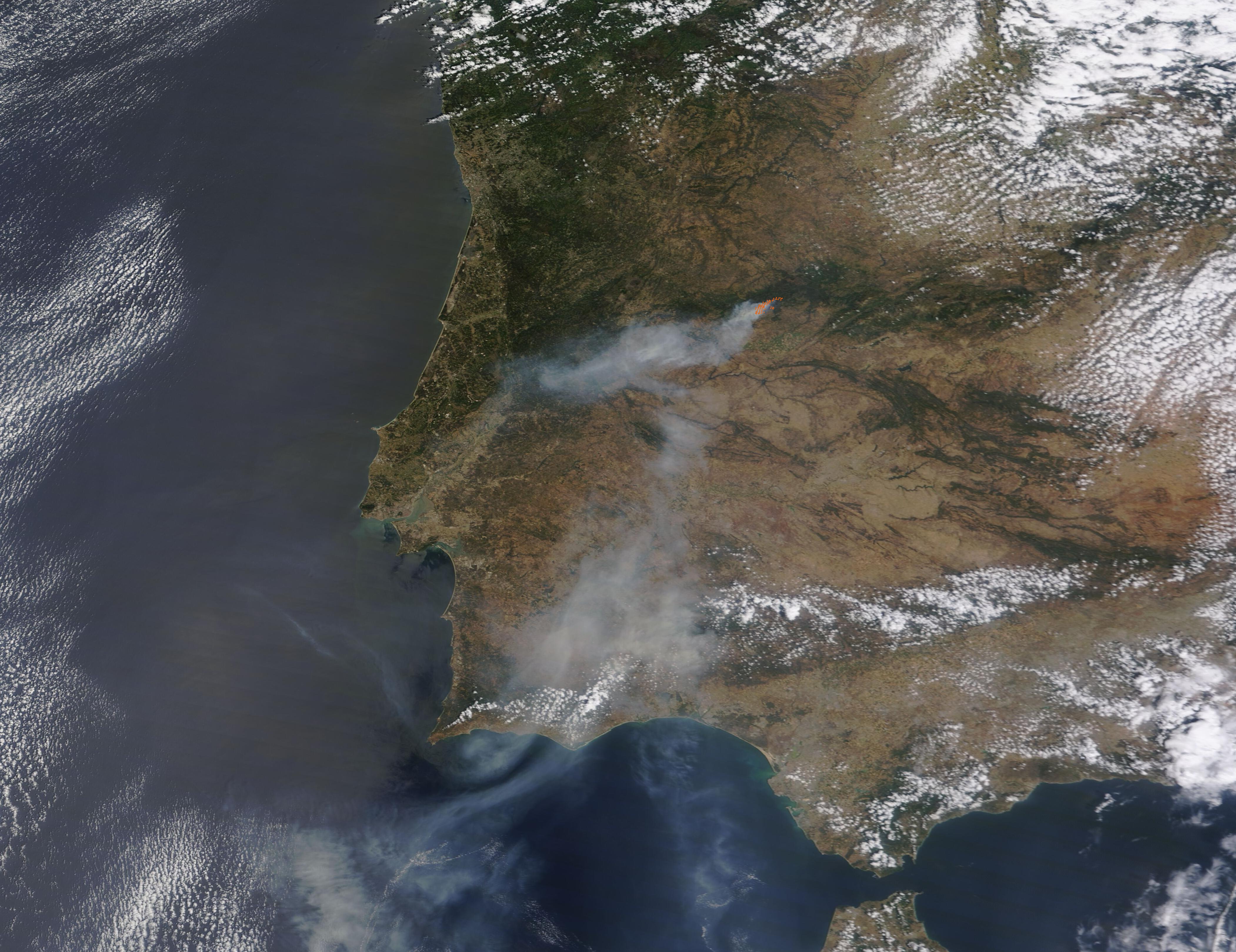
Spain and France are battling major wildfires as extreme heat, dry storms and strong winds maintain dangerous conditions across southern Europe.
Spain's largest wildfire of the year has burned an estimated 32,000 hectares in the Guadalajara region. The blaze forced evacuations in 34 municipalities and confinement orders in 14 others before beginning to stabilise.
Residents of several villages have been allowed to return, but restrictions remain in place and emergency teams are continuing to monitor the fire. Prime Minister Pedro Sanchez visited the affected area as authorities warned that Spain had already reached around 100,000 hectares burned this year before the most dangerous part of the season.
Spain's weather agency AEMET said the wildfire threat remained very high or extreme across most of the mainland and the Balearic Islands. It warned that the ongoing heatwave was combining with dry thunderstorms and Saharan dust.
Temperatures were expected to reach between 39C and 42C across large areas, with some Mediterranean regions potentially seeing 42C to 44C. A short period of cooler weather may follow, but forecasts suggest intense heat could return next week.
In southern France, lighter winds and slightly lower temperatures helped firefighters confronting a blaze in the Var region. The fire burned about 2,500 hectares, damaged dozens of homes and forced hundreds of people to leave.
Around 1,100 firefighters worked through the night, with helicopters resuming water drops in the morning. The fire remained active, although conditions were expected to become more favourable.
France has also recorded firefighter deaths during the wider emergency, underscoring the danger faced by crews operating in extreme heat and shifting wind.
The fires are part of a broader pattern across the region. Italy, Greece and other southern European countries have issued heat or fire warnings, while authorities have restricted some outdoor work and urged residents to avoid activities that could ignite dry vegetation.
Wildfire risk is shaped by weather, land management and human behaviour. But scientists have repeatedly warned that human-driven climate change is making extreme heat more frequent and severe, drying vegetation and lengthening the conditions in which fires can spread rapidly.
Europe is the world's fastest-warming continent. That does not mean every fire is directly caused by climate change, but hotter and drier conditions increase the probability that an ignition becomes a large and destructive event.
The emergency is not one fire or one heatwave, but the repeated collision of extreme heat, dry landscapes and populated regions.
Authorities now face two tasks at once: suppressing the current fires and preparing for a season that may continue to produce dangerous conditions after the immediate heat eases.
Reader comments
Subscribers can join the conversationSign in to join the conversation. Comments are open to everyone with a free account.
Sign in or create accountLoading comments…