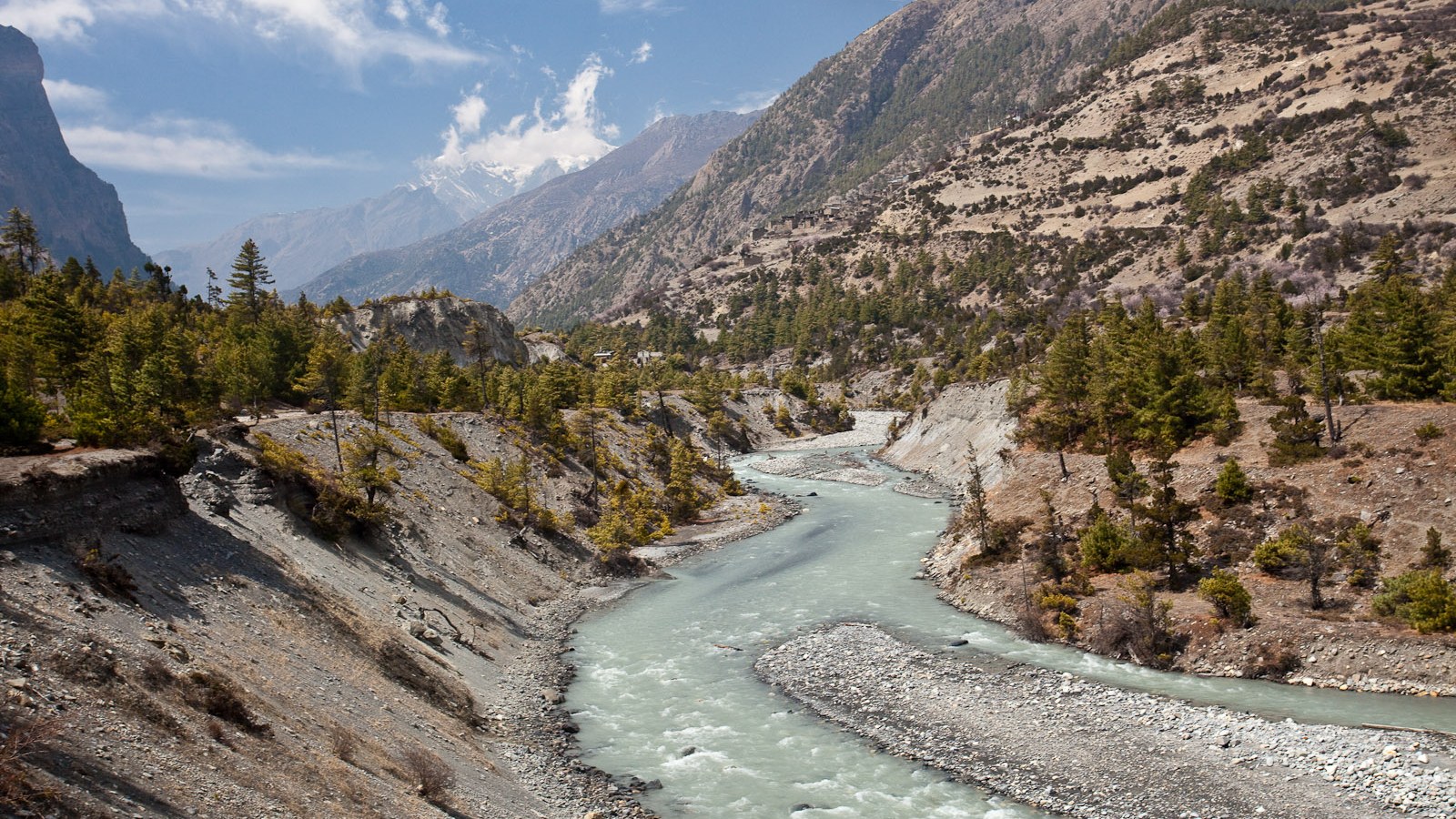
The catastrophic floods that swept through the Nepal-Tibet borderlands have opened a new argument over the price of development in one of the world's most fragile regions. As rescue teams work through debris, damaged roads and hydropower sites, critics are asking whether China's expanding Belt and Road infrastructure has made a naturally dangerous landscape more vulnerable. The question is politically charged. It is also not yet answered by the available evidence.
The immediate human toll is immense. Nepal's Ministry of Foreign Affairs said on 4 September that 1,287 bodies had been recovered and about 5,083 people remained missing after the Bhote Koshi floods of 26 August. The ministry stressed that the figures were continuing to change as searches and verification progressed. On the Chinese side, official figures have also shifted in successive reports, while access to the affected Tibetan region has remained tightly controlled.
The flooding damaged settlements, bridges, border infrastructure and power projects. In Nepal, hundreds of workers were feared trapped at hydropower facilities, including in tunnels filled with mud and debris. The rescue effort has produced moments of hope, including the recovery of two workers alive from a hydropower tunnel nine days after the floods. It has also underlined how quickly infrastructure built into steep valleys can become a barrier to rescue when roads, electricity and communications fail together.
A disaster becomes a development debate
The debate intensified after Breitbart News reported that critics were linking the destruction to China's "voracious" Belt and Road buildout across the Himalayas. The report highlighted the proposed Medog Hydropower Station, planned for the Yarlung Tsangpo river in Tibet and widely described as one of the world's most ambitious future dams. It also carried claims that construction was taking place near the area of the landslip and that blasting may have been involved.
Those claims require a clear distinction between proximity and causation. The fact that a project is under construction in a geologically hazardous region does not prove that it triggered a glacial collapse. Nor does the presence of hydropower facilities downstream establish that they caused the flood. The available reporting reviewed for this article does not provide independent evidence that the Medog project caused the collapse or that blasting at the site initiated it.
That caveat does not make the development question irrelevant. Large dams, access roads, tunnels and transmission corridors reshape mountain environments. They can increase exposure to landslides, complicate evacuation and concentrate workers and settlements in narrow valleys. Those risks are matters for transparent environmental assessment and public scrutiny even when a particular disaster cannot be attributed to a particular project.
The information gap
The physical difficulty of reaching the disaster zone has been compounded by the political difficulty of reporting from Tibet. While Nepalese authorities have issued regular updates and allow outside reporting in affected areas, Chinese authorities have restricted access and tightly managed information from the Tibetan side. Chinese officials have rejected speculation that development caused the disaster, while state media have focused on rescue and relief measures.
That information gap matters because disaster figures are not simply statistics. Families need names, locations and credible timelines. Rescue teams need accurate maps of damaged sites. Independent investigators need access to the terrain, construction records and warnings issued before the collapse. When those materials cannot be examined, uncertainty becomes a political resource: critics can fill the gap with worst-case interpretations, while governments can dismiss scrutiny as disinformation.
What can be established now
Three facts are already clear. First, the floods have caused a major humanitarian emergency, with more than a thousand confirmed dead in Nepal and thousands still unaccounted for. Second, the disaster has struck a region where hydropower construction and other infrastructure projects are expanding rapidly. Third, the public record is incomplete, particularly on the Tibetan side of the border.
What remains unproven is the central allegation that a specific Chinese project caused the glacial collapse. Establishing that would require geological analysis, construction records, satellite data, testimony from people in the area and an independent reconstruction of the sequence of events. A responsible investigation should seek those materials rather than treating a politically plausible theory as a settled conclusion.
The floods nevertheless offer a warning for governments, investors and communities across the Himalayas. Development in high-risk terrain cannot be assessed only by its economic output or strategic value. It must also account for geological instability, climate-driven change, emergency access and the rights of people who live near the work. Those standards are especially important when the public is asked to trust official assurances from authorities that restrict independent scrutiny.
For now, the priority is rescue, identification and aid. The next responsibility is accountability: not a rush to assign blame, but an open examination of how a disaster unfolded, what warnings existed and whether infrastructure decisions increased the consequences. The scale of the Himalayan floods makes that examination unavoidable.
Source: Breitbart News, "Completely Disruptive of Nature": Critics Link China's Voracious Belt and Road Buildup to Tibet Floods, 1 September 2026. Read the original report

Reader comments
Subscribers can join the conversationSign in to join the conversation. Comments are open to everyone with a free account.
Sign in or create accountLoading comments…