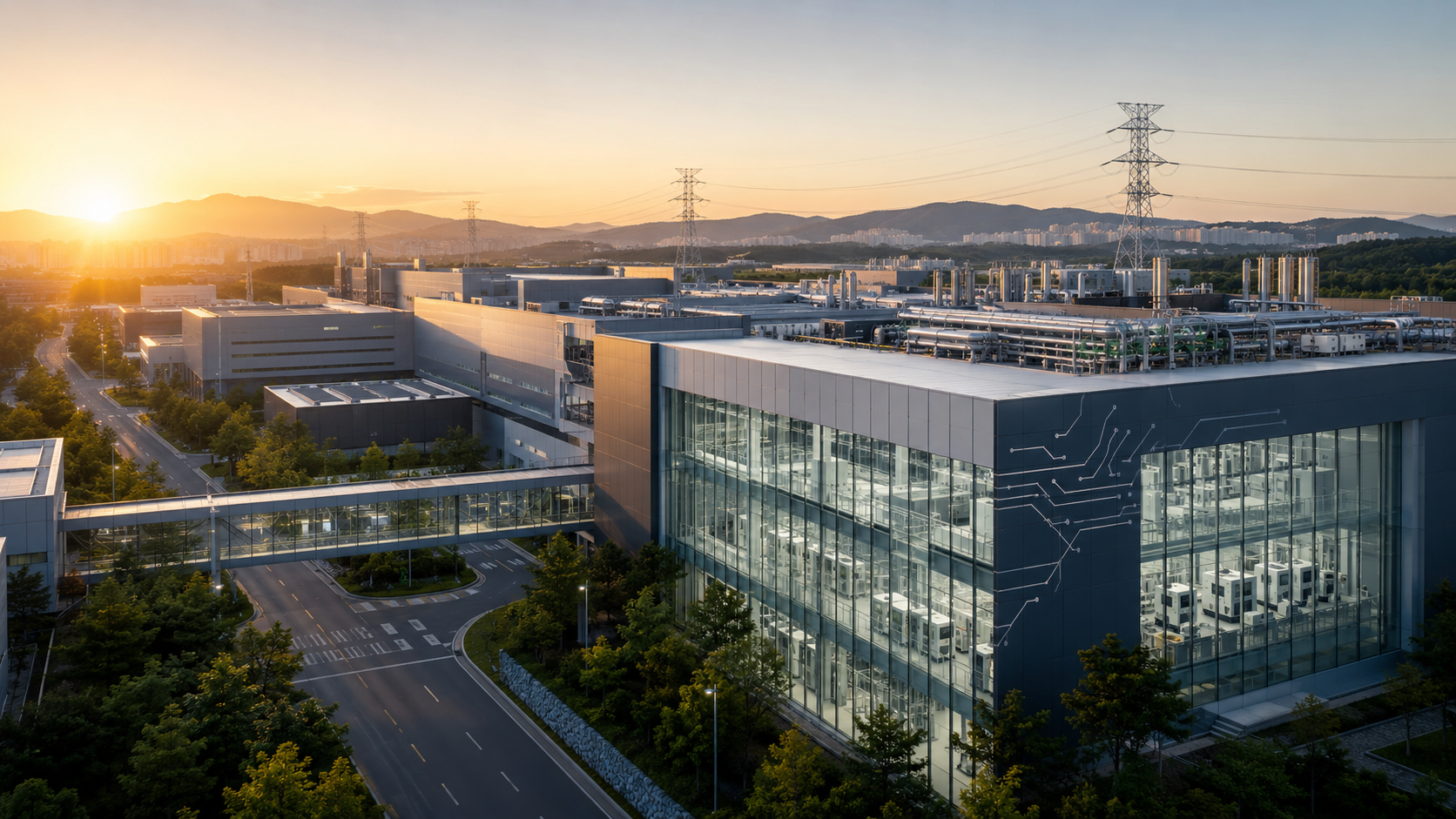
Samsung Electronics and SK Hynix plan to invest a combined 800 trillion won, about $518 billion, in a new chipmaking hub in South Korea's southwest, according to AP and Reuters-linked reporting citing the South Korean government.
The announcement places artificial intelligence at the centre of South Korea's industrial strategy. Samsung and SK Hynix dominate high-end memory production used in AI servers, data centres and advanced computing systems. Demand for high-bandwidth memory has surged as AI companies build larger models and cloud providers expand capacity.
South Korean President Lee Jae Myung attended the announcement with senior executives from Samsung and SK Group. The plan would give each company two new fabrication sites as part of a wider semiconductor ecosystem intended to move more investment beyond the traditional chip base around Gyeonggi Province.
The scale is striking, but the execution questions are just as large. New fabs require enormous supplies of electricity and water, specialized labour and years of construction. Government officials have pointed to renewable-energy potential in the southwest, while analysts have warned that infrastructure constraints could shape the pace of investment.
The plan also lands in a global semiconductor race shaped by U.S.-China export controls, industrial subsidies and concerns over supply-chain concentration. South Korea wants to protect its lead in memory chips while positioning itself for the next wave of AI hardware demand.
The project is best understood as a long-term industrial commitment rather than a single near-term capital spend. Timelines, incentives, permitting and financing details still need company and government documentation. But if completed, the hub would reinforce South Korea's status as one of the central manufacturing powers in the AI economy.

Reader comments
Subscribers can join the conversationSign in to join the conversation. Comments are open to everyone with a free account.
Sign in or create accountLoading comments…