
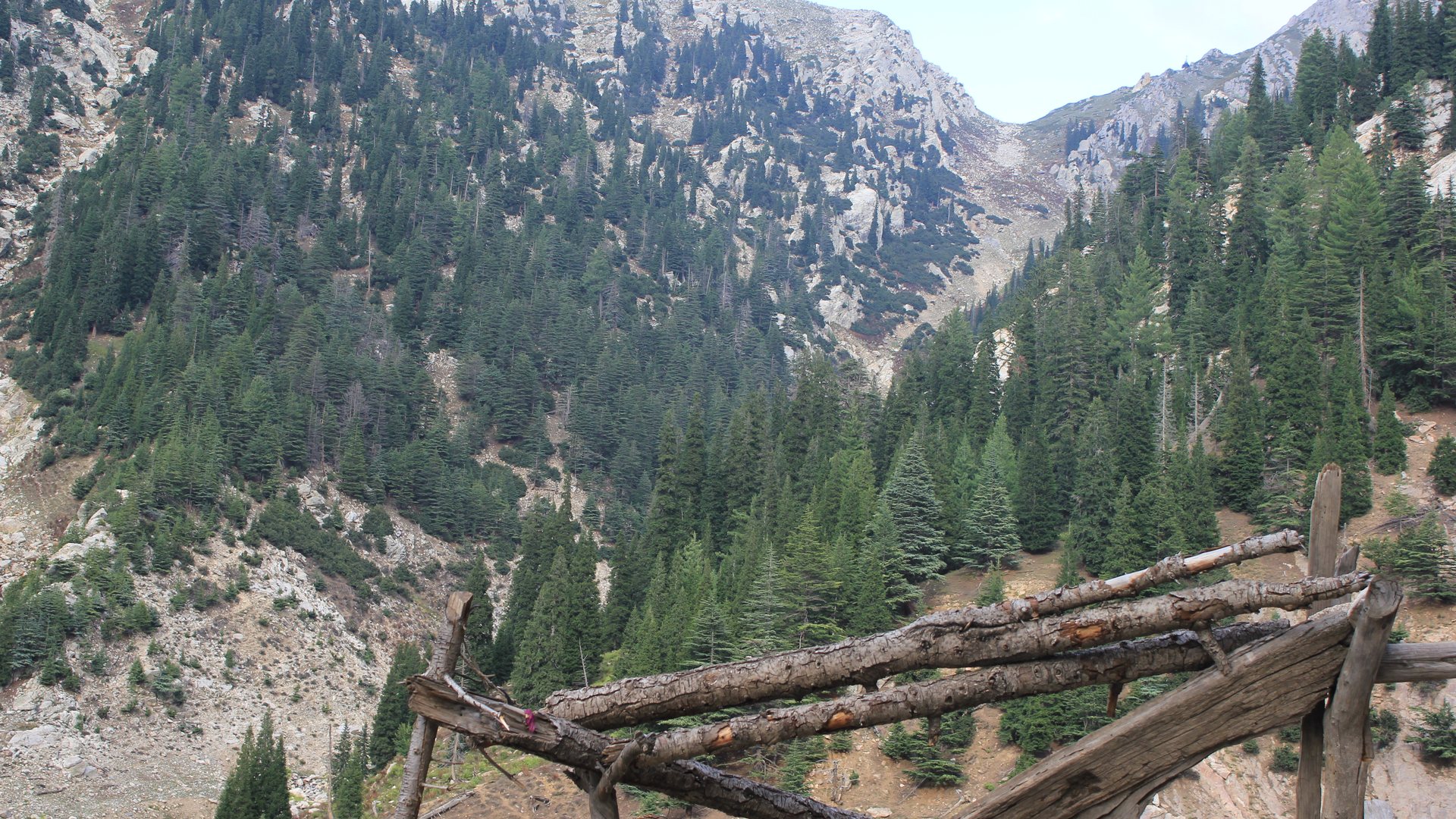
High in the jagged valleys of eastern Afghanistan, along rough mountain tracks that take hours to negotiate by pickup truck, ten-man squads in military fatigues are trekking through pine, oak and cedar ravines with automatic rifles slung across their shoulders. They stay out in the hills for ten to twelve days at a stretch, sleeping rough and working alongside villagers who know every ridge and smuggling trail.
They are not hunting insurgents. They belong to the Green Units — a specialised police force created by the Taliban administration to guard what little remains of Afghanistan’s natural forests against chainsaws, charcoal burners and cross-border timber smugglers.
Across much of the country, flying over the Hindu Kush reveals ridge after barren ridge of brown rock and dust. Decades of armed conflict, unregulated felling, drought and severe poverty have stripped Afghanistan of woodland it could scarcely afford to lose. As Associated Press reporting from Kunar province and Al Jazeera English highlighted this week, the Taliban’s forest patrols have become the most visible front line in an unlikely environmental battle — one that raises hard questions about whether armed policing can reverse ecological collapse in a nation largely cut off from international climate finance.
A Landscape Stripped by Four Decades of War
To grasp what the Green Units are trying to defend, it helps to look at how little is left. Centuries ago, dense forests covered roughly 5% of what is now Afghanistan, while sparser pistachio, almond and juniper woodlands stretched across another 33%, according to the UN Food and Agriculture Organization (FAO). Today, forests and shrubland combined account for just 2.8% of the country’s land area — roughly 1.8 million to 2 million hectares.
The heaviest devastation unfolded during the country’s most chaotic decades. Between the Soviet invasion in 1979 and the collapse of the first Taliban government in 2001, Afghanistan lost an estimated 50% of its forests, according to Mohammad Nasir Shalizi, a research assistant professor of forestry at North Carolina State University who previously taught at Kabul University from 2009 to 2015.
Different regions bled for different reasons. In the dry pistachio belt of the north and west, displaced and impoverished families cut trees simply to cook meals and survive bitter winters. In the lush conifer provinces of the east — chiefly Kunar, Nuristan, Paktia, Paktika and Khost — high-value deodar cedar, oak and pine fed a lucrative cross-border smuggling economy into neighbouring Pakistan, where Afghan timber long supplied construction markets and helped finance armed factions.
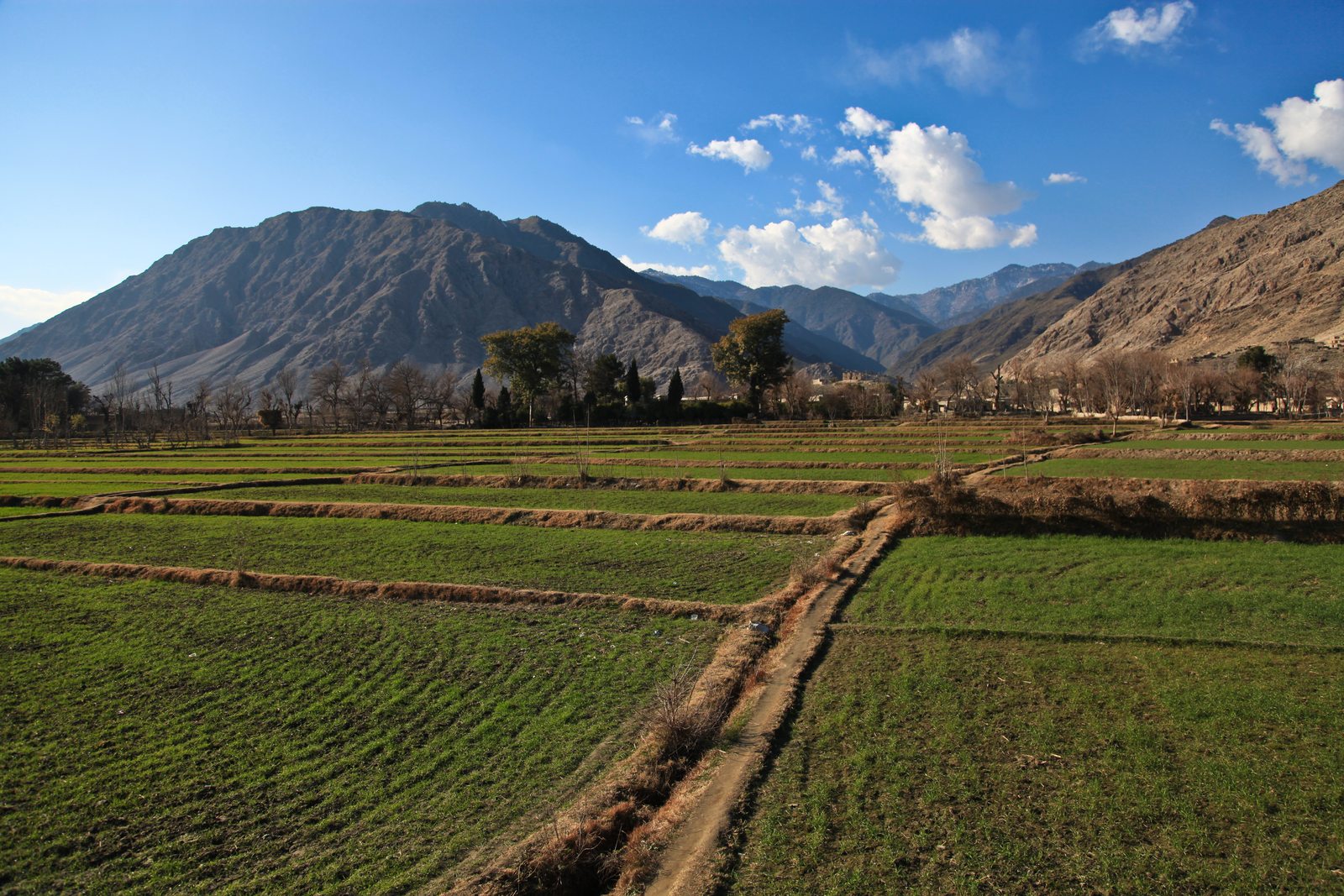
Deforestation was formally outlawed more than two decades ago under the post-2001 republic, yet corruption, weak state reach and active combat across the eastern mountains rendered the ban largely unenforceable. Even after the Taliban returned to power in August 2021, satellite imagery and field reporting documented fresh surges of logging in remote eastern districts before tighter policing took hold.
Inside the Green Units: Rifles, Permits and Sermons
In December 2021, the Taliban’s Council of Ministers renewed a strict prohibition on cutting down forests, selling natural timber and transporting logs, announcing an initial 450-strong Green Unit under the Ministry of Interior for Kabul and seven eastern provinces. Five years on, the force has more than doubled: around 1,000 personnel now patrol forested provinces nationwide, according to Ministry of Agriculture, Irrigation and Livestock spokesperson Sher Mohammad Hatami.
In Kunar’s mountainous Chawkay district, where AP journalists accompanied patrols in October 2026, officers described a strict regime. Felling any live tree is outlawed outright, and even collecting dead timber requires an official permit, Kunar police command spokesperson Maj. Faridullah Dehqan said. Officials argue the crackdown has sharply curtailed the smuggling corridors into Pakistan that thrived during the war years.
The patrols combine deterrence with persuasion. Officers gather village elders and residents to explain hunting bans meant to let depleted wildlife recover, and local imams have been enlisted to frame conservation as a religious obligation. Sgt. Khair Ul Rahman, a 22-year-old who has spent five years in Kunar’s Green Unit, told AP that public outreach echoes both Kabul’s directives and the teachings of the Prophet Muhammad: “In an Islamic society, obeying such directives is a mandatory duty.”
Enforcement has spread beyond Kunar. In neighbouring Nuristan, provincial natural-resource officials announced in August 2026 that nine formal community councils had signed local pacts imposing a fine of one cow on any villager caught cutting a tree, while turning commercial smugglers over to authorities for arrest. In northwestern Badghis province, police Green Units arrested seven suspects in September 2026 for felling pistachio and juniper trees. Provincial officials in Khost and Paktia have claimed 85% to 90% drops in illegal cutting since the units became active.
Yet the picture on the ground is far from uniform. Residents in parts of Kunar and Nuristan have continued to tell independent Afghan outlets that illegal logging persists in hard-to-reach valleys, sometimes with local collusion. And in Badghis, provincial forestry director Safiullah Mohammadi acknowledged earlier this year that every winter brings a fresh wave of cutting because jobless families lacking gas or electricity have no other way to heat their homes.
Millions of Seedlings — and the Reality Check
Taliban officials point to ambitious figures to show that Afghanistan’s woodlands are turning a corner. Hatami told AP that authorities have planted roughly 126 million seedlings and cuttings over the past five years. Afghanistan’s National Statistics and Information Authority (NSIA) spokesperson Mohammad Halim Rafi likewise says national forest cover has expanded by 427,000 hectares (1.06 million acres) over the past 15 years — a trend spanning both the previous republic and the current administration.
Independent forestry specialists agree that the runaway pace of wartime deforestation has slowed considerably over the past two decades, and that small pockets of forest are regenerating. Still, they urge caution over headline planting totals.
“They plant trees, they have those numbers, but they do not come back and check how many of those trees that they planted survive,” Shalizi warned AP. “Usually … the mortality rate is very high.”
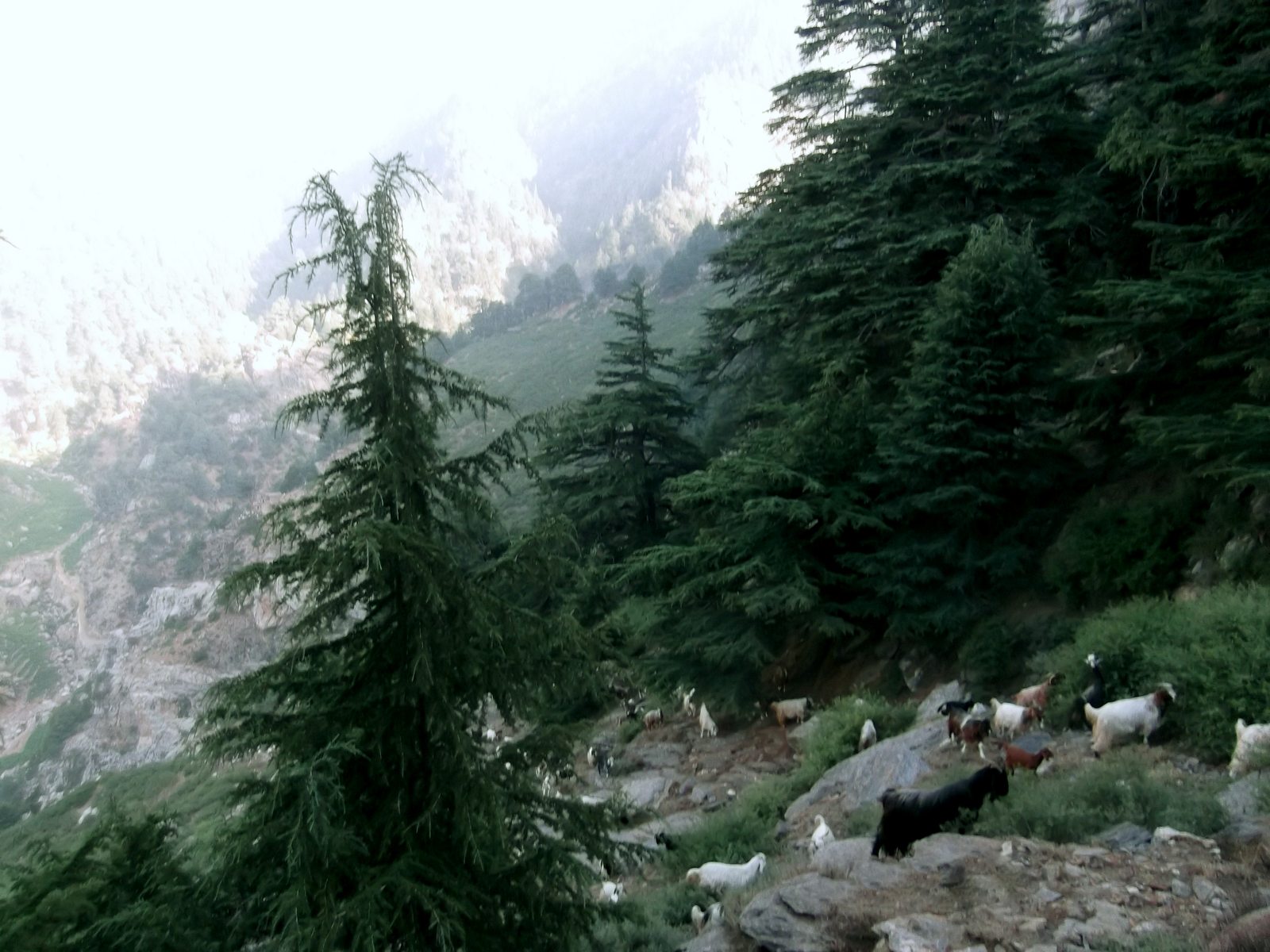
Just as critical is the slower, quieter threat of forest degradation. Armed rangers can intercept a logging truck or confiscate chainsaws, Shalizi noted, but they cannot easily solve overgrazing by herds of goats and sheep that strip young shoots before they ever mature into trees. Without long-term watering, fencing, alternative winter fuel and paid community stewardship, a patrol with rifles can guard mature trunks while the next generation of forest quietly fails to take root.
When Missing Roots Turn Rain into Disaster
In Afghanistan, the stakes of that failure are measured in lives. Though the country produces a negligible share of global greenhouse gas emissions, the United Nations ranks it among the nations most vulnerable to climate change and least equipped to adapt. According to Afghanistan’s National Environmental Protection Agency (NEPA), average temperatures climbed by 1.8°C between 1950 and 2010 — roughly twice the global average — and floods, droughts, avalanches and snowstorms now hit an estimated 200,000 Afghans every year.
Sparse tree cover amplifies both heat and runoff, says Abdul Hadi Achakzai, head of the Kabul-based Environmental Protection Training and Development Organization. On steep Himalayan slopes, deep tree roots act like living scaffolding, anchoring thin mountain soils and slowing sudden cloudbursts. Strip those slopes bare, and rain turns within minutes into walls of mud and boulders.
Eastern Afghanistan received a brutal reminder this summer. Between 20 July and 3 August 2026, flash floods ripped through Parun and Barg-e-Matal districts in mountainous Nuristan — killing at least 24 to 25 people, injuring more than 119, and damaging or destroying more than 310 homes alongside bridges, roads, farmland and drinking-water networks, according to UNICEF Afghanistan and local reporting by Salam Watandar. Survivors recounted torrential runoff racing down steep canyons in as little as eight minutes, sweeping away shops and houses.
That is why international aid groups working alongside rural communities treat mountainside reforestation not as conservation luxury, but as basic civil defence. The Aga Khan Foundation has focused tree-planting projects directly above villages sitting beneath bare slopes — work its global agriculture and climate lead, Apoorva Oza, described to AP as “disaster-proofing the communities” and “actually a life-saving intervention.”
Locked Out of COP31, Reopening a Door in Kabul
The Green Units’ mountain patrols also expose the central diplomatic paradox hanging over Afghanistan’s environment. While armed rangers guard watersheds that buffer millions from floods and drought, Kabul’s de facto government remains shut out of formal global climate diplomacy because UN member states refuse to recognise Taliban rule, citing its sweeping restrictions on women and girls.
That isolation was on full display this month at the COP31 climate summit in Antalya, Turkey. Although Turkish hosts extended a guest invitation and Afghan officials initially signalled plans to attend as observers — as they had at COP29 in Baku in 2024 — the delegation stayed away after receiving no formal invitation from the United Nations, leaving Afghanistan’s seat empty for a second straight year.
Yet three days after COP31 closed without an overarching fossil-fuel agreement, a rare practical channel reopened inside Kabul. On 23 November 2026, NEPA and the United Nations Development Programme (UNDP) formally relaunched the Global Environment Facility (GEF) Small Grants Programme in Afghanistan — reviving international financing for community-led forest restoration, biodiversity and water-management projects that had been frozen since August 2021.
At the launch ceremony, NEPA director general Matiul Haq Khalis urged that international environmental support continue free of political conditions, while UNDP Deputy Resident Representative Doel Mukerjee noted how sharply Afghanistan’s climate had worsened since his first visits in 2008 and 2009, stressing that community-based organisations need faster, practical backing to turn local priorities into action.
Whether those small community grants can grow into sustained rural alternatives — clean winter heating, managed grazing, nurseries with real survival monitoring — will decide whether the Green Units represent a lasting turning point or merely a holding action. Armed patrols can buy Afghanistan’s surviving cedar and oak valleys precious time. Keeping the mountains green for the next generation will take far more than rifles.

Reader comments
Subscribers can join the conversationSign in to join the conversation. Comments are open to everyone with a free account.
Sign in or create accountLoading comments…