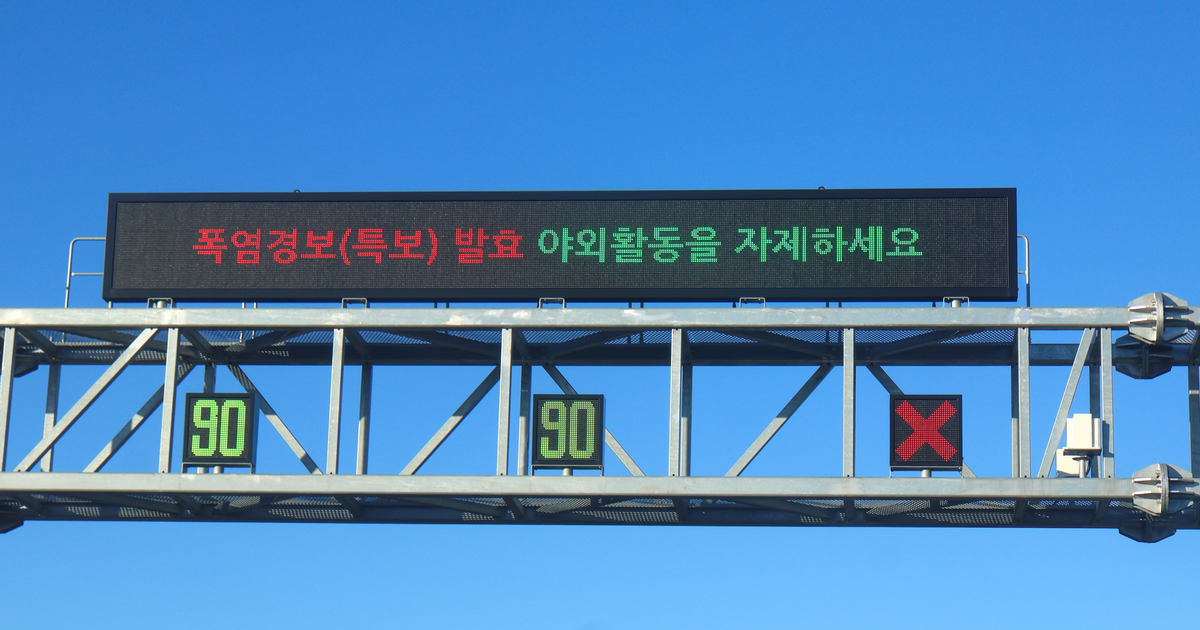
South Korea has reported 16 heat-related deaths and more than 2,000 illnesses since May as record temperatures spread across the country and Seoul activated the most serious level of a new warning system. The south-eastern city of Yangsan reached 42.5C on Sunday, the highest temperature measured in 122 years of national weather observations. The heat then shifted westwards toward the capital, where temperatures were forecast to reach 38C after a district of Seoul recorded 39C on Monday.
A public-health emergency
The Korea Disease Control and Prevention Agency linked 16 deaths to heat and reported more than 2,000 people treated for heat-related illness. The figures are provisional and may rise as hospitals and local authorities update surveillance data. Extreme heat can cause dehydration, heat exhaustion and heatstroke, with older people, infants, people with chronic illness and outdoor workers at greatest risk. High night-time temperatures also reduce the body's opportunity to recover and can increase the danger over several consecutive days.
Seoul activates severe warning
Seoul issued its first severe heatwave warning under an alert system established this year. City authorities said nurses were checking up to 63,000 people considered especially vulnerable, including older residents and people with disabilities or long-term health conditions. A fleet of 200 trucks was spraying almost 2,000 kilometres of roads with water, with repeated runs in the hottest areas. Mist zones and shaded routes were being used to reduce exposure for pedestrians. In North Gyeongsang province, officials deployed drones fitted with loudspeakers to broadcast safety messages. Thermal cameras were also used over crowded holiday areas to help identify dangerous concentrations of heat.
Workers face the greatest exposure
Construction workers, delivery riders, agricultural labourers and people working in car parks or other open areas cannot always avoid the hottest hours. Regular breaks, access to water and the authority to stop work become critical when temperatures reach levels that can cause illness within a short period. President Lee Jae Myung told officials to protect daily life, inspect electricity systems and reconsider how the country manages emergencies as extreme weather becomes more common. Air-conditioning demand can place additional strain on the power system at the same moment that public buildings are needed as cooling spaces.
Why the heat is so intense
The Korea Meteorological Administration attributed the heatwave to overlapping high-pressure systems, strong sunlight and clear skies. In parts of the south-east, the foehn effect has made descending air hotter and drier after it crosses mountain ranges. The path of Typhoon Dolphin adds uncertainty. A track toward eastern China could increase humidity and worsen tropical nights, while a route closer to the Korean peninsula could bring wind, cloud and rain that temporarily reduce temperatures.
A changing climate risk
No single local temperature record explains the full climate trend, but scientists have repeatedly warned that human-driven climate change makes extreme heat more frequent and intense. The policy challenge is no longer limited to issuing warnings; it includes housing, labour rules, urban shade, health surveillance and a power system capable of supporting mass cooling. South Korea's response will be judged by whether emergency measures reach the people least able to protect themselves. The record of 42.5C is striking, but the deaths and illnesses show why the heatwave must be treated as a sustained public-health crisis rather than a weather curiosity.
Reader comments
Subscribers can join the conversationSign in to join the conversation. Comments are open to everyone with a free account.
Sign in or create accountLoading comments…