
A Saudi energy group has announced a set of agreements with Afghanistan that could, if the geological evidence, financing and politics line up, become one of the largest proposed energy programmes in the country's modern history. The figure attached to the announcement is striking: about $50 billion over 25 years, with a separate estimate of roughly $10 billion for a possible gas corridor. But the language surrounding the deal matters as much as the number.
The agreements were announced by Delta Energy Group after a ceremony in Kabul on September 7. They cover exploration and production in the Kushk and Tirpul contract area in Herat, a study of how gas could be used around Herat Industrial Park and Herat city, and a framework for assessing a proposed 700-kilometre pipeline between a receipt point near Guzara in Herat province and a delivery point near Spin Boldak in Kandahar province. The area named for exploration spans approximately 23,317 square kilometres.
The Afghan Ministry of Mines and Petroleum provides a more cautious account of the starting point. In a statement about a September 5 meeting, the ministry said its minister, Hedayatullah Badri, and Delta's chief executive, Shaher Al-Taqi, discussed cooperation in the exploration, evaluation and extraction of oil and gas. Delta described talks with ministry technical teams as positive and said it was ready to invest subject to the relevant processes being facilitated and an agreement being reached. That is a commitment to pursue a process, not proof that commercial reserves have already been established.
The first stage is therefore investigative. Delta says it will conduct geological and geophysical work, seismic surveys, exploration drilling and reservoir evaluation. These steps are designed to answer the question on which every later promise depends: how much recoverable hydrocarbon is actually present, at what cost, and with what route to market? Until those answers exist, the headline sum remains a projection across multiple possible stages rather than money already committed to construction.
The Herat element is more immediate in concept, though still a study. The proposed gas-utilisation programme would assess possible supplies for industrial activity, power generation and other energy needs in Herat Industrial Park, Herat city and other approved areas. If viable gas is found nearby, local use could be economically and politically easier than exporting it. It could also give the project a visible domestic dividend before a regional pipeline becomes realistic.
The regional piece is the proposed CentGas - Corridor of Prosperity. Delta's material describes a route of about 700 kilometres, linking a proposed receipt point near Guzara with Spin Boldak. The reported estimate of approximately $10 billion over ten years is explicitly subject to technical and economic feasibility, regulatory approvals, financing and a final investment decision. The project would have to move from a corridor on paper to a financed, engineered and secured piece of infrastructure crossing a complicated political geography.
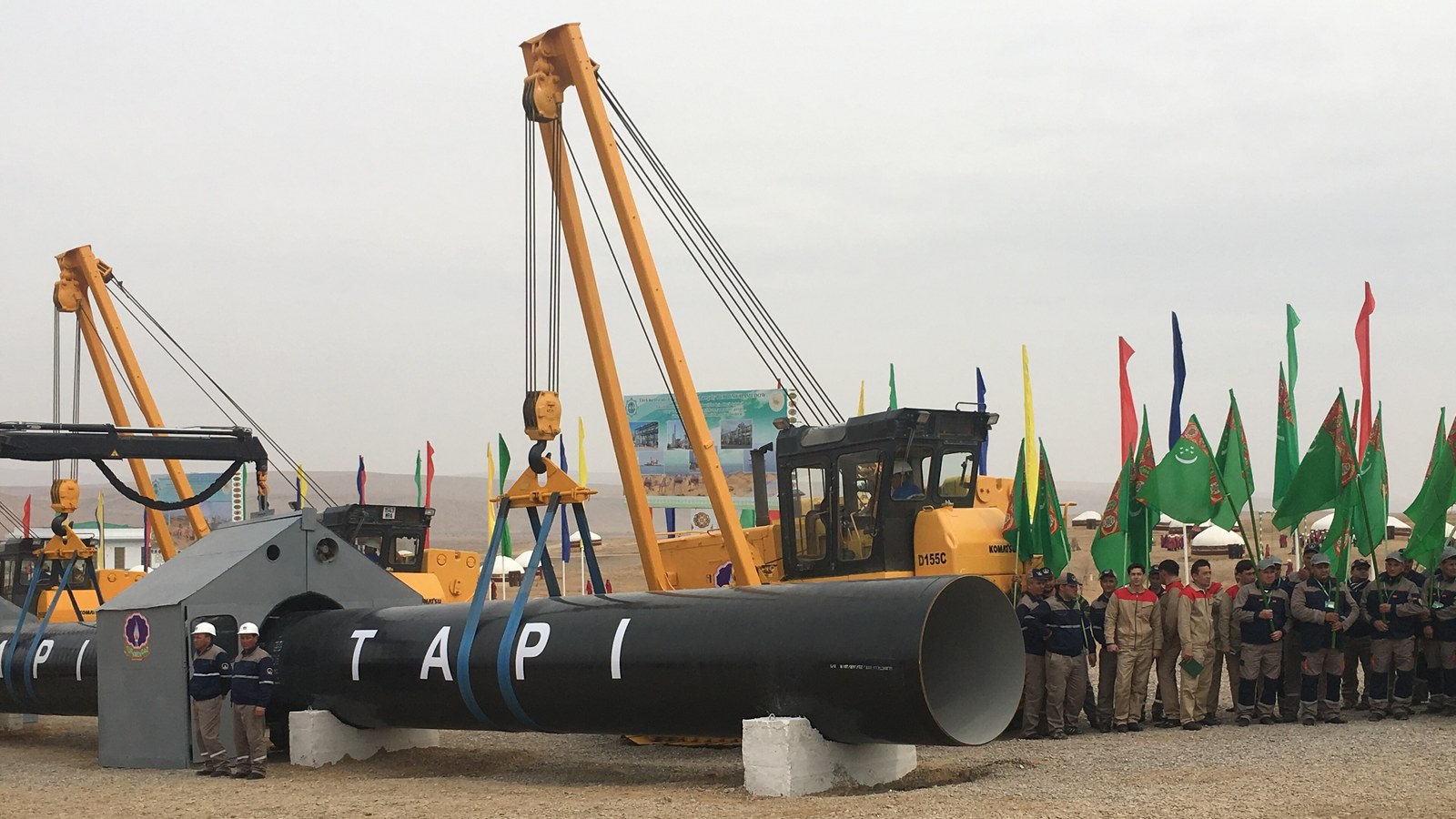
This is where the wider regional context comes in. Afghanistan has long been discussed as both a potential gas producer and a transit state. The TAPI project, intended to move Turkmen gas through Afghanistan toward Pakistan and India, has supplied the language of regional connectivity for years. Afghan officials have also discussed possible links between future domestic production, TAPI and other routes. The CentGas proposal is not the same project, and it should not be presented as one, but it belongs to the same strategic conversation: whether Afghanistan can turn geography into energy revenue rather than merely absorb the risks of transit.
The difference between $50 billion and $60 billion in the reporting around the announcement is also revealing. Islamabad Post describes an integrated programme of roughly $50 billion over 25 years, then refers to an estimated $60 billion in potential investment across exploration, field development, gas utilisation, pipelines and related facilities over ten years. Ariana News uses the more restrained phrase "tens of billions" and repeats that later phases depend on exploration, commercial viability, financing and approvals. These figures are not interchangeable. They appear to describe different time horizons or programme envelopes, and none should be read as a signed cheque.
For Afghanistan, the attraction is clear. A large energy project could create demand for technical work, expand electricity and industrial capacity, and give the authorities a new source of revenue and diplomatic leverage. For Saudi Arabia, the proposal would extend its commercial reach into a country where energy, infrastructure and regional access overlap. A successful project could position a Saudi company at the centre of a new corridor between Central and South Asia, while also giving Riyadh a role in Afghanistan's post-war economic story.
The obstacles are equally substantial. Exploration can fail. Gas resources may be too small, too difficult or too expensive to develop. A pipeline must be financed and insured, built across terrain vulnerable to disruption, and connected to buyers with the ability to pay. The project would need stable contracts, transparent rules, credible dispute resolution and a regulatory environment that can satisfy lenders. Afghanistan's international isolation, sanctions exposure and unresolved questions of recognition add another layer to every transaction. Political access can open a ceremony; it does not automatically close a financing plan.
Security is not the only risk, but it is part of the investment case. Energy infrastructure becomes valuable precisely because it is fixed, visible and connected to multiple interests. The longer the proposed route, the more points there are where local consent, protection and maintenance matter. Any serious development plan will have to explain not only who builds the pipeline, but who guarantees the right of way, who controls the revenue, and what happens when conditions change.
The ceremony was attended by former U.S. special envoy Zalmay Khalilzad, according to the announcement reported by Islamabad Post. His presence may add political symbolism, but it does not substitute for the technical, legal and financial work still ahead. The official Afghan ministry statement is similarly careful: it records a positive discussion and a willingness to invest subject to process and agreement.
The most accurate way to describe the announcement is therefore neither a guaranteed $50 billion windfall nor an empty publicity exercise. It is an opening framework with an unusually large ambition. Its next test will be whether exploration produces credible data, whether the Herat gas study identifies paying demand, and whether the proposed corridor can attract capital under real-world political and security conditions. Until then, the value lies in what the agreements make possible - not in money that has already arrived.


Reader comments
Subscribers can join the conversationSign in to join the conversation. Comments are open to everyone with a free account.
Sign in or create accountLoading comments…