
For centuries, the routes that linked the Indian subcontinent with Central Asia carried not only goods, but also ideas, faiths, languages, and cultures. The Silk Road was as much a civilisational bridge as a commercial network. In the modern era, however, India and Central Asia have found themselves separated by geopolitical barriers that have reduced a historically connected neighbourhood into a distant strategic space. Reimagining connectivity with Central Asia therefore demands more than building roads, ports, or railways; it requires restoring a relationship shaped by geography, history, and shared interests.
Why Central Asia matters to India
Central Asia matters to India in ways that are becoming increasingly important in a turbulent world. The region possesses significant reserves of oil, natural gas, uranium, rare earths, and other critical minerals that are essential for energy security and for the technologies driving the global green transition. For a rapidly growing economy such as India, dependence on a narrow set of suppliers carries obvious risks. Diversifying access to energy and minerals is not merely an economic objective; it is a strategic necessity. Central Asia also offers India new markets for pharmaceuticals, information technology, healthcare services, education, and engineering goods, thereby supporting trade diversification at a time when global supply chains are being reshaped by geopolitical tensions.
Yet India’s engagement with Central Asia has long been constrained by geography and politics. The most immediate obstacle is Pakistan’s refusal to provide overland transit access, which blocks the shortest land route from India to Central Asia. This single constraint has forced India to rely on longer and more expensive maritime and multimodal routes. The problem is compounded by the deepening China–Pakistan strategic partnership, which has created connectivity networks from which India remains excluded. China’s expanding economic presence across Central Asia has further altered the regional balance, making connectivity not only an economic question but also a strategic one.
Afghanistan, cost and the corridor alternative
Afghanistan adds another layer of complexity. Instability, security concerns, weak institutions, and uncertain regulatory conditions continue to make transit and investment difficult. Even where political intent exists, practical barriers persist: inadequate logistics infrastructure, high freight costs, limited banking channels, cumbersome customs procedures, and insufficient business awareness often make trade commercially unattractive. These constraints explain why India’s trade with Central Asia remains far below its potential despite strong diplomatic relations.
Against this backdrop, India has sought alternative pathways. The International North–South Transport Corridor represents the most practical of these efforts. By connecting India with Iran, the Caspian region, Russia, and onward to Eurasia, the corridor offers a viable route that bypasses Pakistan. Its promise lies in reducing transit time and transportation costs while creating access to Central Asian markets through Iran and the Caspian Sea.
However, the corridor is still a work in progress. Missing rail links, uneven infrastructure quality, sanctions-related financial complications involving Iran, and limited cargo volumes have slowed its emergence as a major commercial artery.
The lesson is clear: connectivity projects succeed not through announcements but through sustained operational coordination.
Chabahar and TAPI
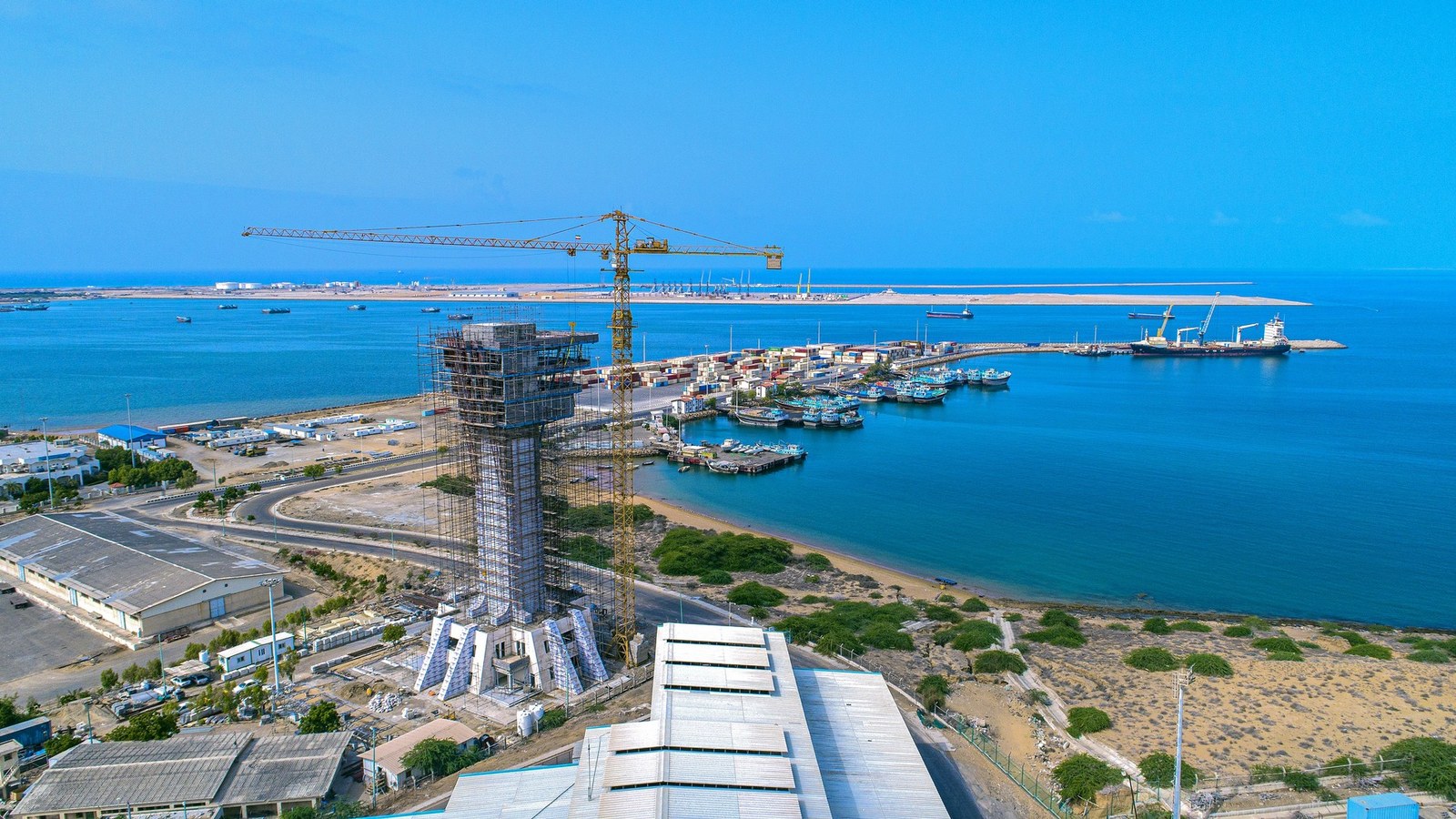
Chabahar Port occupies a special place in India’s strategic imagination. It provides India with a gateway to Afghanistan and Central Asia without passing through Pakistan, and Indian investment in the port reflects a long-term commitment to regional connectivity. Yet Chabahar has not fully realised its commercial potential. Competition from other regional ports, financing constraints, and incomplete hinterland connectivity have limited traffic volumes. Its value today is less that of a bustling trade hub and more that of a strategic option whose importance could grow over time.
The Turkmenistan–Afghanistan–Pakistan–India gas pipeline once symbolised the hope that economic interdependence could overcome political divisions. In principle, TAPI could have strengthened India’s energy security while linking South and Central Asia through shared economic interests. In practice, security risks in Afghanistan, financing difficulties, and political uncertainties have repeatedly delayed the project. TAPI remains a reminder that regional infrastructure cannot flourish where political trust is fragile.
Emerging routes, air cargo and digital links
More recently, the India–Middle East–Europe Economic Corridor has opened a new conversation about India’s westward connectivity. Although it is not a direct route to Central Asia, it could complement India’s broader Eurasian strategy by linking Indian ports with logistics, energy, and digital networks across the Middle East and Europe. Its future, however, will depend on sustained political commitment and stability in a region often marked by volatility.
If traditional routes remain constrained, emerging alternatives deserve greater attention. The Trans-Caspian or Middle Corridor, stretching across Central Asia, the Caspian Sea, and the South Caucasus to Europe, has gained importance as countries seek to diversify transport routes. India may not be geographically embedded in this corridor, but partnerships with Iran, Azerbaijan, Kazakhstan, and other regional actors can create meaningful linkages. Equally important are multimodal transport systems that combine sea, rail, road, and air networks, offering flexibility in an uncertain geopolitical environment.
The future of connectivity will not be decided by infrastructure alone. Air cargo corridors can support high-value exports such as pharmaceuticals, textiles, medical supplies, and perishables. Digital connectivity may prove even more transformative. Cooperation in digital public infrastructure, fintech, e-governance, cybersecurity, and digital payments can create forms of integration that are faster, cheaper, and less vulnerable to geopolitical disruption. Collaboration in education, healthcare, renewable energy, critical minerals, and resilient supply chains can deepen economic interdependence without waiting for every physical corridor to be completed.
The changing geopolitical landscape gives India an opening that did not exist a decade ago. Central Asian republics are increasingly pursuing multi-vector foreign policies to avoid excessive dependence on any single power. They seek diversified partnerships that bring investment, technology, skills, and market access without political domination. India is well placed in this environment because it is generally viewed as a respectful and development-oriented partner rather than a coercive one.
India’s comparative strengths
India’s comparative strengths are significant. Its achievements in information technology, digital governance, affordable healthcare, pharmaceuticals, higher education, and capacity building are directly relevant to Central Asian development priorities. Indian scholarship programmes, technical training initiatives, telemedicine platforms, and digital governance models have generated goodwill that cannot be measured merely in trade statistics. In an era when trust is becoming a strategic asset, these softer forms of engagement matter deeply.
To translate goodwill into durable influence, India must strengthen both bilateral and regional mechanisms. Regular high-level visits, investment agreements, customs cooperation, and business facilitation measures are essential. The India–Central Asia Dialogue offers a valuable platform for coordinating connectivity, trade, security, and development initiatives. The Shanghai Cooperation Organisation, despite its internal complexities, remains useful for practical cooperation on transport, energy, and regional security. Above all, India should approach the INSTC pragmatically by focusing on commercially viable segments, improving logistics services, digitising trade documentation, and creating predictable financing and insurance mechanisms.
The central insight is that India’s connectivity challenge with Central Asia will not be solved by a single grand corridor.
The way forward
A resilient strategy must be diversified across physical routes, digital networks, air connectivity, educational partnerships, energy cooperation, and technological collaboration. The objective should not simply be to reach Central Asia, but to build a web of relationships that makes the partnership economically meaningful and strategically enduring.
Reimagining connectivity is therefore ultimately an exercise in strategic imagination. India and Central Asia were connected long before modern borders intervened. The task today is to create twenty-first-century bridges that carry energy, technology, knowledge, investment, and people across a region once linked by the Silk Road. If India can combine pragmatic infrastructure diplomacy with its strengths in technology, healthcare, education, and digital governance, it can emerge not merely as a transit-seeking power, but as a trusted partner in shaping a more connected, balanced, and multipolar Eurasia.


Reader comments
Subscribers can join the conversationSign in to join the conversation. Comments are open to everyone with a free account.
Sign in or create accountLoading comments…