
On September 8, Britain announced measures targeting Israeli settlement activity alongside a new package of sanctions on Iran. Within three weeks, the country had seen renewed constitutional tensions in Scotland and Wales, Donald Trump weigh in on Irish unity, official warnings over Iranian and Russian threats — and, finally, a mysterious security incident near a US-used RAF base. Then came another pressure point: a threat to US diesel exports and emergency talks over Britain's fuel reserves. Taken separately, each event has its own explanation. Together, their timing raises a question: are they simply a remarkable series of developments, or is there a wider story yet to emerge?
September 8: Two significant announcements
Britain announced new measures targeting Israeli settlement activity in the occupied West Bank.
The government said it would introduce restrictions on imports from illegal settlements and sanctions against individuals and companies that support, facilitate or profit from illegal settlement activity. The measures were presented as an attempt to counter settlement expansion and protect the prospects of a two-state solution.
But that was not the only significant announcement from London that day.
The UK also announced further sectoral sanctions against Iran, covering areas including finance, trade, energy, technology, shipping, insurance and banking, as well as measures linked to Iran's nuclear and conventional weapons capabilities.
September 10: Scotland asks Westminster for a route to another referendum
Two days later, Scottish First Minister John Swinney wrote to British Prime Minister Andy Burnham following comments by Burnham on Scotland's constitutional future.
Swinney invited the prime minister to meet and discuss how what he described as an accepted principle — Scotland's right to decide its constitutional future — could be turned into a legal mechanism for another referendum.
Burnham had said the question of a Scottish referendum should be considered if public opinion changed to the point where there was a clear consensus for one.
The issue was no longer simply about Britain's foreign policy. It was beginning to touch the constitutional structure of the United Kingdom itself.
September 13: Trump enters the debate over Ireland
Three days later, during a visit to Ireland, US President Donald Trump publicly backed Irish reunification.
Asked about the prospect of a united Ireland, Trump said he would “love” to see Ireland unified and suggested that reunification would eventually happen.
He declined to engage in a similar discussion about Scottish independence, saying he would not talk about Scotland “yet”. (Sky News)
His intervention added an international dimension to constitutional questions already being debated across the UK.
September 14: Scotland and Wales move closer
The following day, Scottish First Minister John Swinney and Welsh First Minister Rhun ap Iorwerth signed the Cardiff Agreement, establishing a framework for closer cooperation between the Scottish and Welsh governments.
The agreement covers areas including child poverty, the cost of living, economic growth, fiscal arrangements, climate change, international engagement, relations with the European Union, and language, culture, media and sport.
It also records a shared commitment to democratic accountability and to the right of people in Scotland and Wales to determine their constitutional futures through democratic means.
It was a separate political development, with its own stated objectives.
But it came immediately after renewed pressure over Scotland's constitutional future and Trump's intervention on Irish unity.
Taken individually, each event has its own political explanation.
Taken together, they formed an unusually concentrated sequence.
September 24: Britain warns Iran
Ten days later, Britain's Foreign Secretary Ed Miliband met Iranian Foreign Minister Abbas Araghchi on the sidelines of the United Nations General Assembly in New York.
Miliband warned that Britain would not tolerate intimidation, threats or hostile activity on UK soil from groups linked to Iran, including threats against British Jews.
The meeting came amid heightened tensions between Iran and Western governments.
September 25: Britain warns of Russian threats
The following day, the UK government announced closed-door briefings for defence companies and providers of critical national infrastructure on threats posed by Russia.
The government said the briefings would address cyberattacks, sabotage and other forms of hostile activity, as part of efforts to strengthen Britain's resilience against Russian threats.
And then came Fairford.
September 27: The RAF Fairford incident
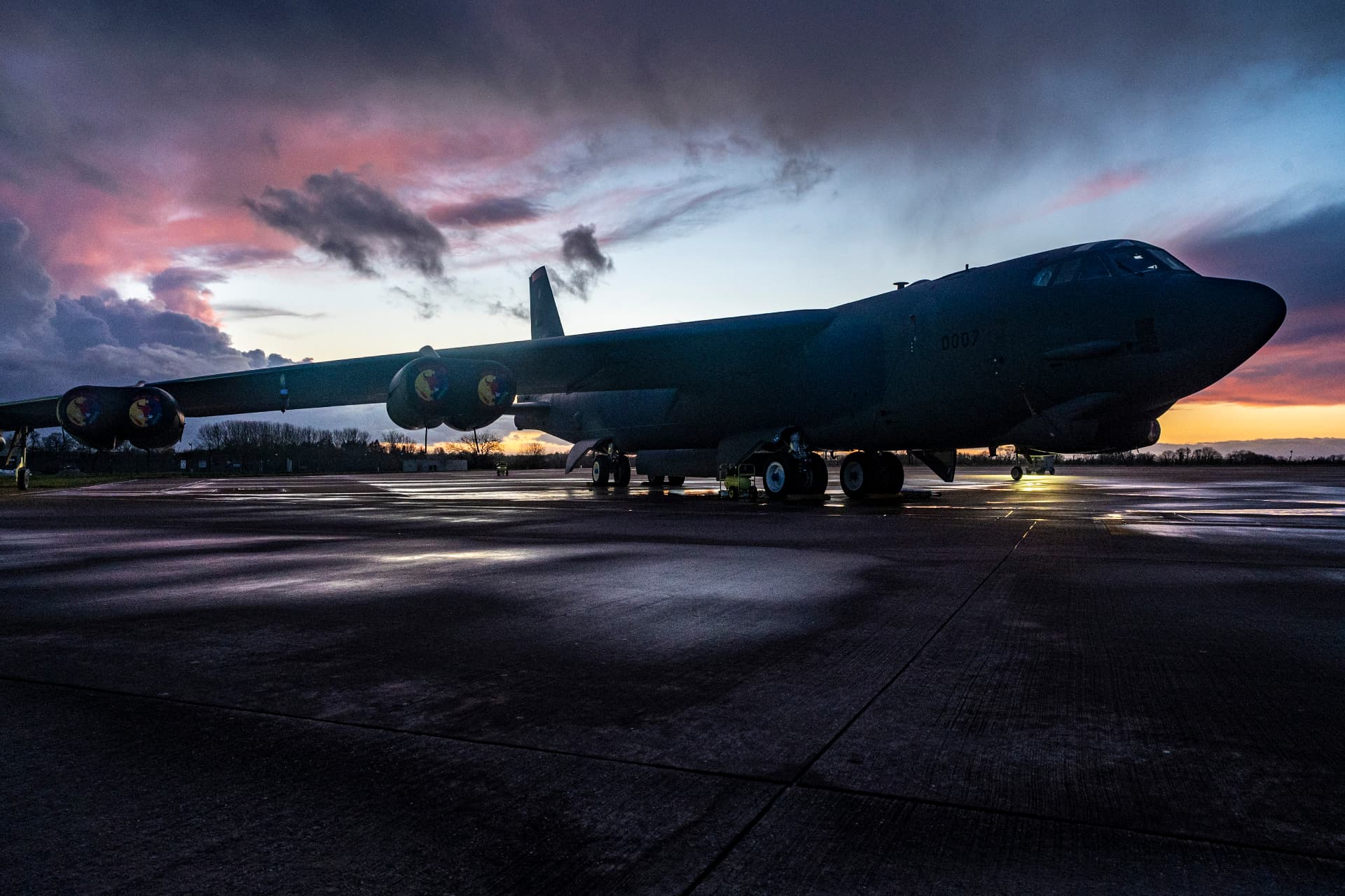
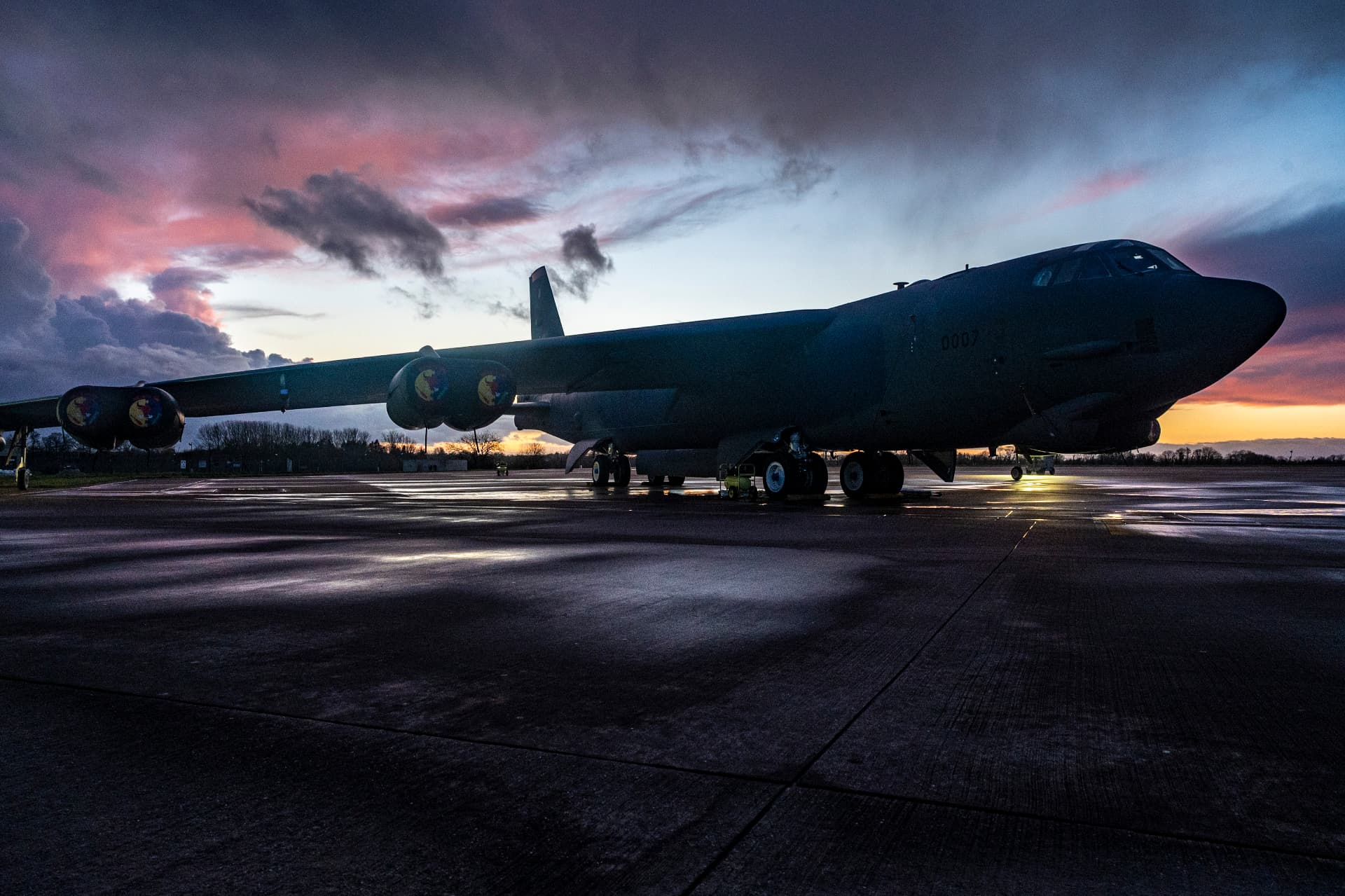
In the early hours of September 27, police received a report concerning three suspicious vehicles near RAF Fairford in Gloucestershire.
Five British men in their twenties were arrested near the airbase on suspicion of offences under the Explosives Act and later on suspicion of preparing a terrorist act.
About 85 households were evacuated and a 400-metre cordon was established while counter-terrorism officers, bomb-disposal specialists and military personnel examined the scene.
RAF Fairford is a British airbase used by the US military and has been used for US bomber operations connected to the conflict with Iran.
The initial reports suggested a potentially serious explosives incident.
But the investigation soon became more complicated.
No viable explosive devices — and an unusual sequence of events
On September 29, Britain's counter-terrorism police said extensive searches had found no viable improvised explosive devices in the vehicles.
Police did, however, find a quantity of petrol.
The five men were released on bail and remained under investigation. No charges had been brought against them.
Counter-Terrorism Policing said investigators were pursuing multiple lines of inquiry, including whether the suspected offences could have been carried out by individuals acting knowingly or unknowingly on behalf of a foreign state.
Then another unusual detail emerged.
One of the five men had reportedly called 999 himself before the separate call that brought police to the scene. The reason for his call has not been publicly established.
That sequence leaves several questions open.
Was this an operation designed to fail?
Or was it simply an attempted operation that went wrong?
Could the absence of viable explosive devices, the presence of petrol and the suspect's own call to police point to something other than a conventional attack?
There are other possible explanations: inexperienced individuals, reconnaissance, an attempt to create disruption rather than destruction, or people who may not have fully understood the purpose of what they were doing.
None of those explanations has been established publicly.
September 30: Britain points towards Iran
The picture changed on September 30.
US Secretary of State Marco Rubio said the “hands of a foreign actor” were involved in the incident, without publicly naming the state. Iran denied any involvement.
Then Prime Minister Andy Burnham said Britain had “strong indications” that Iran had played a part in the Fairford incident.
Burnham said the UK was working closely with US authorities and that the investigation remained ongoing.
That is now an important part of the official picture.
But it does not, by itself, resolve the unanswered questions surrounding what happened at Fairford.
If Iran did play a role, what exactly was that role?
Was the intention to cause destruction, disrupt operations, test security, send a political message — or something else?
And if the men were acting on behalf of a foreign state, did they knowingly understand who they were working for?
The fact that no viable explosive devices were found also remains relevant to understanding what the group may actually have intended to do.
At present, those questions remain matters for the investigation.
October 1–2: The diesel warning
Then Britain faced a very different kind of pressure.
On October 1, the Trump administration warned France and Germany that they should draw down emergency diesel inventories to help bring down soaring global fuel prices, or face the possibility of a US ban on diesel exports.
The warning marked an escalation in pressure from Washington as President Donald Trump considered restricting US diesel exports to lower domestic fuel prices. (Reuters)
Britain was drawn into the discussions.
UK officials joined calls with the European Commission, France, Italy and Ireland over whether emergency fuel reserves might need to be released.
The issue is particularly sensitive for Britain because the UK imports nearly 55% of the diesel it uses, with the United States accounting for around 31% of those imports. (ITVX)
On October 2, the average UK diesel pump price reached £2 per litre for the first time, according to the RAC.
The British government sought to reassure the public that supplies remained resilient, while continuing discussions with international partners and the fuel industry. (Reuters)
Trump has not announced a final ban on diesel exports to Britain.
Rather, he has repeatedly said he is considering restrictions on US diesel exports and has pressed European countries to release reserves.
For Britain, however, the timing adds another layer to an already turbulent period: a country dealing simultaneously with geopolitical tensions, energy disruption, constitutional questions and a developing counter-terrorism investigation.
What does — and does not — connect the wider sequence?
The Fairford investigation now has an official British indication of Iranian involvement.
But that does not establish a connection between Fairford and everything that happened earlier in September.
There is no established public evidence linking the incident to Britain's September 8 measures on Israeli settlement activity, its new Iran sanctions, the constitutional developments involving Scotland and Wales, Trump's comments on Irish unity, the government's warnings about Russian threats, or the subsequent dispute over diesel supplies.
The events share a timeline.
They do not yet share a proven cause.
Nor does the identification of Iran as a possible participant automatically answer the separate question of who might benefit politically or strategically from the consequences of an incident at a US-used British airbase.
Russia, the United States and Israel all have distinct strategic interests in the wider conflict and in Britain's relationship with Iran and the United States.
But identifying an actor whose interests might be affected by an event is not evidence that the actor caused it.
The distinction matters.
Who may have caused an event, who may have benefited from its consequences, and what investigators can actually prove are three different questions.
Three weeks, three questions
The sequence began with Britain's announcement of measures against Israeli settlement activity and new sanctions on Iran.
It moved through renewed constitutional pressure involving Scotland and Wales, Trump's intervention on Irish unity, warnings about Iranian-linked activity on British soil and government briefings on Russian threats.
Then came Fairford.
Five British men.
Three vehicles.
Petrol, but no viable explosive devices.
A suspect who reportedly contacted police himself.
All five were released on bail and remain under investigation, with no charges brought against them.
And now the British prime minister says there are “strong indications” of Iranian involvement, while Tehran denies it and the investigation continues.
Then came the diesel crisis: a US threat to restrict exports, emergency European discussions over fuel reserves, and a record £2-a-litre diesel price in Britain.
Some of these events clearly have separate political and security explanations.
Others remain unresolved.
The honest answer, for now, is that we do not know whether the timing means anything.
What we do know is what has been established, what has been denied, and what the investigations and governments involved have yet to explain.
Reader comments
Subscribers can join the conversationSign in to join the conversation. Comments are open to everyone with a free account.
Sign in or create accountLoading comments…