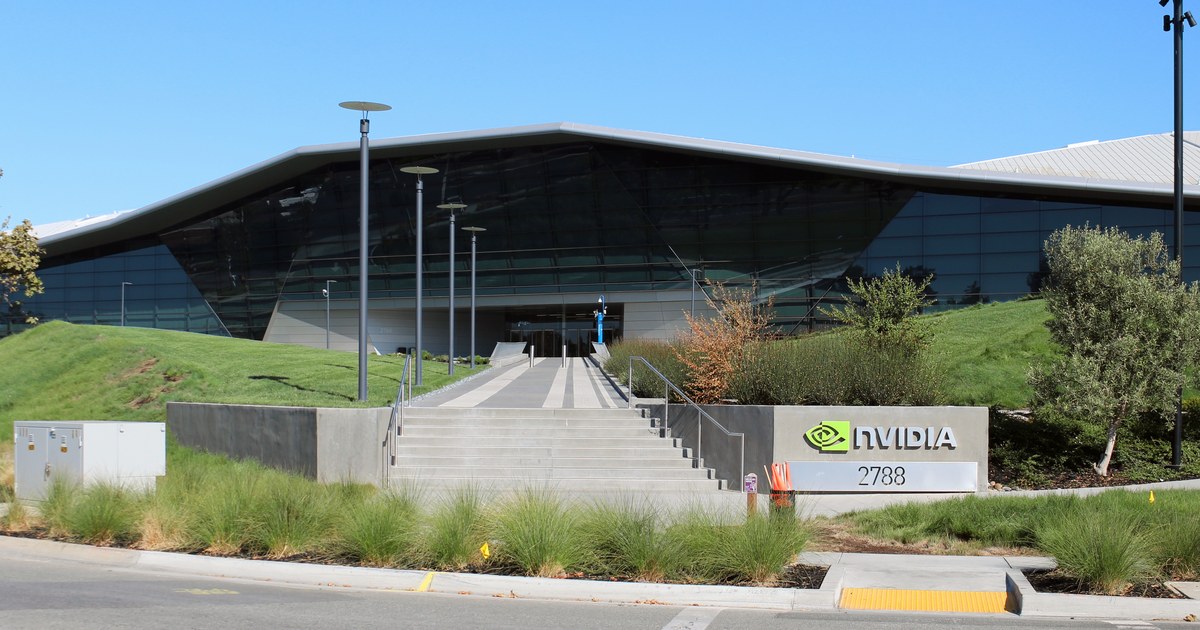
A new financing layer for the AI boom
Nvidia is partnering with six of the world's largest financial institutions on platforms intended to mobilise more than $500 billion of third-party capital for artificial-intelligence infrastructure.
The groups named in current reporting are Apollo, BlackRock, Blackstone, Brookfield, Goldman Sachs and KKR. The objective is to make financing available for the data centres, computing systems, power infrastructure and other physical assets required to run increasingly large AI workloads.
From chip supplier to infrastructure organiser
The initiative pushes Nvidia further beyond its traditional role as a semiconductor company. Its graphics processors remain central to the market for advanced AI computing, but the bottleneck is no longer only the availability of chips. Customers also need buildings, electricity, cooling, networking and long-dated financing.
Chief executive Jensen Huang has increasingly described large computing sites as "AI factories". The new financing arrangements are designed to connect that industrial demand with pools of private capital that already invest in infrastructure, credit and real assets.
AI competition is becoming a financing contest as well as a technology race: chips need power, data centres and hundreds of billions of dollars of capital before a model can run.
Why Wall Street is interested
Data centres can require billions of dollars before they begin generating revenue. That makes them natural candidates for project finance, private credit and infrastructure funds, particularly when customers are willing to sign long-term contracts for computing capacity.
For asset managers, the appeal is exposure to AI spending through physical infrastructure rather than only through technology-company shares. For Nvidia, the benefit is a larger pool of customers able to finance the systems built around its hardware.
The circular-financing question
The scale of the initiative also sharpens a debate already surrounding the AI investment boom. When a supplier helps arrange capital for customers that may use the money to buy the supplier's products, investors have to judge how much demand is independent and how much is being reinforced by financing structures inside the same ecosystem.
Nvidia and its partners are presenting the model as a way to expand access to scarce computing capacity by bringing institutional capital into a new infrastructure market. The test will be whether the projects generate durable cash flows once the initial wave of AI construction matures.
The announcement is therefore about more than one financing programme. It shows how quickly AI has become a capital-intensive industrial buildout, with chipmakers, energy providers, cloud companies and private finance increasingly tied to the same investment cycle.


Reader comments
Subscribers can join the conversationSign in to join the conversation. Comments are open to everyone with a free account.
Sign in or create accountLoading comments…